



CAR 2026 Recap Part 2: Closing the Gap Between Data & Remarketing Value
How America’s Auto Auction Used AI to Scale Finance Through Rapid Growth
As America’s Auto Auction expanded from about 10 locations to more than 50, AI-powered automation enabled its Accounts Payable team to process 33,000 invoices a month without adding staff.
by Adriane Lohsl, America's Auto Auction
August 1, 2026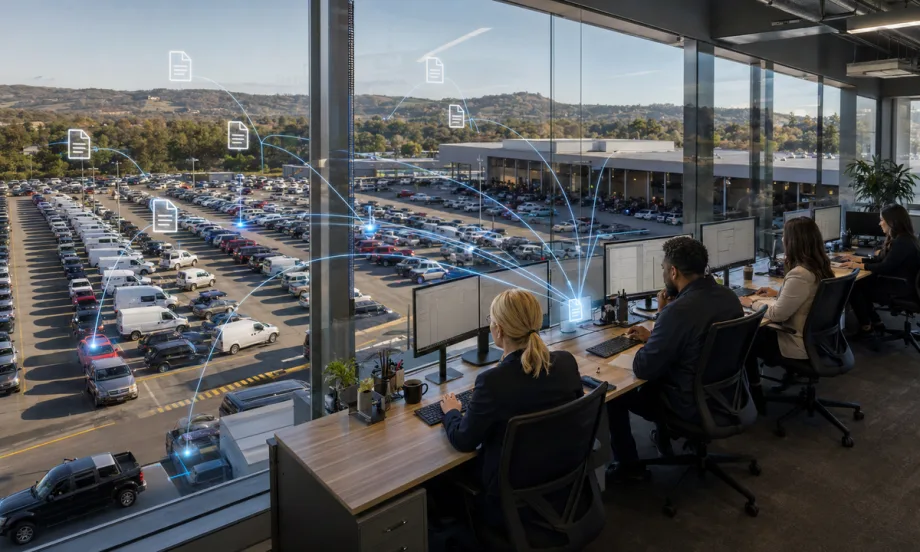
Centralizing invoice data and approval workflows gave auction locations greater visibility while allowing the finance team to spend less time on manual processing. This image created using AI. Refer to our Terms of Use.
Credit:
Automotive Fleet
6 min to read
What happens when a company grows from approximately 10 auction locations to more than 50, but its Accounts Payable team remains virtually the same size?
For America’s Auto Auction, the answer was embracing AI-powered automation.
Over the past several years, America’s Auto Auction has experienced tremendous growth through acquisitions and expansion across the United States and internationally. As invoice volumes increased and new locations were integrated into the business, we needed a way to scale our finance operations without dramatically increasing headcount.
By integrating AI into our Accounts Payable processes, we transformed a potential growth bottleneck into a competitive advantage.
Growth Created a New Challenge
When I joined America’s Auto Auction in 2018, the company operated approximately 10 auction locations. Through strategic acquisitions and expansion, that footprint has grown to more than 50 physical locations across the U.S., with continued growth internationally.
One of our most significant challenges came in 2022 when Accounts Payable operations were centralized across 22 auction locations. Overnight, invoice volume increased dramatically, new workflows had to be established, and our team was tasked with supporting a much larger organization while maintaining day-to-day operations.
At the time, many of our processes were still highly manual. Invoices arrived through shared email inboxes, data was extracted by hand, and information was entered into multiple systems before payments could be processed. While those processes had served us well, they were not designed to support the pace of growth we were experiencing.
The challenge was not simply processing more invoices. Centralizing Accounts Payable also meant changing the way people worked. Teams that had managed invoices locally for years now relied on a centralized process. Building confidence in that change required more than technology — it required transparency.
Giving locations visibility into where invoices were, who had approved them, and what came next helped create trust in the process while allowing our team to support a rapidly growing organization more consistently. The system we were operating at the time did not have that available.
In the auction industry, strong vendor relationships are critical. Every successful sale depends on transportation providers, reconditioning partners, title services, inspectors, facility vendors, and countless others working together behind the scenes. Paying those partners accurately and on time is essential to keeping vehicles moving, supporting customers, and maintaining the trust that drives long-term business relationships.
As our company expanded, we knew our finance infrastructure needed to evolve as well.
Finding a Better Way
Rather than continuously adding headcount as invoice volume increased, we focused on finding a more scalable solution.
We identified two key requirements.
First, we needed a system capable of automatically capturing invoice data regardless of vendor format, but not another OCR. We needed a tool that could identify invoices received in different formats. A lot of our vendors are small businesses that still have handwritten invoices; an OCR would not work. Given the number and variety of vendors we work with, consistency and accuracy were essential.
Second, we needed tighter integration between our Accounts Payable platform and our ERP system. Too much time was being spent moving data between systems, creating inefficiencies and increasing the risk of errors. We were spending nearly 10 hours a week on importing invoices into our ERP.
We weren't simply looking for another invoice processing system. We needed a solution that could grow with us. It had to reduce manual work, provide greater visibility, and support the pace of acquisitions without requiring us to continually add headcount. Scalability was just as important as automation because we knew our growth wasn't slowing down.
After evaluating multiple options, we selected Stampli, an AI-native Procure-to-Pay platform that integrates directly with Microsoft Business Central, our ERP system.
The impact was immediate. Invoice data could be captured and processed more efficiently, approval workflows became more transparent, and information moved seamlessly between systems. Processes that once required hours of manual effort became largely automated.
Just as importantly, our locations gained visibility into the process. Instead of wondering where an invoice was or waiting for updates, they could see its status throughout the approval workflow. That transparency helped build confidence in our centralized Accounts Payable model while reducing the time our team spent responding to status inquiries. More importantly, the technology provided a framework that could grow alongside the business.
The Results
Today, our Accounts Payable team remains the same size, yet we process approximately 33,000 invoices every month serving over 14,000 vendors.
That single statistic tells the story better than anything else.
What once required significant manual effort is now handled through automated workflows that allow our team to focus on exceptions, analysis, and business support instead of routine data entry.
The benefits became especially apparent as America’s Auto Auction continued to acquire new businesses. Where onboarding new locations once involved extensive administrative work and limited visibility, we now have a centralized process that provides clear insight into invoice status, approvals, and payment activity from day one.
Standardized workflows also meant that newly acquired locations didn't have to reinvent their Accounts Payable processes. Instead of adapting to different procedures at every location, they could transition into an established framework that promoted consistency while still supporting the unique needs of each auction.
The result is a smoother transition for newly acquired locations, greater confidence from local teams, and a finance operation capable of supporting continued expansion without dramatically increasing staffing levels.
Benefits Beyond Efficiency
While efficiency gains were the initial goal, the impact has extended far beyond invoice processing.
Our finance team now spends less time on repetitive administrative tasks and more time supporting the business. Employees who once focused primarily on invoice coding and data management can now contribute to compliance initiatives, reporting, process improvements, and other higher-value activities.
AI didn't make our employees less valuable; it gave us the opportunity to better utilize the unique talents each person brings to our department. When employees are able to focus on work that aligns with their strengths, they become more engaged, and that engagement naturally leads to higher-quality work, stronger collaboration, and better service for the business.
Our vendors benefit as well. Faster, more consistent payment processing reinforces trust and strengthens relationships with the businesses that help support our auctions every day. Those partnerships are critical to delivering a positive experience for buyers and sellers, making reliable payments an operational advantage rather than simply an accounting function.
The platform has also improved our ability to manage compliance and reporting requirements. Access to financial data is faster, reporting is more streamlined, and responding to auditors is significantly more efficient than it was under our previous processes.
Preparing for What’s Next
Artificial intelligence has not replaced the need for experienced Accounts Payable professionals, nor do I believe it ever will.
There will always be situations that require human judgment, collaboration, and expertise. The real value of AI is its ability to remove repetitive work so that finance teams can focus on the tasks that drive greater business impact.
As the automotive remarketing industry continues to evolve, organizations will face increasing pressure to do more with the resources they have. Growth, acquisitions, and expansion into new markets require systems that can scale without slowing the business down.
That's the power of combining great people with the right technology. For America’s Auto Auction, AI hasn't replaced our team, it has empowered us to grow faster, work smarter, and build a finance operation capable of supporting the company's continued growth.
Looking back, my only regret is that we didn't implement it sooner.
About the author: Adriane Lohsl is Accounts Payable Manager at America’s Auto Auction.
Subscribe to Our Newsletter
More Technology

How to Build Custom Fleet Tools With AI and Vibe Coding [Webinar]
A new Automotive Fleet webinar explores how fleet managers are using AI and vibe coding to automate routine work and create simple operational tools without traditional programming skills.
Read More →
Stop Remarketing Electric Vehicles Like Gas Cars
The advantages and attributes of electric vehicles are upending the traditional remarketing cycle, requiring fleet sellers to rely on new factors and approaches detailed below.
Read More →
The Predictive Pivot: How AI and Data Are Redefining Auto Logistics in 2026
AI is no longer a luxury but the baseline for profitability in 2026. Auto haulers that adopt these tools now will quickly outpace those that use manual workflows or take a wait-and-see approach.
Read More →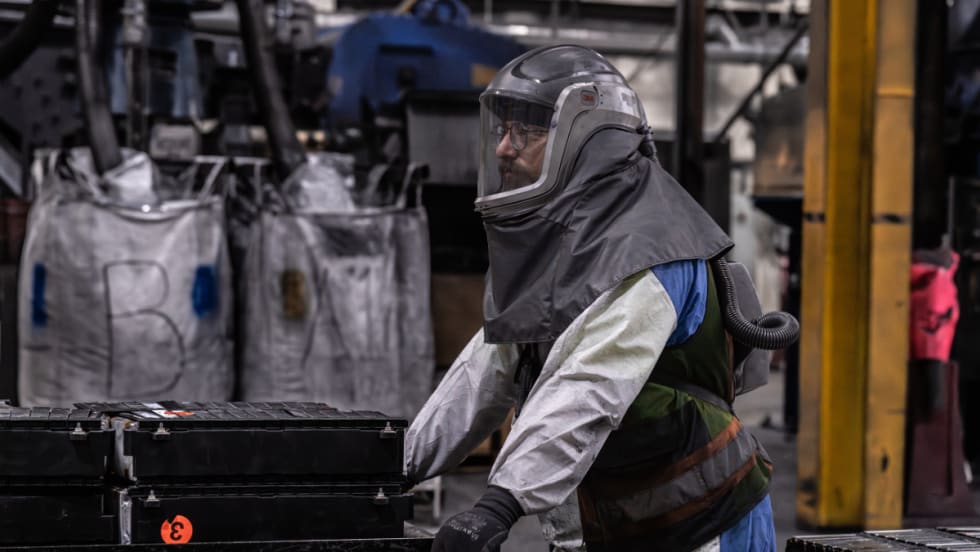
Cox Automotive Amasses EV Battery Minerals
The company has processed more than 10 million pounds of EV battery black mass, highlighting growing demand for recycling and lifecycle management as more electric vehicles enter the used market.
Read More →
TSD Mobility, UVeye Partner On Automated Vehicle Inspections
The enhanced technology allows rental car operations, dealerships, and auctions to compare a vehicle’s condition at pickup and drop-off within the same rental or loaner record.
Read More →
CAR 2026: What Really Moves Vehicle Value Now — And What Doesn’t
A panel at the 2026 Conference of Automotive Remarketing will examine how resale value is created across the vehicle lifecycle and which traditional remarketing practices still deliver ROI.
Read More →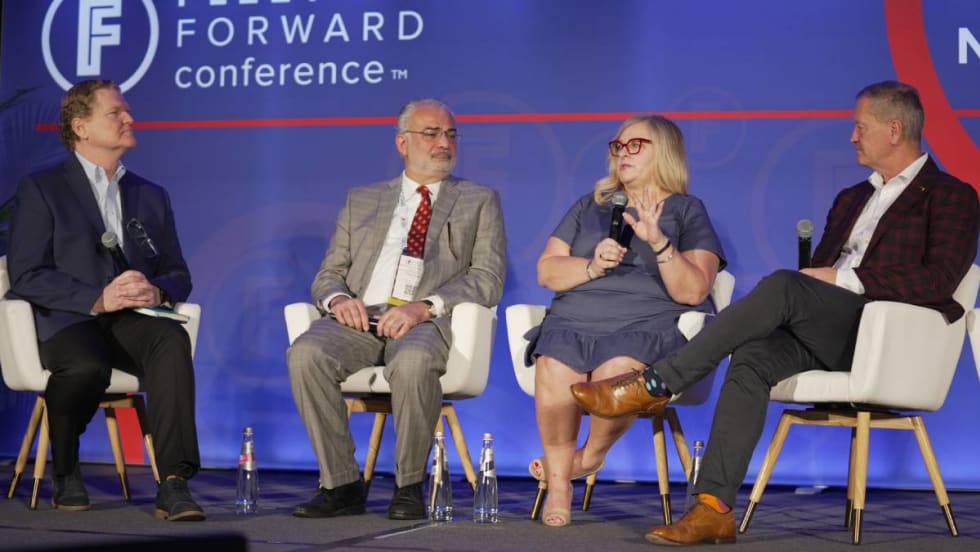
Despite World Troubles, Forward Thinking Guides Fleets
Fleet operators shared their challenges during an annual conference that embraced the latest advances across all aspects of running private- and public-sector vehicles.
Read More →
Privacy4Cars Study Reveals How 49 Auto Brands Handle Consumer Data Rights
The first-ever report sheds light on how well auto manufacturers offer vehicle owners access to their vehicle data.
Read More →
How AI Enhances Buying, Selling, and Trading Vehicles
AI has already evolved into a must-have tool for remarketers to work with greater clarity, make faster decisions, and run smarter digital marketplaces and business operations.
Read More →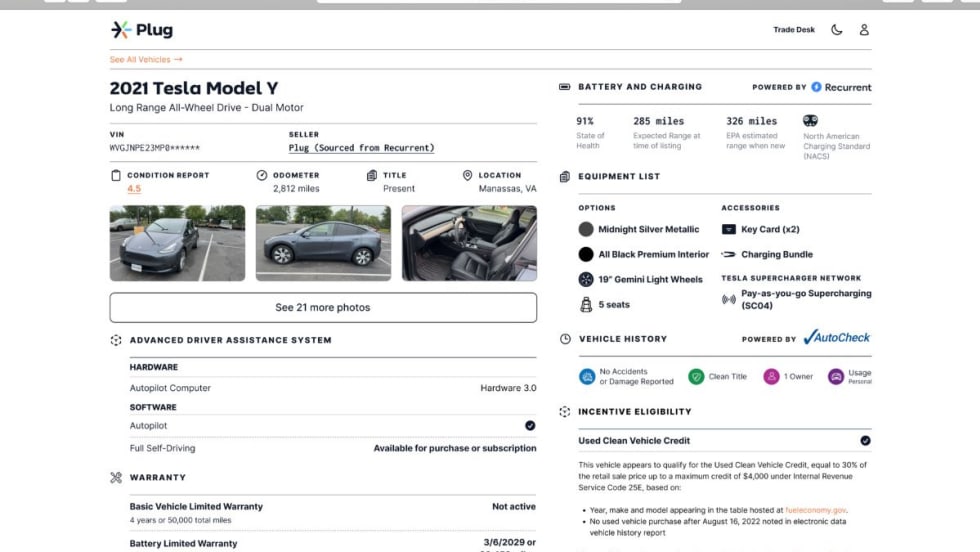
Plug Named Exclusive Partner For Recurrent EV Platform
The service enables used EV sellers to receive firm offers in under an hour, and expands dealer access to EV inventory.
Read More →