




FFC 2025:Day 1 Photos
Despite World Troubles, Forward Thinking Guides Fleets
Fleet operators shared their challenges during an annual conference that embraced the latest advances across all aspects of running private- and public-sector vehicles.
October 29, 2025

Global fleet perspectives from (L to R): Bobit Business Media CEO and moderator Colin Sutherland, Paulo Gaba of Autotur Group, Kimberly Fisher of NOV Inc., and Mace Hartley of the Australasian Fleet Management Association (AFMA).
Photo: Jonathan Robbins / Bobit Business Media
9 min to read
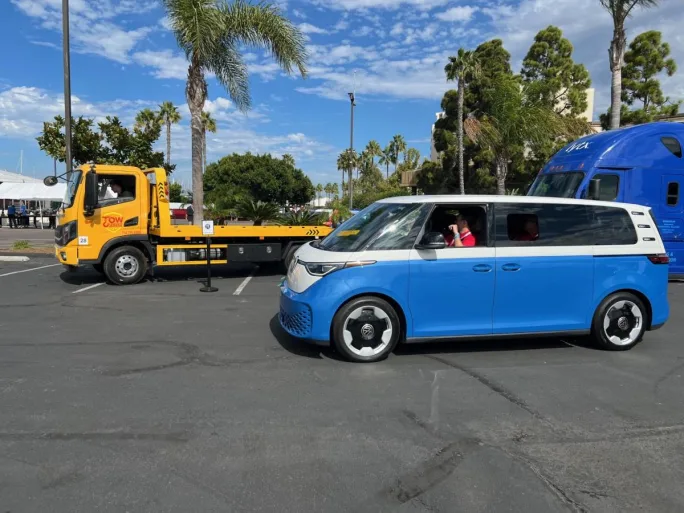
A variety of electric vehicles in all classes drew test drivers during the conference event. Driving conditions: Sunny and clear, San Diego style.
Photo: Martin Romjue / Automotive Fleet
The 2025 Fleet Forward Conference pulled together leading transportation trends and topics to keep attendees engaged on the future of fleet: Mobility, technology, connectivity, electric vehicles, autonomous vehicles, driver safety, and global disruptions.
In one way or another, these overlapping developments create a crucible reshaping how fleets operate and pursue ever-more efficient business models.
About 400+ registered fleet professionals and about 60+ suppliers/sponsors gathered for three days, Oct. 21-23, along the San Diego harbor front for exhibits, rides-and-drives with 26 electric vehicles, interactive sessions, and plenty of networking in a classic sunny 70s-degree Southern California coastal climate.
China Shaking Up EV Market
During the session, “An Insider’s View of the Rise of Chinese Automakers and the Impact on Fleets,” Dr. Leo Cai, co-founder and former EVP of eHi Car Services in China, and Ryan Pritchard, CEO of SHAED.ai and fifth-generation leader of Pritchard Companies, explored how Chinese automakers rapidly transformed from joint venture manufacturers into global leaders in electric vehicle (EV) technology, and what that evolution means for fleets worldwide.
Cai explained how the price pendulum between the U.S. and China has reversed:
In 2006, a Honda Accord cost roughly $45,000 in China versus $25,000 in the U.S. By 2025, the same car sells for under $20,000 in China, while exceeding $40,000 in the U.S. Cai attributed this transformation to a combination of government infrastructure investment, open-market competition, and massive growth in EV technology.
Globally, seven out of 10 EVs are made in China. China sells 32 million vehicles annually, with more than 50% of them electric, compared to the U.S., which sells 16 million vehicles annually, with only 10% EVs.
Key factors driving EV adoption in China include:
Extensive charging networks supported by government investment.
License plate incentives in megacities like Shanghai and Beijing, where internal combustion vehicles face
lotteries or steep license fees (up to $15,000), while EV buyers receive plates for free.
Competitive pricing means many EVs now cost less than comparable gasoline models.
Those factors have resulted in a market where EVs account for more than 50% of new vehicle sales in China, a stark contrast to the U.S., where the rate hovers around 10%.
China has about 160 OEMs spurring change and driving innovation, with a supply chain built around them, their talent, and staff.
“There is cutthroat competition,” Cai said. “People are fighting for survival. If you’re not careful, your market position is gone. That’s why people work hard day and night.”
Pritchard recounted how a search for secondary supply chains led him to China in 2013, a move that enlightened him about the country’s rapid progress in manufacturing and mobility innovation. “I was once embarrassed to put a Chinese logo on a U.S. product,” Pritchard said. “Now, I’m proud to.”
Go-Go Global Touches The Local
China may be a leading economic and technological disruptor, but there's plenty of dynamism around the world.
In a keynote kickoff session, "Leading Fleets Through Global Disruption," speakers examined how fleet managers can navigate the global tech influences on fleet transportation.
Moderator Colin Sutherland, CEO of Bobit Business Media, hosted a panel that featured Hans Damen of Fleet3Sixty, Kimberly Fisher of NOV Inc., Mace Hartley of the Australasian Fleet Management Association (AFMA), and Paulo Gaba of Autotur Group.
Among collective insights:
Global fleet management is like “handing someone a jigsaw puzzle purposely designed not to fit,” Hartley said. While global strategy provides a vision, success depends on local execution. “Think global, act local,” he said, noting that differences in distributor networks, regulatory standards, and infrastructure prevent one-size-fits-all solutions.
Gaba favored “local flexibility” in how multinational procurement often requires local adaptation. Lessons learned in emerging markets can sometimes guide global strategy rather than the other way around.
2025 is bringing tougher challenges to the fleet sector, including tariffs, technological shifts, and political polarization. Just like during the supply chain shocks and geopolitical tensions of the pandemic era, operators must remain resilient. That requires the agility to adjust order cycles, source alternatives, and maintain service quality regardless of external pressures.
“The great uncertainty now is politically, and many companies are looking inward as the U.S. blocks out imports of certain products,” Hartley said.
Fisher added, "As fleet managers, we must learn to be a bit nimbler and more aware of what's going on. What we're experiencing now is the new normal. There's no turning back the clock, and no one can write an executive order. Life now involves a shock factor at how quickly things have changed."
Sutherland pointed out that the next wave of breakthroughs will be much like the evolution of telematics in the late 1990s. It will come from combining technologies in new ways. “AI by itself isn’t innovative,” he said. “You’ve got to add two or three things to it to make it propel forward.”
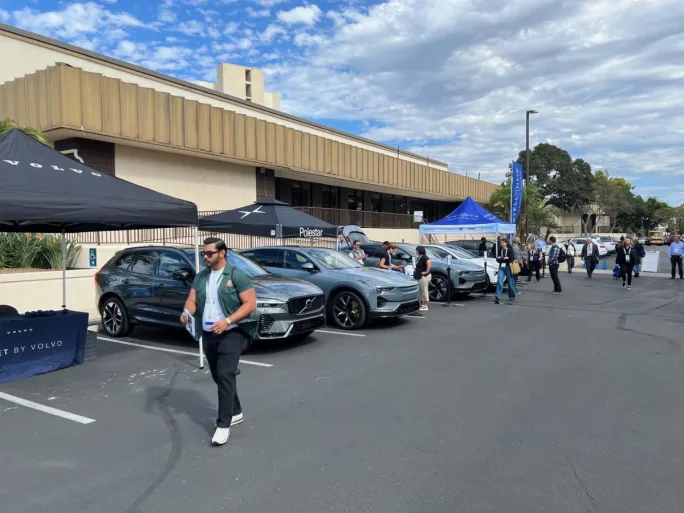
Electric vehicles, such as these lined up at the FFC ride-and-drive, come with tipping points and reality checks for fleets on the path to electrification.
Photo: Martin Romjue / Automotive Fleet
The Wider Mobility View
Before fleet operations can thrive, they must come to grips with reality checks and tipping points. Electrification, autonomy, and AI are the key accelerants going mainstream throughout the fleet sector.
In a session titled "Mobility 360: Understanding the Tipping Points of Fleets," Chris Brown of Automotive Fleet moderated a panel featuring Andrew Krulewitz of Inspiration Mobility, Donald Smith of S&P Global Mobility, and Steve Greenfield of Automotive Ventures.
Electric vehicles generate tipping points and pain points for fleets. Among the session insights:
While EV adoption is growing, the reality remains uneven across fleets because infrastructure, grid capacity, and model availability still constrain complete transition.
The threshold for electrification is a fleet with vehicles that roll less than 150 miles a day and can use Level 2 charging.
EV penetration among commercial fleets fell only 1% year-over-year, while hybrid adoption surged 32%. Hybrids are likely to remain a dominant bridge technology until pure EVs achieve cost and range parity.
Greenfield underscored that major transitions take time. "Being early is worse than being wrong," he said, asserting that EVs will dominate globally in 25 years but that actual adoption depends on breakthroughs in charging speed, range, and battery chemistry. "Once you can charge in five minutes and drive 1,000 miles, people will look at gas cars and wonder why they ever owned one."
Residual values and second-life economics remain key barriers to fleet electrification. Understanding battery health by tapping telematics can provide the data needed for accurate valuations.
Battery replacement costs, now at about $25,000, will drop steeply as technology matures.
Total cost of ownership (TCO) models show that hybrids offer both fuel savings and emissions reductions without the infrastructure demands of full electrification.
Within five years, many fleets will include autonomous vehicles requiring new operational roles, such as cleaning, charging, and maintaining them between trips.
AI tools can detect subtle charging inefficiencies or driver behavior patterns by layering machine learning over telematics data.
Fleets that succeed in the next decade will be those that align technology adoption with behavioral insight, education, and real-world experience.
Navigating Market Shocks
Two J.D. Power experts presented a session, "Managing Market Turbulence with Strategic Fleet Insights," that touched on volatile factors battering fleet operations.
Tyson Jominy, senior vice president of data and analytics at J.D. Power, tied together “shock after shock” to provide a deeper outlook rooted in optimism:
Fleet sales remain about 1 million units below pre-pandemic levels, leaving room for growth.
Automakers like Toyota and Honda continue to sell every vehicle they produce.
An increase in lease returns will bolster the used market.
Quality improvements and long-term durability are enhancing the total cost of ownership for fleets.
While consumer affordability on new vehicles remains strained, fleets benefit from stable residual values and sustained demand for used cars.
Despite the expiration of federal EV incentives on Sept. 30, EV adoption should rebound to about 15% of the market by decade’s end as more vehicles launch and industry economics balance out.
Those positive scenarios, however, come with some prices still to be paid, or figured out:
Tariff policies have so far walloped automakers with an additional $62 billion in costs following 2025’s trade actions. That has wiped out nearly two-thirds of the industry’s annual profits. While subsequent deals reduced that burden to $40 billion, the hit remains massive. Automakers have responded by localizing production and adjusting supply chains, but uneven exposure to costs works against passing them on to consumers for now.
As markets have calmed, used vehicle prices remain historically high due to low supply. Scarcity in the used market is a mixed blessing for fleets, driving higher resale values for vehicles but complicating plans to buy replacements.
Richard Hall, who leads J.D. Power’s ZappyRide division, focused on fleet electrification strategies:
A wide array of state, local, and utility-based incentives continues to make EVs attractive, especially for certain fleet use cases.
Fleets must take advantage of underused tools and free utility programs that simplify electrification planning.
One-year depreciation allowance for EVs can help offset higher upfront costs.
Key approaches for fleet operators include:
Expect modest declines in used values but continued strong demand.
Leverage TCO analysis and localized incentives for EV adoption.
Prepare for OEMs to renew their focus on fleet sales as consumer markets plateau.
Balance short-term cost pressures with long-term operational and sustainability goals.
The AI Powers Behind the Fleet Thrones
Artificial intelligence will define nearly every technology tool and program in the second half of this decade. David Prusinski, CEO of Vehicle Management Solutions (VMS), drew on industry surveys and experience with vehicle technologies to convey how AI is becoming a must for fleet operations.
In a session, “Fleet AI Tools: Adoption, Struggles, and the Road Ahead,” Prusinski outlined AI’s potential to modernize fleet operations, reduce costs, and even out competition among small and large fleet operations.
Key benefits of AI adoption include:
Predictive maintenance: AI systems analyze telematics and sensor data to forecast component failures with up to 90% accuracy. It allows fleets to shift from reactive repairs to preventive maintenance, reducing downtime and repair costs by up to 30%.
Enhanced safety: Advanced vision and behavior monitoring detect distractions, fatigue, and unsafe behaviors in real time, helping prevent accidents and reduce insurance risk.
Cost efficiency: By automating repetitive tasks such as scheduling and reporting, AI reduces administrative labor while improving the usage of fleet vehicles.
Accessibility for smaller fleets: AI-driven maintenance and operations tools flatten fleet management by giving smaller fleets the same data-driven insights once reserved for large enterprises.
According to VMS's 2025 fleet industry survey, most companies are still in the early stages of AI integration:
11% of fleets have fully implemented generative AI tools.
40% use AI in some capacity (e.g., telematics or maintenance).
39% are exploring or considering future adoption.
ROI isn't always immediate but can be substantial over time. Early adopters already report measurable efficiency gains.
AI’s rise resembles past technological revolutions like the internet and cloud computing, Prusinski said. Those willing to evolve will define the next generation of fleet operations.
Topics:Vehicle TechnologyFleet Forward ConferenceFleet ManagementmobilityAutonomous VehiclesFleet ForwardChinaTelematicsindustry educationElectric VehiclesFleet SafetyFleetTechnology
Originally posted on Automotive Fleet
Subscribe to Our Newsletter
More Fleet

Acertus Acquires Fisher Shipping, CEO to Join Acertus
Fisher Shipping will retain its brand and team, while its customers gain access to Acertus’ transportation, storage, vehicle care, and title and registration services.
Read More →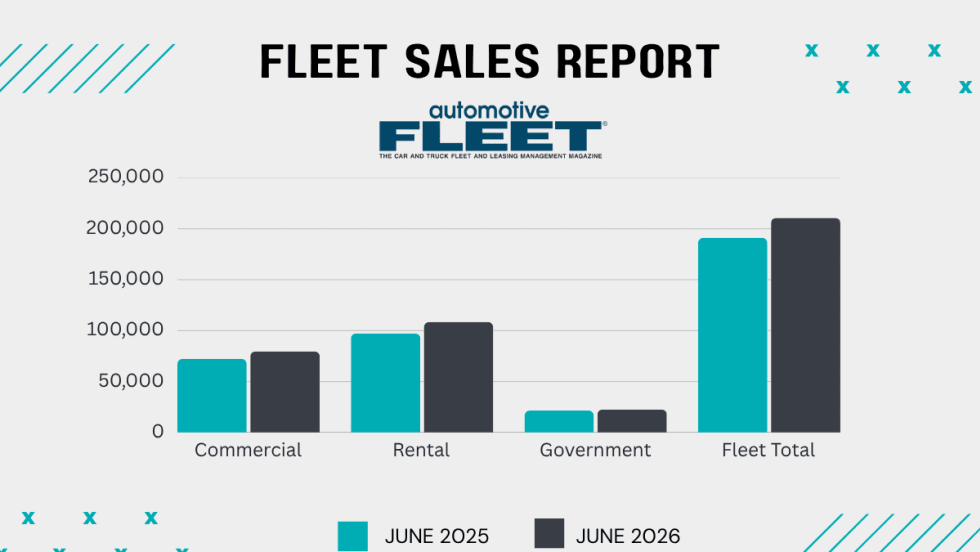
Commercial Fleet Sales Contribute To June, YTD Gains
The fleet sector has boosted its vehicle purchases at a reliable pace in the first half of this year compared with 1H 2025.
Read More →
Registration Opens for 2026 Fleet Forward Conference
Held on the East Coast for the first time, the Washington, D.C.-area event features expert-led education, a new IIHS Crash Test Experience, and collocation with the NAFA’s Fleet Safety Symposium.
Read More →
AP Fleet Management Expands Remarketing Program for Commercial Work Trucks
AP Fleet Management expanded its commercial vehicle remarketing program with dedicated resale services and an online marketplace for used work trucks.
Read More →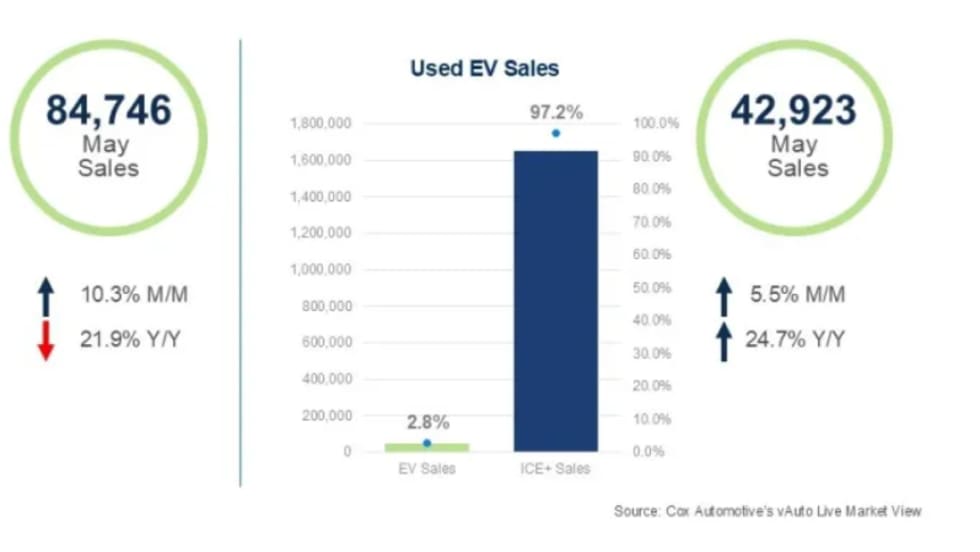
Used EVs Strengthen Overall Electric Vehicle Market
The latest sales data point to several reasons for the divergent trends in new and used EVs that can factor into fleet cycling decisions.
Read More →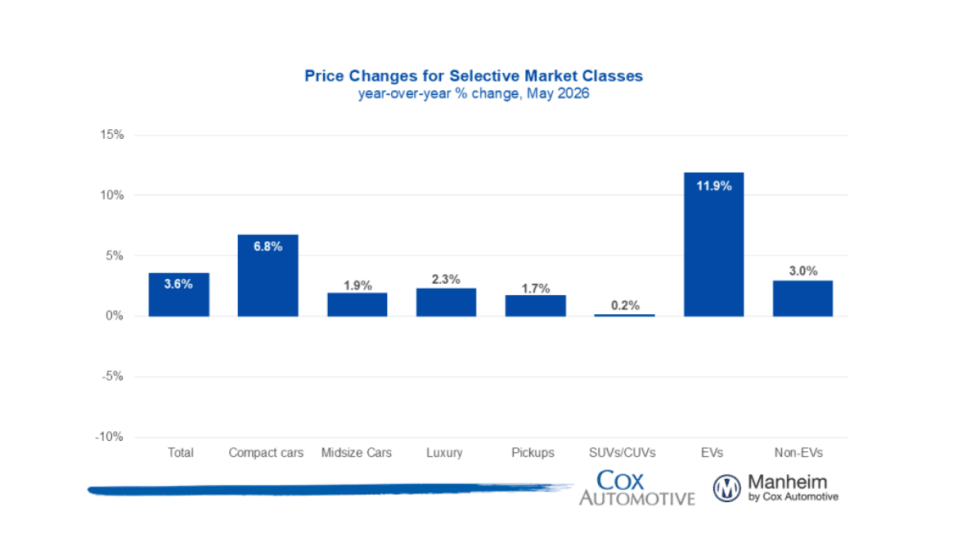
Wholesale Used Vehicle Market Sustains Moderate Rise In Values, Prices
Trends continue to normalize after a strong start to the year, as consumers contend with higher gas prices in the coming summer months.
Read More →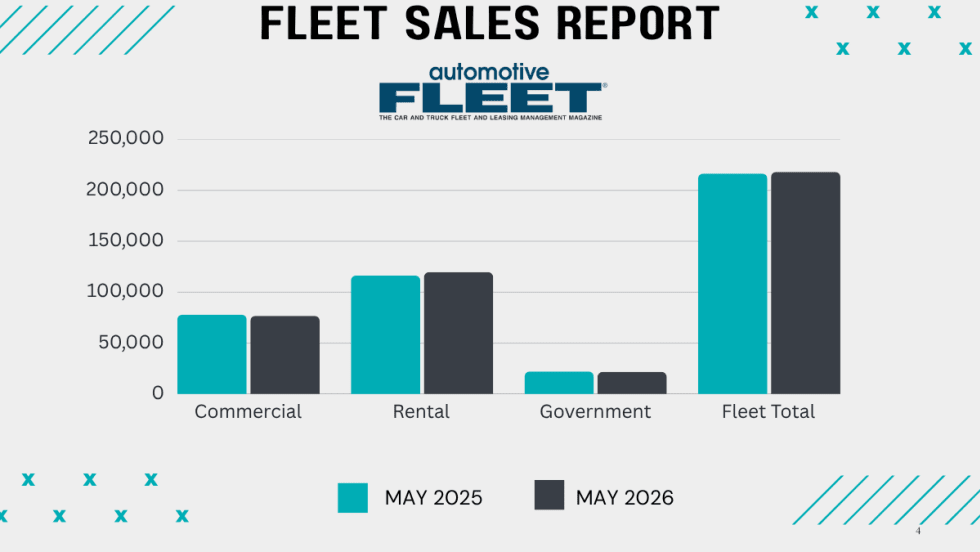
Commercial Fleet Sales Still Lead Sectors Despite May Mini Dip
The U.S. economy's continued growth and positive business investment are creating a favorable environment for fleet vehicle demand.
Read More →
The Data-Driven Haul: 5 Ways AI is Leveling the Playing Field in Auto Transport
Large and small transport fleets are becoming more competitive as predictive analytics and real-time data inform the logistics decision chain.
Read More →
Commercial Fleet Sales Show Healthy Gains
So far, the fleet sector is outshining government and rental fleet sales this year as economic growth spurs more business investment.
Read More →
CAR 2026 Recap Part 2: Closing the Gap Between Data & Remarketing Value
The second half of CAR 2026 examined how fleets can translate lifecycle strategy, vehicle data, and market shifts into higher real-world results.
Read More →