


July 1, 2026
Stop Remarketing Electric Vehicles Like Gas Cars
The advantages and attributes of electric vehicles are upending the traditional remarketing cycle, requiring fleet sellers to rely on new factors and approaches detailed below.
Jimmy Douglas, Plug
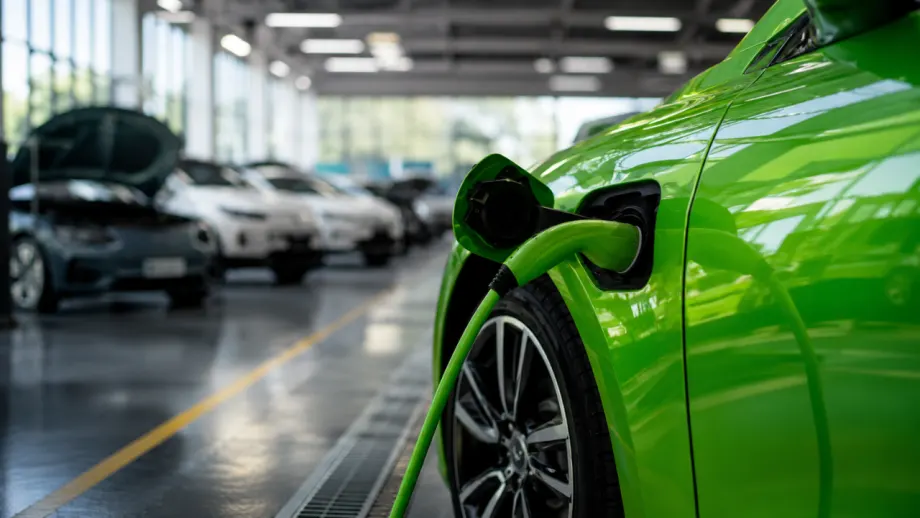
Preparing an EV for resale may require a different approach, including battery documentation, faster reconditioning, and maintenance decisions that address the questions used-EV buyers bring to the sale.
Credit:
Vehicle Remarketing
9 min to read
- The shift in marketing approach is driven by the evolving attributes of electric vehicles compared to traditional gas-powered cars.
- Battery condition, range efficiency, and technological features can greatly influence the resale value of EVs.
*Summarized by AI
Most electric vehicles lose nearly half their value in the first three years.
Those same vehicles can last hundreds of thousands of miles. When a fleet replaces EVs on the standard three-year, 36,000-mile cycle, it uses only about 10% of the asset while absorbing about half of its lifetime depreciation. That's the worst trade in the fleet.
Nobody should apologize for the old playbook. Gas cars age on a schedule: maintenance climbs, resale slides, and somewhere around year three, the math tells you to sell.
The questions a remarketing manager learned to ask were the right questions for that asset:
- Do we sell now or wait for the seasonal bump?
- Do we run everything through the auction relationship we've had for 15 years, or test a digital channel?
- Recondition first, or sell as-is and let the buyer deal with it?
Entire careers were built on answering those well, and for ICE vehicles, the framework still performs.
But the fleet mix has changed, and the framework hasn't. EVs are now nearly 10% of new light-duty sales in the U.S., and they don't sit on the ICE cost curve at all. They're a different asset with a different depreciation profile, buyer concerns, and a relationship between age and operating cost.
The industry is still wedging them into the same cycles, auction lanes, and recon logic. That habit costs real money, and the fleets that notice first will be meaningfully more profitable than the ones that notice last.
Hold Them Longer And Stop Watching The Calendar
The case for selling a gas car in year three is that it becomes costly to maintain. Year four is when the brake jobs, transmission services, and check-engine surprises start stacking up, reliability dips right as the warranty walks out the door, and the wholesale value erodes underneath you the entire time. Selling before that wave hits is rational.
An EV mostly doesn't produce that wave. The drivetrain has a fraction of the moving parts. There's no oil to change, no transmission to service, no exhaust system to rust out, and regenerative braking means even the brake pads last far longer than they should.
The studies cluster around 40% lower maintenance and repair costs versus combustion vehicles, and the fuel line on the P&L shrinks dramatically on top of that. The risks that justified early exits simply aren't there in the same way.
The depreciation curve works in your favor the longer you keep the vehicle. The steepest losses come early. By year three, an EV has already taken its biggest hit, so each additional year in service delivers low-cost miles from an asset past the worst of its depreciation.
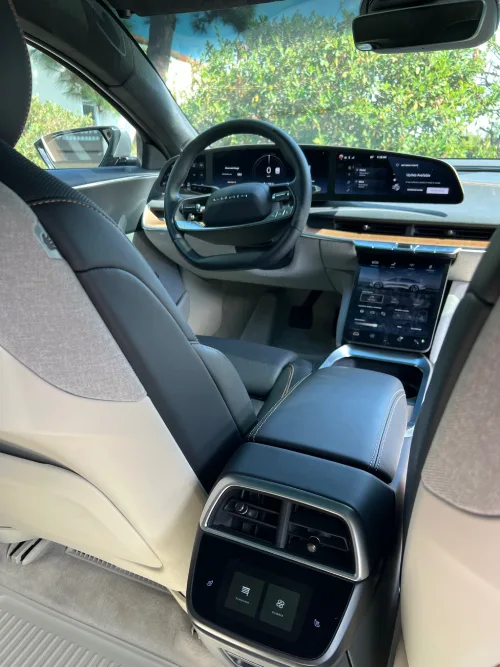
The EVs that have dominated fleet purchasing carry panoramic roofs, huge windshields, and integrated displays, and a cracked windshield is no longer a $400 problem.
Credit:
Martin Romjue / Automotive Fleet
Measure total operating cost per mile instead of focusing on a resale date, and the conclusion changes: for most EV fleets, holding longer makes more sense. More time in service is how fleets capture the asset’s full value.
The standard worry here is the battery, and the data on that has gotten boring. Packs measured in hundreds of thousands of miles of useful life are outlasting the duty cycles of the fleets that own them. Battery condition matters enormously at resale (more on that below), but as a reason to dump a three-year-old EV early, it doesn't hold up.
And when you do sell, don't wait around for a window. Seasonality is real for combustion vehicles (trucks move in spring, convertibles in summer), and remarketing managers have made careers out of riding those cycles.
EVs don't trade on seasons, but on technology cycles, and that distinction changes everything about timing. Every model year, the new ones get more range, faster charging, software your used unit will never receive, and frequently a lower sticker price, because manufacturing efficiency and competitive pressure keep pushing new prices down.
The car you're holding doesn't get better while you wait; instead, the vehicles it competes against do. Anyone who has tried selling a two-year-old iPhone the week after a launch knows how this goes. The previous generation doesn't drift down in value; it steps down, hard, the moment the new one ships. EVs behave like iPhones, not like gas pickup trucks.
The timing rule for EVs is simple: A used EV never gets more competitive by sitting on your lot. Keep it in service, earning its keep, or sell it now and sell it fast, because there is no third option where you can outsmart the market.
Recon Is About Removing Doubt
A used EV with unanswered questions attracts only risk-tolerant buyers, and they price that uncertainty into every bid. The discount is usually larger than the cost of resolving the issue upfront. That is why EV reconditioning is, above all, about removing doubt:
- Start with the battery.State-of-health documentation is becoming the baseline expectation in wholesale EV transactions, and if the high-voltage battery or drive units are outside the manufacturer's warranty, buyers want an independent assessment before they bid with confidence. Vehicles with documented battery health consistently sell for more. Vehicles without it force every bidder to assume the worst, and you'll see that assumption in the bids. This is the cheapest fix in EV remarketing: the pack's condition doesn't change when you document it, but the price does.
- Glass is the line item that catches everyone off guard. The EVs that have dominated fleet purchasing carry panoramic roofs, huge windshields, and integrated displays, and a cracked windshield is no longer a $400 problem. Many require a full ADAS recalibration before the car can return to service, so a dealer staring at that crack is pricing in glass, calibration, and days of downtime. Sometimes, fixing it pre-sale is obvious money. Sometimes the right call is to disclose the damage, price accordingly, and move the car now. Run it per unit, but run it deliberately, because the buyer is doing that math whether you did or not.
- Recon speed is mostly a parts game. The wrench work on an EV is rarely the bottleneck; waiting on parts is. Fleets that diagnose remotely before the vehicle ever moves and stage parts ahead of arrival push cars through recon in days instead of weeks. Velocity matters here for the same reason it matters everywhere else in this asset class: every day a vehicle sits, it's depreciating against a technology cycle, not a calendar.
- Beware of structural gaps. There's also a structural gap working against you, and it's worth understanding because it explains where the friction in your sale price comes from. The direct-to-consumer EV brands never built franchise dealer networks, which means they never built the machine that has quietly absorbed and reconditioned used vehicles for traditional OEMs for decades. A used Camry lands in a system with parts on the shelf and technicians who have done the job a thousand times. A unit used from a DTC brand often doesn't. The pipeline is being built but isn't finished, and unreconditioned vehicles hit that gap at the worst possible moment: the point of sale.
Here, fleets running sizable EV cohorts have a real edge. They built service relationships and parts access out of necessity, just to keep their own vehicles on the road, and that infrastructure often beats what a standalone dealer can manage. Putting it to work on mechanical recon can widen the buyer pool from risk specialists to mainstream buyers, which is where competitive bidding lives. Whether it pencils depends on the unit.
Sometimes the answer is your own shop, sometimes it's your remarketing partner's network. But decide deliberately, before the car crosses the block, because an as-is unit with a vague service history has already made the decision for you.
Sell Where The EV Buyers Already Are
Our data at Plug shows the same thing repeatedly. Channels with concentrated EV demand produce more competition, and competition drives both price and velocity. Specialist buyers bid more sharply because they know their downstream.
They know which models move in their market, what battery health is worth, how software-enabled features and charging network access change the number, and what their retail customers will pay 90 days from now. A generalist looks at the same car and discounts everything he can't evaluate.

Plug CEO Jimmy Douglas advises remarketers price off of real-time data while using multiple sales channels and platforms.
Credit:
Plug
Fleet operators have more exit options than they often realize, and the right mix depends on volume, infrastructure, and how much margin you're willing to hand to the sales channel itself:
- Dealer sales, whether direct or through digital wholesale, still anchor fleet remarketing volume, and EVs are no exception. What changes is the need for selectivity. Send EVs to dealers with proven EV throughput and strong retail demand, not simply to the closest or most convenient option. An EV-specialized dealer is not the same as a used-car lot that happened to take in a few Teslas last year, and that difference shows up in the bid.
- Digital auction platforms bring speed, reach, and pricing transparency, and for EV inventory specifically, purpose-built platforms tend to outperform general wholesale lanes because they concentrate the buyers most likely to compete aggressively. Fee structures and technology vary widely, so when you evaluate platforms, look at the composition of the buyer network before the feature list. A slick interface in front of the wrong buyers is still the wrong channel.
- Hybrid strategies, where vehicles waterfall across channels in sequence (not simultaneously), take more coordination but tend to produce the best outcomes at scale. If a unit stalls in one channel, you move it to the next without losing a week. Fleets routing every EV through a single auction relationship, because that's the relationship they've always had, are donating margin to habit.
Whatever the mix, price off live data. The tooling here is dramatically better than it was even three years ago: real-time market pricing, comparable-sale history, and demand signals by region and vehicle type.
Use it, with one caveat. The data is only as good as the market it reflects, and EV pricing is still volatile enough that historical comps go stale much faster than they do for gas vehicles. A 90-day-old EV comp is closer to trivia than pricing data. Near-real-time is the standard for pricing this asset class with confidence.
The Window Is Now
A big wave of off-lease EVs is hitting the market now, which means every fleet running electric is about to find out whether its remarketing operation was built for the asset or borrowed from the last one.
The fleets that win the next decade of remarketing will be the ones that do the unglamorous work:
- Longer holds are modeled on actual operating costs.
- Recon that answers what EV buyers fear before they ask.
- Channels that concentrate demand instead of hoping for it.
- Prices set from data that's current enough to trust.
EVs are technology assets. The ICE playbook had a great run. It was built for a different machine.
Quick Answers
The traditional remarketing cycle is not suitable for electric vehicles because their unique advantages and attributes differ significantly from those of gas-powered cars, requiring new approaches and considerations.
*Summarized by AI
Loading data...