




How To Adapt Fleet TCO To Rising Insurance, Purchasing Costs
Smart operational and spec'ing decisions can dramatically improve both the total cost of ownership during use and the resale value when it's time to remarket day cabs.
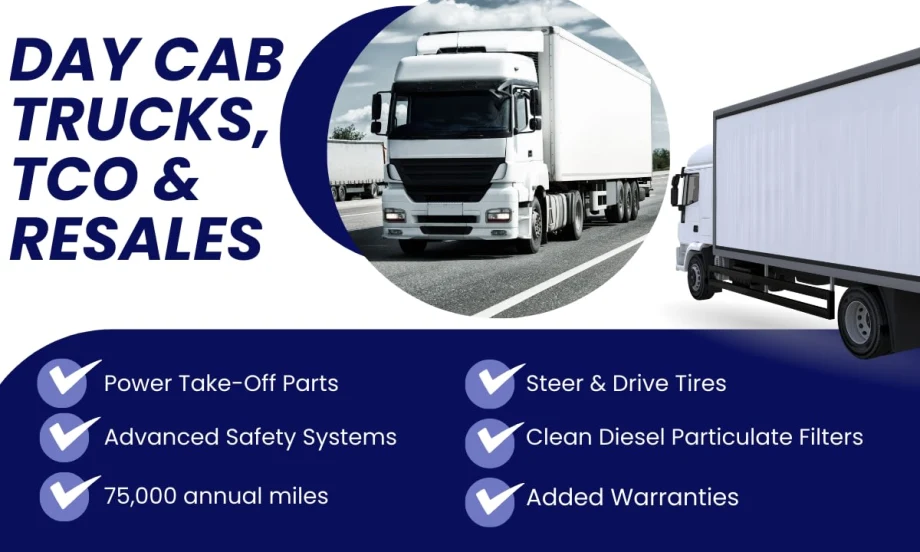
This surge in e-commerce trucking has created a nationwide surplus of used day cabs, creating a volatile buyer’s market.
Vehicle Remarketing
The growth in e-commerce, often called the “Amazon effect,” is driving demand for new and used day cabs.
Day cab popularity has also been driven by the decline in long-haul rates and increasingly stringent corporate safety mandates.
Whether your fleet buys or sells used day cabs, there are many decisions that help maximize the total cost of ownership (TCO) and increase resale value.
As large shippers like Amazon and FedEx move toward faster delivery (often same-day or next-day), demand has shifted toward day cabs that are better suited to regional, short-distance routes.
Amazon has more than 2,500 delivery service partners (DSPs) across the U.S., employing about 200,000 people. FedEx Ground now has a network of over 6,000 independent delivery contractors in North America.
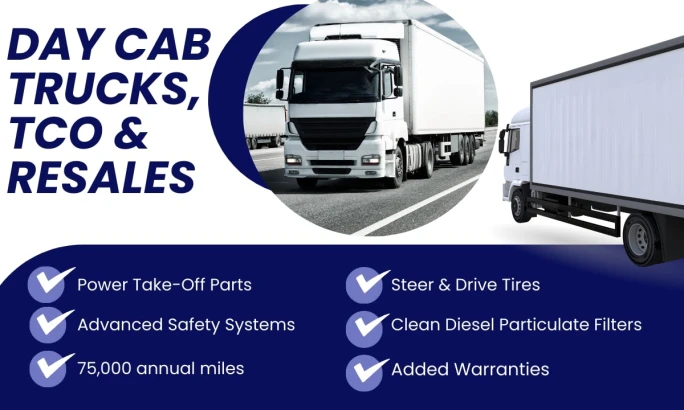
This surge in e-commerce trucking has created a nationwide surplus of used day cabs, creating a volatile buyer’s market.
Vehicle Remarketing
Residential deliveries yield lower margins for these companies than business deliveries. They’re looking for reliable, efficient used day cabs that can still meet compliance and driver safety requirements.
This surge in e-commerce trucking has created a nationwide surplus of used day cabs, creating a volatile buyer’s market. Some companies are delaying purchases due to the challenging freight rate environment and the overall freight recession over the last several years.
However, some fleets are buying used day cabs to supplement their new trucks, attracted by the lower initial purchase price (often about one-third of a new truck), fuel efficiency, and proven reliability.
Used day cabs help “right-size” a fleet because they’re ideal for short-haul applications like port drayage and warehouse-to-delivery runs. Since day cabs are commonly spec’d for local work, their resale market can be highly susceptible to regional oversupply. There are two prevailing customer segments: the compliance market and the vocational market.
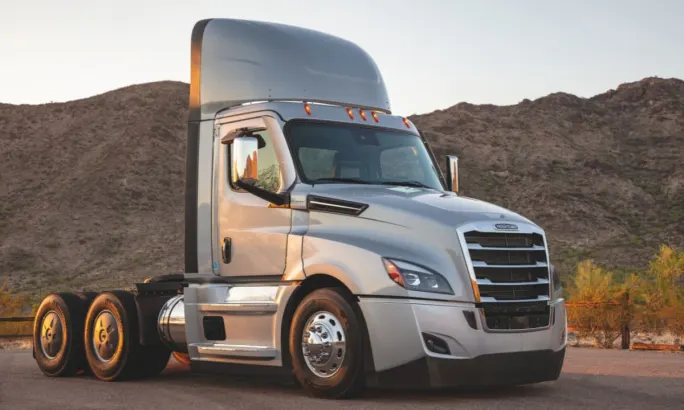
A surge in e-commerce trucking has created a nationwide surplus of used day cabs, creating a volatile buyer’s market.
SelecTrucks
Small- to medium-sized regional fleets with corporate buyers comprise the core of the compliance market. They often purchase used day cabs for specific contracts with companies such as FedEx or Amazon.
These buyers prefer late-model used trucks with specific, non-negotiable specs. Their chief concern is finding the right truck, so they can be less price-sensitive than vocational buyers.
In addition, their purchases can be influenced by compliance mandates, such as those issued by the California Air Resources Board (CARB). Although CARB has approved amendments to the Advanced Clean Trucks (ACT) regulations that give manufacturers and resellers more flexibility, the regulations remain rigorous overall.
Nitrogen oxide (NOx) emissions standards are very strict, and California’s Clean Truck Check (CTC) requires mandatory twice-a-year emissions testing.
For vocational buyers — including farmers, loggers, and industrial haulers — older, more rugged trucks get the job done. These customers need immediate utility at a bargain price.
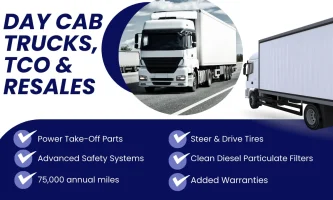
Here are some of the used day cab specs that increase resale value:

Used day cabs help “right-size” a fleet because they’re ideal for short-haul applications like port drayage and warehouse-to-delivery runs.
SelecTrucks
Used day cabs should always be assessed by lifecycle stage to determine whether the repair cost outweighs the potential return.
The industry norm for day cab usage is about 75,000 miles/year, or 300,000 miles for four years of service. Resale value takes a hit when mileage exceeds 300,000, and anything over 500,000 usually means the vehicle is headed for the wholesale/auction market.
Outside of mileage requirements, engine hours are important for many buyers. Excessively high hours can raise buyer concern, even when the mileage is low. Significant rust on the frame and body damage are also major value detractors for day cabs.
The cleaning and replacement of a day cab’s diesel particulate filter (DPF) has a major impact on both TCO and resale value.
DPFs are critical to emissions compliance, and they’re expensive to replace, usually in the $3,000 range, including parts and labor. DPF ash count (or “ash load”) measures the noncombustible material that accumulates in the filter. Soot burns off, but ash remains, reducing filter capacity and requiring cleaning or replacement at around the 400,000-mile mark.
Remaining new-truck warranty on a day cab is a key value driver because it provides coverage for potential high-cost repairs, such as the $10,000+ required for an after-treatment system. If there is no active warranty coverage, savvy operators often add a used truck warranty at the time of purchase to protect their investment.
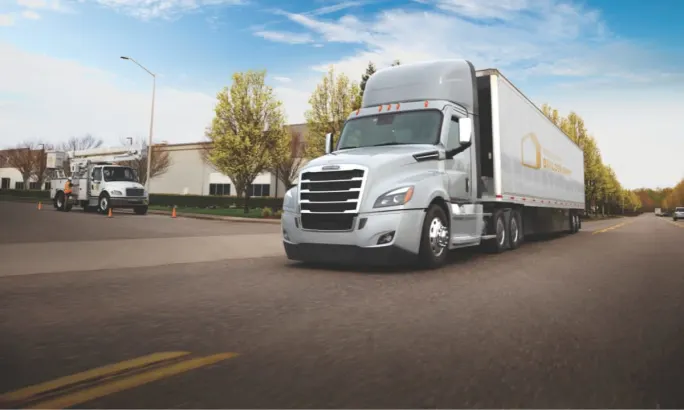
As large shippers like Amazon and FedEx move toward faster delivery (often same-day or next-day), demand has shifted toward day cabs that are better suited to regional, short-distance routes.
SelecTrucks
Many companies are now diversifying their fleets, using new and used day cabs to achieve strategic goals.
It’s important to have warranty coverage in the secondary market to better protect against problems that can arise with used equipment.
The explosive growth in e-commerce deliveries will continue throughout this decade, so the buying and selling of used day cabs will play a pivotal role in most fleets’ financial success.
The fleets that understand the needs of the compliance and vocational resale markets will dramatically reduce TOC while commanding the highest possible resale prices.
Loading data...

Operations
The advantages and attributes of electric vehicles are upending the traditional remarketing cycle, requiring fleet sellers to rely on new factors and approaches detailed below.

Fleet
Large and small transport fleets are becoming more competitive as predictive analytics and real-time data inform the logistics decision chain.

Technology
AI is no longer a luxury but the baseline for profitability in 2026. Auto haulers that adopt these tools now will quickly outpace those that use manual workflows or take a wait-and-see approach.
Used Vehicle Values
Smart operational and spec'ing decisions can dramatically improve both the total cost of ownership during use and the resale value when it's time to remarket day cabs.

Used Vehicle Values
Fleets invest heavily in vehicle technology, but that value disappears at resale. Here’s how proof of maintenance and safety can carry forward into remarketing.