




Operations
Stop Remarketing Electric Vehicles Like Gas Cars
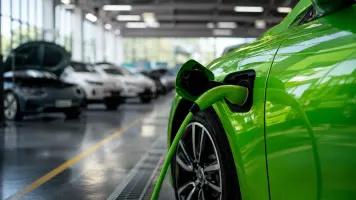
The advantages and attributes of electric vehicles are upending the traditional remarketing cycle, requiring fleet sellers to rely on new factors and approaches detailed below.
Fleets invest heavily in vehicle technology, but that value disappears at resale. Here’s how proof of maintenance and safety can carry forward into remarketing.

As fleet vehicles head to auction, resale outcomes often come down to how well the asset can be positioned and differentiated in a market that rarely sees proof of care.
Credit: Vehicle Remarketing
Fleets invest heavily in vehicle technology to improve safety, reduce downtime, and keep vehicles maintained to original equipment standards. But at resale, much of that value disappears.
When a business vehicle is prepared for remarketing, it typically must be “downfitted,” meaning that installed technology is removed before the vehicle is sold. The secondary market rarely sees the proof behind how that vehicle was operated, maintained, or cared for, so the asset is priced like any other vehicle crossing the lane.
I’ve spent much of my career working with business owners and fleet operators to deploy vehicle technology, from basic location tracking to systems that monitor and coach driver behavior, and platforms that diagnose vehicles in need of service.
From a financial perspective, these investments are significant. Fleet technology often includes hardware installed in the vehicle that depreciates over roughly 36 months, or the length of the vehicle lease, whichever is longer. Installation labor is also meaningful and, in many cases, can equal or exceed the cost of the hardware. On top of that, software and licensing fees are typically expensed through the operating budget on a monthly or annual basis.
It is not uncommon for a basic tracking solution to cost $500 over its useful life, while more feature-rich solutions can exceed $1,000 over four years.

As fleet vehicles head to auction, resale outcomes often come down to how well the asset can be positioned and differentiated in a market that rarely sees proof of care.
Credit: Vehicle Remarketing
Here’s the 2026 affordability issue: the vehicles you bought or leased beginning in 2022 have exposed fleets to greater-than-expected risk of loss just as those vehicles are now coming up for remarketing.
That pressure is not anecdotal. As J.D. Power recently noted during a Fleet Forward Conference keynote, “Affordability remains a big challenge in this industry. We’re seeing transaction prices move up at the same time that trade values are falling. Even though demand for used vehicles is still strong, the economics are putting pressure on residual values.”
For fleets, that combination is particularly problematic. Despite meaningful investments in technology to improve safety, reduce downtime, and maintain vehicles to OEM standards, those investments are effectively erased at resale.
Before a business vehicle can be sold, it must be “downfitted.” All installed technology — the hardware you paid for, relied on, and maintained — must be removed.
At auction, the vehicle is treated no differently than a consumer-owned vehicle of the same make and model. It is also no better than a business vehicle that never invested in technology to keep the asset in peak operating condition.
The market does not currently recognize or reward well-operated fleet vehicles.
This creates a fundamental disconnect. Fleet vehicles are operated with discipline: governed speed, preventive maintenance, documented service intervals, and safety-driven driving behavior. Yet none of that context travels with the vehicle once it enters the secondary market.
Consumer vehicle history reports primarily summarize insurance claims, and even those are incomplete. Minor incidents below deductible thresholds often go unreported, while proactive maintenance, safety coaching, and OEM-aligned service schedules remain invisible.
The result? A flattened resale market, where responsibly operated fleet vehicles are indistinguishable from everything else crossing the auction block.
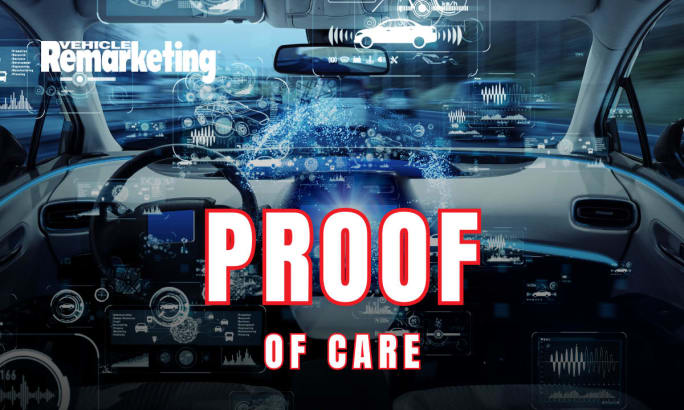
Proof of maintenance and safety driven operation rarely follows a vehicle into the secondary market, leaving well managed fleet units hard to distinguish at resale.
Credit: Vehicle Remarketing
The Fleet Remarketing Industry Council (FRIC) was formed in August 2025 to address this structural gap. Its mission is to bring together fleets, public-sector operators, fleet management companies, and industry suppliers to ensure that investments in safety, maintenance, and technology translate into recoverable value at resale.
FRIC has helped establish a partner ecosystem that allows fleets to route vehicles before downfitting. These partners market vehicles to buyers who value proof of proper maintenance, adherence to OEM requirements, and evidence of a strong safety culture.
In addition, FRIC partners may offer concierge services to buyers, including:
The objective is not to inflate values artificially, but to accurately reflect how a vehicle was operated, maintained, and cared for throughout its lifecycle.
This is not about creating a luxury tier in the used-vehicle market. It is about correcting a long-standing blind spot.
As residual values face pressure from affordability constraints, interest rates, and market volatility, fleets can no longer afford for thousands of dollars in technology-driven value to vanish at remarketing. Data, transparency, and proof of care must become part of the resale equation.
To learn more, attend the Conference of Automotive Remarketing on April 13, 2026, and subscribe to Business Fleet and Vehicle Remarketing content to stay informed as this ecosystem continues to evolve.
Loading data...

Operations
The advantages and attributes of electric vehicles are upending the traditional remarketing cycle, requiring fleet sellers to rely on new factors and approaches detailed below.
Fleet
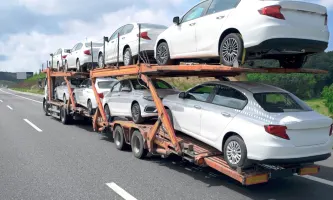
Large and small transport fleets are becoming more competitive as predictive analytics and real-time data inform the logistics decision chain.

Technology
AI is no longer a luxury but the baseline for profitability in 2026. Auto haulers that adopt these tools now will quickly outpace those that use manual workflows or take a wait-and-see approach.
Used Vehicle Values
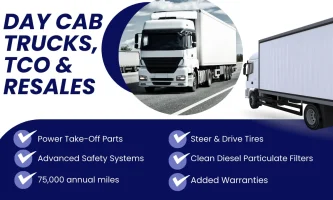
Smart operational and spec'ing decisions can dramatically improve both the total cost of ownership during use and the resale value when it's time to remarket day cabs.

Used Vehicle Values
Fleets invest heavily in vehicle technology, but that value disappears at resale. Here’s how proof of maintenance and safety can carry forward into remarketing.