




June 1, 2026
The Data-Driven Haul: 5 Ways AI is Leveling the Playing Field in Auto Transport
Large and small transport fleets are becoming more competitive as predictive analytics and real-time data inform the logistics decision chain.
Vlad Kadurin, Ship.Cars
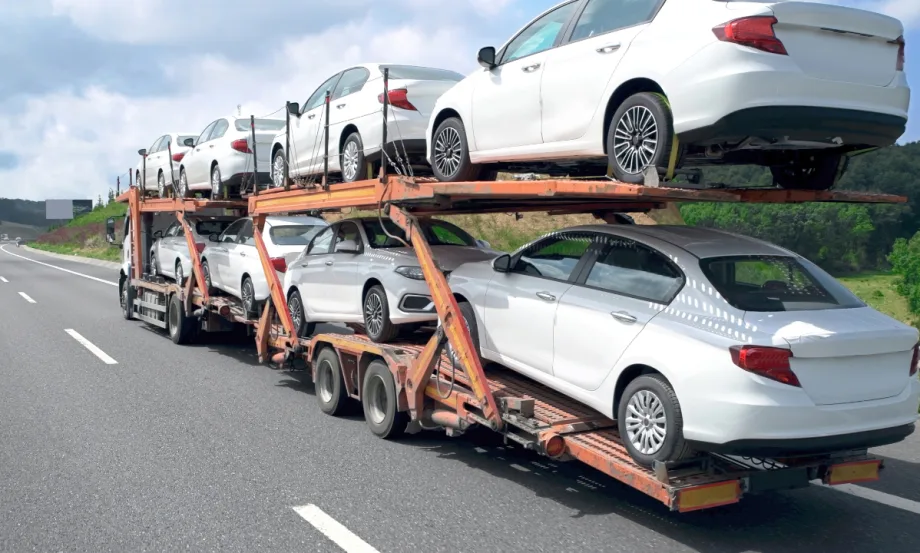
Every day, the competition between a 50-truck carrier and a small four-truck operator, for example, sharpens as AI and predictive analytics proliferate.
Credit:
Getty Images
5 min to read
- Real-time data is increasingly integral in informing logistics decisions.
- AI technologies are helping to level the playing field in the auto transport industry.
*Summarized by AI
Auto hauling has run on relationships, spreadsheets, and instincts in the past: Dispatchers remembering lanes, brokers pricing by feel and experience, carriers guessing capacity.
When everything lined up, it was more due to chance than data or sound reasoning.
AI is now replacing that layer with something measurable, with the change happening faster than expected.
The gap between large carriers and small owner-operator shops is narrowing due to access and data-backed intelligence via transport management system (TMS) software.
In the past, only large carriers could afford such premium technology, which drove huge competitive advantages, but that’s no longer the case. Adoption is more a question of mindset than carrier size and budgets.
Predictive capabilities are available across a variety of TMS platforms that accommodate budgets of all sizes, including for small and mid-sized carrier operations. Even a small owner-operator shop gets the same access to lane forecasting, dynamic pricing, and estimated-time-of-arrival (ETA) models as part of its main TMS.
While large carriers and brokerages still lead with custom models and some proprietary data advantages, their competitive edge has receded.
Every day, the competition between a 50-truck carrier and a small four-truck operator, for example, sharpens as AI and predictive analytics proliferate.
Here are five ways predictive analytics are improving automotive transport:
1) Automating Negotiations with Dynamic Pricing
Like many services, automotive transport is not a set-it-and-forget-it price.
Seasonality, fuel costs, and supply/capacity determine lane rates, which change by week.
Predictive pricing models now calculate competitive rates immediately upon posting, setting a rate-per-mile that adjusts in real time for fuel spikes or seasonal surges.
Without the extra time needed to negotiate rates between carriers and shippers, trucks are booked faster, and potential loads don’t sit idle waiting for a carrier to accept a rate. This eliminates most manual back-and-forth phone calls, since competitive rates adjust in real time to market conditions.
2) Predicting Risk and Preventing Fraud with Defensive Data
The risk of fraud in the automotive shipping industry has skyrocketed in recent years. Some of the most common include double brokering, ghost carriers, and scammers posing as shippers to steal high-value loads.
Once it’s in their hands, the chances of recovery are slim, and once the vehicles reach a port for overseas shipment, it is impossible to recover them. A single claim like this can be catastrophic to a reputation and business, erasing full margins.
Predictive models flag loads and lanes that could result in damage claims or delivery exceptions, even before dispatch. AI scans for behavioral anomalies, such as previously dormant carrier profiles suddenly bidding on high-value loads, or IP addresses that don’t match the business location.
Historical data can also be used to flag specific routes or trailers with higher incidences of damage. This allows dispatchers to intervene immediately and make informed decisions rather than react after the problem arises.
3) Fewer Dead Miles with Accurate Demand Forecasting
Think about the overall expense and drag of every deadhead mile: fuel costs, driver wages, equipment wear and tear, insurance, etc. You might dismiss that as simply the cost of doing business for a carrier, but why not save the time and money through accurate modeling instead of reaction?
Too much of the auto logistics industry has relied on reactive models that respond to trends rather than predict them. Many trends you see in auto transport occur more frequently and are more predictable than you might think.
This is where data-driven decision-making directly affects carrier usage. Knowing in advance where to move vehicles and where carrier capacity will be tight provides advantages to both sides of the supply chain.
For shippers, this foresight enables them to plan transportation needs in advance. Carriers can use this same information to strategically plan and find the right backhauls, rather than chasing any available load just to avoid moving empty.
4) Optimized Routes And Loads
Auto transportation with multiple stops resembles a puzzle. You have 10 vehicles on the trailer, weight distribution, delivery windows, driver hours, etc. When ill planned, the driver loses time at each stop rearranging the load, which eats hours on the road and effective miles.
AI-assisted load bundling and routing calculates the most efficient delivery sequence to minimize the need to reshuffle unloading three cars to reach the one in the middle. This squeezes in just a little bit more revenue per mile, leading to more active time on the road and fewer idle hours shuffling deliveries. On a single load, it might not look like much, but it’s the difference between staying afloat and going under in tough economic times.
5) Reducing Estimated Arrival Times
For decades, the automotive shipping industry has provided estimated time of arrival (ETA) windows that typically span 7-10 business days. That may not seem like much, but a 10-day delivery window represents two weeks of dead time on a dealership’s floorplan.
During that period, the vehicle incurs interest costs and cannot be marketed as sales inventory. Adding to the pain point, these vague delivery windows make it impossible for dealers to accurately schedule reconditioning teams and marketing staff, creating a bottleneck in their time-to-lot process that ultimately delays a vehicle’s resale.
AI models trained on historical lane data, weather, congestion, and driver-specific performance deliver estimated arrival times far more accurate than past industry estimates.
For dealerships, this reduces floor-plan interest costs by getting cars on lots or to auctions faster.
For individual customers buying a car from out of state or shipping a vehicle for a move, this minimizes delivery anxiety and gives them a more accurate expectation for vehicle delivery.
All such improvements enhance visibility along the supply chain, helping carriers, shippers, and brokers deliver higher-quality service and more satisfied customers.
These systems keep getting better. Each load and route adds data that informs future decisions, removes obstacles, and streamlines processes. AI is not replacing managers or drivers; it is reducing the wasted time and effort in their workdays.
Loading data...