



What Happens When Residual Values Meet Real-World Markets
A truck's trade value isn't determined on turn-in day. Learn how market cycles, maintenance, and timing shape the gap between residuals and reality.

A committed trade value may be fixed when a truck is purchased, but the market, equipment condition, and operating environment can change considerably before it returns.
Vehicle Remarketing
- A truck's trade value is influenced by more than just its estimated residual value, with several factors playing a crucial role in determining the final figure.
- Market cycles significantly impact trade values, as fluctuations in demand and supply affect vehicle valuations over time.
- Proper maintenance and strategic timing of the sale can help bridge the gap between expected residuals and the actual market value.
*Summarized by AI
Residual values are supposed to reduce uncertainty, but for fleets, they also create a predictable floor when purchasing new equipment, making it easier to budget replacement cycles and evaluate total cost of ownership. For OEMs and dealers, they help close new truck sales while creating a roadmap for what equipment may eventually return through remarketing channels.
The challenge is that the number agreed upon at the beginning of a truck's life must withstand years of economic swings, changing regulations, evolving equipment specifications, and thousands of operational decisions made after the truck leaves the dealership.
By the time that truck returns four or five years later, the market may bear little resemblance to the one in which the original commitment was made.
That disconnect, often referred to as the trade-in commitment gap, has become an increasingly important conversation throughout the commercial truck industry. While residual values remain an essential tool for structuring new truck purchases, the growing sophistication of fleet remarketing operations and continued market volatility have exposed just how difficult it is to predict future values years in advance.
According to executives with Daimler Truck Remarketing (DTR), which operates the SelecTrucks used-truck brand and retail network, understanding that gap requires looking beyond the trade agreement itself and examining everything that happens throughout the ownership lifecycle.
A Residual Value Is Fixed, but the Market Never Is
A committed trade value is established on a given day, based on the information available at that time. The truck, however, won't return for years.
"The gap develops because a residual value is fixed at a single moment but has to hold up three, four, or five years into the future," said Phillip DeGroat, Director of Used Truck Acquisitions & Operations at Daimler Truck Remarketing. "That number anchors the new-truck deal and gives the fleet a known floor to plan against."
What happens during those intervening years ultimately determines whether that number still reflects reality. Freight demand rises and falls. New truck production accelerates or slows. Equipment specifications evolve. Emissions regulations change. Interest rates fluctuate. Every one of those factors influences used truck values, yet none can be predicted perfectly years in advance.
Because the used truck market remains highly cyclical, DeGroat said the biggest factor is often remarkably simple: "The single biggest determinant of the gap is simply where the truck lands in the cycle when it comes back."
That doesn't mean the market alone determines whether a fleet realizes additional value or reverts to its guaranteed return.
"The fleet's own choices widen or close it," DeGroat said. "When the open market is paying well above the committed value, a sophisticated operator sells the truck itself and keeps the upside, and the commitment is called on mainly when the market has moved the other way."
In other words, guaranteed trade values often function less as a predetermined selling price and more as insurance against an unfavorable market.

Mileage, duty cycle, maintenance practices, and equipment condition all influence whether a returning truck can support the residual value established years earlier.
DTNA | Freightliner
Why the Remarketing Channel Feels the Downside First
That dynamic explains why remarketing organizations frequently absorb the pressure when used truck markets soften.
"The remarketing channel sits at the point in the value chain where committed values are reconciled against real ones, so it is structurally the first place a softening market shows up," said Marc Sutton, Director of Distribution at Daimler Truck Remarketing (DTR), which operates the SelecTrucks used truck brand and retail network.
The pattern has become increasingly apparent over the past several years. During the unusually strong used-truck market that followed the pandemic, many fleets had little reason to exercise their guaranteed return programs. Open-market demand frequently exceeded committed values, allowing fleets to maximize returns by remarketing trucks themselves.
"When values are strong, the advantage flows to whoever can move trucks quickly, which is often the fleets that have built their own retail or wholesale capability," Sutton said. "Committed return options go largely unused."
As market conditions cooled down, the opposite occurred: "When the cycle turns, more of those return commitments are exercised, and channel inventory rises accordingly," Sutton added.
DTR noted that the pattern has recurred across recent market cycles. During the peak of the 2020-2022 market, relatively little equipment flowed back through OEM remarketing channels. As pricing normalized, inventories returning through those programs increased significantly within a relatively short period.
The industry itself has also changed, amplifying the effect. Structural shifts have fundamentally changed how trucks flow through the secondary market and who ultimately carries the financial exposure.
"Fleets have become far more capable of selling their own equipment," Sutton said. "The dealer network has consolidated into larger, better-capitalized organizations that move inventory and risk differently than they did a decade ago."
Supply and Demand Still Rule the Market
While maintenance history, mileage, warranties, and equipment specifications all influence resale values, Sutton shared one factor that still outweighs everything else.
"Of all the variables, the one that most often separates the committed value from the achievable price is the balance of supply and demand at the moment the truck returns, or the number of comparable trucks available measured against freight demand," Sutton said.
Residual values serve as reference points. Actual transactions happen at whatever price buyers are willing to pay that day.
"A committed value is a fixed reference point," Sutton said. "The actual transaction has to happen at the real-world price of, say, a four-year-old sleeper on the day it is in the market, and the distance between those two figures is the gap."
That gap rarely develops because of a single issue, Sutton shared, "as condition, mileage, and regulation tend to converge."
One trend that receives increased attention is the industry's extended ownership cycles. Many fleets have delayed replacement schedules over the past several years, keeping trucks in service longer than originally planned. While extending ownership can improve capital utilization, it also changes the assumptions built into the original residual calculations.
"As fleets extend their ownership cycles, returning units may carry meaningfully higher mileage and age than the original residual assumed," Sutton said. "The coming emissions transition adds a layer of uncertainty to where values settle."
Those additional variables make forecasting future values even more challenging than they were a decade ago.

When used-truck demand is strong, fleets may sell equipment through their own remarketing channels and capture more value than the original trade-in commitment.
DTNA | Freightliner
The Fleet Still Controls More Than You Think
Markets may fluctuate, but not every variable affecting residual value is outside a fleet's control. According to DeGroat, maintenance discipline during first ownership remains one of the strongest predictors of how well a truck performs in the secondary market.
"Maintenance discipline during first ownership is one of the strongest predictors of whether a returning truck still supports its original residual, and it impacts the fleet’s reputation," he said. The contrast between disciplined fleets and those that defer maintenance becomes obvious once trucks reach the used market.
"A fleet that runs an intentional, well-documented preventive-maintenance program, accepting some up-front downtime and cost, tends to return trucks that perform well and command respect in the secondary market," DeGroat noted. "A fleet that lets its program lapse can watch its equipment slide from a premium reputation to a discounted one."
Buyers notice both cosmetic condition and mechanical health, but one component deserves particular attention.
"The specific value drivers are consistent, such as cosmetic issues including body condition and corrosion at one end, and functional issues including the after-treatment system at the other. The diesel particulate filter is the one to watch," DeGroat said. "An unmaintained DPF, measured by ash count, can lead to significant repair costs and potentially catastrophic engine damage."
Beyond avoiding repairs, maintenance records also provide confidence to the next owner, helping demonstrate that the equipment has been properly cared for throughout its service life. Warranty coverage can further strengthen resale value.
That combination of preventive maintenance, documented service history, and remaining warranty coverage can significantly narrow the gap between an original committed value and what the truck ultimately commands when it returns to market.
Part 2 continues with how preventive maintenance influences long-term value, the economics dealers face as inventory flows shift, rising reconditioning costs, the growing sophistication of fleet remarketing strategies, and why the future lies in shared remarketing risk rather than asking any one party to absorb it alone.
Quick Answers
A truck's trade value is influenced by market cycles, which determine demand and supply conditions, the vehicle's maintenance history, and the timing of the sale relative to market conditions.
*Summarized by AI
More Used Vehicle Values
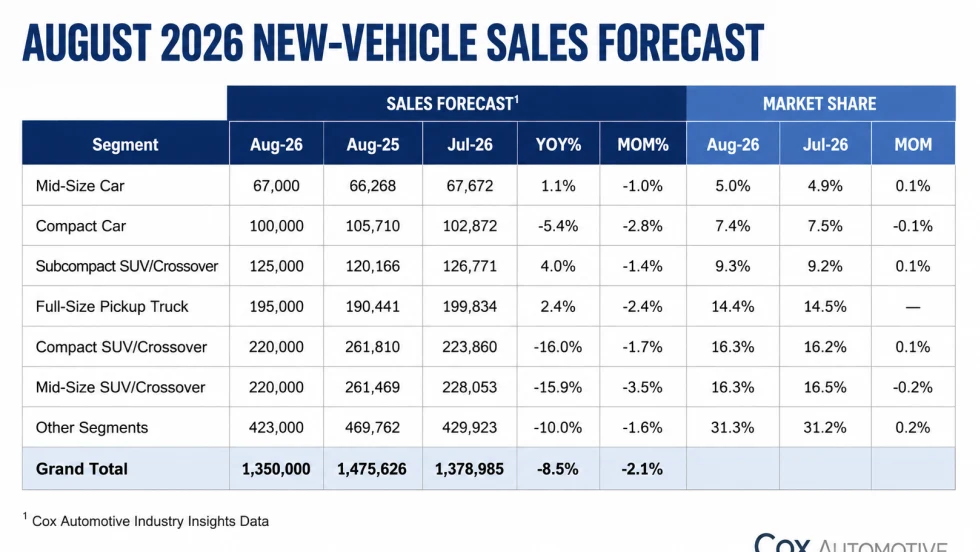
August New-Vehicle Sales Pace Forecast to Hold Above 16 Million
Despite an expected 8.5% year-over-year decline in August volume, Cox Automotive forecasts a 16.3 million SAAR, with full-size pickups outperforming several major crossover segments.
Read More →
Trade Strategy Now Starts Long Before Turn-In
The strongest trade values aren't built at turn-in. Discover how maintenance, lifecycle planning, and shared risk protect truck resale value.
Read More →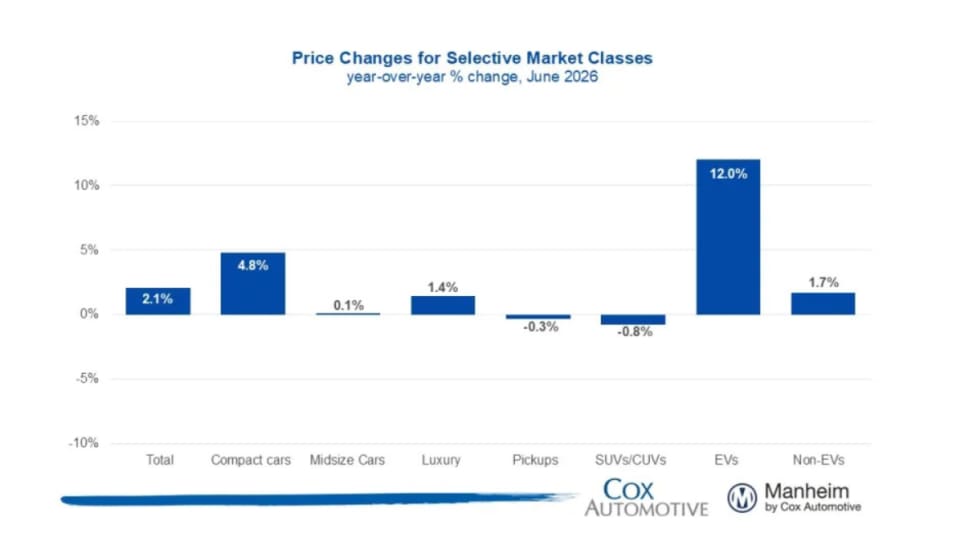
Manheim Index Shows Used-Vehicle Wholesale Prices Up 2.1% in June
The market is seeing stronger appreciation in older used vehicles this year, and the most affordable segments have been among the year’s best performers.
Read More →
Stop Remarketing Electric Vehicles Like Gas Cars
The advantages and attributes of electric vehicles are upending the traditional remarketing cycle, requiring fleet sellers to rely on new factors and approaches detailed below.
Read More →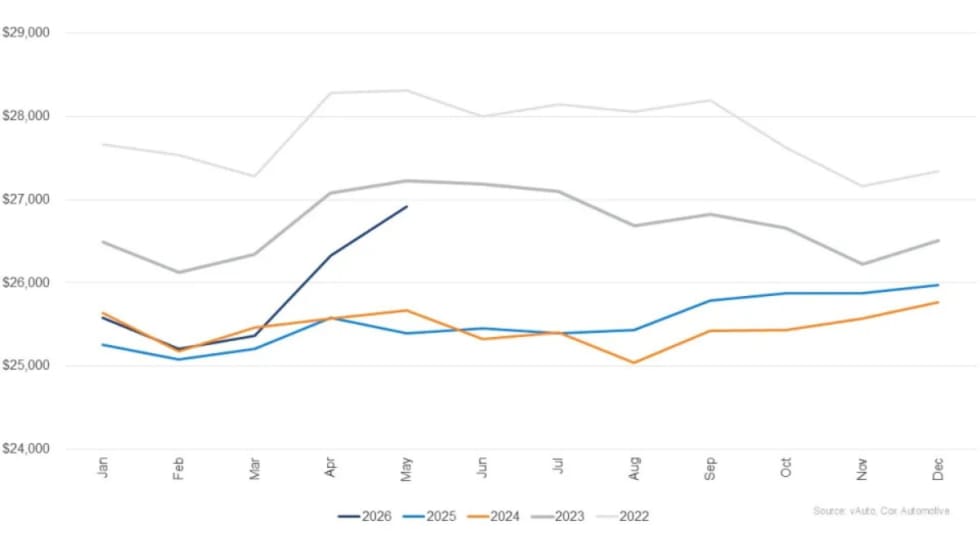
Used Vehicle Prices Climb Higher As Sales Pace Slows
The higher prices at used retail reflect strong wholesale values earlier in the spring, particularly for older, more affordable vehicles.
Read More →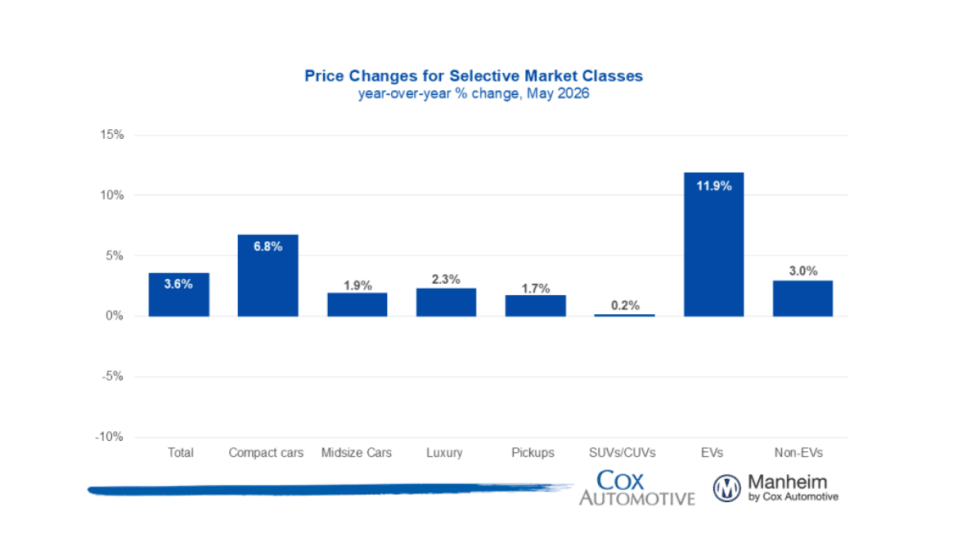
Wholesale Used Vehicle Market Sustains Moderate Rise In Values, Prices
Trends continue to normalize after a strong start to the year, as consumers contend with higher gas prices in the coming summer months.
Read More →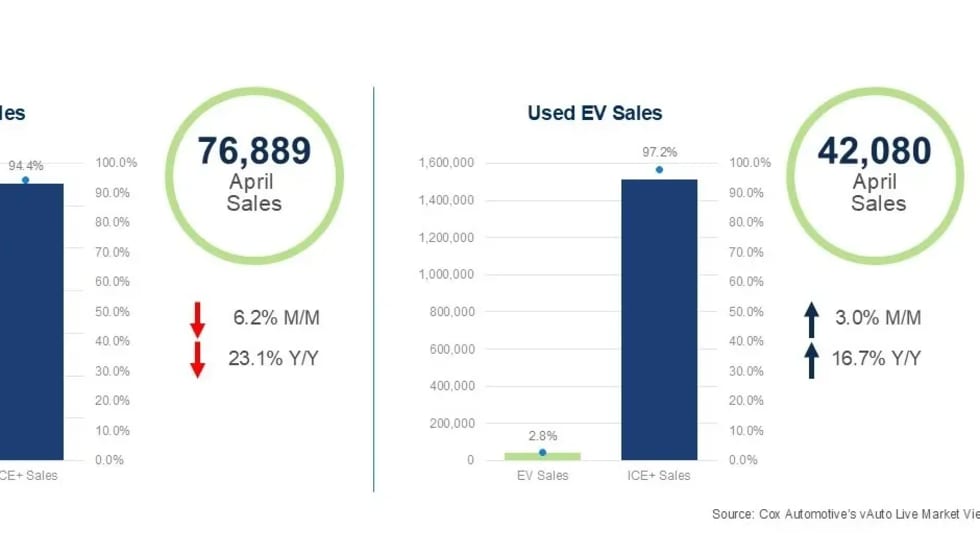
Used EV Sales Grow In April
While EV sales declined, used EV sales grew, as tighter inventory and rising prices reflected a more normalized pace for the EV market.
Read More →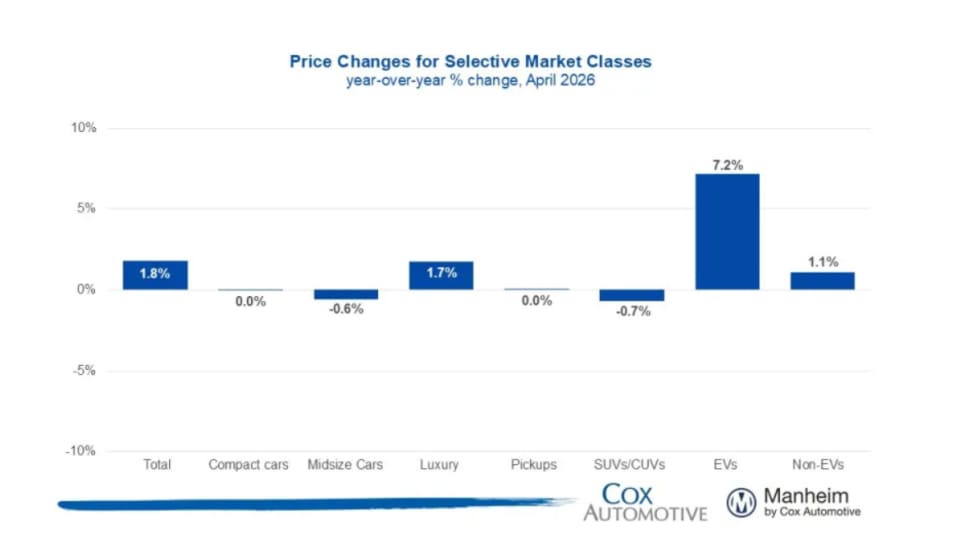
Wholesale Used Vehicle Prices Slightly Up In April
The Iranian conflict and rising gas prices inject much uncertainty into the future wholesale used vehicle markets, as higher gas prices soak up spendable income from vehicle buyers.
Read More →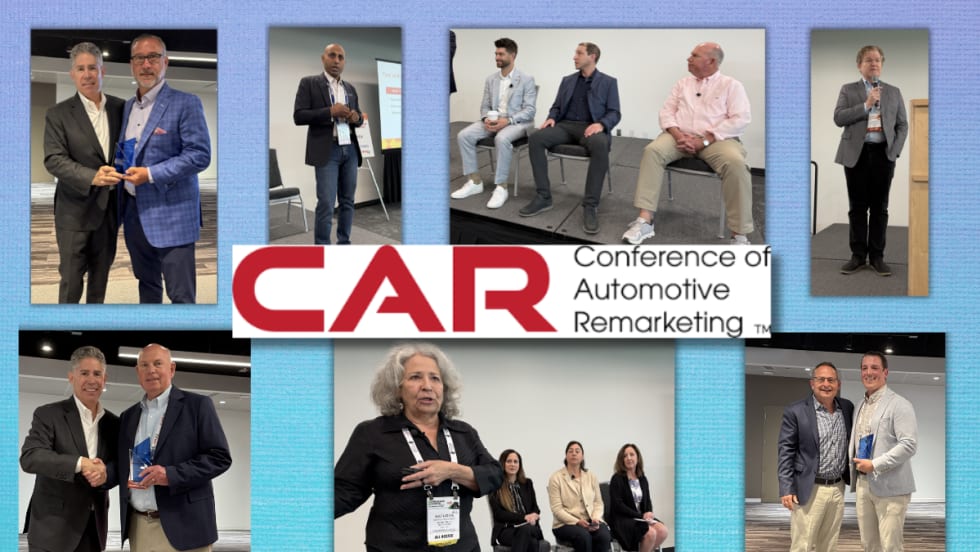
CAR 2026 Recap Part 2: Closing the Gap Between Data & Remarketing Value
The second half of CAR 2026 examined how fleets can translate lifecycle strategy, vehicle data, and market shifts into higher real-world results.
Read More →
CAR2026 in Two Words: Velocity, Value (Part 1)
The 2026 Conference of Automotive Remarketing convened with a mandate to involve a new constituency — fleet managers — and an updated mission to demonstrate unrealized value in de-fleeted vehicles.
Read More →