



Used EV Sales Grow In April
While EV sales declined, used EV sales grew, as tighter inventory and rising prices reflected a more normalized pace for the EV market.

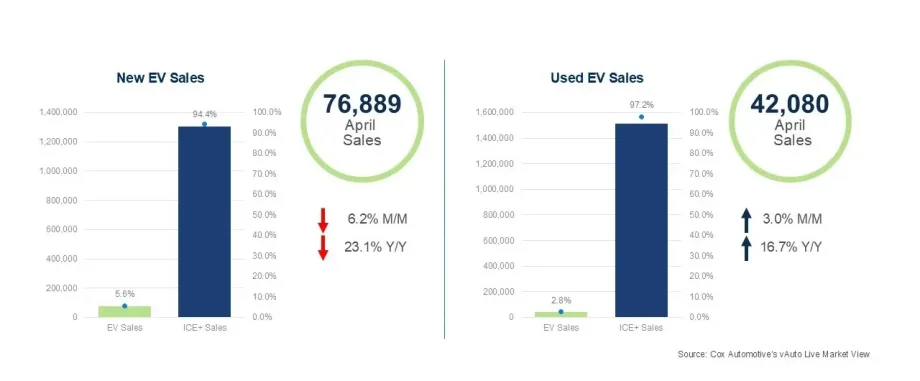
April new EV sales slowed while the used EV market continued gaining momentum, highlighting a shift toward affordability and growing secondary-market inventory.
Cox Automotive
April reflected a more measured pace for the EV market following March’s rebound, according to Cox Automotive.
New EV sales declined year over year and month over month, while used EV sales continued to grow as inventory availability improved and more off-lease vehicles entered the market. Prices increased across both segments, while days’ supply tightened for new and used EVs.
Sales
New EV Sales
New EV sales totaled an estimated 76,889 units in April, down 23.1% year over year and 6.2% month over month. EVs accounted for 5.6% of total new-vehicle sales.
Tesla remained the market leader with 37,550 units sold, followed by Chevrolet, Hyundai, Ford, and Cadillac. Tesla’s EV market share declined slightly to 48.8%.
Most automakers posted month-over-month declines, reflecting broader softness in the new-vehicle market. Ford was a notable exception, with EV sales increasing 23.9% from March.
Used EV Sales
Used EV sales reached 42,080 units in April, up 16.7% year over year and 3% month over month, pushing used EV market share to a record 2.8%.
Tesla led the used EV market with 16,174 units sold through non-Tesla dealerships, followed by Hyundai, Chevrolet, Ford, and BMW.
Cox Automotive said used EV sales growth continued to be supported by improving inventory availability and a growing number of off-lease vehicles entering the secondary market.
Prices
New EV Average Transaction Price
The average transaction price for a new EV in April was $55,211, up 1.4% month over month but down 4.9% year over year.
Incentives averaged $7,640, representing 13.8% of ATP.
Cox Automotive said the monthly ATP increase reflected stronger sales of higher-priced EV models and lower sales volumes among lower-priced brands such as Chevrolet and Toyota. The EV premium over ICE+ vehicles widened modestly to about $6,214 from roughly $5,800 in March.
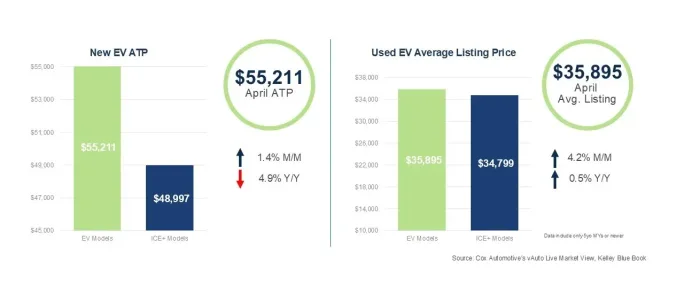
EV prices moved higher in April as tighter inventory and stronger demand for higher-priced models pushed up both new transaction prices and used listing prices.
Cox Automotive
Used EV Listing Price
The average listing price for a used EV was $35,895 in April, up 4.2% month over month and 0.5% year over year. Cox Automotive said it was the first positive year-over-year pricing increase since July 2025.
The increase was broad-based, with 29 brands posting higher listing prices, including Tesla, Chevrolet, Hyundai, and Ford.
The used EV price premium over ICE+ vehicles widened slightly to $1,096.
Supply
New EV Days’ Supply
New EV days’ supply declined to 79 in April following a modest upward revision to March. Inventory remained more than 20% below year-earlier levels and near the lowest readings recorded so far in 2026.
Toyota, Hyundai, Mercedes-Benz, and Subaru maintained relatively lean inventory positions, while Volkswagen, Nissan, and GMC continued to carry elevated inventory levels.
Used EV Days’ Supply
Used EV days’ supply fell to 32 in April, down modestly month over month and 31.8% below year-earlier levels.
Used EV inventory remained tighter than the broader used-vehicle market for a second consecutive month, reflecting faster inventory turnover.
Chevrolet and Nissan posted some of the largest declines in used EV days’ supply, while Tesla, Toyota, and Rivian remained relatively lean at about 28 to 29 days’ supply.
Outlook
Cox Automotive said near-term volatility is likely to continue for new EVs as demand responds to broader new-vehicle market conditions, pricing strategies, inventory levels, and fuel prices.
The company said the used EV market remains comparatively well positioned due to improving inventory availability, expanding model-year coverage, and faster inventory turnover. Cox Automotive expects the used EV segment to remain a growth area through the remainder of the year.
Originally posted on Charged Fleet
More Used Vehicle Values

Ford Pro Launches Certified Pre-Owned Program for Commercial Vehicles
Ford Pro Advantage will offer certified pre-owned Class 1-7 commercial vehicles through more than 700 Ford Pro Commercial Vehicle Centers.
Read More →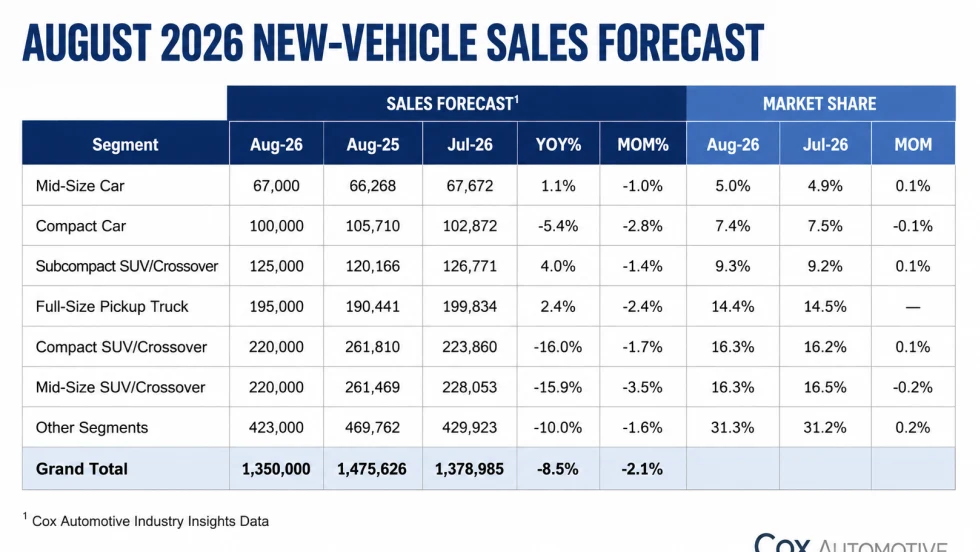
August New-Vehicle Sales Pace Forecast to Hold Above 16 Million
Despite an expected 8.5% year-over-year decline in August volume, Cox Automotive forecasts a 16.3 million SAAR, with full-size pickups outperforming several major crossover segments.
Read More →
Trade Strategy Now Starts Long Before Turn-In
The strongest trade values aren't built at turn-in. Discover how maintenance, lifecycle planning, and shared risk protect truck resale value.
Read More →
What Happens When Residual Values Meet Real-World Markets
A truck's trade value isn't determined on turn-in day. Learn how market cycles, maintenance, and timing shape the gap between residuals and reality.
Read More →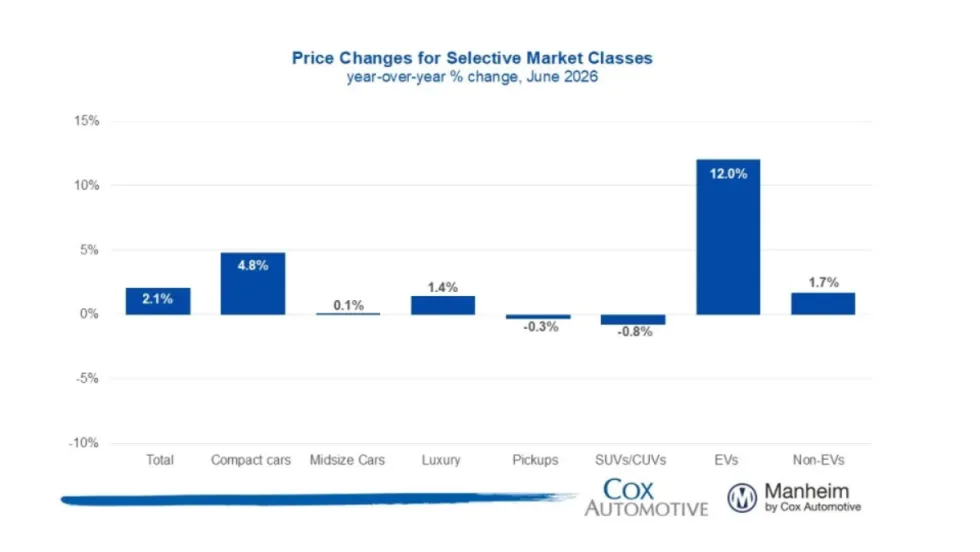
Manheim Index Shows Used-Vehicle Wholesale Prices Up 2.1% in June
The market is seeing stronger appreciation in older used vehicles this year, and the most affordable segments have been among the year’s best performers.
Read More →
Stop Remarketing Electric Vehicles Like Gas Cars
The advantages and attributes of electric vehicles are upending the traditional remarketing cycle, requiring fleet sellers to rely on new factors and approaches detailed below.
Read More →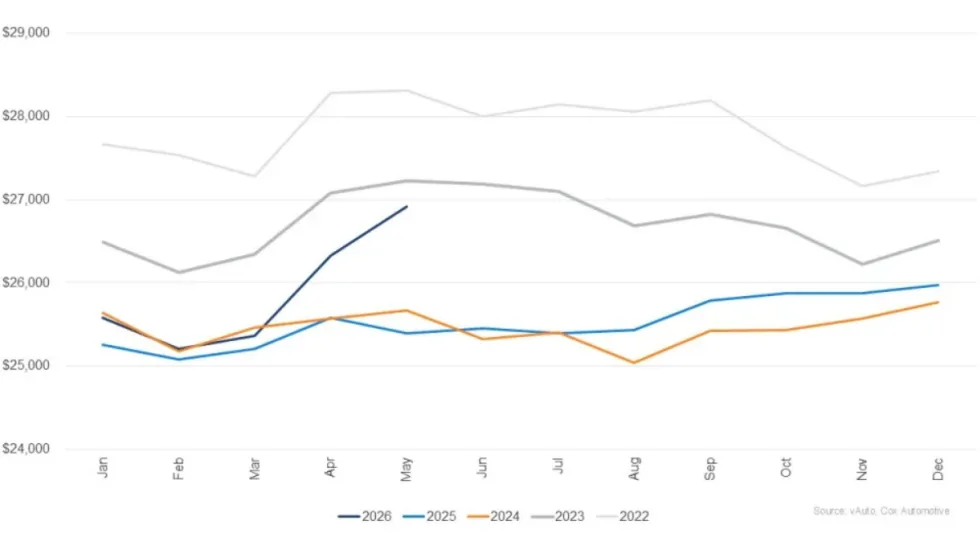
Used Vehicle Prices Climb Higher As Sales Pace Slows
The higher prices at used retail reflect strong wholesale values earlier in the spring, particularly for older, more affordable vehicles.
Read More →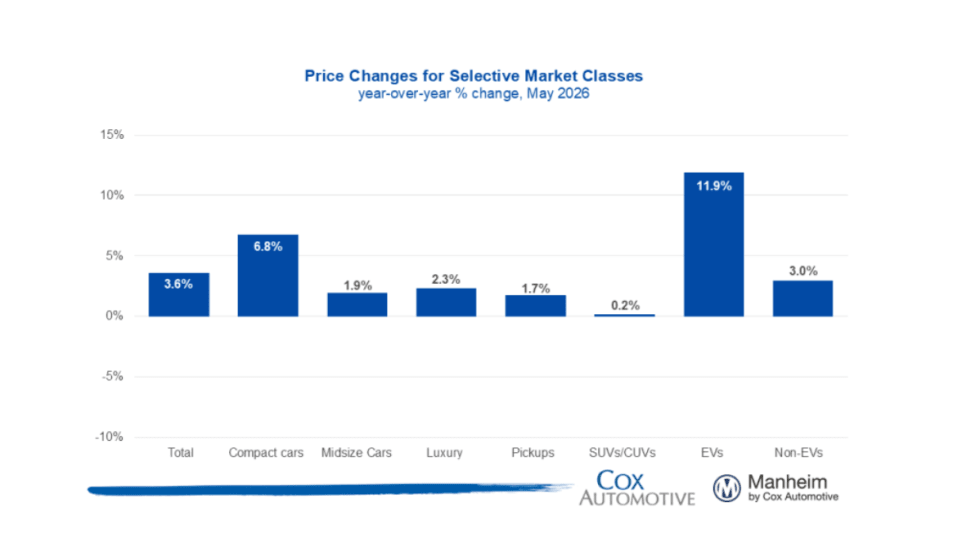
Wholesale Used Vehicle Market Sustains Moderate Rise In Values, Prices
Trends continue to normalize after a strong start to the year, as consumers contend with higher gas prices in the coming summer months.
Read More →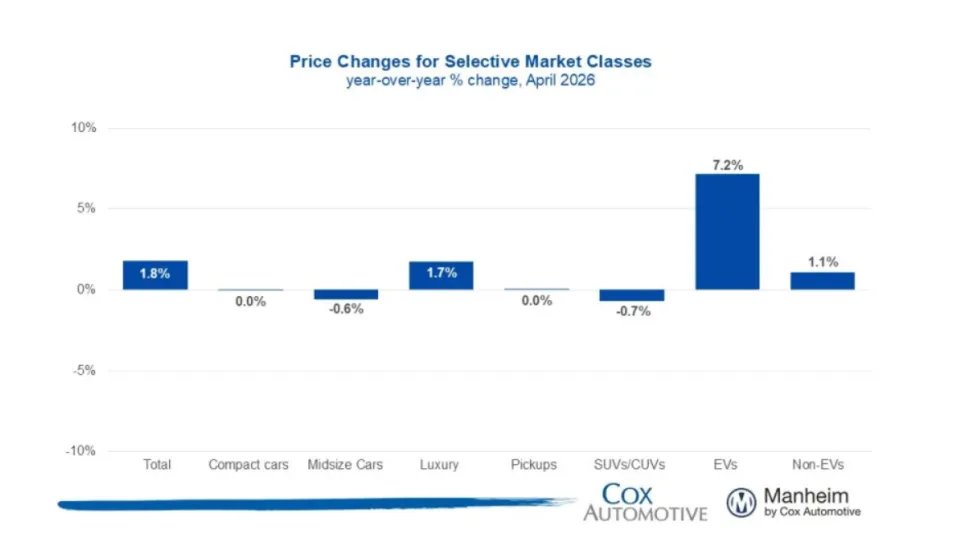
Wholesale Used Vehicle Prices Slightly Up In April
The Iranian conflict and rising gas prices inject much uncertainty into the future wholesale used vehicle markets, as higher gas prices soak up spendable income from vehicle buyers.
Read More →
CAR 2026 Recap Part 2: Closing the Gap Between Data & Remarketing Value
The second half of CAR 2026 examined how fleets can translate lifecycle strategy, vehicle data, and market shifts into higher real-world results.
Read More →