




Related News: Wholesale Used Vehicle Prices Rose in April
Tariffs Drive Drop in Vehicle Inventory, Spike in Prices
Data indicates tariffs may raise costs for some vehicle models, but automakers remain uncertain how the added expense could inflate consumer pricing.
May 16, 2025
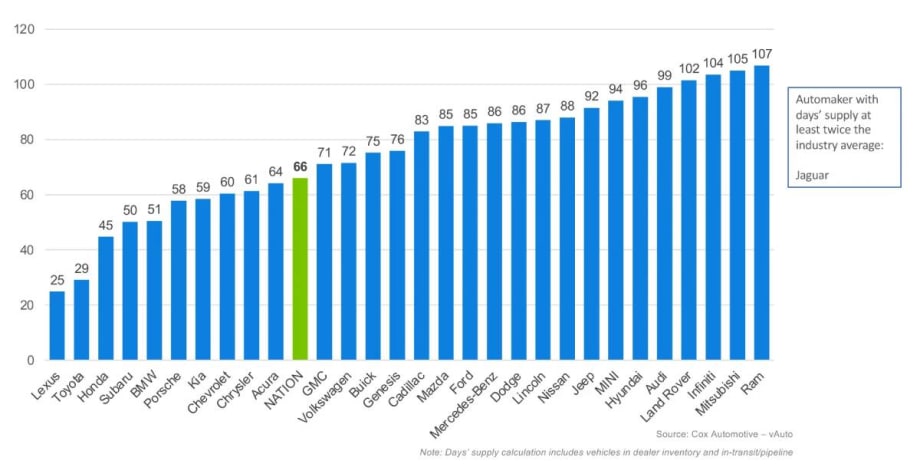
At the start of May, the new-vehicle days' supply was 66, down 16 days from last year and six days from last month.
Graphic: Cox Automotive
3 min to read
Even as the whipsaw of changing tariff policy dominated the headlines, the dynamics of the April new-vehicle market unfolded as expected.
New-vehicle sales saw momentum from late March and into April, before tapering off. New-vehicle inventory declined further, by 7.4% from March, according to the Cox Automotive analysis of vAuto Live Market View data released May 16.
May opened with a total supply of new vehicles on dealer lots across the U.S. at 2.49 million units, down 7.4% from the 2.69 million units at the start of April and down 10.5% from a year ago. Seasonal patterns persist, as it is not unusual to see sales rise during the traditional “spring bounce.”
Inventory, however, is not being replenished at the same rate. Some automakers are likely holding the line on deliveries and production, as everyone struggles with the uncertainty surrounding the Trump Administration’s tariff policies.
Cox Automotive’s vAuto Live Market View days’ supply is based on the estimated retail sales pace for the most recent 30-day period. At the start of May, the new-vehicle days' supply was 66, down 16 days from last year and six days from last month. As automakers prepare to bring 2026 model-year vehicles to showrooms and introduce post-tariff-announcement pricing, inventory is expected to rise, but higher prices may further slow the pace of sales.
The 30-day sales pace peaked in mid-April but ended the month higher by less than 1%, as the market cooled notably in the final two weeks. The real urgency was in late March and early April. Still, that push faded as consumer sentiment stabilized after the rhythm of trade negotiation announcements became normalized, and consumers shifted to a more measured car-buying approach. The market may return to a more normal balance of “wait and see” and “buy now” attitudes. Year over year, the sales pace was up 10.8% at the end of April.
New-Vehicle Listing Prices Increase in April
This is a supply-side story, and there was clearly more demand and traffic in the showroom during March and April, selling down available vehicles. The increase in average listing price shows market-level dynamics had more of an impact on pricing than a change in invoice or manufacturer’s suggested retail price.
At the end of April, the average new vehicle listing price was $48,656, up $774 (1.6%) from the revised $47,882 at the start of the month and up $1,318 (2.8%) from a year earlier. However, the increases were not across the board, as some brands like BMW, Buick, Mitsubishi, and Dodge saw declines month over month. This reinforces the uneven distribution of impacts that the tariff uncertainty creates in the market. Among volume brands, RAM, Lincoln, and Cadillac saw the largest month-over-month increases in listing prices.
As reported earlier, according to Kelley Blue Book, a new vehicle's average transaction price (ATP) was $48,699 in April, up 2.5% month over month and up 1.1% year over year. New-vehicle sales incentives declined to 6.7% of ATP in April, down from 7% in March.
What to Expect in May and Beyond
Consumers are questioning what it means to be “made in America” and whether the preferred model or segment is more significant. Data indicates tariffs may raise costs for some vehicle models, but automakers remain uncertain how the added expense could inflate consumer pricing.
Ford is among the few brands that have announced higher pricing for specific vehicles made outside the U.S., while other brands develop their pricing strategies and promise to hold the line on current model-year products. This period presents a market share challenge; despite the potential shift towards a seller’s market, thorough consumer research can lead to unexpected purchasing decisions.
Originally posted on Automotive Fleet
More Operations

CAS Automotive Launches Remarketing Service for Damaged, Surplus Equipment
Damaged Equipment expands CAS Automotive’s vehicle remarketing model to commercial equipment, targeting fleet operators, insurers, equipment dealers, and rental companies.
Read More →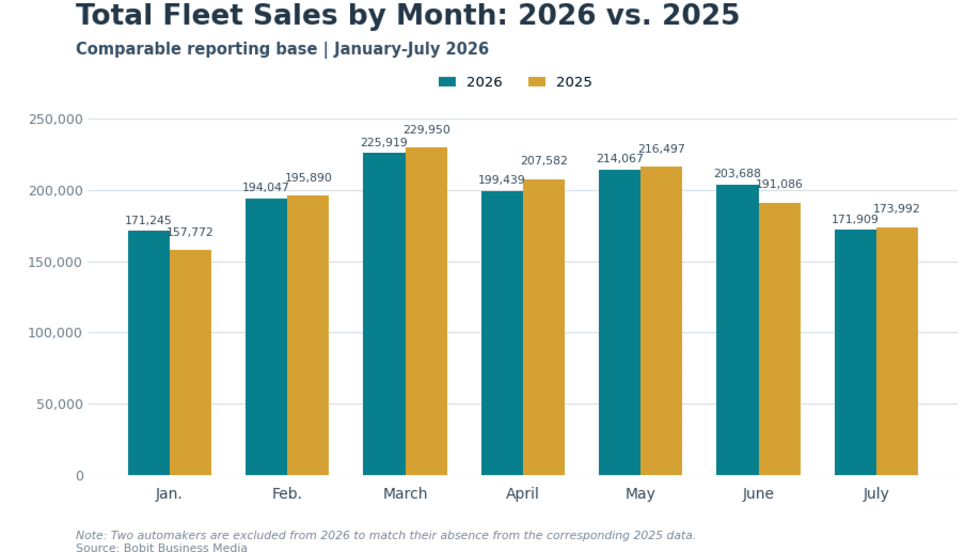
Fleet Sales Hold Steady as Commercial Gains Offset Rental Decline
Commercial and government fleet sales increased through July 2026, offsetting most of the decline in rental volume and leaving combined comparable fleet sales 0.5% above the same period last year.
Read More →
Personnel Update: BrickHouse GPS, PRO-VISION, Auto Driveaway, and Proaction
Check out the latest must-know fleet personnel updates from the last couple of months.
Read More →
What Comes Next for Auto Driveaway?
A new Auto Driveaway feature called Arrive provides recipients with live location updates and ETAs during the final hour of a vehicle move, while fleet customers continue to have end-to-end shipment visibility through the company's customer portal.
Read More →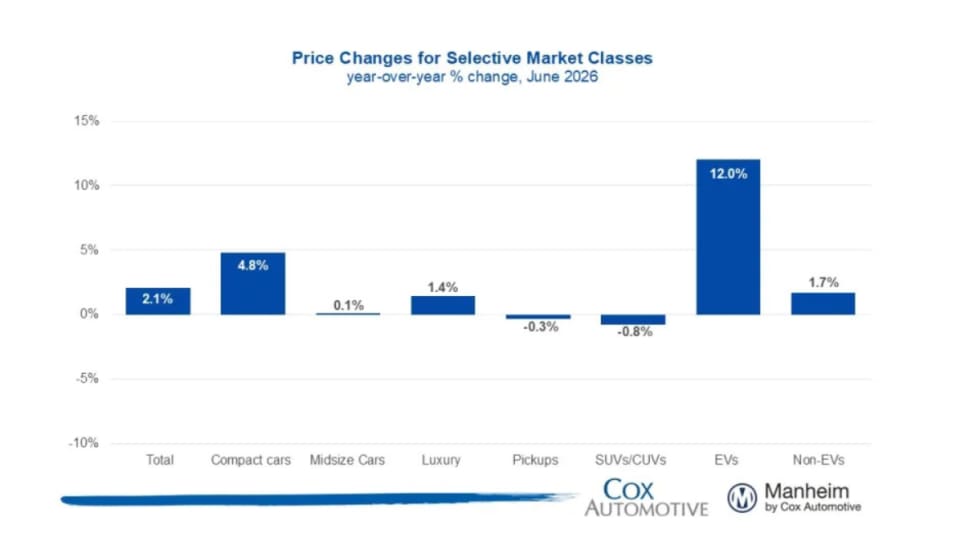
Manheim Index Shows Used-Vehicle Wholesale Prices Up 2.1% in June
The market is seeing stronger appreciation in older used vehicles this year, and the most affordable segments have been among the year’s best performers.
Read More →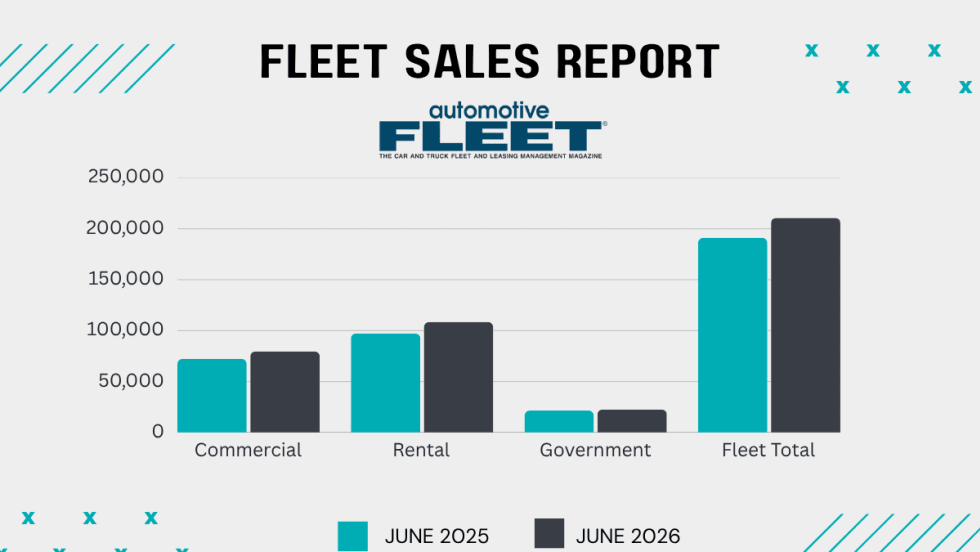
Commercial Fleet Sales Contribute To June, YTD Gains
The fleet sector has boosted its vehicle purchases at a reliable pace in the first half of this year compared with 1H 2025.
Read More →
Stop Remarketing Electric Vehicles Like Gas Cars
The advantages and attributes of electric vehicles are upending the traditional remarketing cycle, requiring fleet sellers to rely on new factors and approaches detailed below.
Read More →
AP Fleet Management Expands Remarketing Program for Commercial Work Trucks
AP Fleet Management expanded its commercial vehicle remarketing program with dedicated resale services and an online marketplace for used work trucks.
Read More →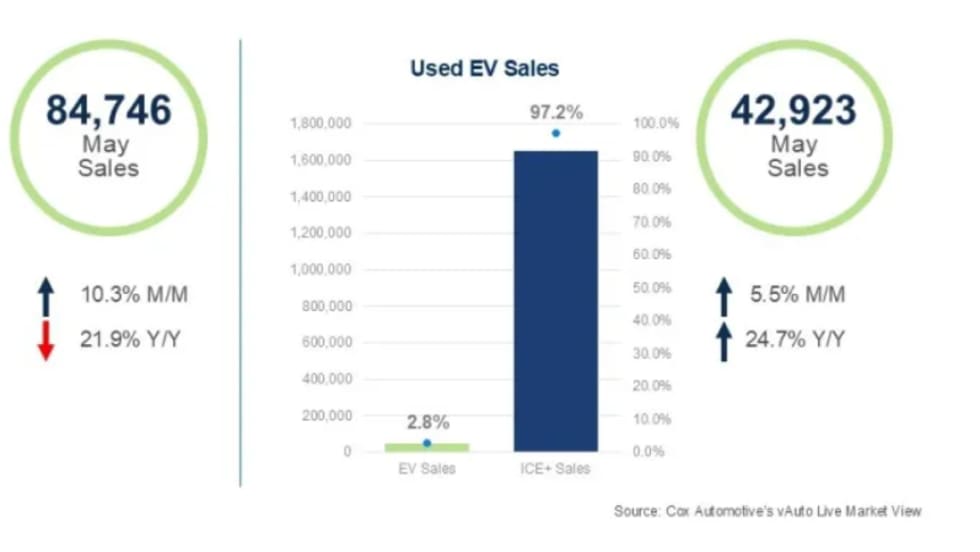
Used EVs Strengthen Overall Electric Vehicle Market
The latest sales data point to several reasons for the divergent trends in new and used EVs that can factor into fleet cycling decisions.
Read More →
The Data-Driven Haul: 5 Ways AI is Leveling the Playing Field in Auto Transport
Large and small transport fleets are becoming more competitive as predictive analytics and real-time data inform the logistics decision chain.
Read More →