




Related: TCO Champs: Crossovers or Sedans?
How to Minimize Vehicle Depreciation Costs with Data
Depreciation can account for a large portion of a vehicle’s lifecycle costs. While there is no escaping from the fact that vehicles are depreciating assets, there are ways to control and minimize the depreciation costs you incur.
March 12, 2018
7 min to read

Photo courtesy of Getty Images.
It’s no secret to anyone that vehicles are depreciating assets. Based on certain factors, some vehicles may depreciate at a slower or faster rate than others, but ultimately every mile that any vehicle drives is lowering its value, little by little.
For fleet managers, vehicle depreciation may be one — if not the — biggest cost in managing their fleets. Fortunately, there are methods and strategies that fleet managers can employ in order to minimize and mitigate these depreciation costs.
Leveraging available depreciation data, instituting a strategy that alternates vehicle use to control the amount of miles put on certain cars, choosing the right trim during the vehicle selection process, and remarketing at the right time can all yield positive results when it comes to lowering depreciation costs for a fleet.
“My advice to fleets looking to minimize depreciation costs would be to utilize data to make their decisions, for past, present, and future expected trends. Once they know what type of vehicles they want, to really understand which vehicles and which models they should acquire. They’re then better armed with understanding what their depreciation could be and what their negotiation strategy could be as well,” said Anil Goyal, executive vice president, operations for Black Book.
Considering Vehicle Depreciation Data
One of the most increasingly valuable resources in today’s world is data. Companies in all industries — the automotive field included — are vying to gather as much data as possible. Fleet managers should be no strangers to this, and should also seek to arm themselves with as much data as possible when making decisions.
Data such as current and projected depreciation rates for vehicles, and what vehicles are seeing the most demand in a given market can provide vital aid during the vehicle selection process.
It may be easy to look at two or three vehicles and opt for the vehicle with the lowest capitalized cost. However, fleet managers should look past the cap cost and look at the whole picture, Goyal added.
A fleet looking to procure mid-size sedans for their fleet, for example, might be better off selecting compact crossovers instead. Their cap costs are similar; however, a fleet manager with his or her eye on depreciation data would see that the rate at which each vehicle is currently depreciating is much different.
Through 2017, mid-size sedans depreciated 17.5%. Meanwhile, compact crossovers depreciated 12%. With gas prices continuing to stay at low levels, and compact crossovers providing fuel efficiency comparable to mid-size sedans, while providing more utility, the forecast is that people will continue to flock toward compact crossovers.
A fleet manager looking to choose between these two segments today, and remarket three to four years from now would be wiser to choose a compact crossover, given the available data.
“We get data from pretty much every FMC out there and we’ve been finding that more and more fleets have been moving toward small crossovers, so there is a shift versus sedan heavy to be more in crossovers,” Goyal said.
He does clarify, however, that fleets shouldn’t shift toward any vehicle segment to follow trends, fleets should choose the vehicle that will best perform that fleet’s task; data should just be used to choose the best type of vehicle in that segment, or to find that a similar segment may be able to perform that same task while holding on to its value better.
Choosing the Best Time and Place for Resale
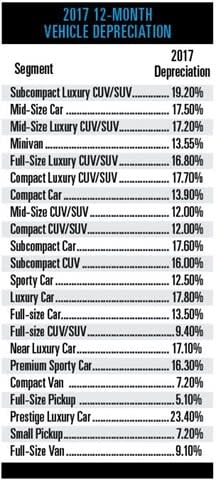
During the remarketing process there are two factors that can have a significant impact on a vehicle resale value: location and time of year.
“Plan your remarketing for when a vehicle segment is strong … look at the data and understand what is a seasonal lift for a vehicle, and plan your lease to end at that time for that segment,” Goyal said.
From a seasonality standpoint, pickup trucks perform well in the summer time, Goyal noted. Compact and mid-size cars perform well in the spring. Luxury vehicles — for companies with executive fleets — don’t really have a strong seasonality pattern. In fact, luxury vehicles have not been performing well in recent years, due to non-luxury brands, offering many amenities that used to be exclusive to luxury vehicles in the higher-end trims of their vehicles.
From a geographic standpoint, four-wheel-drive vehicles perform better in the fall and winter in the northern regions of the U.S., where snow is more prevalent. These types of vehicles may hold their values better in these regions compared to somewhere like California or Florida, where the sunny weather doesn’t require cars to have four-wheel drive.
Similarly, sedans may perform better in these warmer states for the same fact.
“If you have a sporty car and a convertible and it’s coming up for sale in winter, you ship it out to Florida. Remarketers are very much aware of regional demand. If you were to sell the wrong vehicle in the wrong place, you’re not going to get the value. You really have to know which vehicles are in demand and where,” Goyal said.
Additionally, remarketers shouldn’t be afraid to incur some shipping costs to ensure vehicles get sold in the right region for optimal resale value. Incurring $500 in shipping is a good idea when the return is going to be $800.
Vehicle Trim and Mileage
The lowest trim a vehicle has available will provide the lowest cap cost, however, it’ll also often provide the lowest return, given the fact that this is often not the trim that will have the largest retail demand.
Fleet managers can use data to identify what vehicle trims will perform better in any given market. Data can, and should, be used to identify what trims are seeing the highest retail demand, and then use that information to find a balance between what trims are providing the best returns with which will provide an acceptable cap cost. Typically, Black Book finds that a vehicle’s middle trim will be the sweet spot in providing the best cap cost to resale return ratio.
Along with vehicle trim, the amount of miles that a fleet puts on a vehicle will also have an effect on deprecation. Additionally, newer cars have higher cent per mile depreciation than older cars. Given this information, it may help a fleet’s vehicle depreciation costs if it employed a strategy to alternate the use of vehicles so that more miles were put on the older cars than on the newer cars, Goyal noted.
“Maybe there is a strategy in managing a fleet where vehicles are put in a rotation in a way that if a vehicle was acquired at a higher mileage, then you would put more miles on that vehicle versus a newer vehicle where its more expensive for every mile that you drive. It may be a consideration depending on how that fits the needs of the company,” Goyal said.
2018 Depreciation Trends
The industry came off of a year of relatively low depreciation in 2017. Overall depreciation through 2017 was 13.2%, compared to 17.3% in 2016.
This decline was primarily due to the hurricanes that hit Florida and Texas. The destruction of nearly 1 million vehicles caused a surge of activity at auction as people began to replace their vehicles in the months that followed the hurricanes. Since so many people were buying used vehicles, vehicles at auction held their value better than they typically would in a normal year.
Looking ahead, Black Book is forecasting that overall vehicle depreciation will be 17% in 2018, more in line with what was seen in 2016.
Advice that Goyal has for fleets wanting to minimize depreciation costs in 2018 would be to acquire vehicles that best meet their needs, whether that’s a small car, pickup, or SUV. Once that segment is identified, however, fleets needs to use any available data to thoroughly understand the depreciation patterns for individual vehicles in those segments.
“What strategies those manufacturers are employing in those models that forecast out what their retention may be in the coming years and take that into account in your acquisition strategies. Plan for depreciation with that information,” Goyal said.
Originally posted on Automotive Fleet
Subscribe to Our Newsletter
More Used Vehicle Values

Trade Strategy Now Starts Long Before Turn-In
The strongest trade values aren't built at turn-in. Discover how maintenance, lifecycle planning, and shared risk protect truck resale value.
Read More →
What Happens When Residual Values Meet Real-World Markets
A truck's trade value isn't determined on turn-in day. Learn how market cycles, maintenance, and timing shape the gap between residuals and reality.
Read More →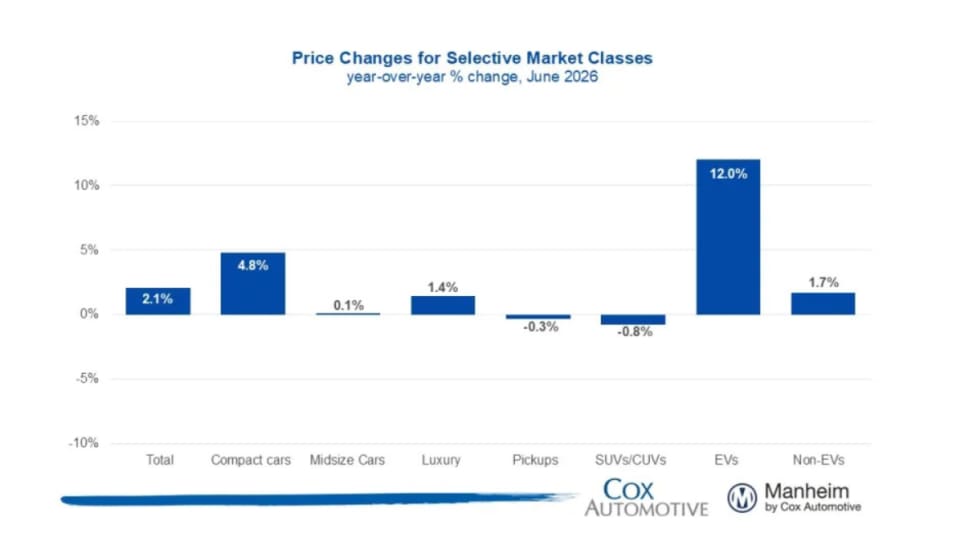
Manheim Index Shows Used-Vehicle Wholesale Prices Up 2.1% in June
The market is seeing stronger appreciation in older used vehicles this year, and the most affordable segments have been among the year’s best performers.
Read More →
Stop Remarketing Electric Vehicles Like Gas Cars
The advantages and attributes of electric vehicles are upending the traditional remarketing cycle, requiring fleet sellers to rely on new factors and approaches detailed below.
Read More →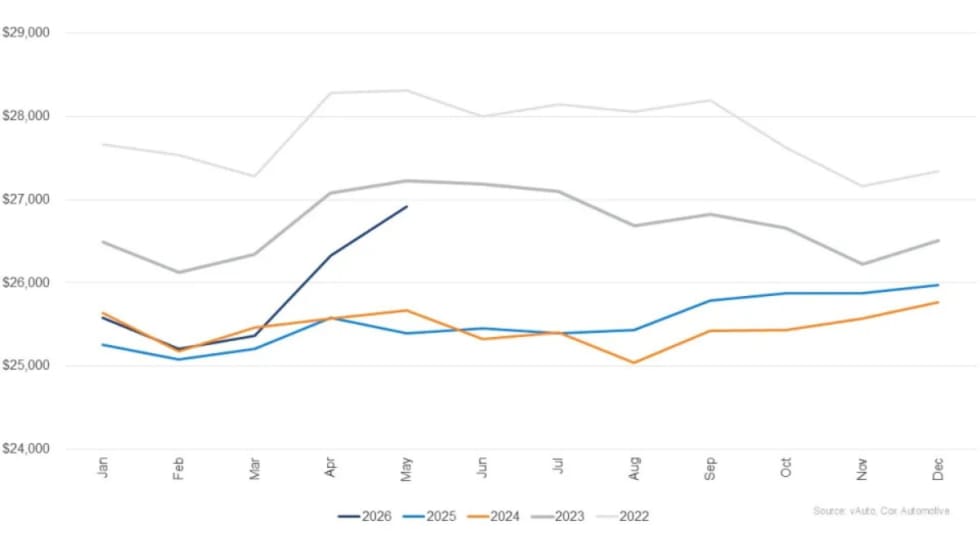
Used Vehicle Prices Climb Higher As Sales Pace Slows
The higher prices at used retail reflect strong wholesale values earlier in the spring, particularly for older, more affordable vehicles.
Read More →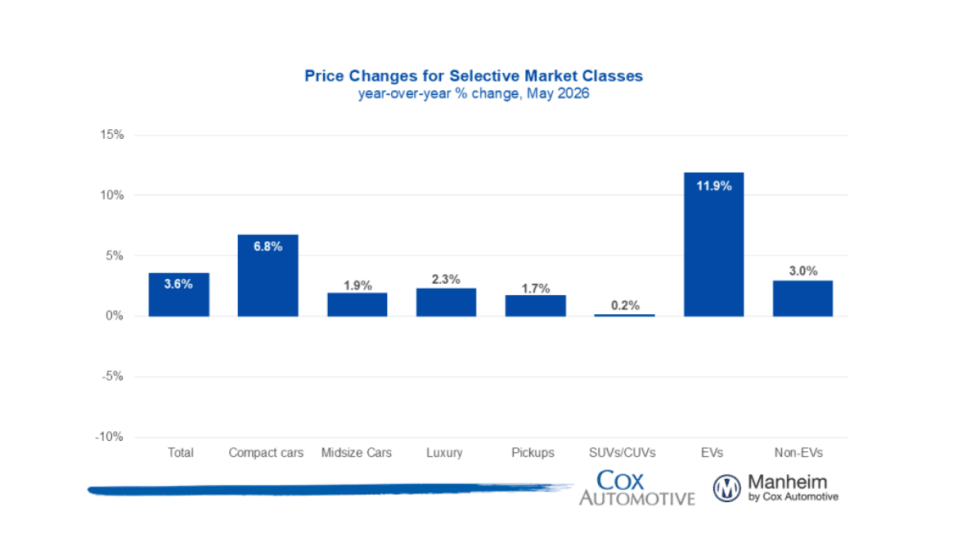
Wholesale Used Vehicle Market Sustains Moderate Rise In Values, Prices
Trends continue to normalize after a strong start to the year, as consumers contend with higher gas prices in the coming summer months.
Read More →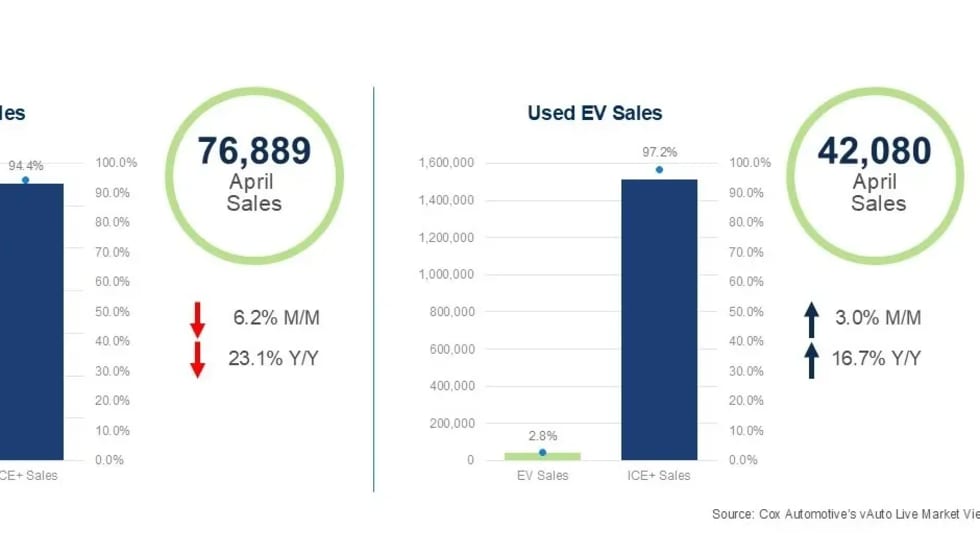
Used EV Sales Grow In April
While EV sales declined, used EV sales grew, as tighter inventory and rising prices reflected a more normalized pace for the EV market.
Read More →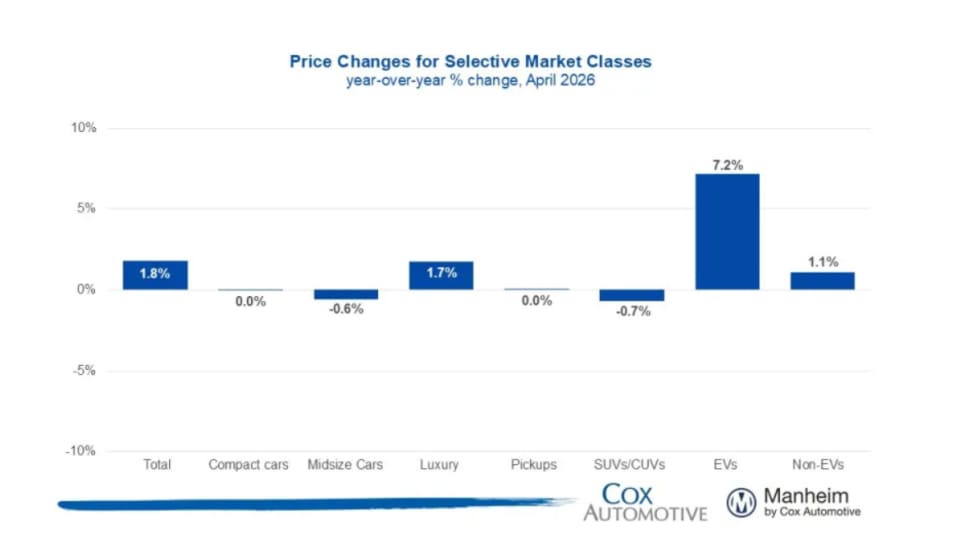
Wholesale Used Vehicle Prices Slightly Up In April
The Iranian conflict and rising gas prices inject much uncertainty into the future wholesale used vehicle markets, as higher gas prices soak up spendable income from vehicle buyers.
Read More →
CAR 2026 Recap Part 2: Closing the Gap Between Data & Remarketing Value
The second half of CAR 2026 examined how fleets can translate lifecycle strategy, vehicle data, and market shifts into higher real-world results.
Read More →
CAR2026 in Two Words: Velocity, Value (Part 1)
The 2026 Conference of Automotive Remarketing convened with a mandate to involve a new constituency — fleet managers — and an updated mission to demonstrate unrealized value in de-fleeted vehicles.
Read More →