



Stage Set for New-Vehicle Sales Contraction: Edmunds
Auto loan interest rates in June likely reached their highest level in nine years, Edmunds reported, a week after saying a strong economy is likely masking market factors bubbling just below the service that could start to slow down sales.

Auto loan interest rates in June likely reached their highest level in nine years, Edmunds reported, a week after saying a strong economy is likely masking market factors bubbling just below the service that could start to slow down sales.
The annual percentage rate on new financed vehicle averaged 5.82% in June, up from 4.96% in June 2017 and 4.10 in June 2013. The firm's analysts point to the most recent rate hike by the Federal Reserve as a contributing factor, noting that June marks a 17% total increase since January 2018, when APRs averaged just below 5%.
"Auto loan interest rates have been steadily on the rise this year and we don't see them going down anytime soon, which could mean trouble for automaker sales through the end of the year," said Jeremy Acevedo, Edmunds' manager of industry analysis. "While some shoppers may take this as a cue to purchase new vehicles now while rates are still somewhat favorable, we're getting dangerously close to a tipping point. Shoppers with average or subprime credit may end up putting off purchases as financing vehicles get increasingly more expensive."
The firm noted that zero percent interest loans reached their lowest level in nine years in June, accounting for just 5.6% of total finance deals, compared to 9.47% in June 2017 and 10.55% in June 2013.
Edmunds revealed another problem in its midyear automotive trend report, which was released last week. It noted that the number of buyers who owe more than their vehicle is worth remains high, with 14.1% of buyers owing more than their car was worth. That's down from 14.2% in 2017 and 14.6% in 2015 — the latter being a 14-year high.
"June typically boasts a substantial amount of zero percent financing offers, so this is a big red flag," added Acevedo. "This might be a sign that access to cheap and easy credit — a post-recession hallmark that we've all grown so accustomed to — could be officially over. But there's hope yet — the true indicator will be whether zero percent deals materialize through the rest of the summer selling season, which automakers typically rely on to clear outgoing model-year inventory."
Edmunds put June sales at 1.52 million new cars and trucks and the month's seasonally adjusted annual rate at 17.1 million, reflecting a 4.1% decline in sales from May but a 3.4% increase from June 2017. Through May, 2018 sales were up 1.1% compared to the same period in 2017. However, the firm noted that the month-to-month fluctuations are enough to give the industry pause.
As for retail sales, Edmunds put June's retail SAAR at 13.9 million units, with fleet transactions accounting for 18.4% of total sales. Additionally, 3.2 million used vehicles were expected to be sold in June, for a SAAR of 39.2 million. That down from 3.3 million used sales in May, which had a SAAR of 39.3 million.
The firm also noted that millennial new-vehicle purchases hit a record high through May, with 21% of millennial car purchase being new.
"The strength of the economy is creating a very thick force field for automakers now, but once that starts to weaken, there are a lot of market factors bubbling just below the surface that could really start to slow down sales," said Jeremy Acevedo, manager of industry analysis at Edmunds. "Even though millennials are finally starting to buy new vehicles, the U.S. market is virtually saturated. Add to that record-high vehicle prices, rising interest rates and historically high numbers of people who owe more than their cars are worth, and the stage is set for a market contraction."
Editor's note: This article first appeared on the website of F&I and Showroom, a companion publication.
Related: Trends in Vehicle Capital Costs
Originally posted on Automotive Fleet
More Used Vehicle Values
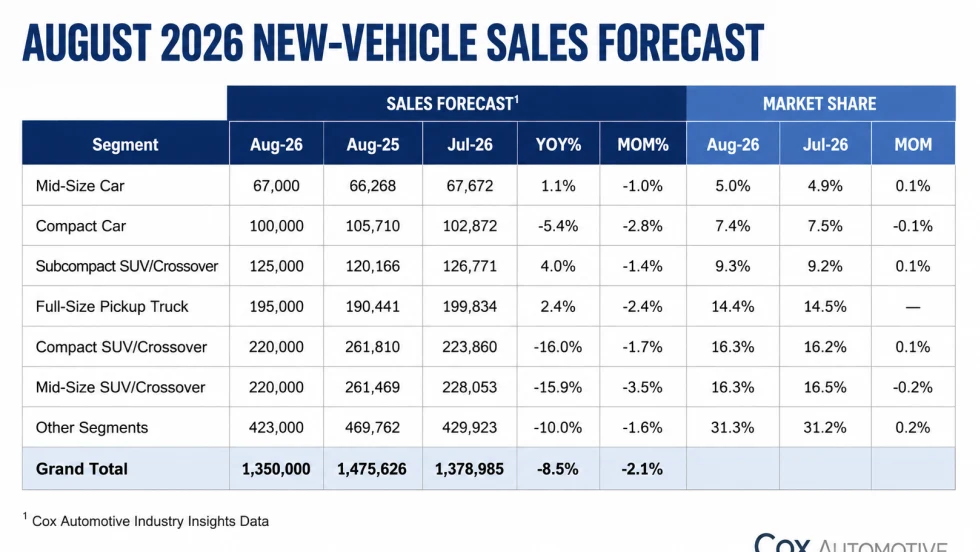
August New-Vehicle Sales Pace Forecast to Hold Above 16 Million
Despite an expected 8.5% year-over-year decline in August volume, Cox Automotive forecasts a 16.3 million SAAR, with full-size pickups outperforming several major crossover segments.
Read More →
Trade Strategy Now Starts Long Before Turn-In
The strongest trade values aren't built at turn-in. Discover how maintenance, lifecycle planning, and shared risk protect truck resale value.
Read More →
What Happens When Residual Values Meet Real-World Markets
A truck's trade value isn't determined on turn-in day. Learn how market cycles, maintenance, and timing shape the gap between residuals and reality.
Read More →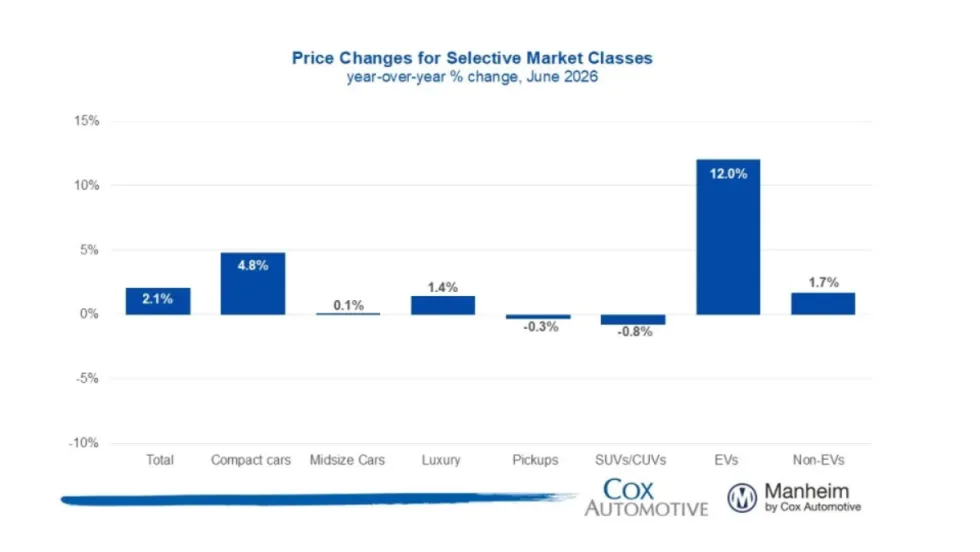
Manheim Index Shows Used-Vehicle Wholesale Prices Up 2.1% in June
The market is seeing stronger appreciation in older used vehicles this year, and the most affordable segments have been among the year’s best performers.
Read More →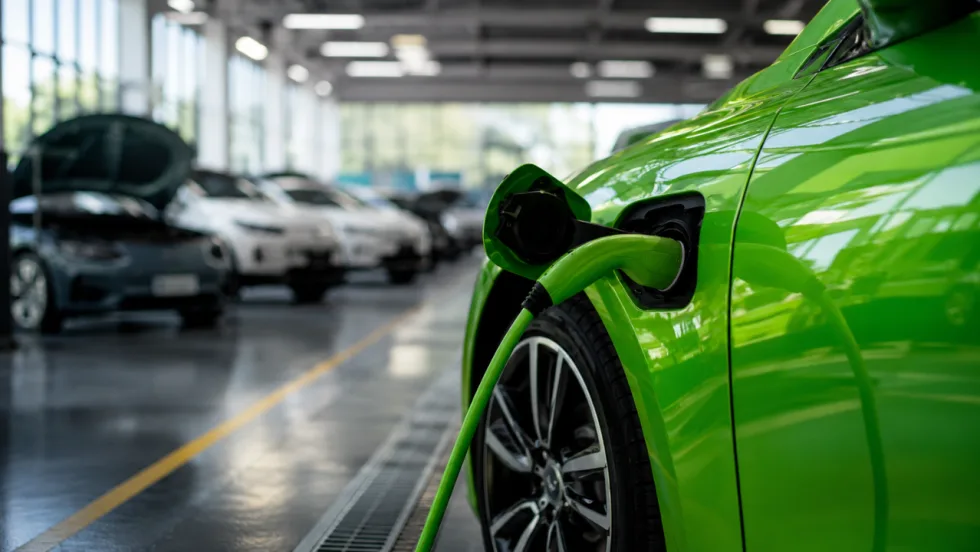
Stop Remarketing Electric Vehicles Like Gas Cars
The advantages and attributes of electric vehicles are upending the traditional remarketing cycle, requiring fleet sellers to rely on new factors and approaches detailed below.
Read More →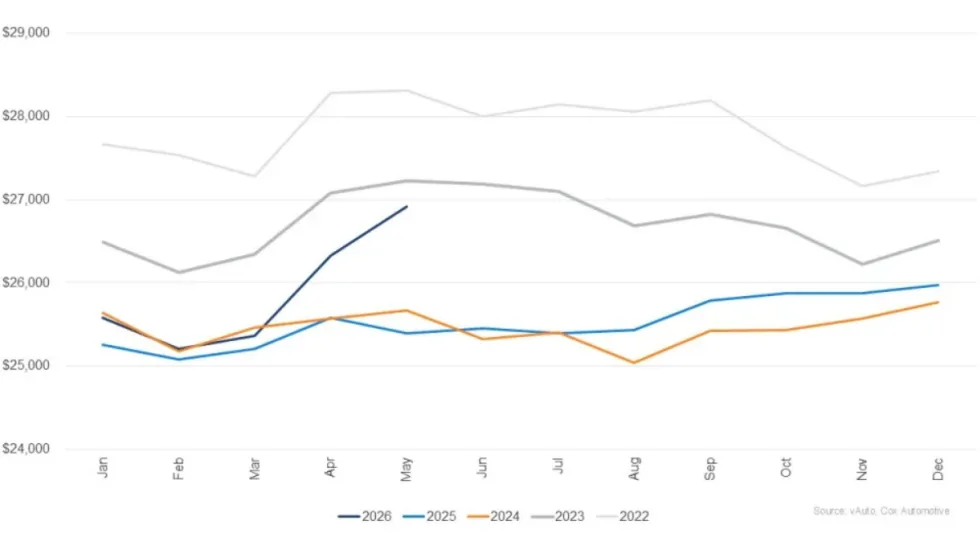
Used Vehicle Prices Climb Higher As Sales Pace Slows
The higher prices at used retail reflect strong wholesale values earlier in the spring, particularly for older, more affordable vehicles.
Read More →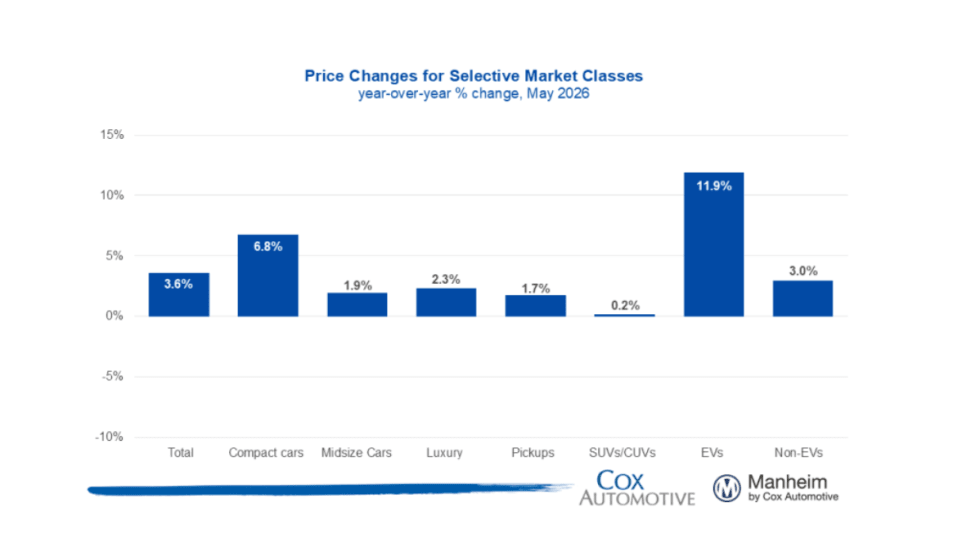
Wholesale Used Vehicle Market Sustains Moderate Rise In Values, Prices
Trends continue to normalize after a strong start to the year, as consumers contend with higher gas prices in the coming summer months.
Read More →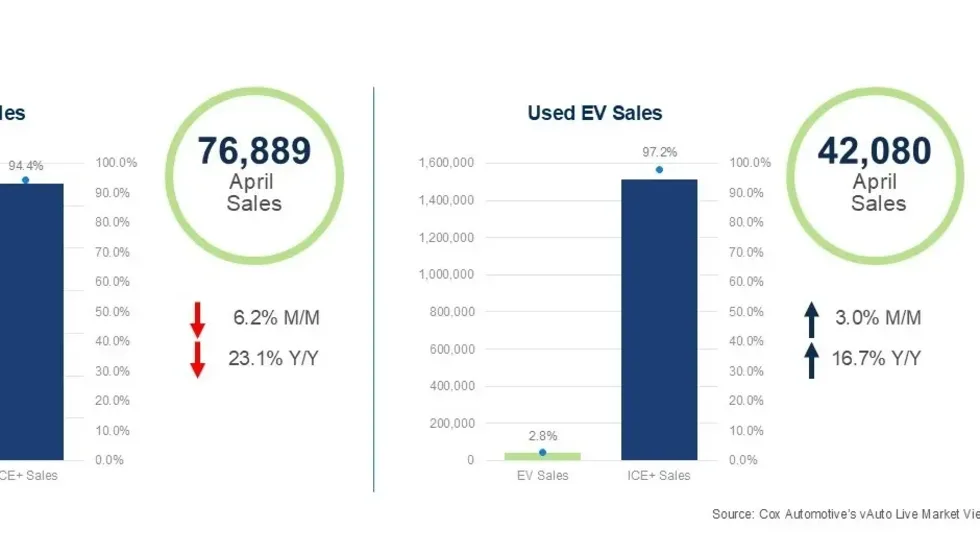
Used EV Sales Grow In April
While EV sales declined, used EV sales grew, as tighter inventory and rising prices reflected a more normalized pace for the EV market.
Read More →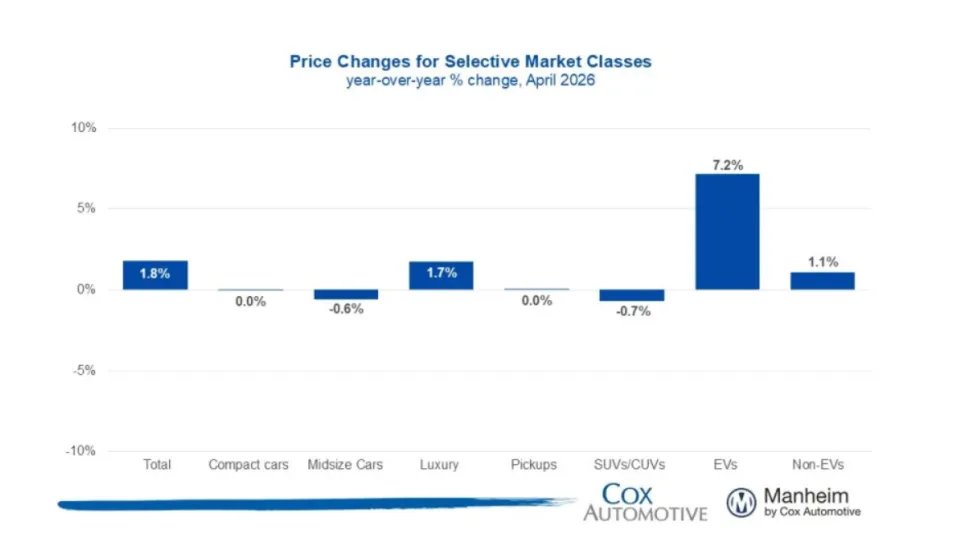
Wholesale Used Vehicle Prices Slightly Up In April
The Iranian conflict and rising gas prices inject much uncertainty into the future wholesale used vehicle markets, as higher gas prices soak up spendable income from vehicle buyers.
Read More →
CAR 2026 Recap Part 2: Closing the Gap Between Data & Remarketing Value
The second half of CAR 2026 examined how fleets can translate lifecycle strategy, vehicle data, and market shifts into higher real-world results.
Read More →