




Related News: Used Vehicle Supply Falls, Inventory Up
Vehicle Inventory Holds Steady Amid Upward Momentum
While inventory is growing, vehicles are moving off lots faster than they were a year ago.
September 12, 2025
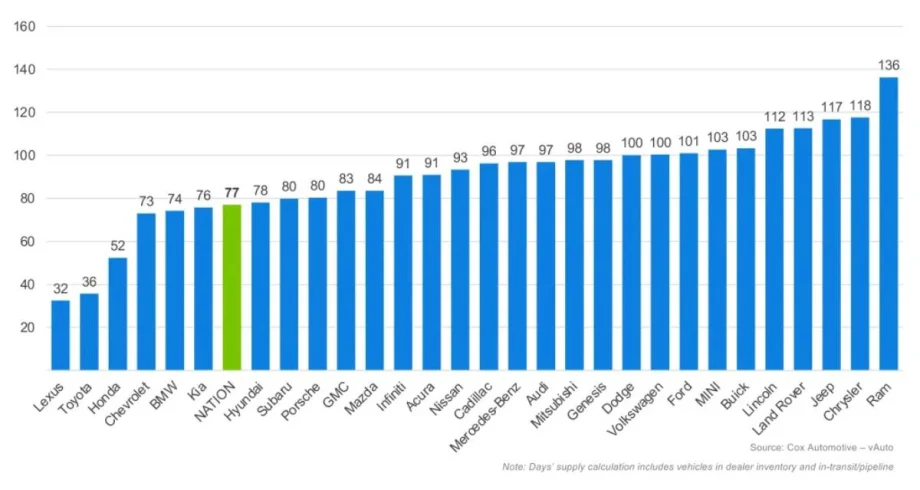
Days’ supply rose to 77, up 4.1% from August, but down 10% year over year, indicating that while inventory is growing, vehicles are moving off lots faster than they were a year ago.
Graphic: Cox Automotive
3 min to read
New-vehicle inventory is gradually increasing as next-model-year vehicles arrive and measures to encourage electric vehicle purchases take effect.
Sales in August were higher compared to previous months and the previous year; new-vehicle inventory and days’ supply have declined year over year, based on Cox Automotive’s analysis of vAuto Live Market View data released Sept. 11.
As of early September, the total U.S. supply of unsold new vehicles stands at 2.76 million units, marking a 4.8% increase month over month, but still 3.9% below last year’s levels. This modest rise in inventory suggests a stabilizing supply chain, although not yet a full recovery to pre-pandemic norms.
Days’ supply rose to 77, up 4.1% from August, but down 10% year over year, indicating that while inventory is growing, vehicles are moving off lots faster than they were a year ago. This dynamic reflects a more balanced market, with automakers showing discipline in uncertain times and consumer demand holding steady.
The average listing price climbed to $48,697, a slight 0.2% increase from August, and up 4% compared to September 2024. This continued upward trend in pricing reflects both inflationary pressures and a continued shift in consumer preference toward higher-trim models and larger vehicles.
The sales pace was also healthy in August, according to the vAuto data, with new-vehicle sales up 0.7% month over month and a robust 6.7% increase year over year. This growth is driven by the urgency of electric vehicle sales as the market rushes to capitalize on expiring tax credits, while dealers capitalize on increased traffic with eye-popping incentives offered on EVs.
Inventory Trends: A Tale of Two Halves
The first half of 2025 saw a clear decline in inventory from January through May, driven by an initial rush on sales amid widespread media coverage of potential tariff-induced price hikes. Consumers moved quickly to secure vehicles before anticipated cost increases, leading to a sharp drawdown in available supply.
From May onward, however, the inventory story shifted into a steady state. A big part of the ongoing downward pressure on supply can be attributed to manufacturers' failure to replenish their EV models, coupled with their highly disciplined approach to underperforming models and those directly affected by tariffs. Meanwhile, more successful models have been slowly recovering in inventory, suggesting a strategic recalibration by automakers to focus on profitability and demand alignment.
Brand-Level Inventory Discipline and Potential Strategic Shifts
Within the Stellantis portfolio, niche players like Fiat and Alfa Romeo are shrinking inventory. Whether this signals a broader strategic shift or a potential wind-down of these brands in the U.S. remains to be seen. Their reduced presence could open the door for Stellantis to reallocate resources toward more competitive segments or emerging technologies.
The same could be said for low-volume, import-focused brands like MINI, Infiniti, and Jaguar (Jaguar is in the midst of a strategic rethink; days’ supply is more than twice the industry average). Meanwhile, brands like Toyota, Honda, and Kia are seemingly holding production in balance with demand. Chevrolet and Mazda are showing strong inventory discipline as well.
Looking Ahead
Although inventory levels remain below last year’s benchmarks, the upward momentum in sales and pricing reveals a resilient and adaptive market.
The first half of 2025 saw big inventory drawdowns as consumers rushed to purchase vehicles ahead of anticipated tariff-driven price hikes, while the latter half is beginning to show disciplined manufacturer replenishment strategies and selective focus on profitable, in-demand models.
As we approach the final quarter of the year, attention will center on how automakers recalibrate production, respond to cost pressures, and leverage promotional activities, all while consumers weigh new incentives amid rising retail prices.
Originally posted on Automotive Fleet
More Operations

CAS Automotive Launches Remarketing Service for Damaged, Surplus Equipment
Damaged Equipment expands CAS Automotive’s vehicle remarketing model to commercial equipment, targeting fleet operators, insurers, equipment dealers, and rental companies.
Read More →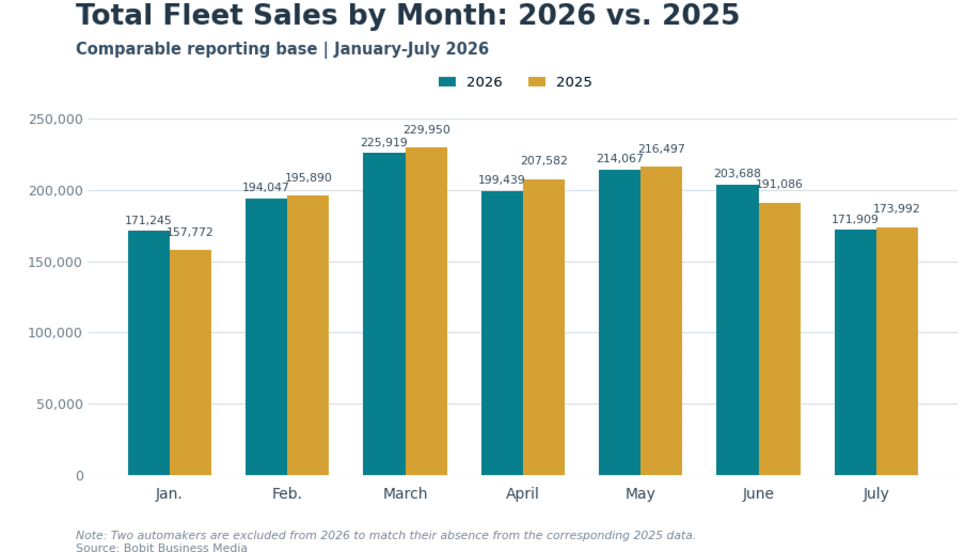
Fleet Sales Hold Steady as Commercial Gains Offset Rental Decline
Commercial and government fleet sales increased through July 2026, offsetting most of the decline in rental volume and leaving combined comparable fleet sales 0.5% above the same period last year.
Read More →
Personnel Update: BrickHouse GPS, PRO-VISION, Auto Driveaway, and Proaction
Check out the latest must-know fleet personnel updates from the last couple of months.
Read More →
What Comes Next for Auto Driveaway?
A new Auto Driveaway feature called Arrive provides recipients with live location updates and ETAs during the final hour of a vehicle move, while fleet customers continue to have end-to-end shipment visibility through the company's customer portal.
Read More →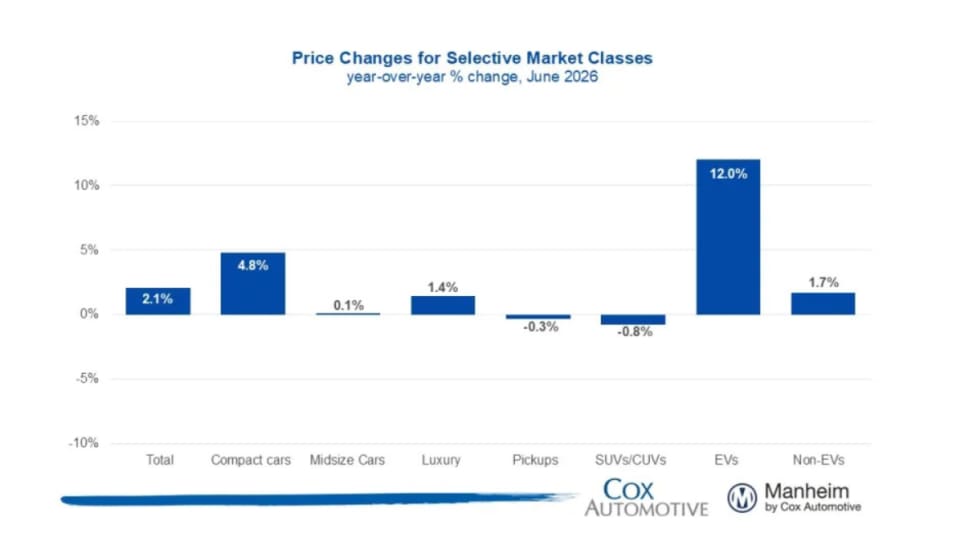
Manheim Index Shows Used-Vehicle Wholesale Prices Up 2.1% in June
The market is seeing stronger appreciation in older used vehicles this year, and the most affordable segments have been among the year’s best performers.
Read More →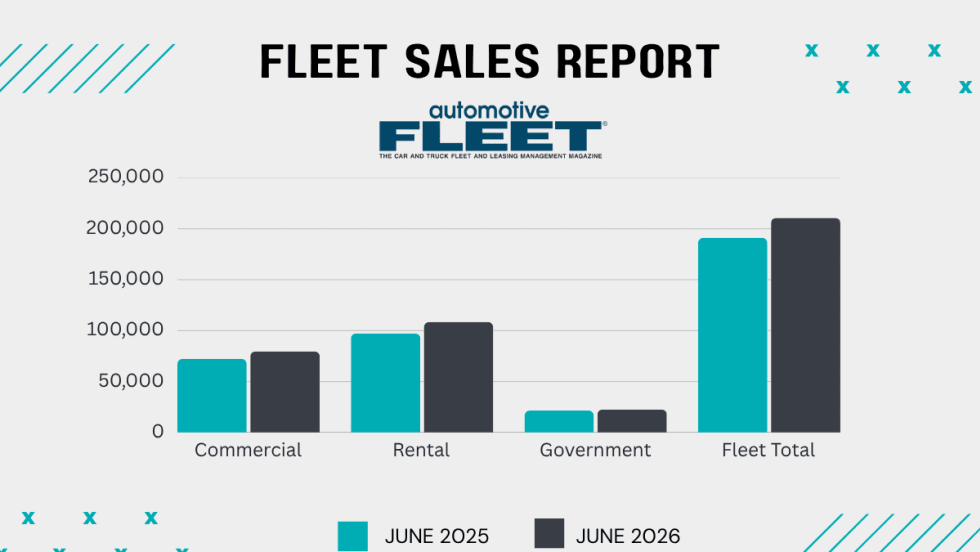
Commercial Fleet Sales Contribute To June, YTD Gains
The fleet sector has boosted its vehicle purchases at a reliable pace in the first half of this year compared with 1H 2025.
Read More →
Stop Remarketing Electric Vehicles Like Gas Cars
The advantages and attributes of electric vehicles are upending the traditional remarketing cycle, requiring fleet sellers to rely on new factors and approaches detailed below.
Read More →
AP Fleet Management Expands Remarketing Program for Commercial Work Trucks
AP Fleet Management expanded its commercial vehicle remarketing program with dedicated resale services and an online marketplace for used work trucks.
Read More →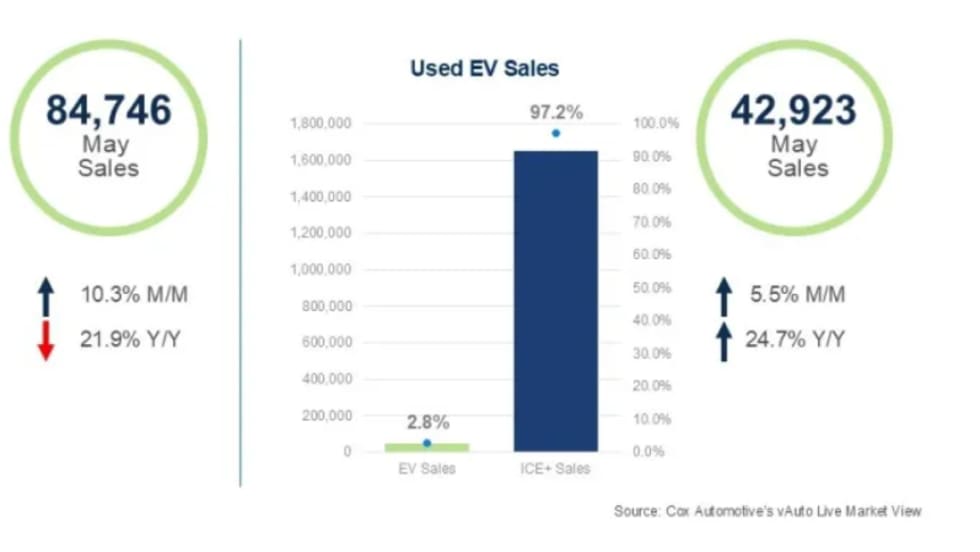
Used EVs Strengthen Overall Electric Vehicle Market
The latest sales data point to several reasons for the divergent trends in new and used EVs that can factor into fleet cycling decisions.
Read More →
The Data-Driven Haul: 5 Ways AI is Leveling the Playing Field in Auto Transport
Large and small transport fleets are becoming more competitive as predictive analytics and real-time data inform the logistics decision chain.
Read More →