



Recurrent, Black Book Team Up to Score and Value Used EVs
The companies are collaborating on an electric vehicle-specific valuation influenced by the condition of the battery, the most expensive part of an EV.

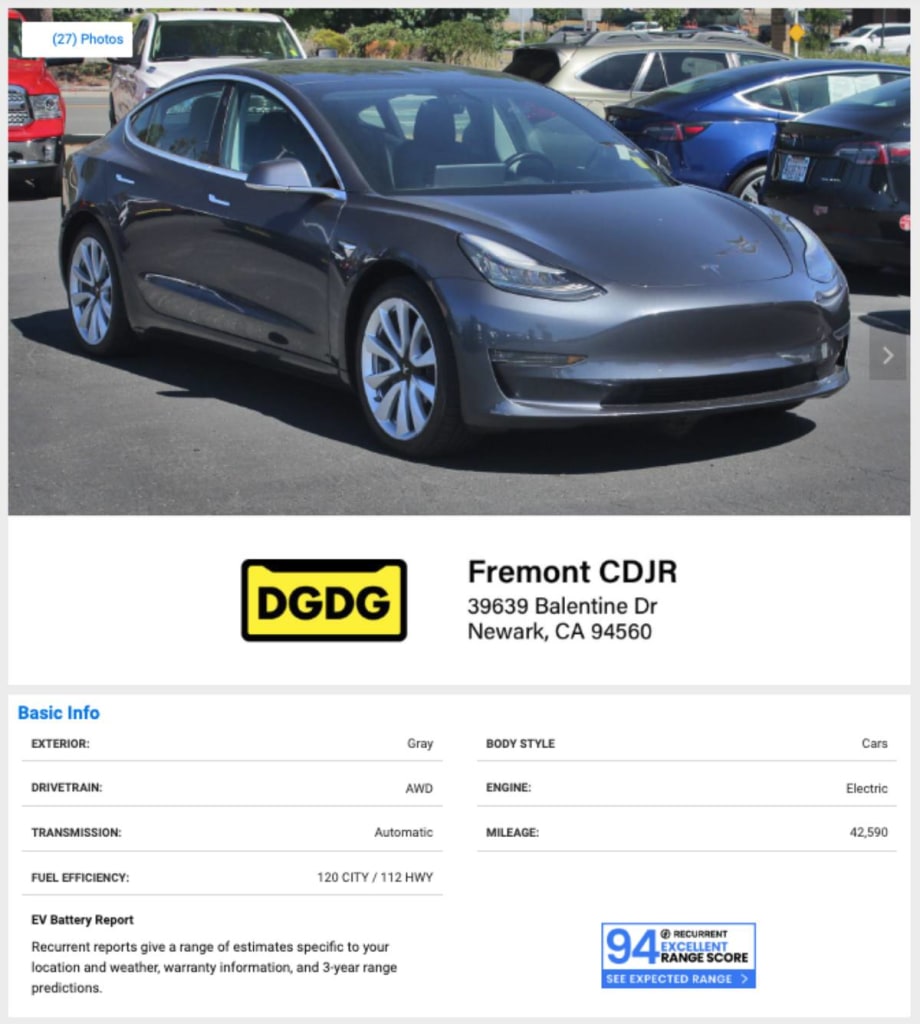
Black Book’s vehicle valuation is combined with Recurrent’s new Range Score value, which uses modeling from 100 million recorded EV miles, to make value adjustments for good batteries.
Photo: Recurrent
Early resale values for electric vehicles (EV) have often been determined by criteria from the combustion engine era, prioritizing metrics like odometers that do not correspond well to battery aging.
Industry vehicle valuation, data and analytics firm Black Book selected Recurrent, an EV battery and range analytics firm, to partner on an EV-specific valuation influenced by battery condition, the companies announced on Sept. 6. Since a battery is the costliest part of an EV, and it naturally degrades over time, car buyers can now make informed decisions based on expected range today and projected range in the future.
Black Book’s vehicle valuation is combined with Recurrent’s new Range Score value, which uses modeling from 100 million recorded EV miles, to make value adjustments for good batteries. The new partnership is a step toward adding transparency to a rapidly growing used EV market that includes more than 2.5 million vehicles in the U.S.
"Recurrent’s adoption of Black Book data will provide EV owners further insight into the real-time value of their vehicles,” said Jared Kalfus, President of Black Book, in a news release. “This integration is the first of its kind for EV battery valuations, and we are thrilled to have been selected to power it.”
Scott Case, CEO and co-founder of Recurrent, said, “We founded Recurrent with the mission to give confidence to used EV buyers, and a lot of that starts with the price tag. The combination of Recurrent’s battery insights and Black Book’s auto market expertise looks a lot like the change that we originally hoped to see.”
EV-Specific Valuations for Owners
As of Sept. 6 on RecurrentAuto.com, many EV models can get a free Range Score and vehicle valuation, backed by data from Black Book. These EV-specific valuations can be turned into premium offers from EV specialist car dealerships around the country as part of the new Sell with Recurrent program.
For EV owners who are looking to sell, Recurrent will share their Range Score with dealerships and organize the offers so it is easy to compare and select a buyer. Individual EV owners can also use Range Score when selling their car to a private buyer.
EV owners that are not ready to sell yet can connect their car to receive ongoing battery insights, wellness monitoring and get updated assessments of their car over time, comparing it to hundreds or thousands of similar cars. Over 50 vehicle makes and models are supported in the U.S.
Range Score for Car Dealerships
The battery is often a black box for used car shoppers. Recurrent’s new Range Score makes it easier to understand expected range in a used EV by comparing a car’s current expected range to what was normal when new, which often differs from its EPA-rated range. EPA range estimates are rarely accurate in real-world conditions because automakers apply their own adjustment factors to the raw EPA results, and even change those adjustment factors later.
More than 50 dealerships have added Recurrent’s Range Scores to their used EV inventory. More detailed EV reports, called Recurrent Reports, are also available to share information with car buyers on battery warranties, expected range in different conditions and how range is projected to change after three years of ownership.
Early results indicate that vehicles with Recurrent Reports can sell for thousands of dollars more than those without and create a much better buyer experience by setting the right expectations around range. Eligible models include Chevrolet Bolt, Chevrolet Volt, Nissan LEAF, Tesla Model 3, Tesla Model S, Tesla Model X and Tesla Model Y.
Information: https://www.recurrentauto.com/
Originally posted on Charged Fleet
More Used Vehicle Values
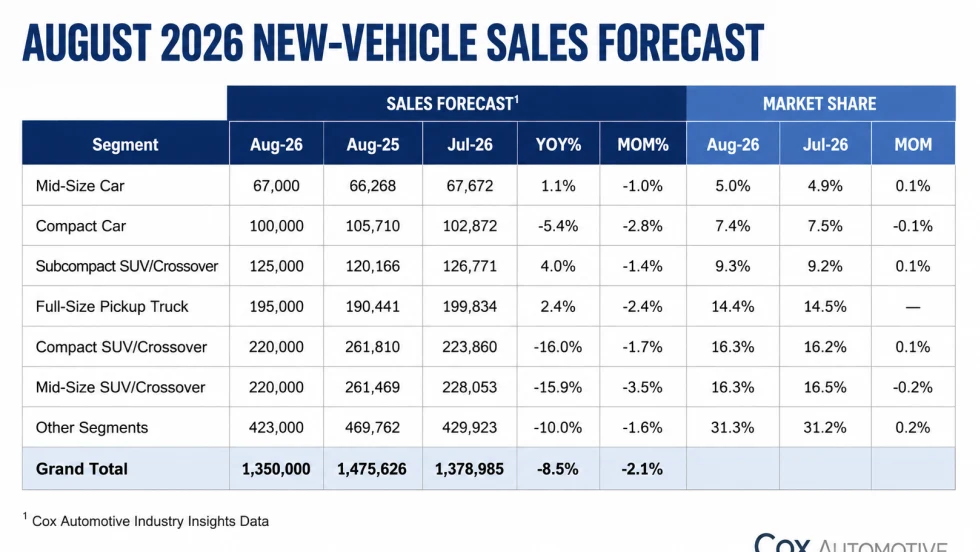
August New-Vehicle Sales Pace Forecast to Hold Above 16 Million
Despite an expected 8.5% year-over-year decline in August volume, Cox Automotive forecasts a 16.3 million SAAR, with full-size pickups outperforming several major crossover segments.
Read More →
Trade Strategy Now Starts Long Before Turn-In
The strongest trade values aren't built at turn-in. Discover how maintenance, lifecycle planning, and shared risk protect truck resale value.
Read More →
What Happens When Residual Values Meet Real-World Markets
A truck's trade value isn't determined on turn-in day. Learn how market cycles, maintenance, and timing shape the gap between residuals and reality.
Read More →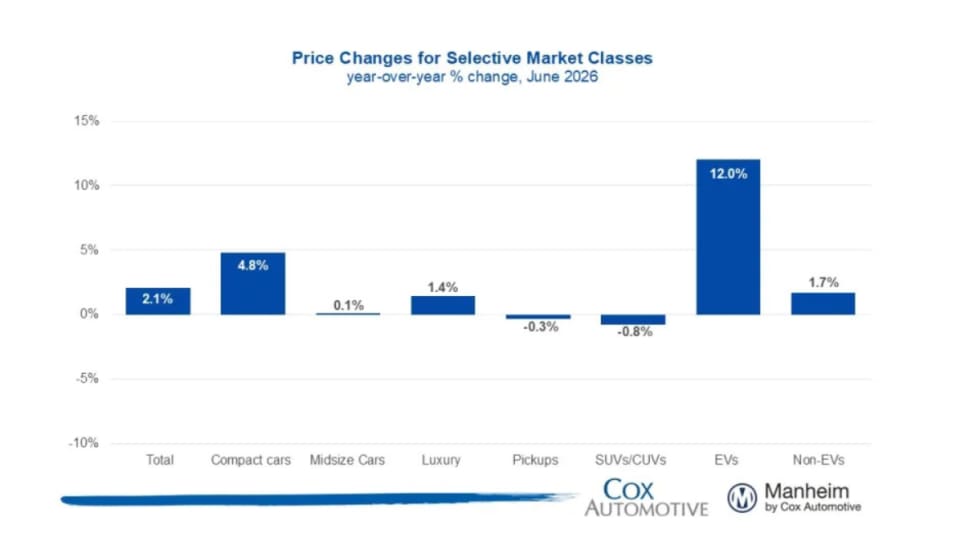
Manheim Index Shows Used-Vehicle Wholesale Prices Up 2.1% in June
The market is seeing stronger appreciation in older used vehicles this year, and the most affordable segments have been among the year’s best performers.
Read More →
Stop Remarketing Electric Vehicles Like Gas Cars
The advantages and attributes of electric vehicles are upending the traditional remarketing cycle, requiring fleet sellers to rely on new factors and approaches detailed below.
Read More →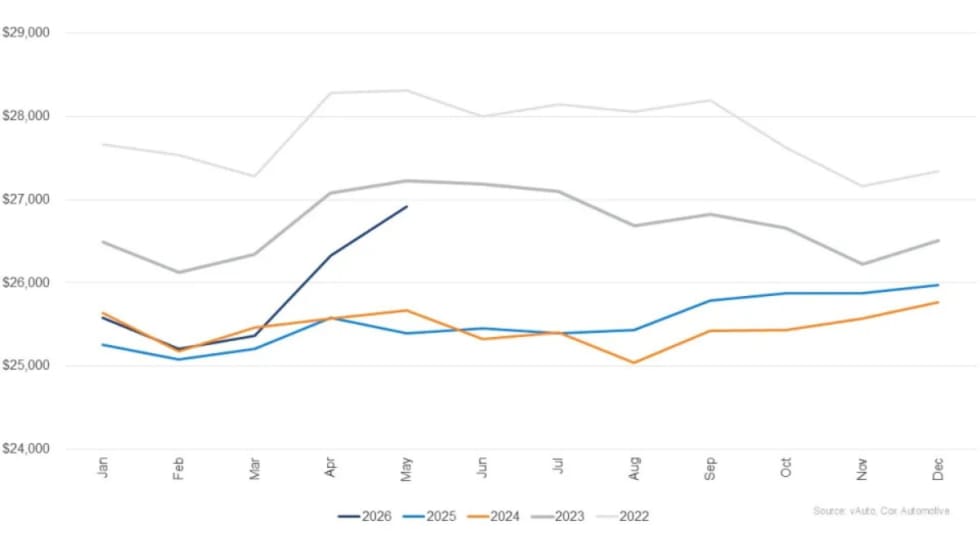
Used Vehicle Prices Climb Higher As Sales Pace Slows
The higher prices at used retail reflect strong wholesale values earlier in the spring, particularly for older, more affordable vehicles.
Read More →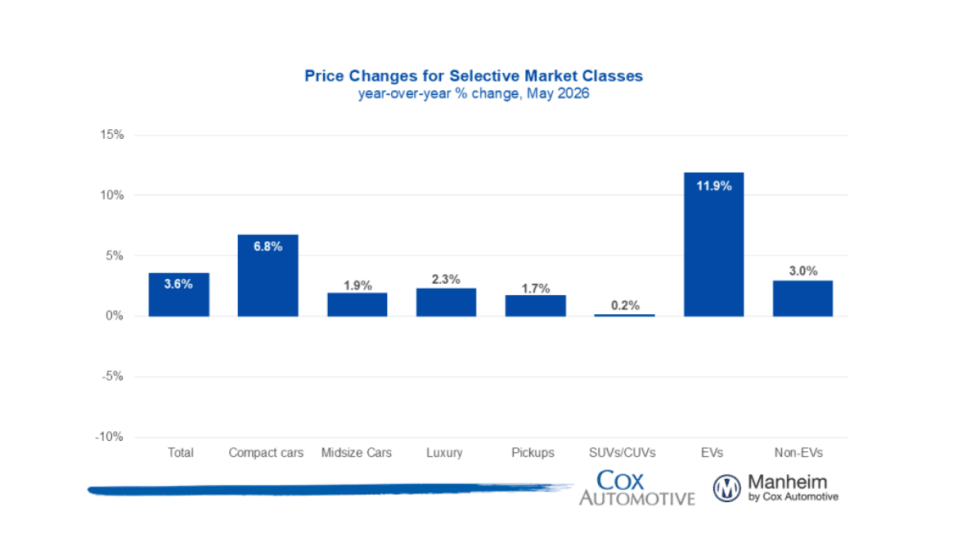
Wholesale Used Vehicle Market Sustains Moderate Rise In Values, Prices
Trends continue to normalize after a strong start to the year, as consumers contend with higher gas prices in the coming summer months.
Read More →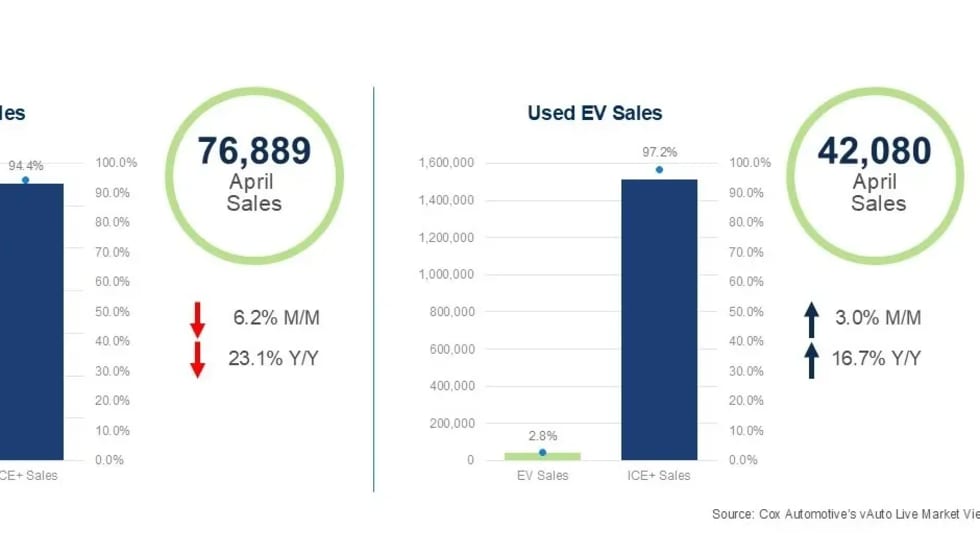
Used EV Sales Grow In April
While EV sales declined, used EV sales grew, as tighter inventory and rising prices reflected a more normalized pace for the EV market.
Read More →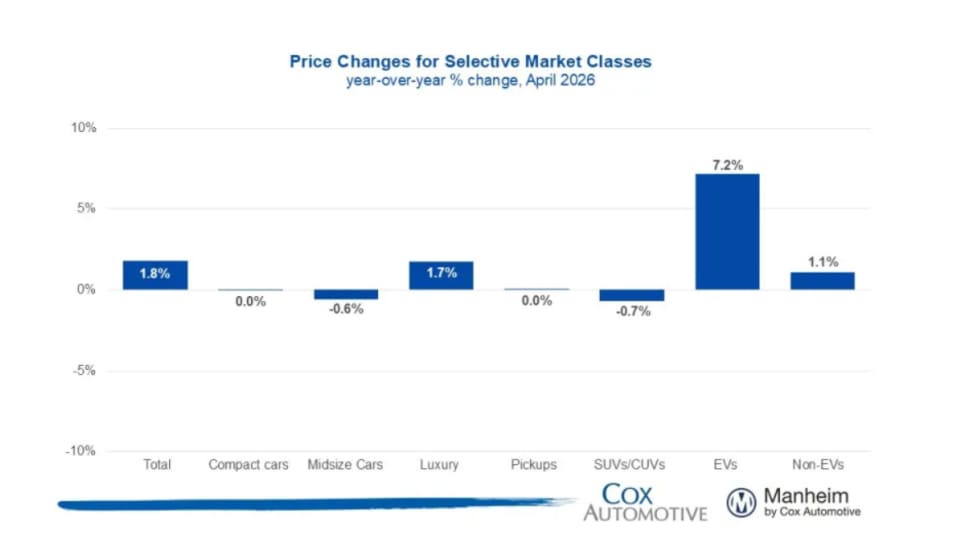
Wholesale Used Vehicle Prices Slightly Up In April
The Iranian conflict and rising gas prices inject much uncertainty into the future wholesale used vehicle markets, as higher gas prices soak up spendable income from vehicle buyers.
Read More →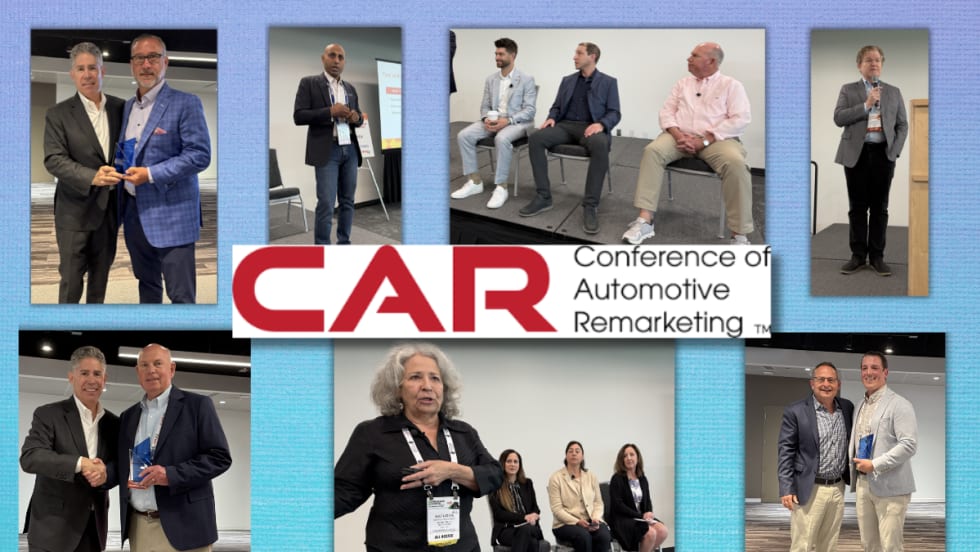
CAR 2026 Recap Part 2: Closing the Gap Between Data & Remarketing Value
The second half of CAR 2026 examined how fleets can translate lifecycle strategy, vehicle data, and market shifts into higher real-world results.
Read More →