




Related News: New Vehicle Prices Surge to Record High
New Vehicle Sales Stall in September
The lack of new-vehicle inventory is steering many dealers and consumers into the used-vehicle market, resulting in higher prices for both wholesale and retail used vehicles.
September 28, 2021
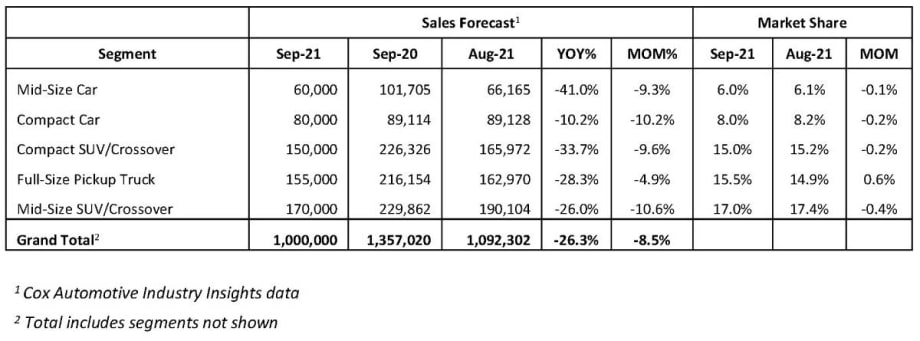
September 2021 Vehicle Sales Forecast
Chart: Cox Automotive
4 min to read
September U.S. auto sales are forecast to be significantly hampered by an ongoing lack of new-vehicle inventory, according to a forecast released Sept. 27 by Cox Automotive.
The pace of auto sales, or seasonally adjusted annual rate (SAAR), is expected to finish near 12.1 million, the slowest pace since May 2020, when much of the country was closed during the first wave of the COVID-19 pandemic. The September 2021 sales pace will be down from August’s 13.1 million pace and down from the September 2020 pace of 16.3 million.
Sales volume is forecast by Cox Automotive to come in near a notably low one million units. The low volume expectations for September 2021 put the month on course to be among the worst in the past decade. Sales volume is expected to be down nearly 26% from last September and down 8.5% from last month.
The sales pace in the U.S. market has fallen every month since reaching a peak of 18.3 million in April. “After a strong spring selling season, the supply situation has worsened precipitously and is dragging sales down with it," said Cox Automotive senior economist Charlie Chesbrough. "The monthly declines have been large – the sales pace has declined by more than a million units in each of the past five months. Available supply on dealer lots is now 58% lower than last September, down nearly 1.4 million units.”
The new-vehicle supply shortage is affecting the market in many ways. Manufacturers have cut back on many incentives, and transaction prices have risen as a result. In addition, the lack of new-vehicle inventory is steering many dealers and consumers into the used-vehicle market, resulting in higher prices for both wholesale and retail used vehicles.
Q3 2021: The Auto Industry Finds the Bottom
With lower sales forecast for September, the third quarter of 2021 is forecast to finish with auto sales down 14% versus Q3 2020 and down 22% compared to the same period in 2019. Cox Automotive will officially revise its full-year forecast, with new projections scheduled to be released on Sept. 30.
The underlying economic conditions in the U.S. are healthy enough to support higher new-vehicle sales levels. The demand is there. Inventory levels, however, are the unique problem facing the automotive market, with disruptions to the global supply chain challenging all automakers, severely constraining available inventory, and pushing many would-be buyers out of the market. In recent research by Cox Automotive’s Kelley Blue Book team, nearly half of would-be buyers indicated in August that they will likely step back from the market, many for three months or more.
Inventory conditions, however, are anticipated to improve in the coming months. “The expectation is that OEM supply issues will improve such that Q4 should have better selling SAARs than the September rate, but that doesn’t mean good selling rates,” Chesbrough said. “Vehicles are getting produced, and some OEMs have improved their supply situation. In recent months, OEMs seem to be managing the situation better now that they’ve had time to adjust. For example, automakers are improving their ability to redirect existing chips to the most important vehicles in their portfolios. This strategy should support better sales in the fourth quarter compared to the third quarter.”
September 2021 Sales Forecast Highlights
New light-vehicle sales are forecast to fall to one million units, or down 357,000 units, nearly 26% from last year. Compared to last month, sales are expected to fall 92,000 or nearly 8%.
The SAAR in September 2021 is estimated to be 12.1 million, down from last September’s early COVID recovery pace of 16.3 million and down from August’s 13.1 million supply-constrained level.
No segment saw a sales increase in September with the mid-size cars and compact SUV/crossover segments seeing the largest year-over-year decreases at -41% and -33.7%, respectively.
Cox Automotive Q3 U.S. Auto Sales Forecast Call
Chief Economist Jonathan Smoke and the Industry Insights team will share their take on the overall industry performance on Thursday, Sept. 30, at 10 a.m. ET. In addition to the economic factors influencing the market, the Industry Insights team will cover the industry’s hottest topics, including inventory, vehicle prices, and valuations. The revised Cox Automotive full-year forecast will be explained, including insights into the outlook for the remainder of the year.
More Used Vehicle Values
August New-Vehicle Sales Pace Forecast to Hold Above 16 Million
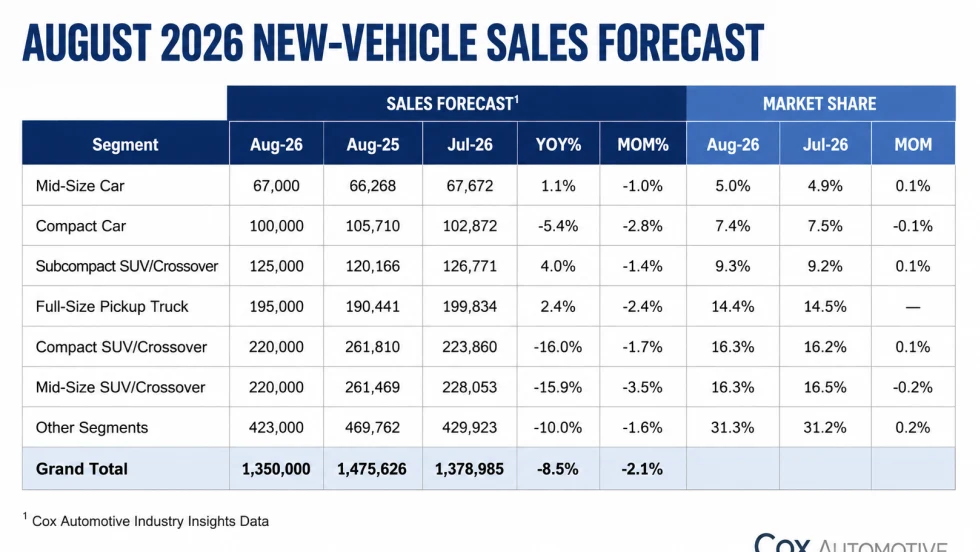
Despite an expected 8.5% year-over-year decline in August volume, Cox Automotive forecasts a 16.3 million SAAR, with full-size pickups outperforming several major crossover segments.
Read More →
Trade Strategy Now Starts Long Before Turn-In
The strongest trade values aren't built at turn-in. Discover how maintenance, lifecycle planning, and shared risk protect truck resale value.
Read More →
What Happens When Residual Values Meet Real-World Markets
A truck's trade value isn't determined on turn-in day. Learn how market cycles, maintenance, and timing shape the gap between residuals and reality.
Read More →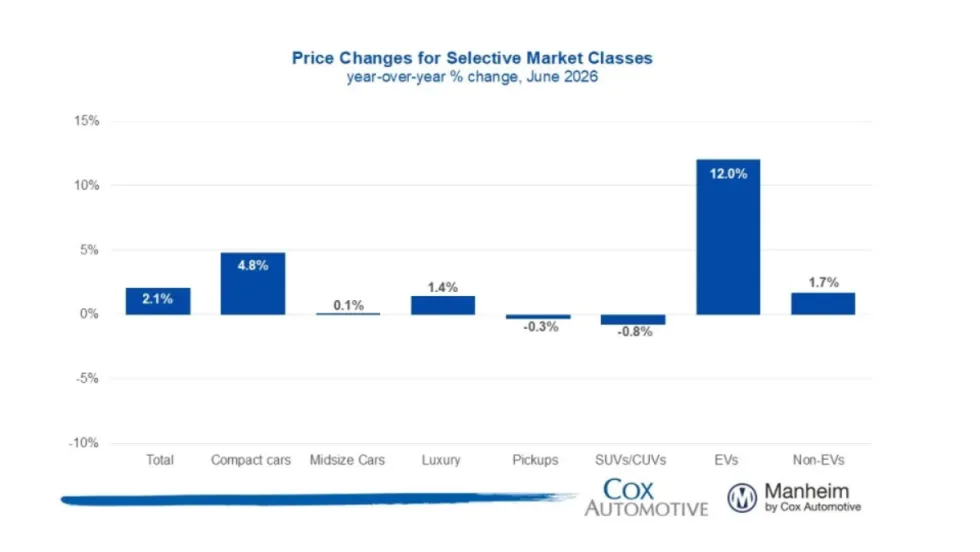
Manheim Index Shows Used-Vehicle Wholesale Prices Up 2.1% in June
The market is seeing stronger appreciation in older used vehicles this year, and the most affordable segments have been among the year’s best performers.
Read More →
Stop Remarketing Electric Vehicles Like Gas Cars
The advantages and attributes of electric vehicles are upending the traditional remarketing cycle, requiring fleet sellers to rely on new factors and approaches detailed below.
Read More →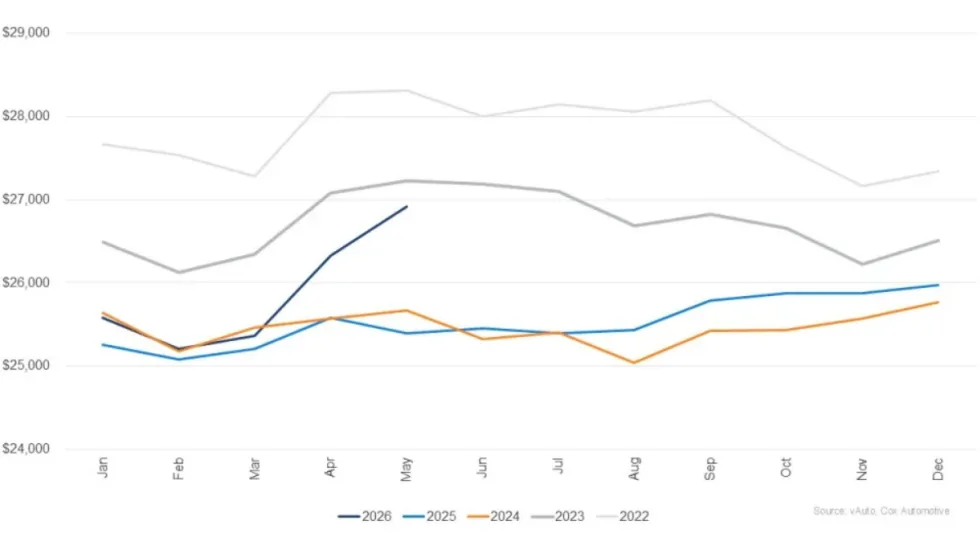
Used Vehicle Prices Climb Higher As Sales Pace Slows
The higher prices at used retail reflect strong wholesale values earlier in the spring, particularly for older, more affordable vehicles.
Read More →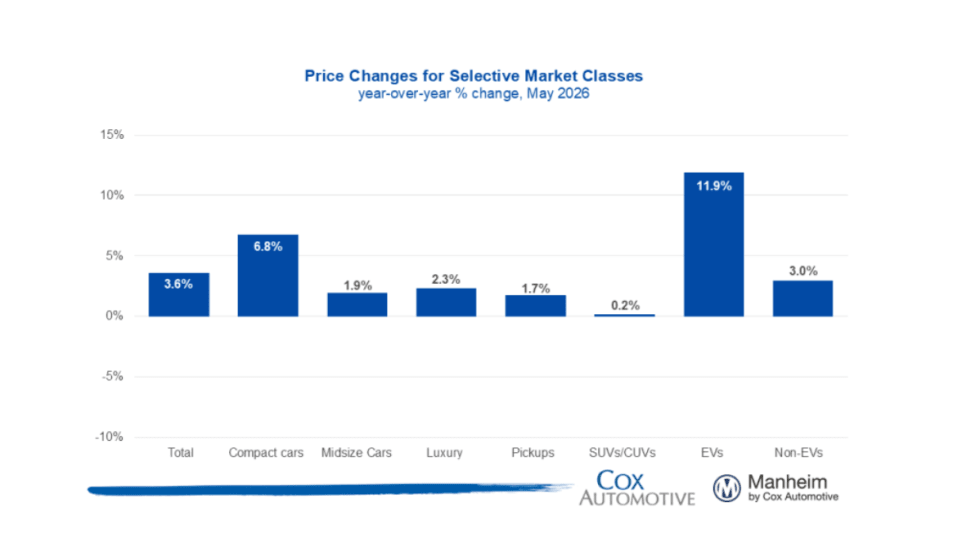
Wholesale Used Vehicle Market Sustains Moderate Rise In Values, Prices
Trends continue to normalize after a strong start to the year, as consumers contend with higher gas prices in the coming summer months.
Read More →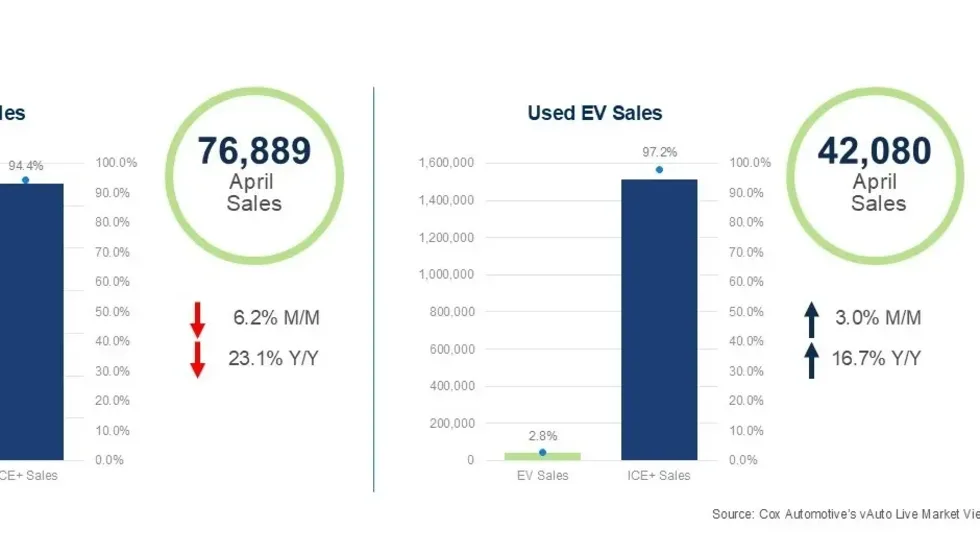
Used EV Sales Grow In April
While EV sales declined, used EV sales grew, as tighter inventory and rising prices reflected a more normalized pace for the EV market.
Read More →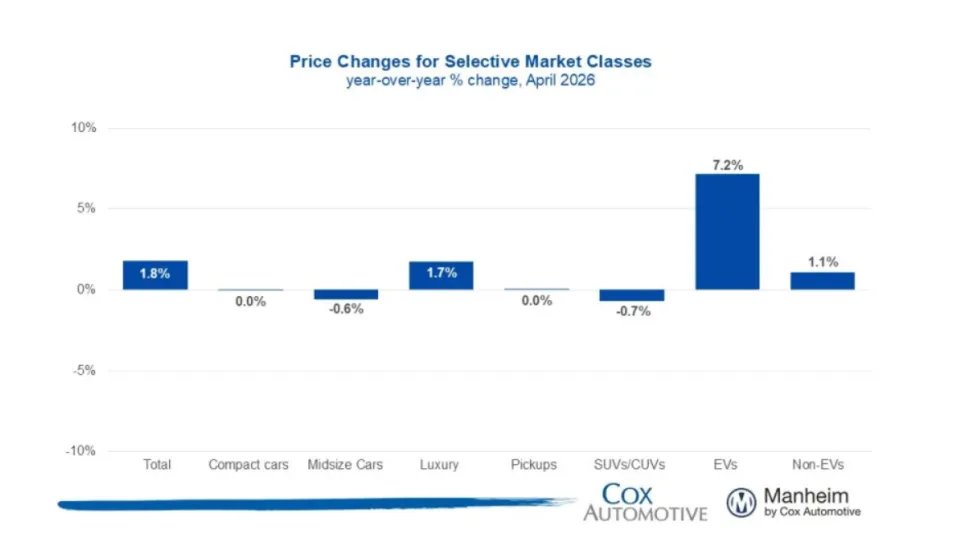
Wholesale Used Vehicle Prices Slightly Up In April
The Iranian conflict and rising gas prices inject much uncertainty into the future wholesale used vehicle markets, as higher gas prices soak up spendable income from vehicle buyers.
Read More →
CAR 2026 Recap Part 2: Closing the Gap Between Data & Remarketing Value
The second half of CAR 2026 examined how fleets can translate lifecycle strategy, vehicle data, and market shifts into higher real-world results.
Read More →