



Dropping: New Vehicle Prices, EV Sales, Incentives
The decline in the average transaction price was mostly expected, as sales of expensive EVs fell sharply as government incentives expired Sept. 30.

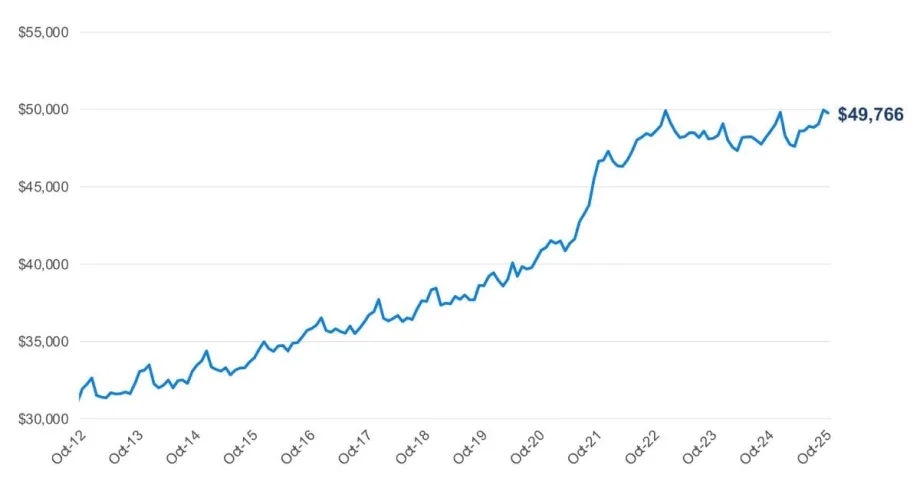
The ATP last month was lower by 0.4% compared to September but higher year over year by 2.1%, slightly below the long-term average ATP increase.
Graphic: Cox Automotive
The average transaction price (ATP) of a new vehicle in the U.S. declined marginally in October, according to estimates released Nov. 12 by Kelley Blue Book, falling from a record high set in September. New-vehicle ATPs last month were higher compared to year-ago levels.
The ATP decline was mostly expected, as sales of expensive electric vehicles (EVs) fell sharply month over month, as government-backed sales incentives expired at the end of September.
In October, the new-vehicle ATP was $49,766, falling as expected from the all-time high in September. The ATP last month was lower by 0.4% compared to September but higher year over year by 2.1%, slightly below the long-term average ATP increase.
The average new-vehicle manufacturer’s suggested retail price (MSRP) – commonly called “the asking price” – also declined in October, as fewer higher-priced EVs were sold last month. The new-vehicle MSRP was $51,841, down from the record set in September, but up by 2.6% year over year.
Incentive spending declined in October. The average incentive package last month was equal to 6.5% of ATP, a decrease of 11.4% compared to September, when incentive spending equaled 7.3% of ATP. A year ago, the average incentive package was equal to 7.6% of ATP.
Full-size pickup trucks, a volume-leading segment in the U.S. market, behind only the compact and mid-size SUV segments, saw average transaction prices hit a record high in October, at $66,462. Incentives, at 8.4% of ATP, were higher month over month but lower than the peaks for 2025 seen in June and July. The average MSRP for a full-size pickup sold last month was $70,351.
Among major volume brands, Cadillac and Porsche have seen some of the biggest price gains in the past year. Cadillac, a brand focused on a robust EV strategy and selling a strong mix of high-end Escalades, has seen ATPs jump more than 22% year over year. At Porsche, a heavy importer facing steep tariff costs, ATPs in October were up more than 13%. Lincoln and Chevrolet also saw annual prices increase well above the industry average, while Acura, Jeep and Tesla saw ATPs notably lower versus year-ago levels.
“October’s dip in average transaction prices was anticipated and reflects a natural market adjustment after September’s record highs," said Erin Keating, executive analyst with Cox Automotive, in a Nov. 12 news release. "Even with the pullback, prices remain elevated year over year. Fortunately for automakers, there is continued strength in consumer demand, especially from well-heeled households. Consumers remain engaged, and while affordability challenges persist, the industry is adapting with incentives and product mix shifts. We’ve been anticipating a slowdown in the market. This is a story of moderation, not retreat.”
Electric Vehicle Sales Plunge in October as Prices Edge Higher
Electric vehicle sales fell sharply in October, as expected, dropping to 74,835, a decline of 48.9% month over month, according to initial estimates from Cox Automotive. EV sales in October were lower year over year by 30.3%.
In October, the ATP for a new EV was 1.6% higher month over month, climbing to $59,125. New EV prices in October were higher year over year by 2.3%.
Market leader Tesla’s ATPs declined month over month in October, falling 1.1% to $53,526. Compared to October 2024, Tesla prices were 5.5% lower. ATPs for the core Tesla models – the popular Model 3 and Model Y – both declined month-over-month in October. Sales also declined, as the entire EV segment contracted. Tesla sales in October fell 35.3% from September and 23.6% from the year-ago level, declines smaller than those of the overall EV segment.
Said Cox Automotive senior analyst Stephanie Valdez Streaty: “We expected this shift in the electric vehicle market. With the IRA-backed sales incentives gone, lower-cost EV volume was hit hard, pushing the mix toward more luxury and driving October’s EV ATP to a 2025 high of $59,125 — now $9,359 above the industry average. Affordability has always been the core challenge with EV sales, and this reset only underscores how critical it is to bring more attainable EV options to market.”
Originally posted on Automotive Fleet
More Operations

CAS Automotive Launches Remarketing Service for Damaged, Surplus Equipment
Damaged Equipment expands CAS Automotive’s vehicle remarketing model to commercial equipment, targeting fleet operators, insurers, equipment dealers, and rental companies.
Read More →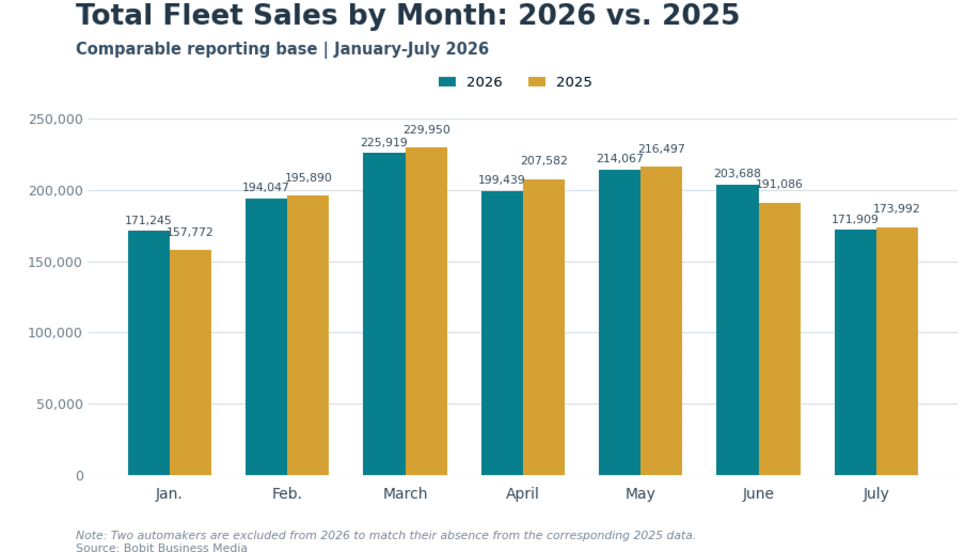
Fleet Sales Hold Steady as Commercial Gains Offset Rental Decline
Commercial and government fleet sales increased through July 2026, offsetting most of the decline in rental volume and leaving combined comparable fleet sales 0.5% above the same period last year.
Read More →
Personnel Update: BrickHouse GPS, PRO-VISION, Auto Driveaway, and Proaction
Check out the latest must-know fleet personnel updates from the last couple of months.
Read More →
What Comes Next for Auto Driveaway?
A new Auto Driveaway feature called Arrive provides recipients with live location updates and ETAs during the final hour of a vehicle move, while fleet customers continue to have end-to-end shipment visibility through the company's customer portal.
Read More →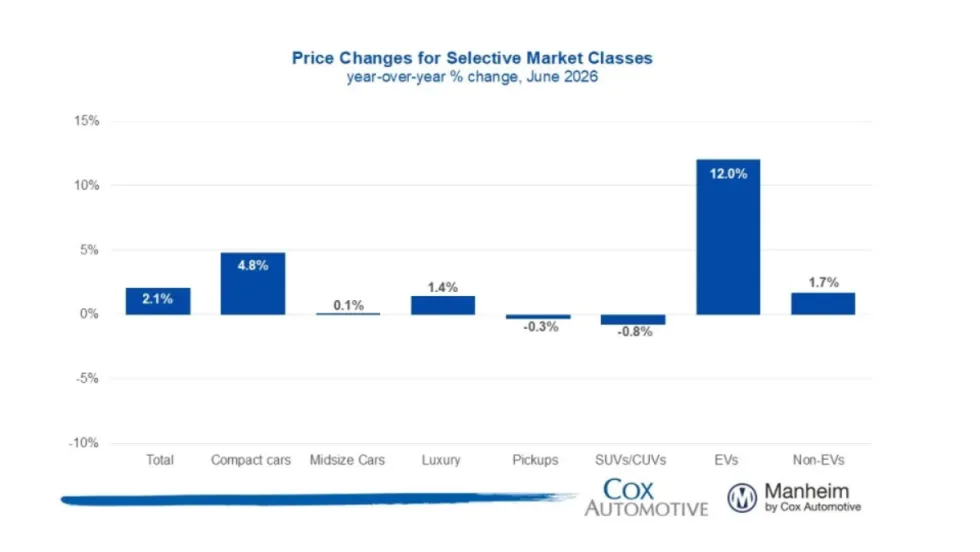
Manheim Index Shows Used-Vehicle Wholesale Prices Up 2.1% in June
The market is seeing stronger appreciation in older used vehicles this year, and the most affordable segments have been among the year’s best performers.
Read More →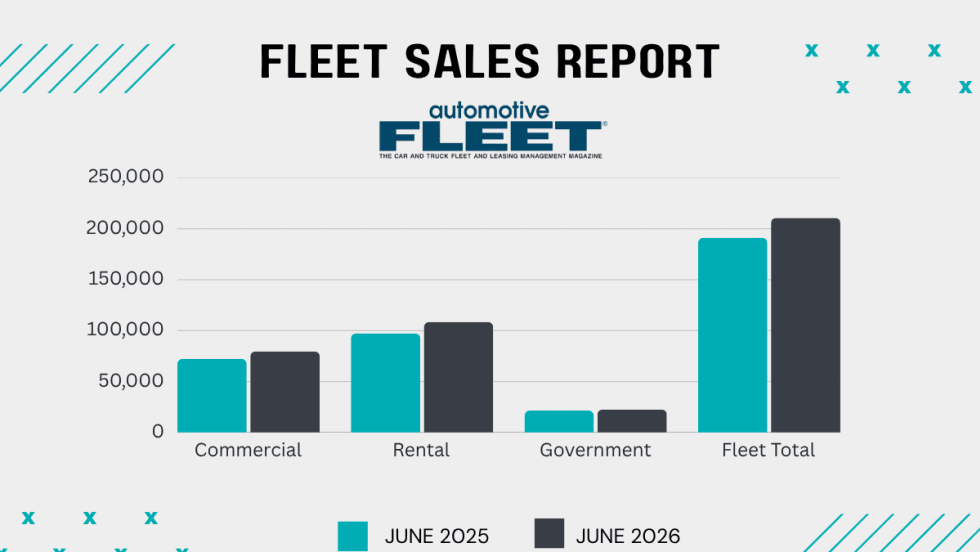
Commercial Fleet Sales Contribute To June, YTD Gains
The fleet sector has boosted its vehicle purchases at a reliable pace in the first half of this year compared with 1H 2025.
Read More →
Stop Remarketing Electric Vehicles Like Gas Cars
The advantages and attributes of electric vehicles are upending the traditional remarketing cycle, requiring fleet sellers to rely on new factors and approaches detailed below.
Read More →
AP Fleet Management Expands Remarketing Program for Commercial Work Trucks
AP Fleet Management expanded its commercial vehicle remarketing program with dedicated resale services and an online marketplace for used work trucks.
Read More →
Used EVs Strengthen Overall Electric Vehicle Market
The latest sales data point to several reasons for the divergent trends in new and used EVs that can factor into fleet cycling decisions.
Read More →
The Data-Driven Haul: 5 Ways AI is Leveling the Playing Field in Auto Transport
Large and small transport fleets are becoming more competitive as predictive analytics and real-time data inform the logistics decision chain.
Read More →