



Euro-Lessons for Electric Vehicle Fleets and Remarketers
CAR 2023: What will be the foundations of a steady and productive used market for electric vehicles? What steps must be taken to ensure a viable EV sector?

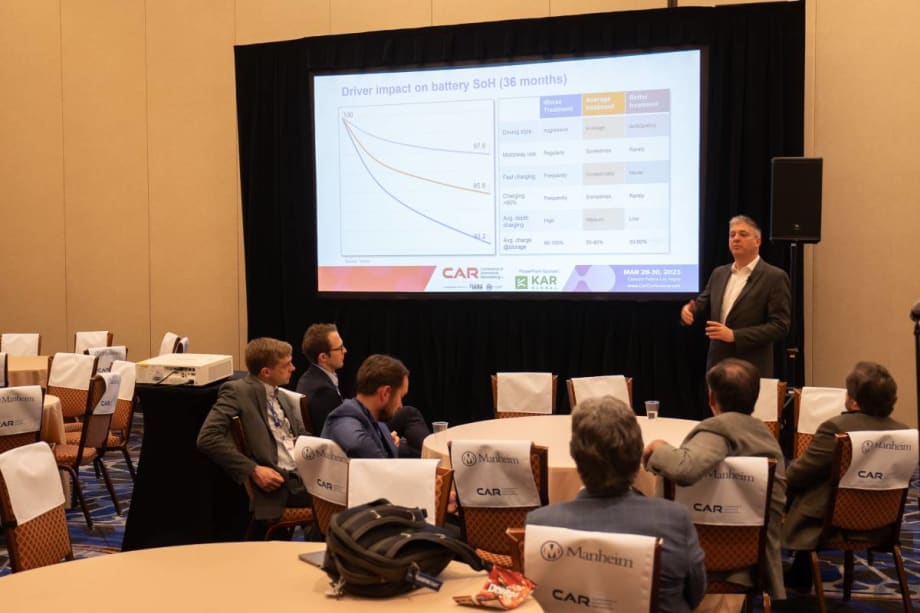
Johan Verbois, managing partner of 5s Consulting in Antwerp, Belgium details the track record of electric vehicles across Europe during his presentation March 29, 2023 at the Conference of Automotive Remarketing in Las Vegas.
Photo: Ross Stewart / Stewart Digital Media
If the electric vehicle wave builds and sweeps across transportation, it will first need strength from a deep enough sea of infrastructure, consistent battery evaluations and standards, and reliable valuations.
Those are among the many insights derived from the European electric vehicle market, which remains a few steps ahead of the U.S. one.
“I think the most dangerous thing is complacency,” said Johan Verbois, managing partner of 5s Consulting in Antwerp, Belgium during the Conference of Automotive Remarketing on March 29. “We need to be open. It's not about whether the wave will move there completely. No, it will move. But if it's 80/20, or it’s 70/30, it’s just as hard.”
Meeting the Big Electric Vehicle Challenges
Verbois presented a session, “The Realities of Electric Vehicles in Fleets & Remarketing Channels,” that covered three key and related areas, which pose specific challenges to the remarketing industry:
The customer journey, such as physical-digital formats and e-commerce channels
The powertrain transition, including how to handle and sell used electric vehicles
Changing distribution models, from dealers, to auctions, to direct sales
“When is the wave going to come?” Verbois asked. “We need to prepare and know the infrastructure; we need to know when to do what.”
Verbois previously worked as head of fleet remarketing and dealer development at Toyota Motor Europe. He also has held various positions in sales and marketing with General Motors, Opel, Peugeot, and Mercedes-Benz. He now serves on the board of the Car Remarketing Association Europe (CARA).
Verbois cited the following trends and stats from his recent research:
14% of the European vehicle market in 2022 was pure electric vehicles and another 9% were PHEVs.
In 2022, 79% of all new cars sold in Norway were 100% battery-electric powered vehicles.
In Belgium, 78% of electric vehicles are in fleets, while in the Netherlands 48% are in fleets. The share of EV fleet usage overall is higher than private use in Europe.
Electric Vehicle Battery Usage Determines Quality
After considering the price of an electric vehicle, the battery is the main element that concerns buyers, Verbois said.
Driving and charging behavior affects an EV battery. Not everyone charges in the same way, while mileage varies among drivers depending on distances driven.
Determining battery capacity and range on a used electric vehicle often depends on learning the history of the vehicle’s usage, Verbois said.
“This is not yet an exact science. Many companies know this is the case. So how do you measure this? How can you go back in history and calculate the value? How can you show that his driver has not done what he should have done? If for example, he only drove 50 miles a day and he used a fast charge every other day?” Verbois asked while illustrating the challenge.
One lesson learned is it’s better to charge an EV for one hour and drive away than charge it and not drive it for 24 hours.
“That’s because the battery is warm and has been charged. If you then start driving, it doesn't need to warm up anymore and doesn't use energy.”
Even in European countries with many electric vehicles, drivers lack adequate information and communication, Verbois said. To build confidence in EV resales for consumers, the market needs a consistent certification of the car’s condition.
“Everyone wants to prove how bad the batteries are. No one sees it from a sales perspective on how can we guarantee that this car is good for you?” Verbois said.
A used EV’s range and battery capacity can vary based on how far and often the new buyer will drive it. Some customers won’t need the maximum range. “What do we need to have to convince someone that the EV is for them?”

Determining battery capacity and range on a used electric vehicle often depends on learning the history of the vehicle’s usage, Verbois told session attendees.
Photo: Ross Stewart / Stewart Digital Media
Obstacles & Opportunities for Electric Vehicles
To keep EVs affordable, focusing on residual values is more important than ever for an OEM. There are many external factors that must be sorted out, from government regulations, taxation, inflation, depreciation, interest rates, and incentives.
The used EV market in Europe has not yet fully developed enough aggregate data for consistent assessments and valuations, Verbois said.
Meanwhile, the online environment needs to support consumers and B2B buyers in ways that can help them analyze the vehicles in searches based on consistent metrics and standards.
“In an auction environment, there's information that the buyer needs because they want to buy the correct vehicle for the one that will buy the vehicle from them,” he said. “Even in Europe, the skills and the knowledge are not where it should be.”
A recent survey showed that right after price (69%), the second most important subject for used EV buyers is the battery. Here are some hard truths about electric vehicles:
Battery deterioration is technically unavoidable
Range deteriorates according to how temperature affects it
Consumption remains relatively stable
Driving and charging behavior affects length of range
These factors all contribute to the battery state of health (SoH)
A battery considered in the best condition is one where the driver has followed these practices:
Anticipated, or scheduled driving trips
Rare use of highways and interstates
No fast charging
Rare charging of battery beyond 90% capacity
Low average depth charging
30%-50% average charge at storage
To help standardize the process, CARA Europe established a working group in April to facilitate remarketing and support residual values of used BEVs through:
Trust in the battery
Easy communication with buyers
Independent assessments and certification
The end goals are to:
Set the SoH standard
Evaluate technology and process possibilities for vehicle individual battery assessment
Review, validate and real-life test technologies for obtaining SOH data
Propose a settlement process in case of disputes
Many of the challenges and opportunities will increase the costs of electric vehicles
Among the challenges:
Transportation safety
Vehicle weight
Energy consumption
Loading capacity
Opportunities:
Compound upgrades for efficiency and safety that will improve the performance and amenities of EVs
Possibility of remote inspections
Assessing fair wear and tear leading to the battery state of health
Determining a detailed SoH report and refurbishment needs
Residual values are even more critical for BEVs based on these TCO factors: Depreciation, which comprises 62% of the residual value, financing, taxes, insurance, service, consumption, and highway usage.
Making Electric Vehicle Resales Consumer-Friendly
Verbois presented five key EV consumer needs for digital retailing and e-commerce:
Convenience: Support my online journey with an easy experience, smooth and seamless.
Security: Give me peace of mind that whenever something would go wrong, there is a safety net.
Trust seller: Support my need for reassurance that vendor can be trusted.
Trust vehicle: Help me to be confident that the vehicle is in line with expectations by a transparent view without hiding any details.
“My” car = choice: Facilitate my search to find the best choice for me personally supported by filters, favorites, and comparisons. I need to check all details to be sure.
Research of used vehicle customer websites across 240 fields found the following standards for successful EV resales:
Search: Narrow down the search to give the consumer the confidence to choose the best possible vehicle based on their preferences.
Display: Describe and display the vehicle to create confidence in the choice and increase desire of the product.
Electrification: Support the BEV customer in their purchase by adding the required information and trust.
Sales: Create a seamless consumer online flow by offering the required services while adding ancillary services sales opportunities.
Trust: Create trust in both seller and vehicle by highlighting quality, being transparent on vehicle history and consumer experiences and offering a safety net.
Originally posted on Charged Fleet
More Used Vehicle Values
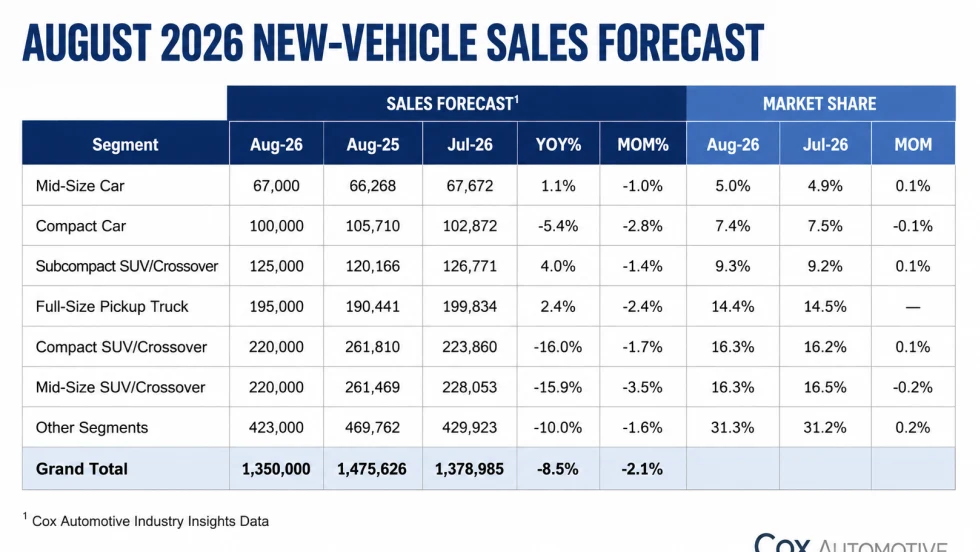
August New-Vehicle Sales Pace Forecast to Hold Above 16 Million
Despite an expected 8.5% year-over-year decline in August volume, Cox Automotive forecasts a 16.3 million SAAR, with full-size pickups outperforming several major crossover segments.
Read More →
Trade Strategy Now Starts Long Before Turn-In
The strongest trade values aren't built at turn-in. Discover how maintenance, lifecycle planning, and shared risk protect truck resale value.
Read More →
What Happens When Residual Values Meet Real-World Markets
A truck's trade value isn't determined on turn-in day. Learn how market cycles, maintenance, and timing shape the gap between residuals and reality.
Read More →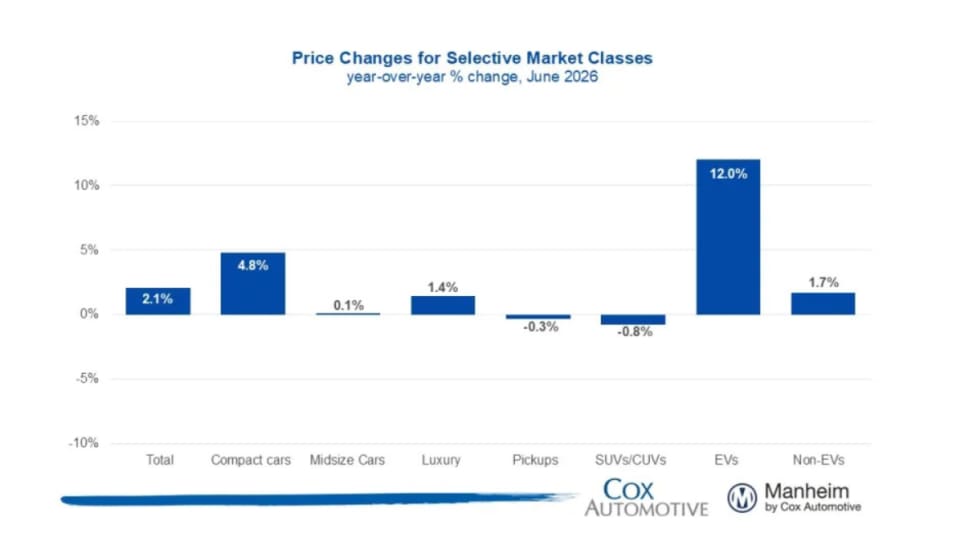
Manheim Index Shows Used-Vehicle Wholesale Prices Up 2.1% in June
The market is seeing stronger appreciation in older used vehicles this year, and the most affordable segments have been among the year’s best performers.
Read More →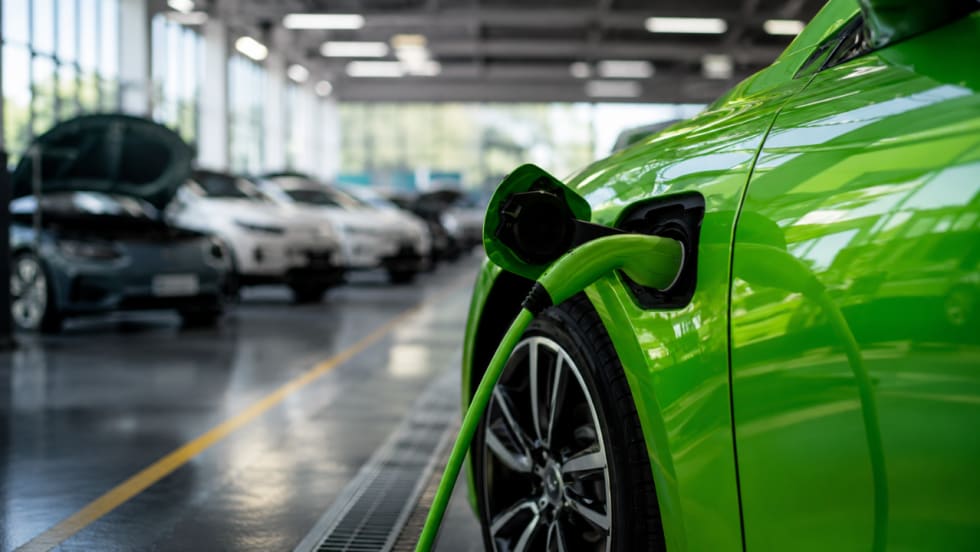
Stop Remarketing Electric Vehicles Like Gas Cars
The advantages and attributes of electric vehicles are upending the traditional remarketing cycle, requiring fleet sellers to rely on new factors and approaches detailed below.
Read More →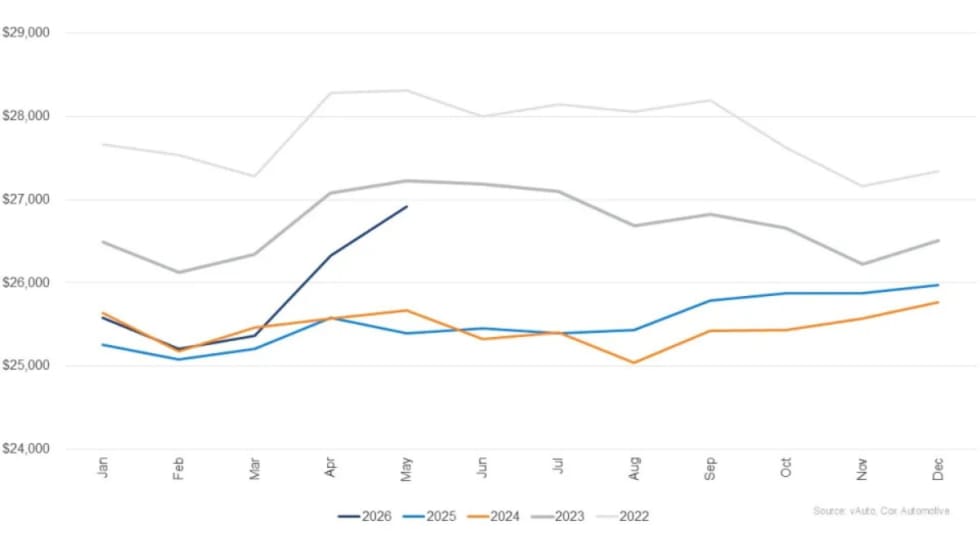
Used Vehicle Prices Climb Higher As Sales Pace Slows
The higher prices at used retail reflect strong wholesale values earlier in the spring, particularly for older, more affordable vehicles.
Read More →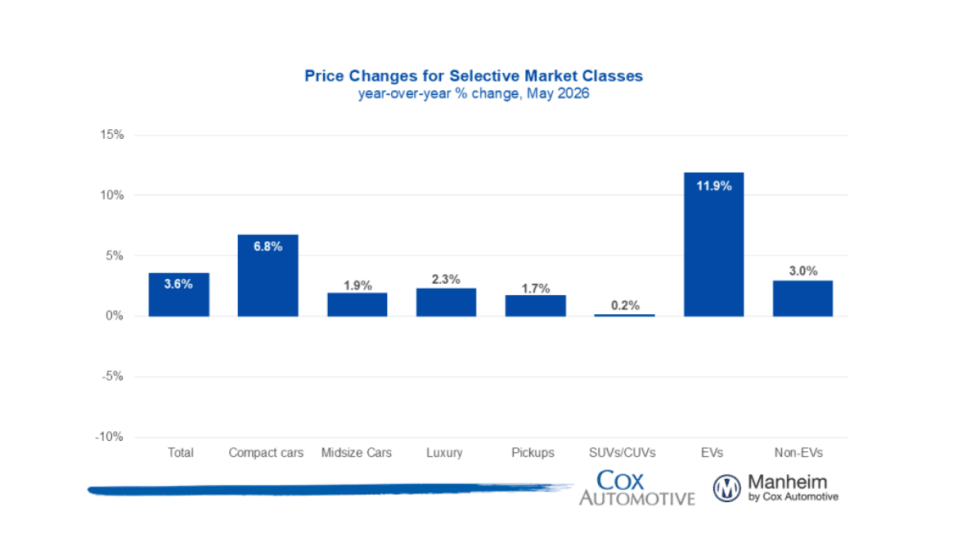
Wholesale Used Vehicle Market Sustains Moderate Rise In Values, Prices
Trends continue to normalize after a strong start to the year, as consumers contend with higher gas prices in the coming summer months.
Read More →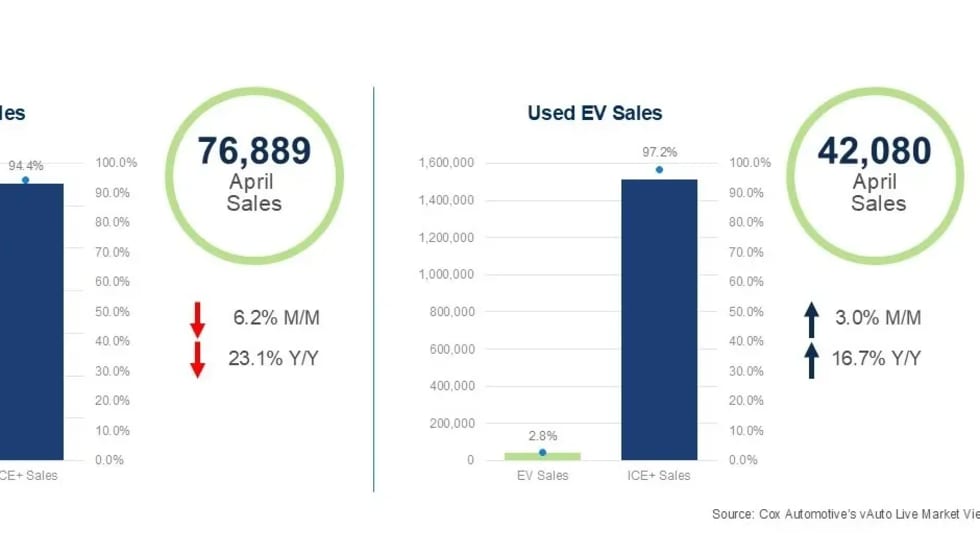
Used EV Sales Grow In April
While EV sales declined, used EV sales grew, as tighter inventory and rising prices reflected a more normalized pace for the EV market.
Read More →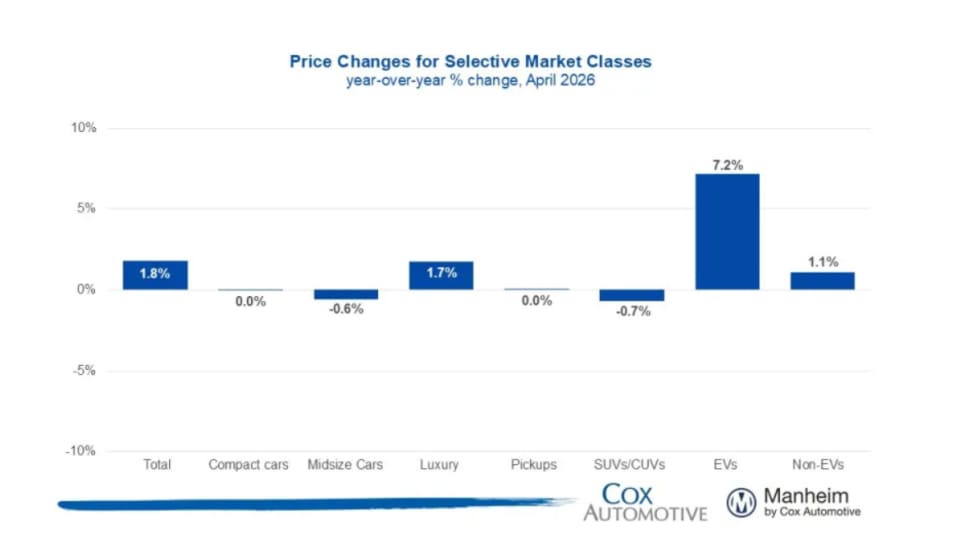
Wholesale Used Vehicle Prices Slightly Up In April
The Iranian conflict and rising gas prices inject much uncertainty into the future wholesale used vehicle markets, as higher gas prices soak up spendable income from vehicle buyers.
Read More →
CAR 2026 Recap Part 2: Closing the Gap Between Data & Remarketing Value
The second half of CAR 2026 examined how fleets can translate lifecycle strategy, vehicle data, and market shifts into higher real-world results.
Read More →