



Economic Twists and Turns Jolt Vehicle Markets
NAAA Remarketing Outlook: High vehicle prices, low inventory, solid resale values, and an enigmatic economy are taking the normality out of used and new vehicle sales.


Remarketing industry analysits Dr. Alex Yurchenko, chief data science officer at Black Book, and Patrick Manzi, the chief economist for the National Auto Dealers Association, shared insights with moderator Larry Dixon, vice president of auction data solutions for the NAAA, during a presentation, "New and Used Market Performances and Economic Outlook," at the National Auto Auction Association convention in Dallas on Sept. 7, 2022.
Photo: Martin Romjue / Bobit
By now the dynamics of the U.S. vehicle markets sound familiar: You overpay for a new car, sell a used one at record high prices, and keep your fleet vehicles for as long as possible, since the demand pile-up could last years.
The causes and the reasons for this state seem to multiply and conflict, with a confusing mix of results for dealers, auctions, and consignors: More profits, fewer sales, and lower volumes.
Adding context to the latest whirl of numbers for auction owners and operators, a panel of analysts dissected the vehicle markets at a presentation Sept. 7 during the National Auto Auction Association convention in Dallas. Moderator Larry Dixon, vice president of auction data solutions for the NAAA, parried the latest indicators with Patrick Manzi, the chief economist for the National Auto Dealers Association, and Dr. Alex Yurchenko, chief data science officer at Black Book.
New, Used, and Electric Vehicles Transform Market
Manzi laid out SAAR since the pandemic hit: As of Q4 2021, there were 283.3 million total vehicles in operation in the U.S. The seasonally adjusted annual rate (SAAR) of new light-vehicle sales hit a pandemic low of 8.6 million units in April 2020 and then soared to an all-time century high of 18.3 million in April 2021, before bottoming out at 12.2 million units later that summer. As of August, SAAR was 13.2 million units, according to the NADA. Inventory has limited new light-vehicle sales, with 1.1-1.2 million forecast to be sold per month for the rest of year.
“CUVs, pickup trucks and SUVs are the most popular vehicles now, which will soon comprise more than 80% of the market,” Manzi said. Small to mid-size cars make sense for certain markets, but larger sedans are gone.
“If you can’t find a new vehicle today, you have to go used,” Manzi said, including fleets that take a backseat to retail buyers that get priority. Competition is especially tight in the 1–3-year-old used vehicle market, with prices pushing up.
NADA reports the year-to-date average price (as of June) for a new car was $45,646, and for used, $30,796. Cox Automotive reported in early September that the average transaction price for a new vehicle reached a record $48,000+.
A leading reason is reduced incentives due to constrained supply. Incentives have been averaging below $1,000 for the last four months, whereas leasing is only about 17-18% of new vehicle sales compared to 30% before the pandemic.
Interest rates now for vehicle financing average 5.3% for new vehicles and 8.4% for used ones, rising to pre-pandemic levels, and expected to increase more.
“Rates are more of a headwind for vehicle affordability,” Manzi said, with $704 the average monthly payment for a new vehicle, $553 for a used, $617 for lease. “More [buyers] will be pushed out as rates and prices rise.”
The market is seeing an abnormal one-to-two-month backlog of orders. “It was an instant gratification type of market. It will start to cool in retail.”
The new vehicle sales forecast this year has declined from 15.2 million in January to 14.2 million now, Manzi said. “Production has picked up a little, but it’s still a very difficult world out there for building cars.”
EVs Emerging at Faster Clip
Electric vehicles make up 5% of vehicle sales so far this year, compared to 2.5% of sales in 2021. But ICE vehicles are still at 87% market share year to date as of July 31, compared to 91% for the same period in 2021. Battery electric vehicles (BEV) make up only 1.5 million or .5% of all vehicles on the road.
The share of EV sales by dealerships is expected to grow to 60% of all BEVs as OEMs push them out. Globally, the U.S. is still behind Europe and China. BEVs are now more than 8.5% of all vehicles sold worldwide.
Inventory to Remain Stagnant
Manzi said temporary factory closures and the chip shortage prevent inventory from building up. “It’s unlikely inventory will climb higher,” he said, and pressure from pent up demand from fleet and retail buyers will keep inventory low in 2023. Further constricting available vehicles will be aging rental cars that need to be replaced, he added.
There were 1.8 million vehicles sold to fleets so far this year, continuing a three-year decline.
Overall, 14.2 million light vehicles have been sold in the U.S. in 2022, but despite such lower volume, the average dealer and OEM will net strong financial results given demand and higher pricing.
Production likely will increase slightly in 2023 as the chip shortage shows no signs of abating, but the chip supply should start growing in 2024 leading to more vehicles sales, he said.
Used Vehicle Supply Stable, But Constrained
Yurchenko elaborated on the general trends as they related to the used vehicle market, which has been affected more than ever by the historic lows in new inventory.
“On the used side, we’re still in a (comparatively) healthy environment,” he said. “We still haven’t seen the lowest inventory. We’re still getting enough used leases and more consumers are coming into the market. The lack of new inventory is a major force in the pricing and availability for the used market.”
Franchise dealers are seeing their share of used vehicle on the lot range below 50%, compared to pre-pandemic average of 60%, he said. “They’re not getting as many used vehicles from regular sources, such as off lease.”
Rental companies are causing a shift in the mix of used vehicles on the market, since most were buying instead of selling in 2021 but now are trying to unload older, higher-mileage vehicles, he said. “It’s tough to get a one-year-old vehicle with low mileage. Most rental companies are bidding for those vehicles.”
Returned used vehicles range to eight years old, which will lead to more of a shortage next year, with used supply already down 6% this year. Expect 3-4-year-old lease returns to decline in the next several years because not enough new vehicles are being sold, Yurchenko said.
Among auctions, conversion rates have been dropping this year following healthy demand in 2021 as retail demand weakens for used vehicles. “Overall, volume going through various channels are substantially smaller than pre-COVID levels,” he said.
Good Luck with Market Predictions
What all the varying year-over-year numbers point to is a market that’s hard to predict, Yurchenko said.
“We see a roller coaster in week over week price changes in three different age groups of vehicles. In last the two weeks alone, we’ve seen unseasonably high depreciation in the used market across (vehicle) age groups.” He blamed some of the lowest consumer confidence levels in a generation for making buyers hesitate on purchasing a vehicle.
He further cited the combination of rising inflation, the Russian-Ukrainian war, and spiking gas prices likely leading to wholesale sales price declines in coming months, with higher rates of depreciation expected in the fourth quarter.
While used vehicle prices have remained stable this year, dealer margins have moved up and down. As demand slows, retail prices should decline slightly, he said.
“Even with expected declines in prices over the next two years, they will be 30-40% above pre-COVID levels,” Yurchenko said. “They’re still in a high range due to used inventory shortage and chip supplies. There will not be normality in the market for a while.”
State of Economy Defies Definition
Dixon asked both experts about effects on the vehicles markets from the wider economy, which he termed “an enigma” with inflation at 40-year highs, a strong labor market, low unemployment and slowing GDP. New vehicles are selling at MSRP 80% of the time, he said.
If a full recession materializes in 1Q 2023, then it will be more of a growth recession instead of a traditional jobs-driven one, Manzi said. “It’s so hard to find workers now. Firms will do all they can to hold on to people.” With 1.8 job openings for every unemployed person, any recession would likely be mild.
On the vehicle demand side next year, consumers with bad credit will be priced out of a market with rising vehicle prices and tighter banking requirements, Yurchenko said. Buyers are postponing purchases amid the uncertain economy.
“If we have a recession, it will be short and mild, but still a recession. Very high new prices will weaken demand.”
To make vehicle payments more affordable, more buyers will take out 72–84-month vehicle loans and take advantage of higher trade-in values on used vehicles, Manzi said. “You don’t have low interest rates and no incentives, so the only option is extending the terms of a loan.”
The market is seeing a portfolio shift among buyers to higher credit scores, which prices lower credit consumers out of the new vehicle market. Ford credit issuers are even seeing delinquency increase even at prime-buyer levels. The market will force sub-prime buyers to seek older and older used vehicles.
Supply Pressures Ahead
Despite predictions in the last decade that the Millennial generation would collectively avoid car ownership, they are becoming the largest car buying cohort as they form families and move to the suburbs, Manzi said, adding to an already competitive buyers’ market.
Yurchenko predicts a more normal year of 15-18% vehicle depreciation with that level holding up in 2023, but without the normal seasonal patterns. The lack of seasonal trends will challenge remarketers since the expected number of lease returns and repossessed vehicles will vary.
The data analyst foresees more consolidation among dealer groups in the next few years, with many opting for volume sales and thereby sacrificing typical margins for used vehicles sold. AutoNation, for example, will increase stores from 12 to 130 by 2026.
Dixon observed that with fleet sales down 45% this year compared to 2019, the market is looking at a 50% expected reduction in off rental and commercial fleet vehicles that will further squeeze fleets starved for newer supply.
Manzi predicted once the chip supply evens out, OEMs will ramp up production to closer to three million vehicles instead of two million. That should dent stacked up demand but not deplete it.
More Used Vehicle Values
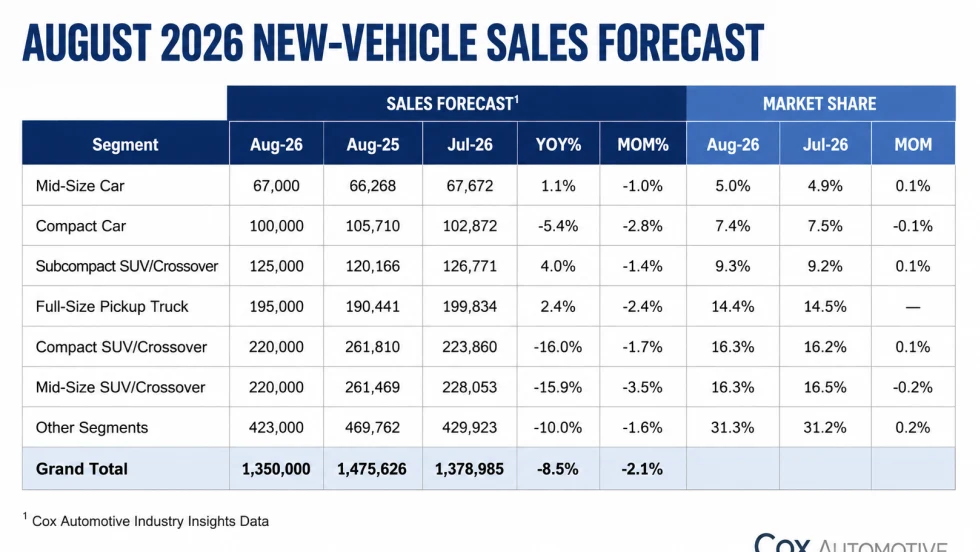
August New-Vehicle Sales Pace Forecast to Hold Above 16 Million
Despite an expected 8.5% year-over-year decline in August volume, Cox Automotive forecasts a 16.3 million SAAR, with full-size pickups outperforming several major crossover segments.
Read More →
Trade Strategy Now Starts Long Before Turn-In
The strongest trade values aren't built at turn-in. Discover how maintenance, lifecycle planning, and shared risk protect truck resale value.
Read More →
What Happens When Residual Values Meet Real-World Markets
A truck's trade value isn't determined on turn-in day. Learn how market cycles, maintenance, and timing shape the gap between residuals and reality.
Read More →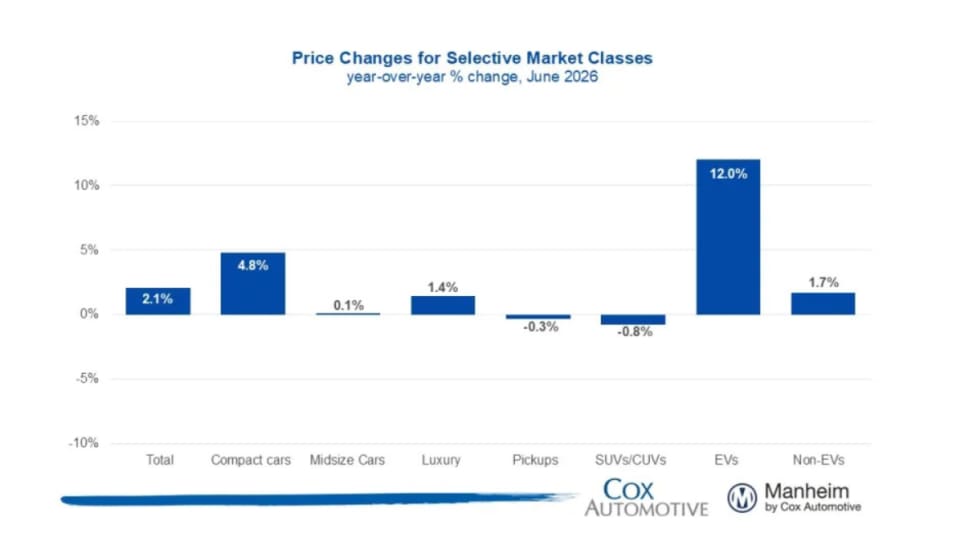
Manheim Index Shows Used-Vehicle Wholesale Prices Up 2.1% in June
The market is seeing stronger appreciation in older used vehicles this year, and the most affordable segments have been among the year’s best performers.
Read More →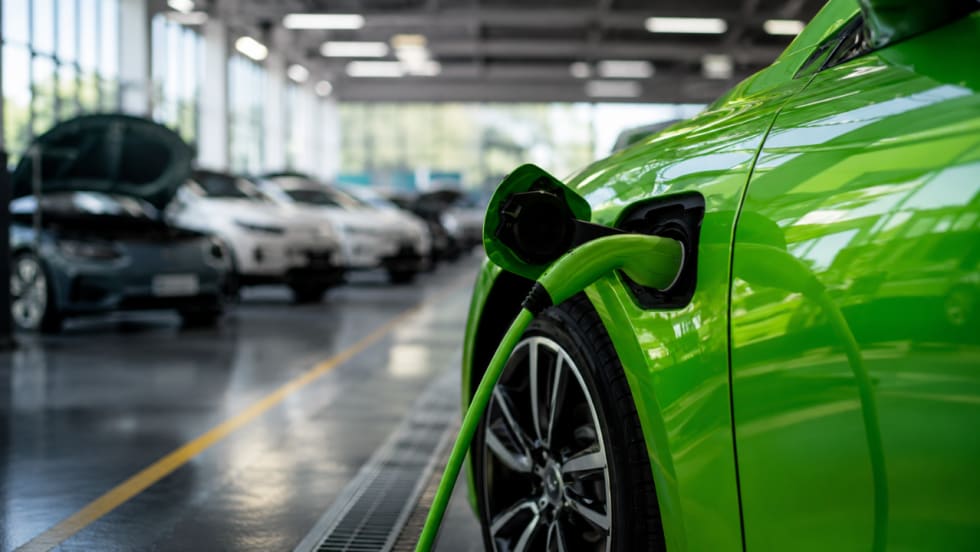
Stop Remarketing Electric Vehicles Like Gas Cars
The advantages and attributes of electric vehicles are upending the traditional remarketing cycle, requiring fleet sellers to rely on new factors and approaches detailed below.
Read More →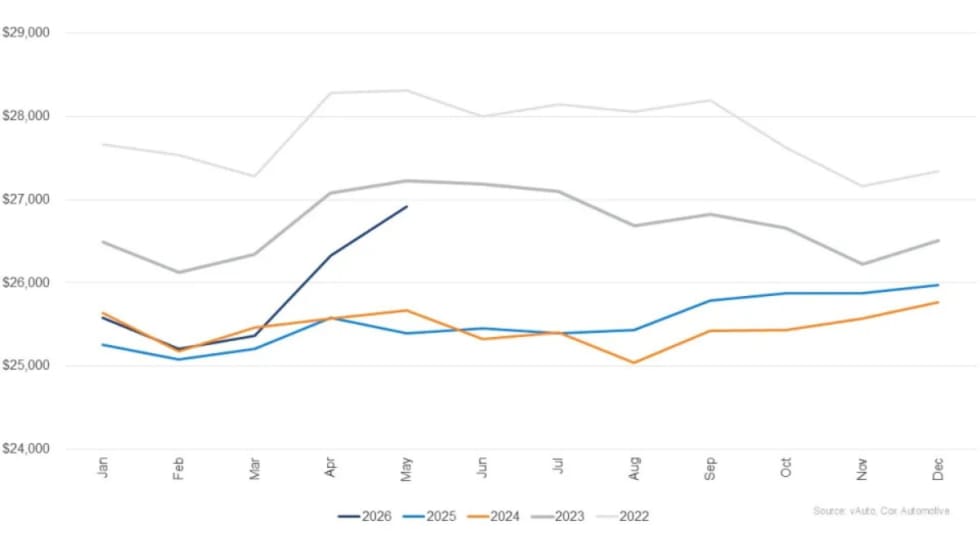
Used Vehicle Prices Climb Higher As Sales Pace Slows
The higher prices at used retail reflect strong wholesale values earlier in the spring, particularly for older, more affordable vehicles.
Read More →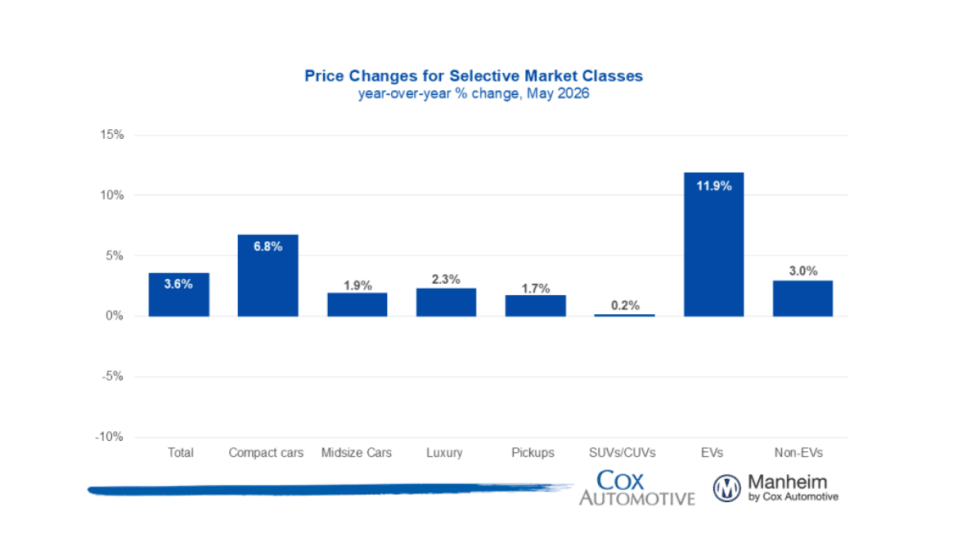
Wholesale Used Vehicle Market Sustains Moderate Rise In Values, Prices
Trends continue to normalize after a strong start to the year, as consumers contend with higher gas prices in the coming summer months.
Read More →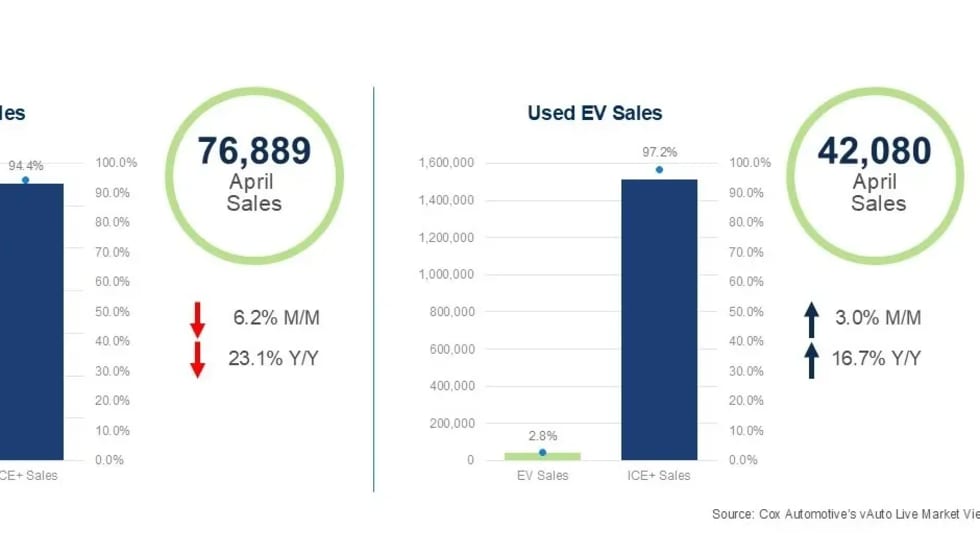
Used EV Sales Grow In April
While EV sales declined, used EV sales grew, as tighter inventory and rising prices reflected a more normalized pace for the EV market.
Read More →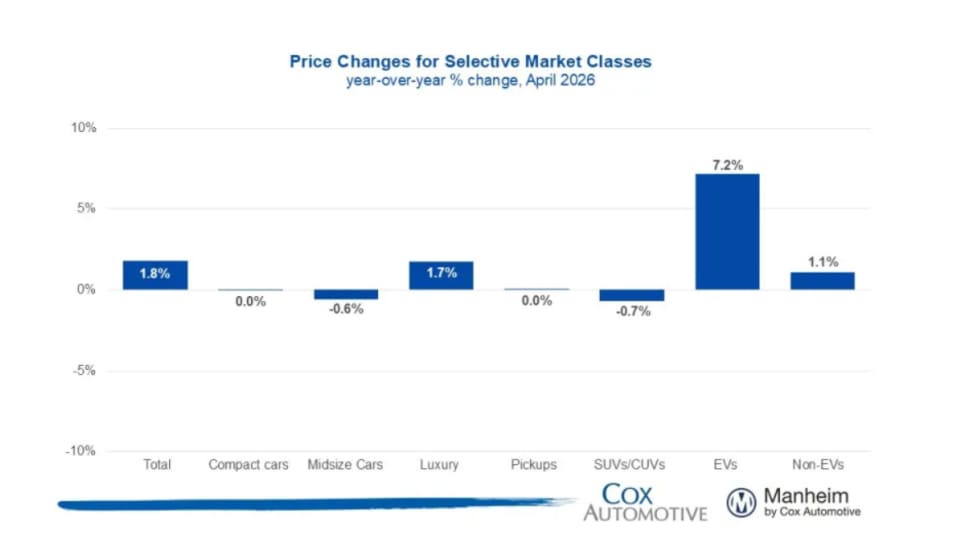
Wholesale Used Vehicle Prices Slightly Up In April
The Iranian conflict and rising gas prices inject much uncertainty into the future wholesale used vehicle markets, as higher gas prices soak up spendable income from vehicle buyers.
Read More →
CAR 2026 Recap Part 2: Closing the Gap Between Data & Remarketing Value
The second half of CAR 2026 examined how fleets can translate lifecycle strategy, vehicle data, and market shifts into higher real-world results.
Read More →