



Using Smart Video Strategies and AI To Build A Safer Fleet Culture
A Solid Safety Culture Steers Crucial Fleet Outcomes
Fleet employers need to throw out the gimmicks and chatter and make way for more positive learning and reinforcement in operations.
December 29, 2025
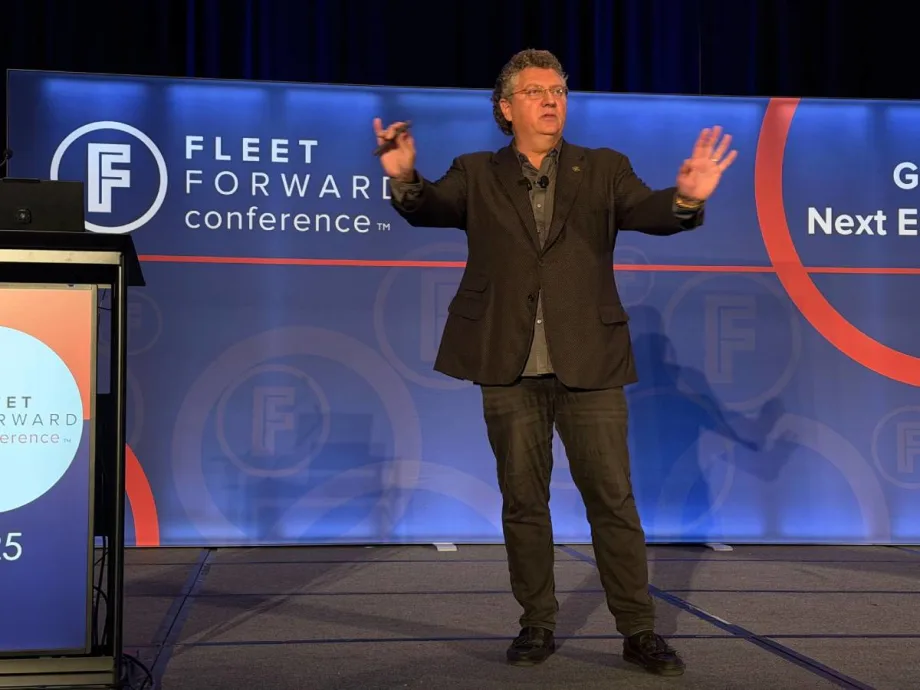
With more than two decades of experience as a global speaker and over 15,000 leadership engagements, safety keynote speaker Bill Sims framed safety as a core concept in fleet operations and company culture.
Photo: Jonathan Robbins / Bobit Business Media
9 min to read
Every fleet operation has one main goal: Ensuring drivers return home safely each night.
The safety culture question behind that outcome: Do fleet managers aim for that goal through positive or negative reinforcement?
“It is the leadership behavior in your company that drives the culture that controls the worker behavior that produces results,” said safety and leadership expert Bill Sims, author of “Green Beans and Ice Cream,” who gave the safety keynote on Oct. 23 during the Fleet Forward/Safety Conferences in San Diego.
While technology, data, and telematics all play critical roles in modern fleet management, Sims noted that safety outcomes ultimately rise or fall based on the quality of leadership.
With more than two decades of experience as a global speaker and over 15,000 leadership engagements, Sims framed safety as a core concept in fleet operations and company culture.
Fatalities, crashes, profits, and losses are results, while the drivers of those results are worker behavior, culture, and leadership. Many operations and organizations struggle to measure and improve those drivers.
Employees Reward Dignity and Respect With More Effort
To illustrate the power of leadership behavior, Sims shared the story of Paul O’Neill, former CEO of Alcoa and former Treasury Secretary under President George W. Bush. When O’Neill took over the company in the 1980s, Alcoa was struggling financially. Wall Street expected a turnaround focused on margins and production. Instead, O’Neill said his top priority would be worker safety.
At the time, Alcoa’s injury rate was already better than the national average, but O’Neill declared that people at Alcoa should never be hurt at work and that the company would pursue zero injuries. Analysts reacted with disbelief, but over the next eight years, Alcoa’s stock value grew from $40 billion to $280 billion.
Sims explained that O’Neill understood something fundamental about human behavior: that employees possess discretionary energy. They can choose to give extra effort or withhold it. When workers feel treated with dignity and respect, they are more likely to apply discretionary energy to safer work, higher quality, and increased productivity.
“Great leaders like O'Neill create a culture of commitment, where people give discretionary effort, where we have more lifters than we do leaners.”
Sims outlined a common scenario for fleets: “Your driver gets in that expensive truck that you just provided him, and he sees a little yellow check engine light on the dash, and he says, ‘I'm going to pull over, and I'm going to check the oil.’ That's what we call discretionary effort. He's a lifter. And he fills it up and reports it to maintenance. On the other hand, another worker is pissed off at management because they've used negative reinforcement, destroying trust, morale, and retention. So, he looks at the yellow light and says, ‘I'm going to drive this truck and drive it and drive it and not say anything. He burns up a $10,000 engine, and you can't do anything about it.”
No Trust Erodes Engagement and Lessens Safety
Leadership behavior creates culture, culture controls worker behavior, and worker behavior produces results, Sims said. While operations and companies often succeed at measuring results, they frequently overlook the leadership behaviors that drive them.
Sims challenged attendees to consider whether leaders throughout their organizations, from the C-suite to dispatchers and supervisors, treat drivers with dignity and respect.
Disrespect is one of the leading reasons drivers leave companies. When leaders fail to build trust, disengagement grows, and safety suffers.
“We know that you don't leave a company. You leave your boss,” Sims said. “This is an interesting question. Why do so many supervisors fail to become leaders? Why is it that your dispatchers, your supervisors, your managers, branch managers, the ones that are right above your drivers, why do so many of them fail to lead? Here's why: Yesterday, you were the hardest-working employee on the front line, and tomorrow, you're a supervisor. Did we provide the soft skills training you needed to succeed in safety leadership? Probably not. Soft skills are the hard skills.”
How To Avoid An Engagement Deficit
Sims pointed to decades of Gallup research showing a persistent engagement deficit in the workforce. About 32% of employees are engaged, while 51% are disengaged and 17% are actively disengaged.
“Sadly, dignity and respect have become an endangered species in our country,” he said.
Engaged employees are safer, more productive, and less likely to leave. Disengaged employees are more likely to cut corners, call in sick, or file costly workers’ compensation claims. Disengaged employees can pose a toxic risk to safety and morale.
“Engaged workers don't call in sick as much,” Sims said. “They get the work done with quality and safety. They don't milk an ankle sprain in the parking lot for a quarter of a million-dollar work comp claim because they don't like their boss.”
Across surveys conducted in 22 countries, one predictor consistently determines engagement: whether employees believe their boss cares about them. When that belief exists, trust forms what Sims described as a “trust bridge,” allowing disengaged workers to cautiously re-engage.
“Some of those cynical, 51% of disengaged workers tiptoe across the trust bridge, and they say, ‘They're different around here. They're not jerks like the last company I left. I'm going to become engaged.’
“And when your company pulls off the tiptoe across the trust bridge, and you go from 32% engagement to 42% to 52% you do what Paul O'Neill did from growing $40 billion to $280 billion in stock value. This is why you care.”
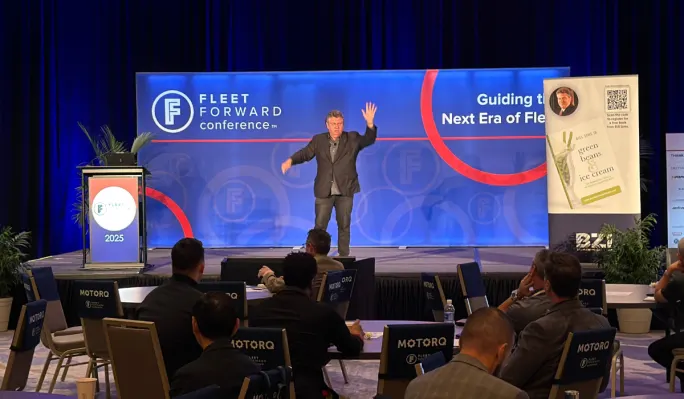
Safety and leadership expert Bill Sims, author of “Green Beans and Ice Cream,” gave the safety keynote on Oct. 23, 2025, during the Fleet Forward Conference in San Diego.
Photo: Jonathan Robbins / Bobit Business Media
Negative Approach Collapses Morale and Retention
Many safety programs rely heavily on training, discipline, and punishment. Sims argued that while training is important, it rarely changes behavior on its own. Using the ABC model (activator, behavior, consequence), he explained that consequences, not instructions, drive behavior change.
Negative reinforcement may produce short-term compliance, but it also damages trust, morale, and retention. Over time, it can erode discretionary effort and prompt employees to retaliate by disengaging or neglecting their work.
“Negative reinforcement, punishment, and penalty; those three consequences are the default consequences most every company uses today to control worker behavior,” Sims said. “And the problem for the worker is it sets up revenge as positive reinforcement.”
Failing To Connect Actions and Rewards
The most powerful tool available to leaders is positive reinforcement, Sims said.
Often used in motivational settings, positive reinforcement focuses on rewards that reinforce stronger behaviors. It can involve praise, encouragement, rewards, incentives, and support, all aimed at increasing desired actions.
Unlike punishment or delayed rewards, positive messages center on immediate, specific, and personal communication. It clearly connects a desired behavior with a meaningful response.
Sims illustrated the concept through the metaphor behind his book title, “Green Beans and Ice Cream.” As a child, he learned to eat green beans because his mother immediately rewarded the behavior with ice cream. The reinforcement was clear and timely.
In contrast, delayed rewards such as annual performance reviews or generic safety awards fail to reinforce specific behaviors because employees cannot connect the reward to their actions.
“Performance reviews are once a year. They're too subjective. The consequences are not great enough. So, it must be immediate,” he said.
Sims said companies are “missing the mark 100%” by resorting to shopworn motivational gimmicks, such as gift cards, gamification and point programs, pizzas in the break room, logoed swag, and other little treats.
“With all due respect to HR, they've been trying for 30 years to change the numbers. Offering larger 401(k) plans didn't work. What works is when my boss cares about my personal safety, my mental health, and my family's safety. Now you've connected with me in a way nothing else can because positive reinforcement builds the trust bridge.”
Telematics Must Enhance Driver Trust
Telematics and in-cab cameras have become standard tools in fleet safety, and many fleets have reduced unsafe driving behavior through negative reinforcement-based systems. Sims warned that those gains come at the expense of the work culture.
“Your employee will get even with you,” he said. “You cannot prevent it. When we use negative reinforcement, it creates more cave people. The danger with negative reinforcement in your culture is that these people will leave you and find another job, and it'll be easy, because they're the lifters. Then you will be left with just 51% of the slackers, and many will become cave people.”
In a case study involving a 10,000-vehicle fleet, Sims described a pilot program comparing two driver groups.
Both groups used telematics, but only one group added structured positive reinforcement.
Within three weeks, the positively reinforced group achieved a 53% reduction in unsafe driving events, including improvements in harsh braking, mobile phone use, seat belt compliance, and forward collision warnings.
Employee Trust Lower Workers’ Comp Costs
Sims cited an example of a fleet where two UPS employees in different areas of the country filed claims for similar injuries.
One was $2,500 claim, the other a $250,000 one. Why?
The Workers Compensation Research Institute studied 100,000 workplace injury claims and outlined three factors that determine the severity and cost of workers’ comp claims:
The type of injury. Did an employee get injured on the finger or the head? Where your employee gets injured is the first driver of injury. Cost.
Severity of the hit. Was the employee hit on the head with a fly swatter or a sledgehammer?
Circumstances of an accident. Two employees are seated in a fleet vehicle with all required safety equipment and protection. Does the vehicle get hit by a bicycle or a Mack Truck?
“The first two factors are largely out of your control,” Sims said. “But the third factor, the biggest one that drives the $250,000 work comp injury claim, takes it from $2,500 to a quarter of a million because of a lack of trust in the boss and leadership. If your employee does not trust you, they don't believe the HR department, the claims adjuster, or the company doctor. They hire an attorney, sue the man, and receive their fair share of workers' compensation.
“The study concluded that how the employee has been treated prior to the injury and during the healing process is one of the largest determining factors,” Sims said.
Priority One: Families See Loved Ones Come Home
Sims underscored the human cost of unsafe work and the moral responsibility carried by safety leaders.
True safety leadership requires uncomfortable conversations, courage, and persistence, Sims said. Safety leaders are the last line of defense in business, and without them, fleet operations risk prioritizing production over people.
Sims challenged every attendee to lead safely. The answer determines not only operational success but also the ultimate success: loved ones return home safely to their families each night.
“Human behavior boils down to what we say and what we do. As leaders, when you say what you will do and do what you say, you build trust. But when you say you do it, and you don't, you destroy the trust bridge.”
Topics:Driver CoachingFleet Forward ConferenceFleet SafetyDriver BehaviorDriver SafetyFleet Safety Conferenceemployee managementOperationsFleet
Originally posted on Automotive Fleet
Subscribe to Our Newsletter
More Operations

CAS Automotive Launches Remarketing Service for Damaged, Surplus Equipment
Damaged Equipment expands CAS Automotive’s vehicle remarketing model to commercial equipment, targeting fleet operators, insurers, equipment dealers, and rental companies.
Read More →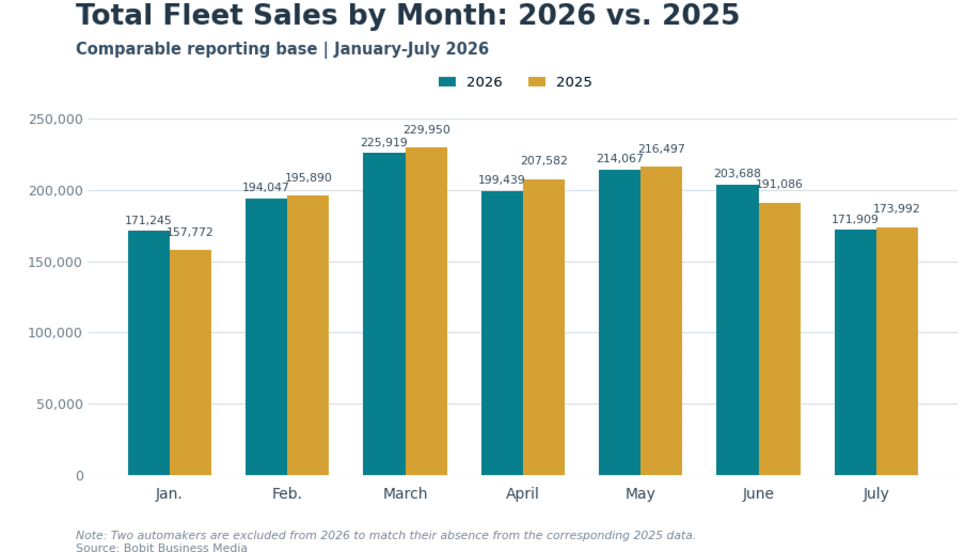
Fleet Sales Hold Steady as Commercial Gains Offset Rental Decline
Commercial and government fleet sales increased through July 2026, offsetting most of the decline in rental volume and leaving combined comparable fleet sales 0.5% above the same period last year.
Read More →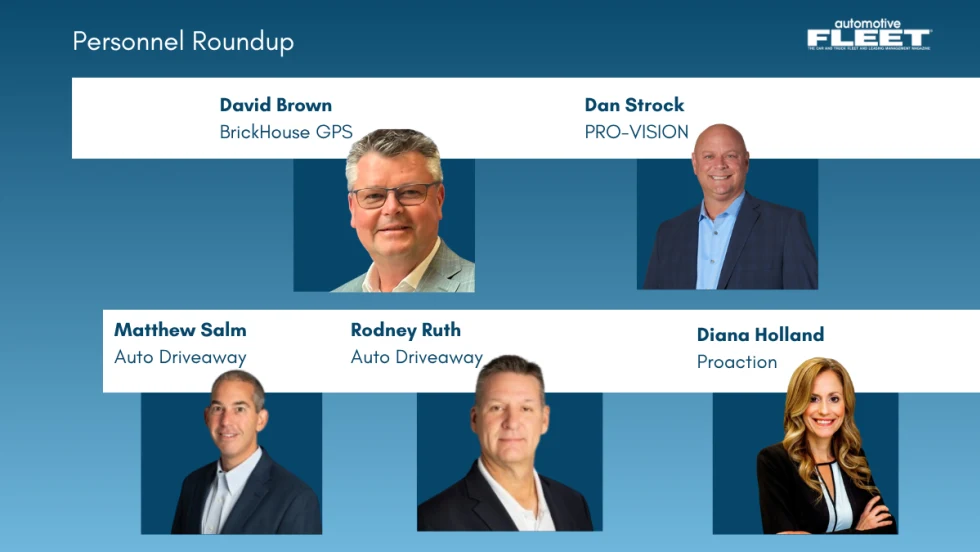
Personnel Update: BrickHouse GPS, PRO-VISION, Auto Driveaway, and Proaction
Check out the latest must-know fleet personnel updates from the last couple of months.
Read More →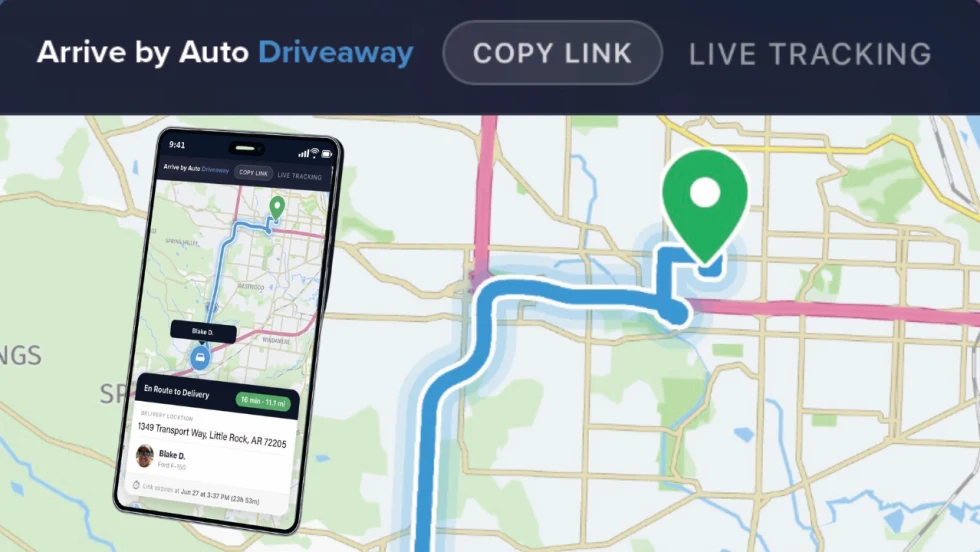
What Comes Next for Auto Driveaway?
A new Auto Driveaway feature called Arrive provides recipients with live location updates and ETAs during the final hour of a vehicle move, while fleet customers continue to have end-to-end shipment visibility through the company's customer portal.
Read More →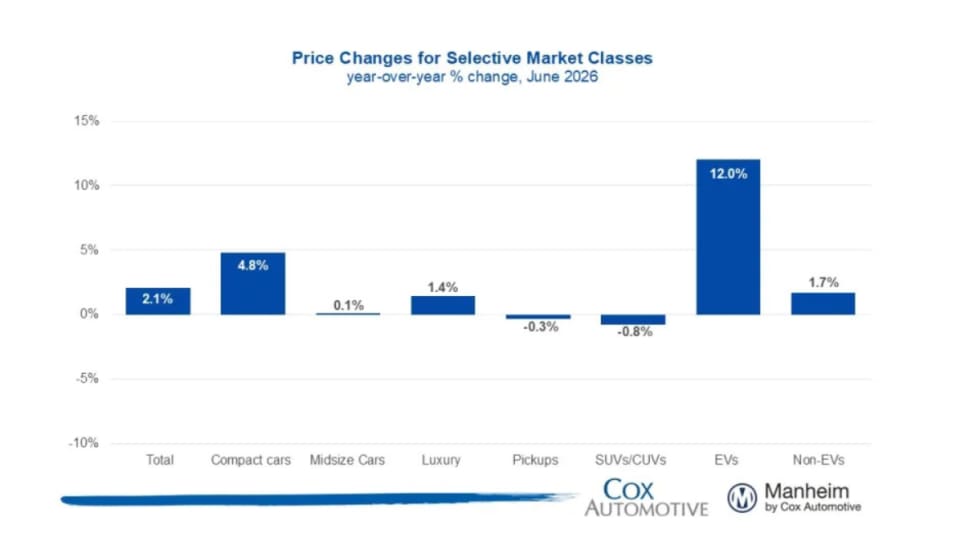
Manheim Index Shows Used-Vehicle Wholesale Prices Up 2.1% in June
The market is seeing stronger appreciation in older used vehicles this year, and the most affordable segments have been among the year’s best performers.
Read More →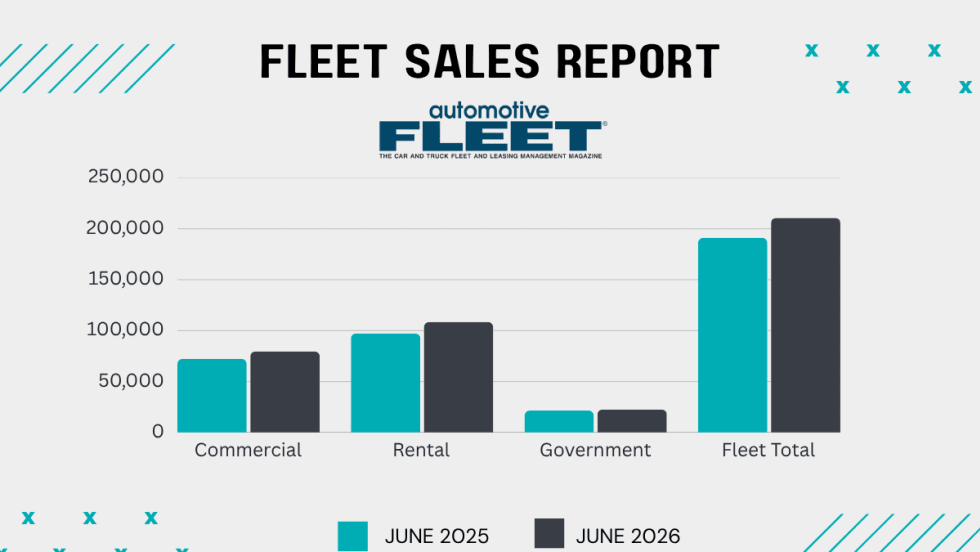
Commercial Fleet Sales Contribute To June, YTD Gains
The fleet sector has boosted its vehicle purchases at a reliable pace in the first half of this year compared with 1H 2025.
Read More →
Stop Remarketing Electric Vehicles Like Gas Cars
The advantages and attributes of electric vehicles are upending the traditional remarketing cycle, requiring fleet sellers to rely on new factors and approaches detailed below.
Read More →
AP Fleet Management Expands Remarketing Program for Commercial Work Trucks
AP Fleet Management expanded its commercial vehicle remarketing program with dedicated resale services and an online marketplace for used work trucks.
Read More →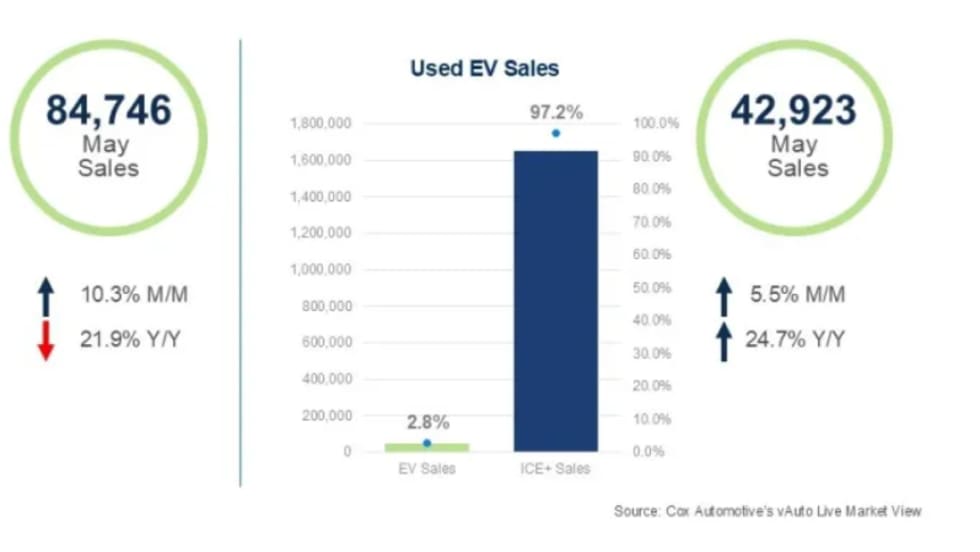
Used EVs Strengthen Overall Electric Vehicle Market
The latest sales data point to several reasons for the divergent trends in new and used EVs that can factor into fleet cycling decisions.
Read More →
The Data-Driven Haul: 5 Ways AI is Leveling the Playing Field in Auto Transport
Large and small transport fleets are becoming more competitive as predictive analytics and real-time data inform the logistics decision chain.
Read More →