




Learn More: 2025 Rental Vehicle Remarketing Summary And Outlook
Up In 2026: Wholesale Used Vehicle Prices, Values
Wholesale values moved even faster than expected on the back of strong retail demand, driving the MUVVI to its highest reading since September 2023.
February 9, 2026
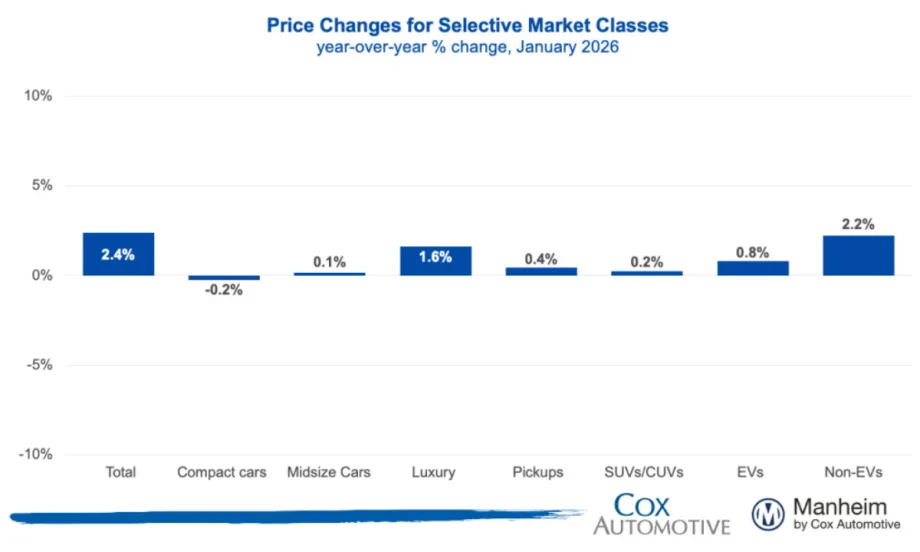
Most vehicle segments are slightly above year-earlier levels in January.
Credit: Cox Automotive
3 min to read
The Manheim Used Vehicle Value Index (MUVVI) rose to 210.5, reflecting a 2.4% increase for wholesale used-vehicle prices (adjusted for mix, mileage, and seasonality) compared to January 2025.
Month over month, the index is up 2.4% in January. The long-term average monthly move is a decrease of 0.2%.
Non-adjusted wholesale vehicle prices are now up 2.5% year over year, and up 2.7% against December 2025. The long-term average monthly move in non-adjusted values is an increase of 0.4% in January.
MMR Prices, Retention & Sales Conversion
MMR prices for the Three-Year-Old Index increased 1.5% in January.
MMR retention averaged 100% in January, up 20 basis points year over year, and up 0.4 percentage points from December.
Sales conversion was 60.7% for the period, 3.2 percentage points higher than the most recent three-year average for January and up 6.5 percentage points from December.
Takeaway: MMR prices for the Three-Year-Old Index increased more than is typical for this period. MMR retention increased slightly and remains seasonally normal for this time of year. Meanwhile, sales conversion indicates strengthening demand, as the metric remains above usual levels for this time of year.
“We had planned for a stronger January from a pricing perspective, but wholesale values moved even faster than we expected on the back of strong retail demand, driving the MUVVI to its highest reading since September 2023," said Jeremy Robb, chief economist for Cox Automotive, in a Feb. 6 news release.
"With tax refund season officially starting last week, we are expecting that more consumers will be getting refunds – and that the size of those refunds will hit a new record," Robb added. "Those factors should help consumers punch the ticket on some big-ticket purchases, even as we have seen a more muted impact on market interest rates amid three Fed cuts since September. The spring bounce for wholesale markets looks like it started early this year, and stronger tax refunds and lower used supply may keep it running for longer than typically seen.”
Segment Performance: Year-Over-Year Price Changes
Overall market prices were up somewhat from a year ago, led by the luxury segment and non-electric vehicles, while compact cars posted slight declines.
Takeaway: Most vehicle segments are slightly above year-earlier levels; however, the luxury segment continues to outperform the overall market. We have observed the strength in this segment throughout the last year. Compact and midsize cars continue to see relatively weak price growth compared to this time last year.
EV versus Non-EV Index
EVs: The Electric Vehicle (EV) Index was up 0.8% year over year and up 0.4% from December.
Non-EVs: The Non-EV Index was up 2.2% year over year and also higher by 2.2% from December.
Takeaway: With the expiration of government-backed EV incentives, prices moderated, but remain slightly higher than a year ago, when EV values saw much more depreciation in the first half of the year.
Wholesale Supply and Rental Prices
Wholesale supply: At the end of January, wholesale days’ supply fell to 26.6 days, lower by 0.3 days year over year and lower by 5.1 days compared to December.
Rental prices: Prices for rental vehicles are higher by 2.4% year over year, as they fell slightly in January, down by 0.3% from December. Rental values on a non-seasonally adjusted basis are 2.7% above 2025’s level and rose 0.6% in January, driven by lower average mileage, down 19% against last January overall.
Takeaway: Before the pandemic, wholesale vehicle days’ supply averaged 32 days at the end of January. Days’ supply in January was lower than historical norms but declined seasonally from December.
Topics:Used Vehicle PricesWholesale VehiclesRental FleetsElectric VehiclesDays SupplyManheim IndexWholesale ValuesUsed Vehicle ValuesFleet
Originally posted on Automotive Fleet
More Used Vehicle Values
August New-Vehicle Sales Pace Forecast to Hold Above 16 Million
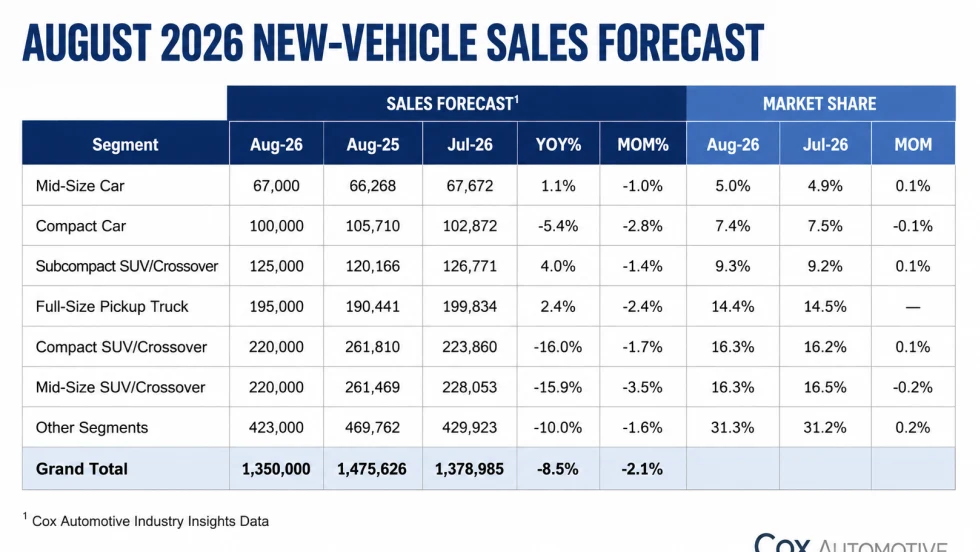
Despite an expected 8.5% year-over-year decline in August volume, Cox Automotive forecasts a 16.3 million SAAR, with full-size pickups outperforming several major crossover segments.
Read More →
Trade Strategy Now Starts Long Before Turn-In
The strongest trade values aren't built at turn-in. Discover how maintenance, lifecycle planning, and shared risk protect truck resale value.
Read More →
What Happens When Residual Values Meet Real-World Markets
A truck's trade value isn't determined on turn-in day. Learn how market cycles, maintenance, and timing shape the gap between residuals and reality.
Read More →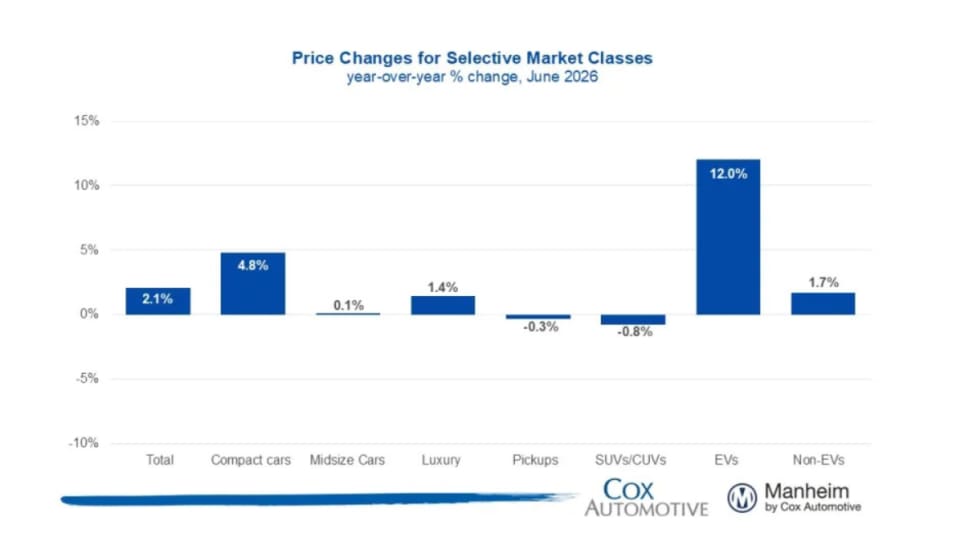
Manheim Index Shows Used-Vehicle Wholesale Prices Up 2.1% in June
The market is seeing stronger appreciation in older used vehicles this year, and the most affordable segments have been among the year’s best performers.
Read More →
Stop Remarketing Electric Vehicles Like Gas Cars
The advantages and attributes of electric vehicles are upending the traditional remarketing cycle, requiring fleet sellers to rely on new factors and approaches detailed below.
Read More →
Used Vehicle Prices Climb Higher As Sales Pace Slows
The higher prices at used retail reflect strong wholesale values earlier in the spring, particularly for older, more affordable vehicles.
Read More →
Wholesale Used Vehicle Market Sustains Moderate Rise In Values, Prices
Trends continue to normalize after a strong start to the year, as consumers contend with higher gas prices in the coming summer months.
Read More →
Used EV Sales Grow In April
While EV sales declined, used EV sales grew, as tighter inventory and rising prices reflected a more normalized pace for the EV market.
Read More →
Wholesale Used Vehicle Prices Slightly Up In April
The Iranian conflict and rising gas prices inject much uncertainty into the future wholesale used vehicle markets, as higher gas prices soak up spendable income from vehicle buyers.
Read More →
CAR 2026 Recap Part 2: Closing the Gap Between Data & Remarketing Value
The second half of CAR 2026 examined how fleets can translate lifecycle strategy, vehicle data, and market shifts into higher real-world results.
Read More →