




Related News:Tariffs Tighten EV Inventory
New Vehicle Prices Steady As OEMs Offset Tariff Costs
However, new-vehicle sales slowed notably in May, falling to 15.6 million from 17.3 million in April.
June 10, 2025
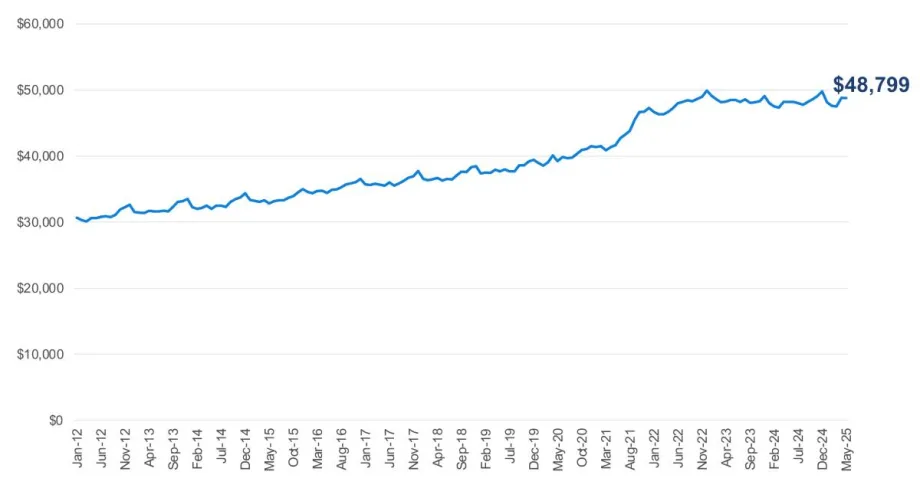
New-vehicle ATP held steady in May at $48,799, virtually unchanged from the revised April ATP of $48,811.
Graphic: Cox Automotive
4 min to read
The average new-vehicle transaction price (ATP) in May was mostly unchanged from April, as the new vehicle sales pace slowed, according to new data released June 10 from Cox Automotive’s Kelley Blue Book. Key takeaways from the May report include:
New-vehicle ATP held steady in May at $48,799, almost unchanged from the revised April ATP of $48,811. Compared to May 2024, new-vehicle transaction prices were higher by 1.0%.
The new-vehicle sales pace slowed notably in May, falling to 15.6 million from a pace of 17.3 million in April. New-vehicle incentives increased slightly last month from 6.7% of ATP in April to 6.8% in May ($3,297). Incentives last month were also mostly unchanged from May 2024. A year ago, incentive packages averaged 6.7% of ATP.
Most automakers reduced incentive spending last month. Volkswagen, Mazda, Land Rover, Volvo and BMW all reduced incentive spending by more than 10%. Incentives were also notably lower monthly for Chrysler, Jeep and Ram. Tesla, Toyota and Nissan, conversely, increased incentive spending significantly in May. Even with an increase of more than 20%, Toyota continues to spend well below the industry average on incentives, averaging approximately 4.1% of ATP in May, up from 3.4% in April.
The average manufacturer’s suggested retail price (MSRP) for a new vehicle in May was $50,968, an increase from $50,774 in April and the highest point in 2025. The new-vehicle average MSRP in May was 2.1% higher year over year; the long-term average increase is 3.5%. The average new-vehicle MSRP peaked in December 2024 at $51,990.
Transaction prices held steady monthly for many of the most popular, best-selling vehicles. Transaction prices and incentive levels mainly were unchanged in the Compact SUV and Mid-size SUV segments – the two largest segments. In May, the average price paid for a Compact SUV – the best-selling segment in the U.S. – was $36,515. Incentive spending in the Compact SUV segment increased to 8.0% of ATP in May from 7.9% in April.
Sports cars, luxury cars and luxury subcompact SUVs saw prices climb the most month over month in May. Popular Small/Mid-Size Pickup Trucks also posted higher prices month over month in May, increasing 0.9% to $42,062; incentives ticked slightly lower, from 6.0% of ATP in April to 5.9% in May.
“While tariff policy is adding uncertainty to the new-vehicle market, prices are holding remarkably steady, a reminder that auto industry change is often slow," said Erin Keating, executive analyst for Cox Automotive, in a news release. “Many automakers are keeping true to a promise to hold the line on pricing, at least in the near term. We are still expecting prices to move higher through the summer, as the inflationary impact of tariffs begins to hit. Right now, we believe dealer profitability is being squeezed, as costs on many products are going up, but raising retail prices in this environment is a real challenge.”
Tesla Prices Decline, Incentives Increase, and EV Affordability Improves
The Kelley Blue Book team’s initial estimate of new electric vehicle ATP in May is $57,734, down from a revised $59,123 in April. New EV prices in May were lower year over year by 1.1%.
EV incentives jumped higher in May, with the average incentive package increasing from 11.6% of ATP in April to 14.2% of ATP ($8,225), more than twice the level of industry-wide incentives and up from 12.0% a year earlier. In May, EV incentives were at the highest level in the modern era of EV sales. (Cox Automotive considers the modern EV era to have begun in 2018, when EV sales achieved more than 1% of total market share.)
Tesla average transaction prices declined in May, falling 1.5% to $55,277. Tesla prices in May were lower year over year by 2.8%. Model 3 and Cybertruck prices increased modestly – less than 1% – month over month in May, while all other Tesla products showed a month-over-month decline. Tesla’s best-selling product, the Model Y, had an average transaction price in May that was 2.9% lower than in April, at $53,895. The Model Y is also the best-selling EV in the U.S.
Originally posted on Automotive Fleet
More Fleet

Acertus Acquires Fisher Shipping, CEO to Join Acertus
Fisher Shipping will retain its brand and team, while its customers gain access to Acertus’ transportation, storage, vehicle care, and title and registration services.
Read More →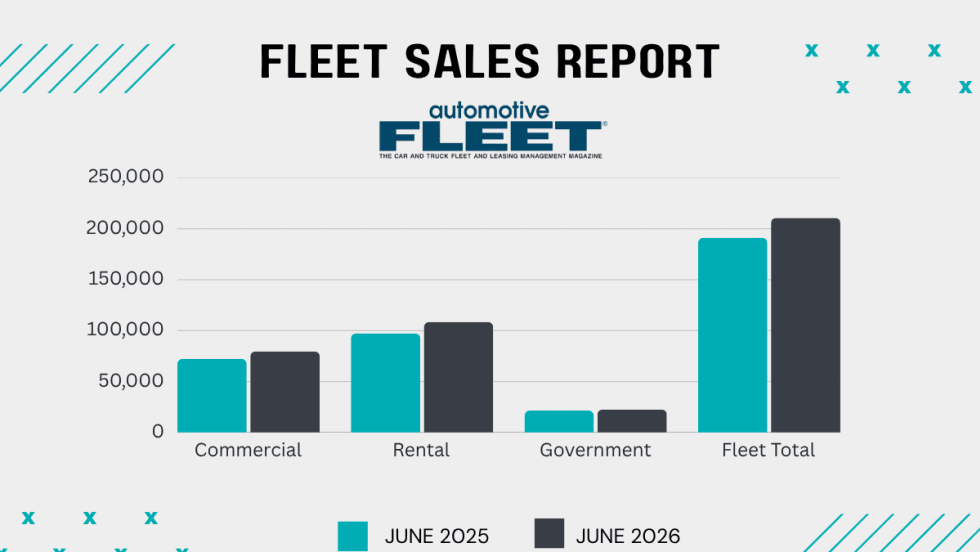
Commercial Fleet Sales Contribute To June, YTD Gains
The fleet sector has boosted its vehicle purchases at a reliable pace in the first half of this year compared with 1H 2025.
Read More →
Registration Opens for 2026 Fleet Forward Conference
Held on the East Coast for the first time, the Washington, D.C.-area event features expert-led education, a new IIHS Crash Test Experience, and collocation with the NAFA’s Fleet Safety Symposium.
Read More →
AP Fleet Management Expands Remarketing Program for Commercial Work Trucks
AP Fleet Management expanded its commercial vehicle remarketing program with dedicated resale services and an online marketplace for used work trucks.
Read More →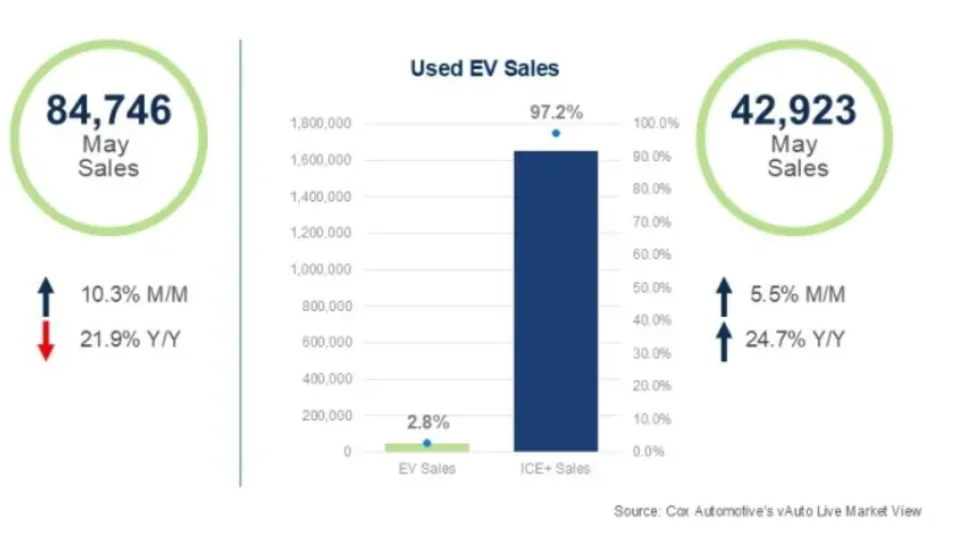
Used EVs Strengthen Overall Electric Vehicle Market
The latest sales data point to several reasons for the divergent trends in new and used EVs that can factor into fleet cycling decisions.
Read More →
Wholesale Used Vehicle Market Sustains Moderate Rise In Values, Prices
Trends continue to normalize after a strong start to the year, as consumers contend with higher gas prices in the coming summer months.
Read More →
Commercial Fleet Sales Still Lead Sectors Despite May Mini Dip
The U.S. economy's continued growth and positive business investment are creating a favorable environment for fleet vehicle demand.
Read More →
The Data-Driven Haul: 5 Ways AI is Leveling the Playing Field in Auto Transport
Large and small transport fleets are becoming more competitive as predictive analytics and real-time data inform the logistics decision chain.
Read More →
Commercial Fleet Sales Show Healthy Gains
So far, the fleet sector is outshining government and rental fleet sales this year as economic growth spurs more business investment.
Read More →
CAR 2026 Recap Part 2: Closing the Gap Between Data & Remarketing Value
The second half of CAR 2026 examined how fleets can translate lifecycle strategy, vehicle data, and market shifts into higher real-world results.
Read More →