




Background News: New Vehicle Affordability Hits Record Low
New Vehicle Affordability Declines in April
The trend continues to be much worse now than a year ago when prices were notably lower and incentives were higher.
May 20, 2022
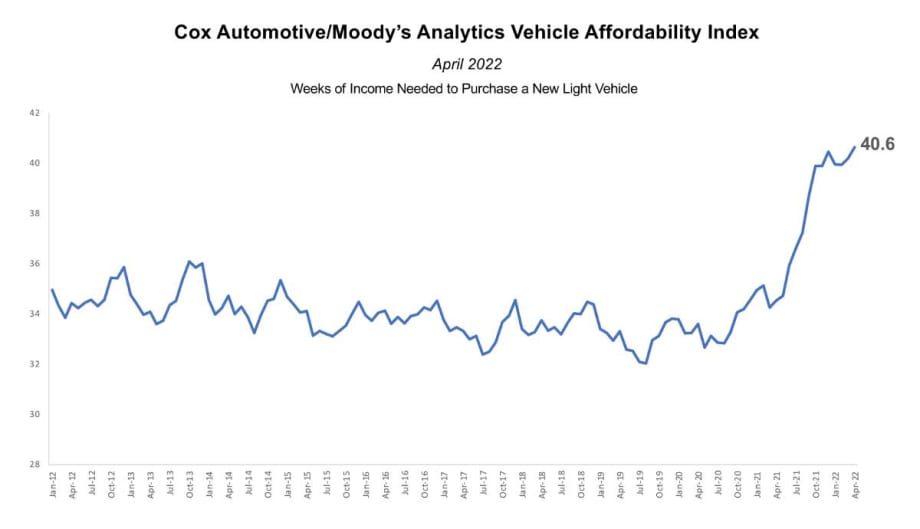
Inflation Rising: Americans need more weeks of income to afford a new car.
Source: Cox Automotive
2 min to read
New-vehicle affordability declined slightly in April despite revised data indicating stronger income gains, according to the latest Cox Automotive/Moody’s Analytics Vehicle Affordability Index.
The inputs to the index again moved in differing directions in the month. The number of median weeks of income needed to purchase the average new vehicle in April increased to 40.6 weeks from a downwardly revised 40.2 weeks in March.
Supporting affordability, median income in the U.S. grew 0.3% in April. The revisions in the data for prior months were driven by updated data from the 2020 American Community Survey’s median household income estimates. The revisions to that data show income growth higher than previous estimates used to infer more recent median income data.
All other factors moved against affordability last month. The price paid moved 0.7% higher, due in part to incentives declining further. The average interest rate on a new-vehicle loan increased another 20 basis points. As a result of these moves, the estimated typical monthly payment increased 1.4% to $698, which was a new record high.
Even with the data revisions, the top-line story remains the same. New-vehicle affordability continues to be much worse now than a year ago when prices were notably lower and incentives were higher. The estimated number of weeks of median household income necessary to purchase the average new vehicle in April was up 18% from last year.
The next update of the Cox Automotive/Moody’s Analytics Vehicle Affordability Index will be published on June 15.
More Fleet

Acertus Acquires Fisher Shipping, CEO to Join Acertus
Fisher Shipping will retain its brand and team, while its customers gain access to Acertus’ transportation, storage, vehicle care, and title and registration services.
Read More →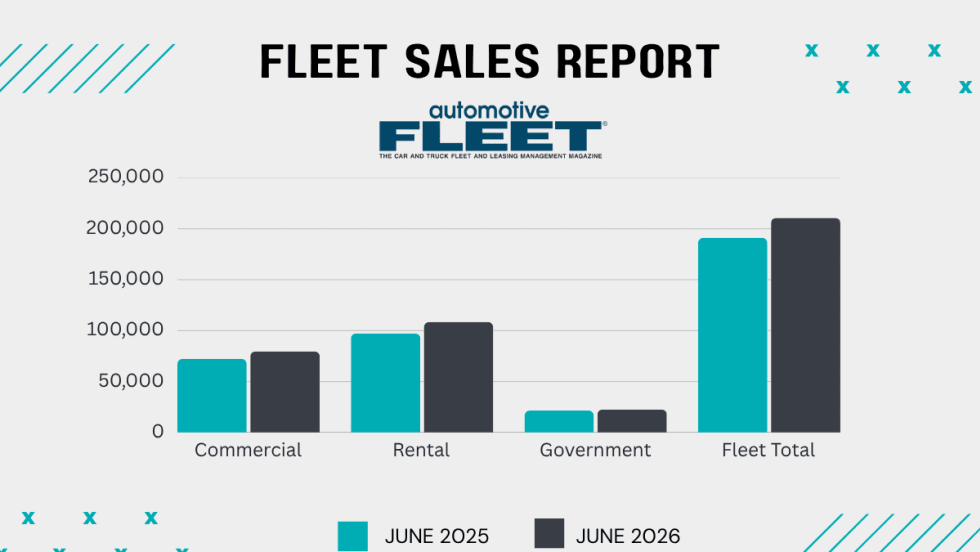
Commercial Fleet Sales Contribute To June, YTD Gains
The fleet sector has boosted its vehicle purchases at a reliable pace in the first half of this year compared with 1H 2025.
Read More →
Registration Opens for 2026 Fleet Forward Conference
Held on the East Coast for the first time, the Washington, D.C.-area event features expert-led education, a new IIHS Crash Test Experience, and collocation with the NAFA’s Fleet Safety Symposium.
Read More →
AP Fleet Management Expands Remarketing Program for Commercial Work Trucks
AP Fleet Management expanded its commercial vehicle remarketing program with dedicated resale services and an online marketplace for used work trucks.
Read More →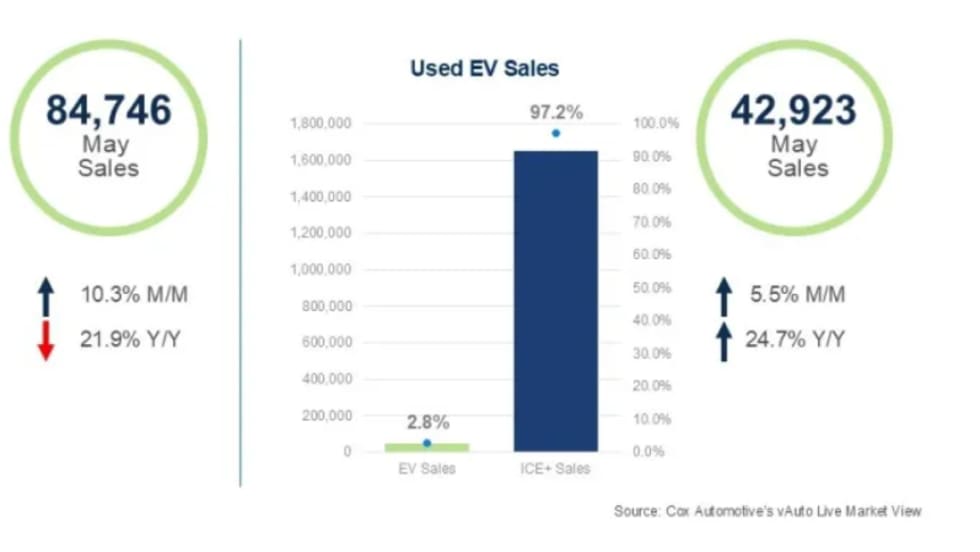
Used EVs Strengthen Overall Electric Vehicle Market
The latest sales data point to several reasons for the divergent trends in new and used EVs that can factor into fleet cycling decisions.
Read More →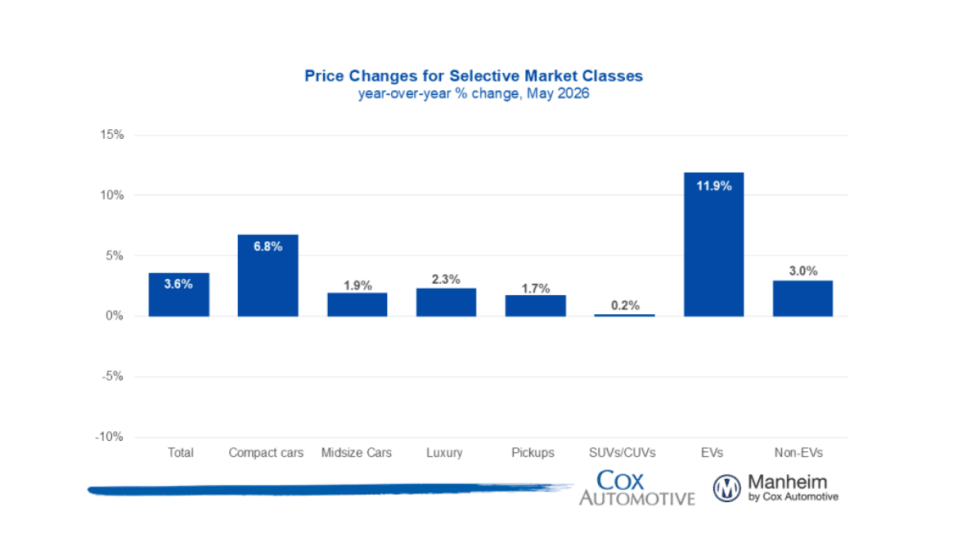
Wholesale Used Vehicle Market Sustains Moderate Rise In Values, Prices
Trends continue to normalize after a strong start to the year, as consumers contend with higher gas prices in the coming summer months.
Read More →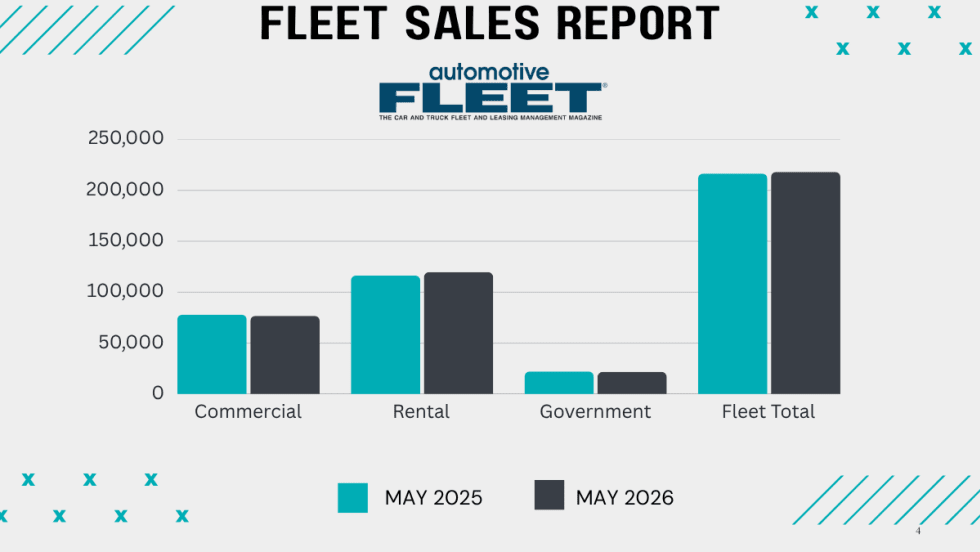
Commercial Fleet Sales Still Lead Sectors Despite May Mini Dip
The U.S. economy's continued growth and positive business investment are creating a favorable environment for fleet vehicle demand.
Read More →
The Data-Driven Haul: 5 Ways AI is Leveling the Playing Field in Auto Transport
Large and small transport fleets are becoming more competitive as predictive analytics and real-time data inform the logistics decision chain.
Read More →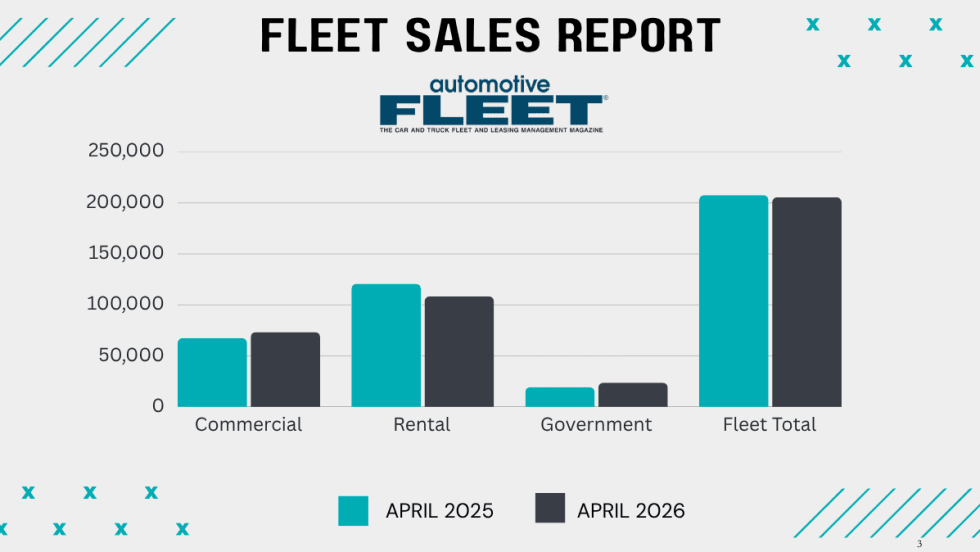
Commercial Fleet Sales Show Healthy Gains
So far, the fleet sector is outshining government and rental fleet sales this year as economic growth spurs more business investment.
Read More →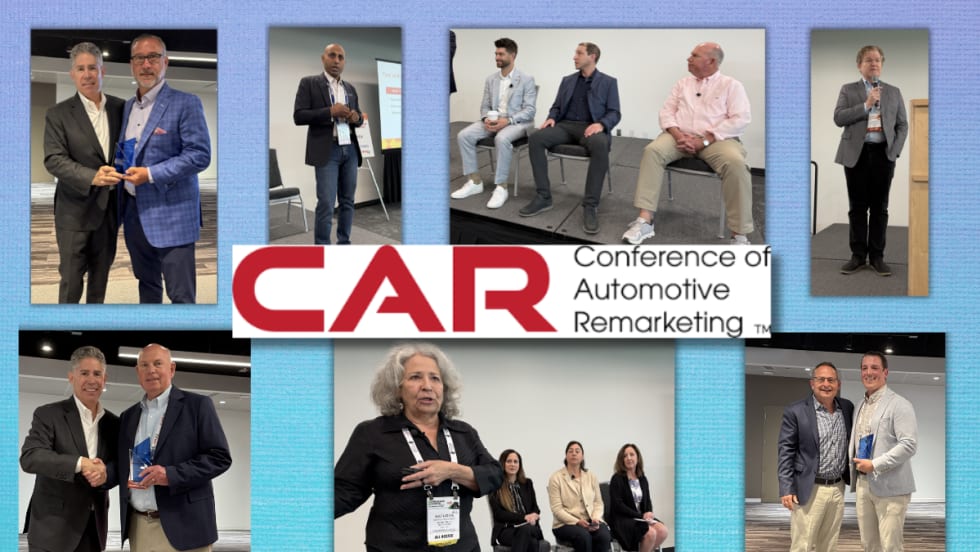
CAR 2026 Recap Part 2: Closing the Gap Between Data & Remarketing Value
The second half of CAR 2026 examined how fleets can translate lifecycle strategy, vehicle data, and market shifts into higher real-world results.
Read More →