




More News:GM Develops New EV Motors
GM, Honda to Build Electric Vehicles for Mass Market
The partnership leverages the wide and deep scalability of the two automotive giants so they can target new EV models to large vehicle segments, including compact crossover utility vehicles.
April 6, 2022
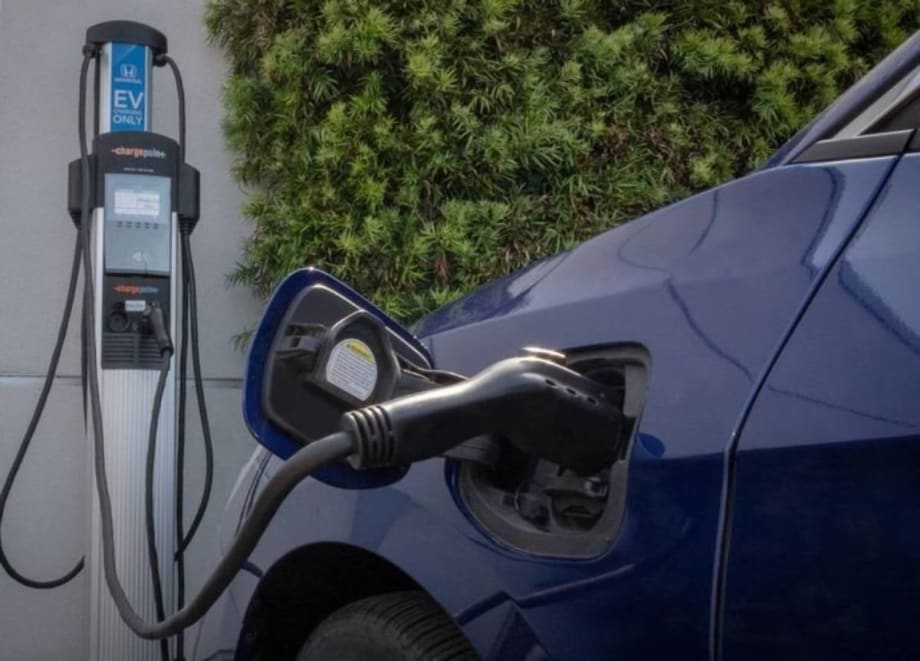
GM and Honda have developed a close working relationship over many years, including several projects in recent years focused on electric and autonomous vehicle technologies. In 2020, GM and Honda announced plans to codevelop two EVs, including the Honda Prologue, to be launched in early 2024, soon followed by Acura’s first EV SUV.
Photo: Honda
3 min to read
General Motors and Honda announced plans on April 5 to co-develop a series of affordable electric vehicles based on a new global architecture using GM's next-generation Ultium battery technology.
The companies are working together to enable global production of millions of EVs starting in 2027, including compact crossover vehicles, leveraging the two companies’ technology, design and sourcing strategies. The companies will also work toward standardizing equipment and processes to achieve world-class quality, higher throughput and greater affordability. The compact crossover segment is the largest in the world, with annual volumes of more than 13 million vehicles, according to the press release.
GM and Honda also will discuss future EV battery technology collaboration opportunities, to further drive down the cost of electrification, improve performance and drive sustainability for future vehicles.
GM is already working to accelerate new technologies like lithium-metal, silicon and solid-state batteries, along with production methods that can quickly be used to improve and update battery cell manufacturing processes. Honda is making progress on its all-solid-state battery technology, which the company sees as the core element of future EVs. Honda has established a demonstration line in Japan for all-solid-state batteries and is working toward mass production.
“GM and Honda will share our best technology, design and manufacturing strategies to deliver affordable and desirable EVs on a global scale, including our key markets in North America, South America, and China,” said Mary Barra, GM chair and CEO, in a statement. “This is a key step to deliver on our commitment to achieve carbon neutrality in our global products and operations by 2040 and eliminate tailpipe emissions from light duty vehicles in the U.S. by 2035. By working together, we’ll put people all over the world into EVs faster than either company could achieve on its own.”
Toshihiro Mibe, Honda president and CEO, added, that Honda is committed to reaching its goal of carbon neutrality globally by 2050, which requires driving down the cost of electric vehicles to make EV ownership possible for tmore customers. By collaborating on technology, Honda and GM expand sales of electric vehicles.

The two companies also plan to work toward standardizing equipment and processes in the compact crossover segment.
Photo: GM
The scale and wide consumer reach of GM and Honda will provide the low cost production and battery foundation needed for a new series of more affordable vehicles for customers, said Doug Parks, GM executive vice president of global product development, purchasing and supply chain. “Our plans include a new all-electric product for North America positioned at a price point lower than the upcoming Chevrolet Equinox EV, building on the 2 million units of EV capacity the company plans to install by the end of 2025,” he said.
GM and Honda have developed a close working relationship over many years, including several projects in recent years focused on electric and autonomous vehicle technologies. In 2013, the two companies began working together on the co-development of a next-generation fuel cell system and hydrogen storage technologies. In 2018, Honda joined GM’s EV battery module development efforts. In 2020, GM and Honda announced plans to co-develop two EVs, including the Honda Prologue, to be launched in early 2024, soon followed by Acura’s first EV SUV.
Further, the companies have an ongoing relationship with Cruise and are working together on the development of the Cruise Origin, one of the first purpose-built fully autonomous vehicles designed for driverless ride-hail and delivery.
Originally posted on Charged Fleet
More Fleet

Acertus Acquires Fisher Shipping, CEO to Join Acertus
Fisher Shipping will retain its brand and team, while its customers gain access to Acertus’ transportation, storage, vehicle care, and title and registration services.
Read More →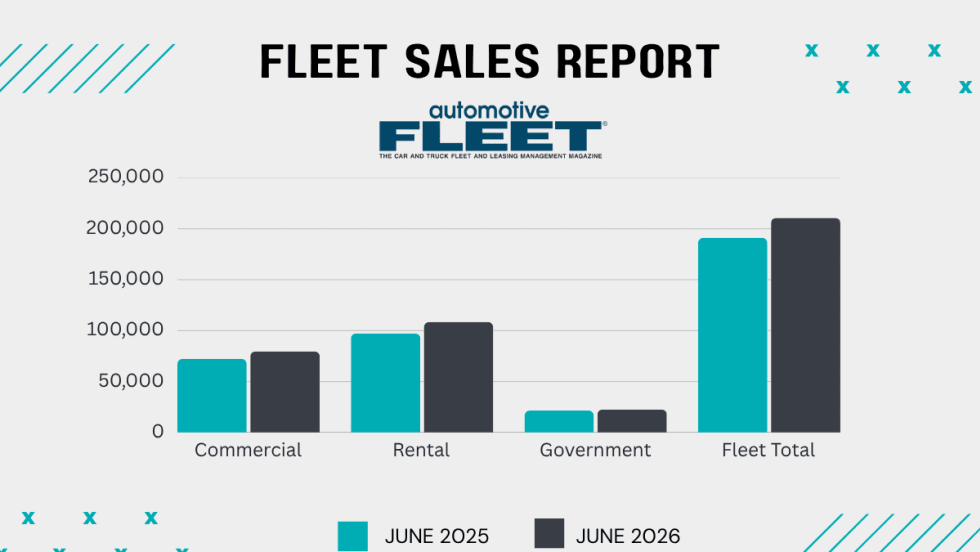
Commercial Fleet Sales Contribute To June, YTD Gains
The fleet sector has boosted its vehicle purchases at a reliable pace in the first half of this year compared with 1H 2025.
Read More →
Registration Opens for 2026 Fleet Forward Conference
Held on the East Coast for the first time, the Washington, D.C.-area event features expert-led education, a new IIHS Crash Test Experience, and collocation with the NAFA’s Fleet Safety Symposium.
Read More →
AP Fleet Management Expands Remarketing Program for Commercial Work Trucks
AP Fleet Management expanded its commercial vehicle remarketing program with dedicated resale services and an online marketplace for used work trucks.
Read More →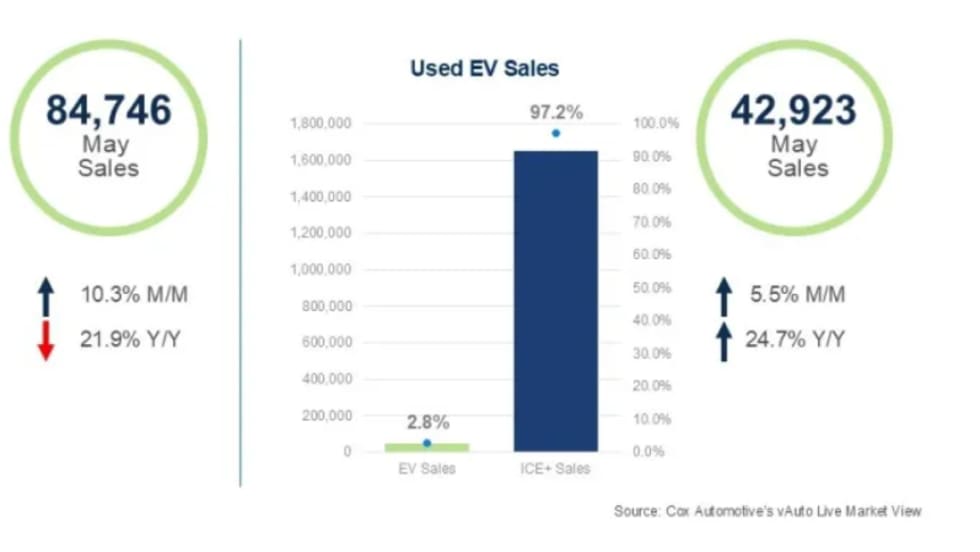
Used EVs Strengthen Overall Electric Vehicle Market
The latest sales data point to several reasons for the divergent trends in new and used EVs that can factor into fleet cycling decisions.
Read More →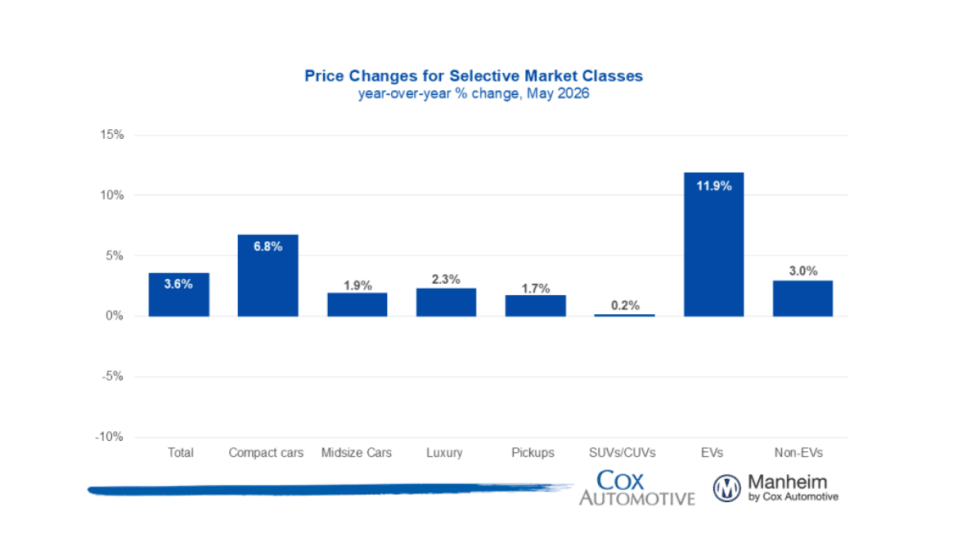
Wholesale Used Vehicle Market Sustains Moderate Rise In Values, Prices
Trends continue to normalize after a strong start to the year, as consumers contend with higher gas prices in the coming summer months.
Read More →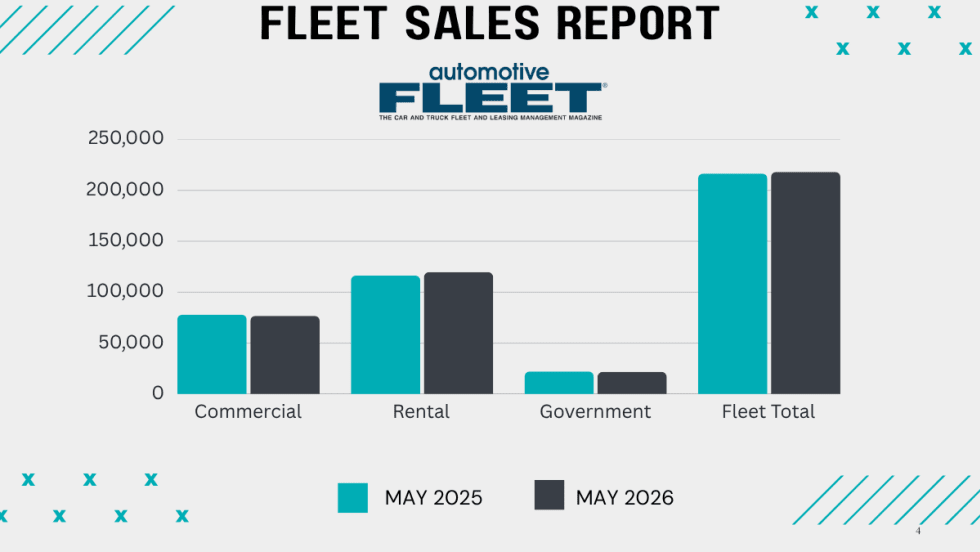
Commercial Fleet Sales Still Lead Sectors Despite May Mini Dip
The U.S. economy's continued growth and positive business investment are creating a favorable environment for fleet vehicle demand.
Read More →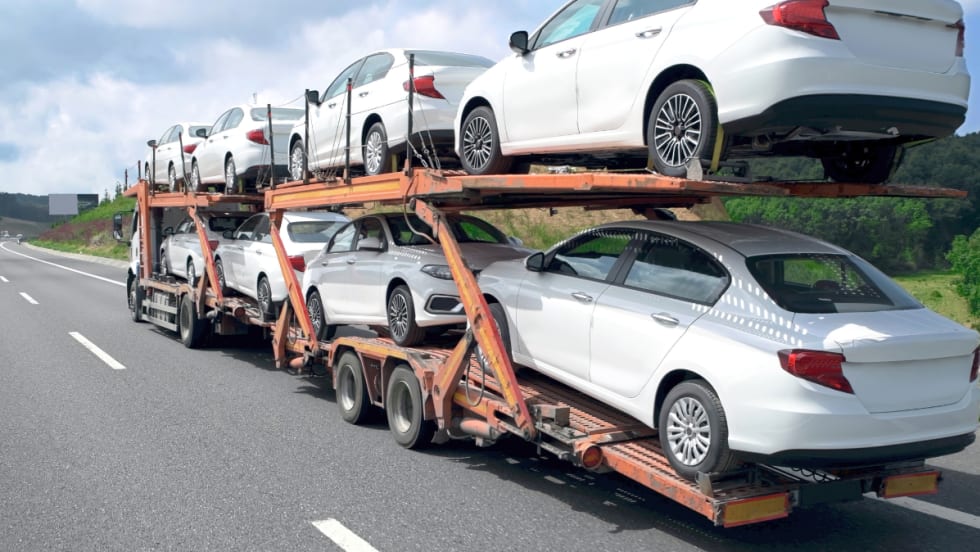
The Data-Driven Haul: 5 Ways AI is Leveling the Playing Field in Auto Transport
Large and small transport fleets are becoming more competitive as predictive analytics and real-time data inform the logistics decision chain.
Read More →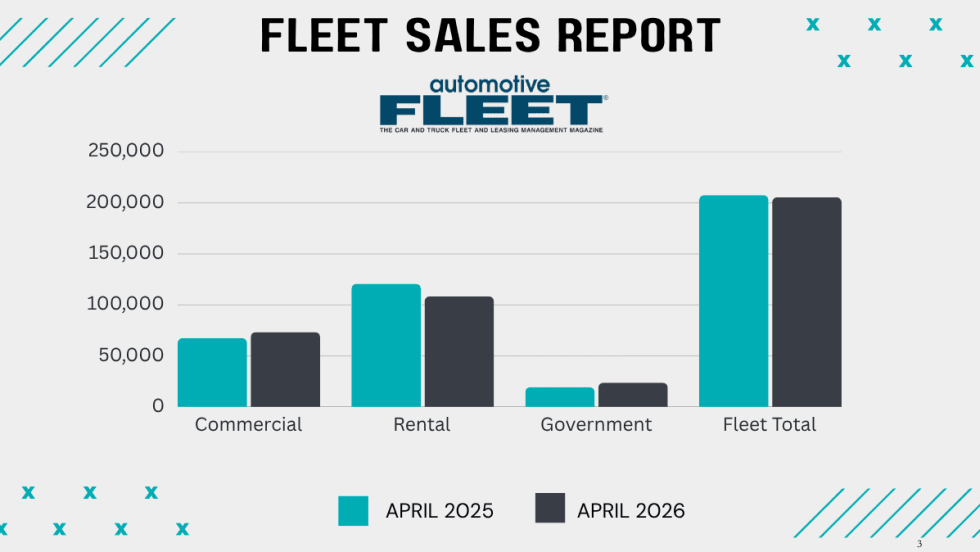
Commercial Fleet Sales Show Healthy Gains
So far, the fleet sector is outshining government and rental fleet sales this year as economic growth spurs more business investment.
Read More →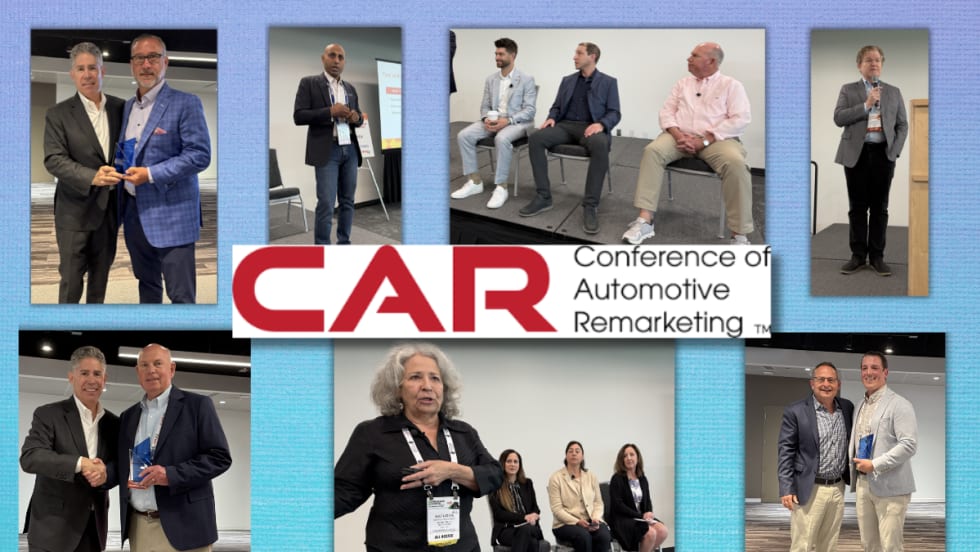
CAR 2026 Recap Part 2: Closing the Gap Between Data & Remarketing Value
The second half of CAR 2026 examined how fleets can translate lifecycle strategy, vehicle data, and market shifts into higher real-world results.
Read More →