




Learn More: Electrification Is Not For Every Fleet
EV Sales Score Their Highest February
Pricing trends showed a decrease in new EV transaction prices, aided by incentives, making them more affordable, while used EV prices increased slightly.
March 24, 2025
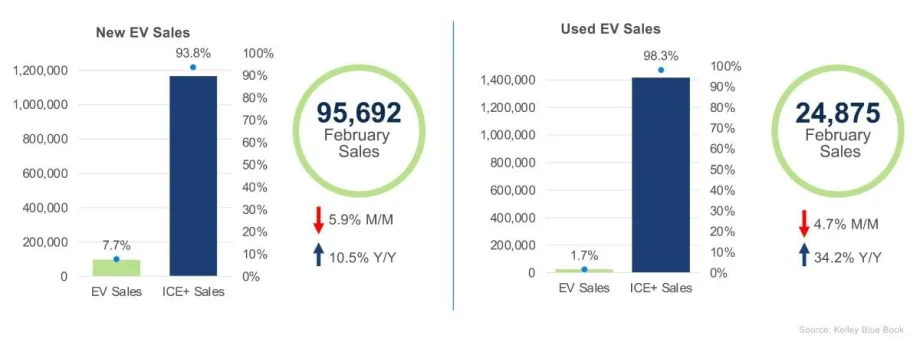
In February, the volume of new EV sales declined by 5.9% month over month to 95,692 units, although it was the highest volume ever reported for February.
Graphic: Cox Automotive
3 min to read
New electric vehicle (EV) sales slightly declined but reached a record high for February, with luxury brands performing well. Used EV sales also decreased monthly but grew by a lot year over year.
Days’ supply increased for both new and used EVs but remained significantly lower than the prior year. Pricing trends showed a decrease in new EV transaction prices, aided by incentives, making them more affordable, while used EV prices increased slightly.
New EV Sales: In February, the volume of new EV sales declined by 5.9% month over month to 95,692 units, although it was the highest volume ever reported for the month of February. The volume increased by 10.5% yearly, but market share declined to 7.7%. It was a good month for luxury brands, with both BMW and Rivian selling more than 4,000 units, representing increases of 20.9% and 34.0%, respectively, compared to the previous month. Tesla’s overall sales were down by 10.0%, driven by declines in the Cybertruck (down 32.5%), Model 3 (down 17.5%), and Model Y (down 3.1%). The top five selling models, ranked by sales volume, were the Tesla Model Y, Tesla Model 3, Ford Mustang Mach-E, Honda Prologue, and Rivian R1S.
Used EV Sales: In February, used electric vehicle sales declined by 4.7%, reaching 24,875 units. Despite this decline, there was a year-over-year growth of 34.2%. Tesla maintained its dominant position in the used EV market with a substantial 39.9% sales share despite a 9.2% decline in month-over-month sales volume.
New EV Days’ Supply: In February, the supply of new EV days increased by 16.8% month over month, reaching 104 days. This exceeded the ICE+ days’ supply after being below it last month. Year over year, the supply of new EV days is down 31.7%, indicating a significant improvement in inventory turnover compared to the previous year.
Used EV Days’ Supply: In February, the days’ supply of used electric vehicles reached 49 days, an increase of 5.9% month over month but a 21.5% year-over-year decrease. Last month, used EVs had a five-day lower supply than ICE+ vehicles. However, with ICE+ days’ supply declining by 6.5% month over month, the gap has now narrowed to just one day. The low days’ supply for EVs indicates a healthy and dynamic market driven by the increasing availability of more affordable options.
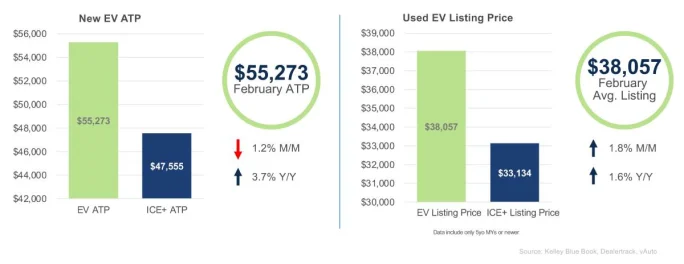
The average listing price for used EVs was $38,057, reflecting a 1.8% increase month-over-month and a 1.6% increase yearly.
Graphic: Cox Automotive
New EV Average Transaction Price: In February, the average transaction price (ATP) for new electric vehicles was $55,273, showing a 1.2% decline from the previous month and a 3.7% increase from the previous year. On average, EVs had a price premium of 16.2%. Incentive spending reached its highest level at 14.9% of ATP, which was 4.4% higher than the prior month.
Used EV Average Listing Price: The average listing price for used EVs was $38,057, reflecting a 1.8% increase month-over-month and a 1.6% increase year over year. Twelve brands had listing prices below those of their internal combustion engine (ICE+) models. Affordable options remain available, with 39% of units sold priced under $25,000.
Originally posted on Automotive Fleet
More Used Vehicle Values
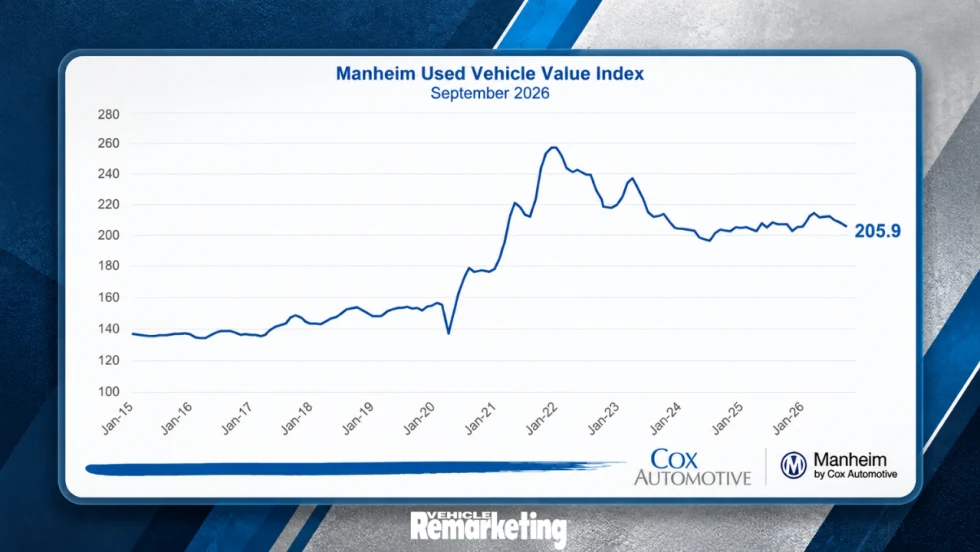
Wholesale Used-Vehicle Values Fall as Cox Automotive Cuts 2026 Forecast
Wholesale used-vehicle prices declined in September as depreciation accelerated, prompting Cox Automotive to lower its year-end forecast.
Read More →
Ford Pro Launches Certified Pre-Owned Program for Commercial Vehicles
Ford Pro Advantage will offer certified pre-owned Class 1-7 commercial vehicles through more than 700 Ford Pro Commercial Vehicle Centers.
Read More →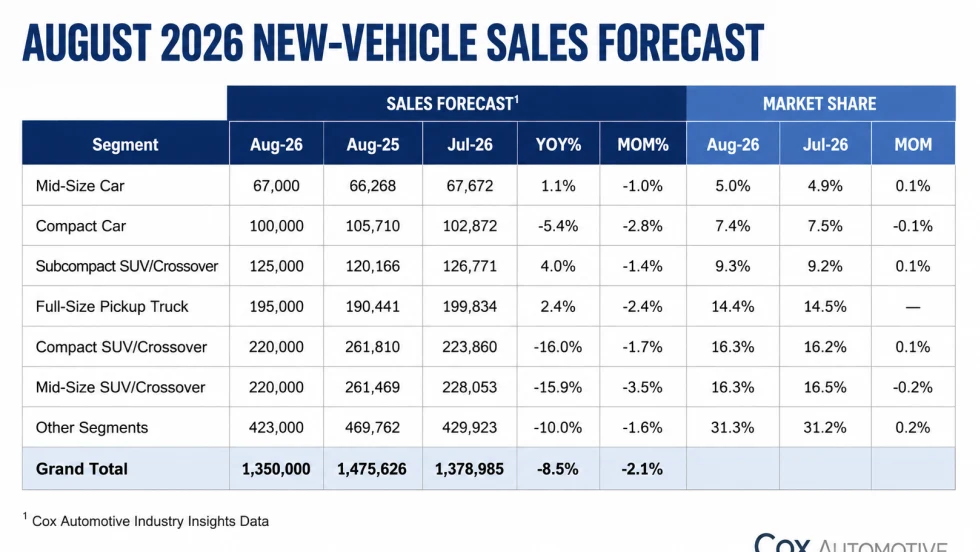
August New-Vehicle Sales Pace Forecast to Hold Above 16 Million
Despite an expected 8.5% year-over-year decline in August volume, Cox Automotive forecasts a 16.3 million SAAR, with full-size pickups outperforming several major crossover segments.
Read More →
Trade Strategy Now Starts Long Before Turn-In
The strongest trade values aren't built at turn-in. Discover how maintenance, lifecycle planning, and shared risk protect truck resale value.
Read More →
What Happens When Residual Values Meet Real-World Markets
A truck's trade value isn't determined on turn-in day. Learn how market cycles, maintenance, and timing shape the gap between residuals and reality.
Read More →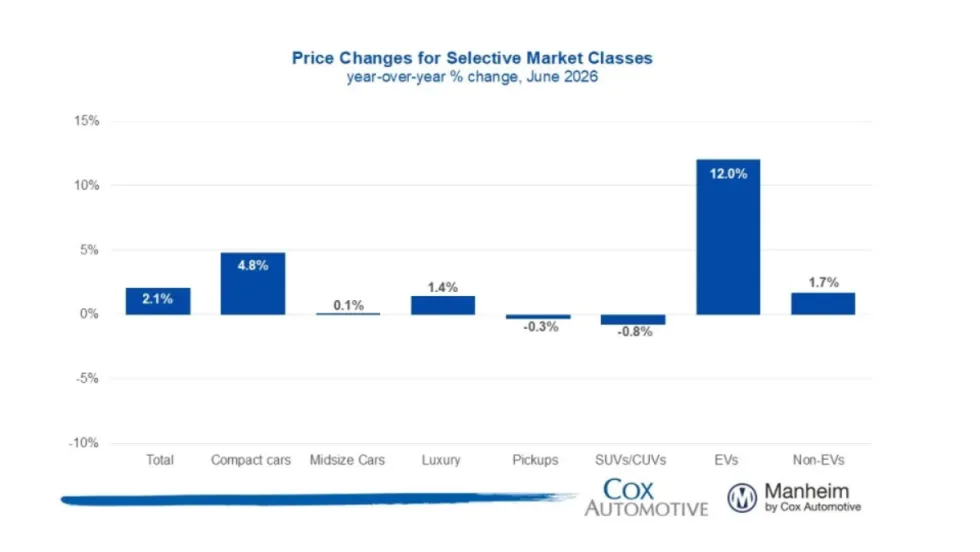
Manheim Index Shows Used-Vehicle Wholesale Prices Up 2.1% in June
The market is seeing stronger appreciation in older used vehicles this year, and the most affordable segments have been among the year’s best performers.
Read More →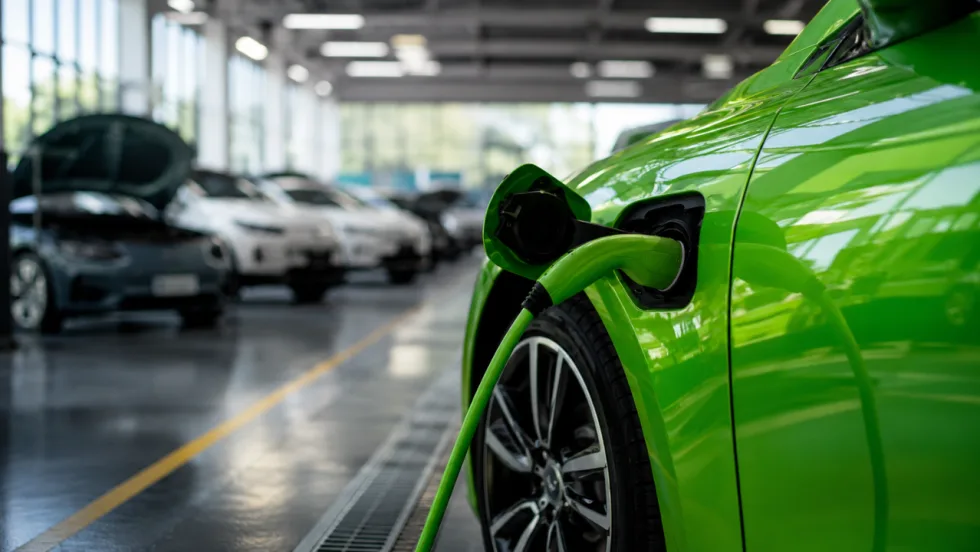
Stop Remarketing Electric Vehicles Like Gas Cars
The advantages and attributes of electric vehicles are upending the traditional remarketing cycle, requiring fleet sellers to rely on new factors and approaches detailed below.
Read More →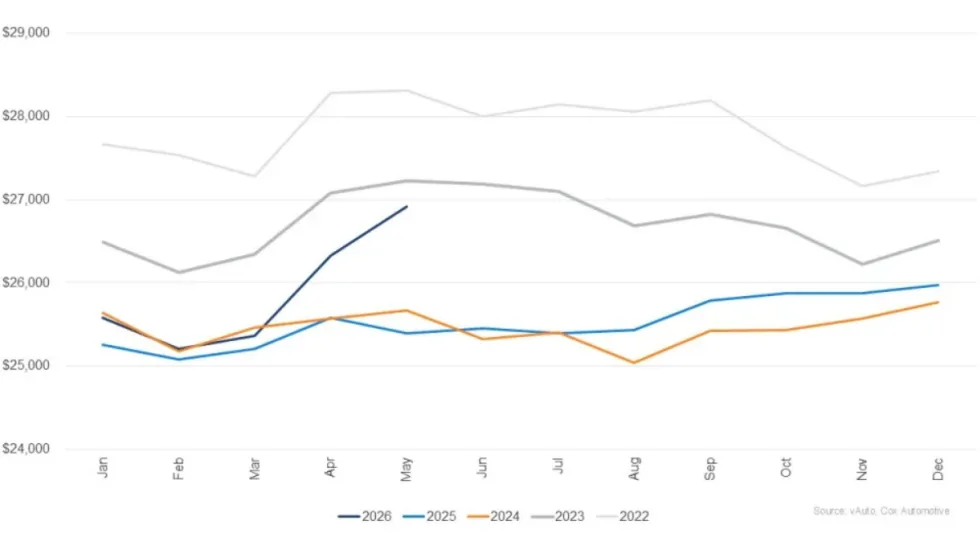
Used Vehicle Prices Climb Higher As Sales Pace Slows
The higher prices at used retail reflect strong wholesale values earlier in the spring, particularly for older, more affordable vehicles.
Read More →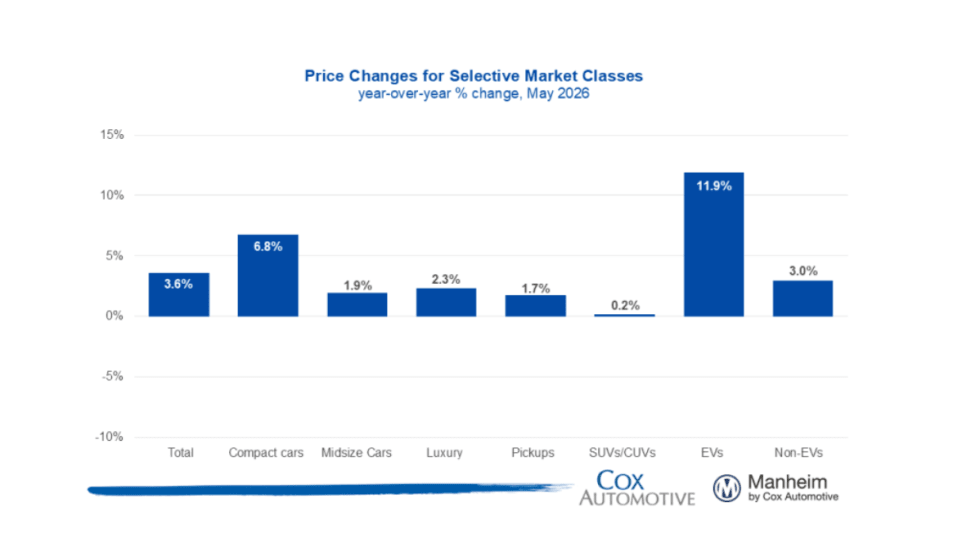
Wholesale Used Vehicle Market Sustains Moderate Rise In Values, Prices
Trends continue to normalize after a strong start to the year, as consumers contend with higher gas prices in the coming summer months.
Read More →
Used EV Sales Grow In April
While EV sales declined, used EV sales grew, as tighter inventory and rising prices reflected a more normalized pace for the EV market.
Read More →