



EV Sales Hit Another Record as Tesla Sales Share Tumbles
Total 2023 EV sales will likely surpass the milestone one million mark next month as the electric vehicle market transforms due to more product and supply and downward pricing pressure.

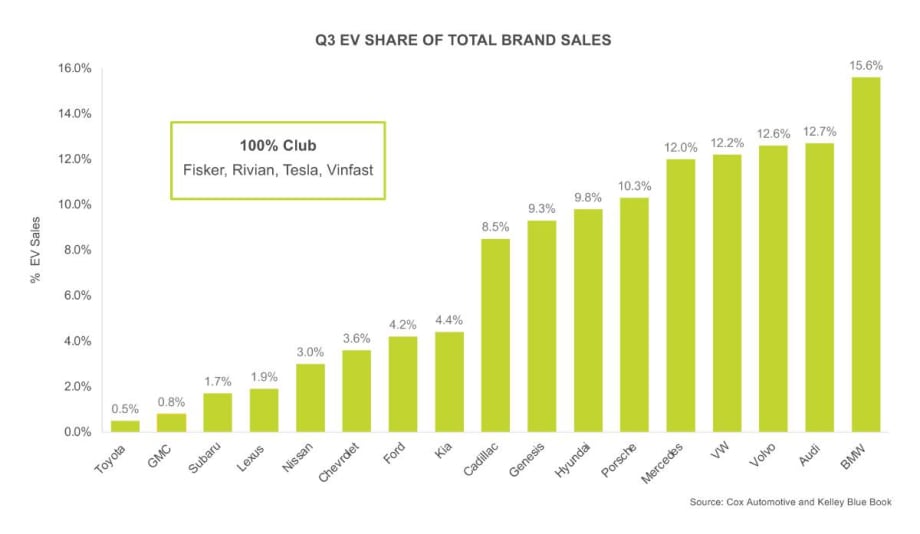
In Q3, Tesla remains the undisputed leader in EV sales, with Ford a distant #2 on the list, selling just over 20,000 EVs. However, Tesla’s share of the EV segment continues to plunge, hitting 50% in Q3, the lowest level on record and down from 62% in Q1.
Graphic: Cox Automotive
Electric vehicle (EV) sales volumes set another record in Q3, as total sales of battery-powered vehicles jumped past 300,000 for the first time in the U.S. market, according to figures released Oct. 12 by Kelley Blue Book.
Year-to-date EV sales through September reached just over 873,000, putting the market firmly on track to surpass one million for the first time ever. The milestone will likely be achieved in November.
Total EV sales in Q3 hit 313,086, a 49.8% increase from the same period one year ago and an increase from the 298,039 sold in Q2. Most automakers posted sizeable gains over 2022, with Volvo, Nissan, Mercedes and Hyundai delivering increases above 200%, thanks mostly to new products entering the market. In Q3, 14 new EV models that did not exist one year ago were in the mix, including Chevrolet Blazer and Silverado EVs. (The new Chevy EVs had very low sales – just an initial few to mark a Q3 launch). The EV market is transforming, to be sure.
Electric vehicle sales accounted for 7.9% of total industry sales in Q3, a record and up from 6.1% a year ago and 7.2% in Q2. As Cox Automotive has been reporting, higher inventory levels, more product availability, and downward pricing pressure have helped spur continued linear growth of EV sales in the U.S. market. EV sales have now increased for 13 straight quarters.
EV transaction prices in Q3 were down a lot from 2022. In an attempt to increase sales volume, Tesla slashed prices, which are now down about 25% year over year. The price cuts have helped, as Tesla’s Q3 sales grew by 19.5% year over year, surpassing the industry’s overall growth rate of 16.3%. However, Tesla’s share of the EV segment continues to plunge, hitting 50% in Q3, the lowest level on record and down from 62% in Q1. The long-promised Cybertruck may reverse the downward trend, although competition from Ford, Rivian and Chevrolet will likely affect Tesla’s electric pickup volume potential.
The German luxury makes – Audi, BMW, and Mercedes – continue to rapidly increase sales of EV models. In Q3, BMW and Mercedes EV sales more than triple year-ago levels, while Audi posted an EV sales gain of 94%.
Among automakers selling internal combustion engine (ICE) and EV products, Audi, BMW and Volvo had the richest mix of EVs in Q3. BMW had the highest proportion, with over 15% of its sales being EVs, followed by Audi and Volvo, with over 12% of their sales being EVs, according to Kelley Blue Book estimates. Mercedes, Porsche and VW all had an EV mix in excess of 10% last quarter.
In 2020, just three years back, EV sales in the U.S. passed 250,000 for the first time. This year, the market will jump past one million. In Q3, Tesla remains the undisputed leader in EV sales, with Ford a distant #2 on the list, selling just over 20,000 EVs.
Most analysts expect a flood of new EVs in the coming three years, with the number of available EV products likely to double by 2027. With this changing landscape, U.S. EV sales volume growth is expected to continue. Of late, product availability has surged, while consumer acceptance has grown in a more linear fashion. Those trends will likely continue, making for some interesting market dynamics in the years ahead.
Originally posted on Charged Fleet
More Fleet

Acertus Acquires Fisher Shipping, CEO to Join Acertus
Fisher Shipping will retain its brand and team, while its customers gain access to Acertus’ transportation, storage, vehicle care, and title and registration services.
Read More →
Commercial Fleet Sales Contribute To June, YTD Gains
The fleet sector has boosted its vehicle purchases at a reliable pace in the first half of this year compared with 1H 2025.
Read More →
Registration Opens for 2026 Fleet Forward Conference
Held on the East Coast for the first time, the Washington, D.C.-area event features expert-led education, a new IIHS Crash Test Experience, and collocation with the NAFA’s Fleet Safety Symposium.
Read More →
AP Fleet Management Expands Remarketing Program for Commercial Work Trucks
AP Fleet Management expanded its commercial vehicle remarketing program with dedicated resale services and an online marketplace for used work trucks.
Read More →
Used EVs Strengthen Overall Electric Vehicle Market
The latest sales data point to several reasons for the divergent trends in new and used EVs that can factor into fleet cycling decisions.
Read More →
Wholesale Used Vehicle Market Sustains Moderate Rise In Values, Prices
Trends continue to normalize after a strong start to the year, as consumers contend with higher gas prices in the coming summer months.
Read More →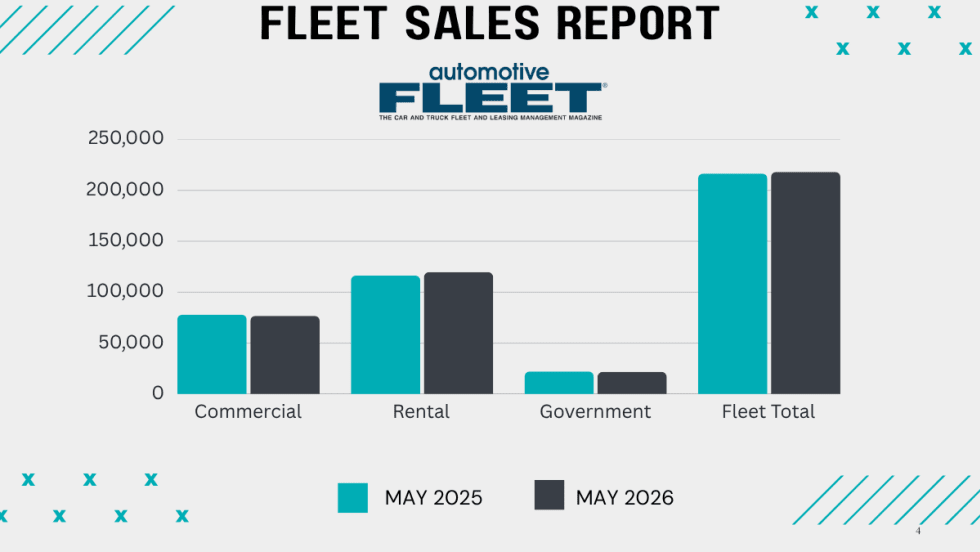
Commercial Fleet Sales Still Lead Sectors Despite May Mini Dip
The U.S. economy's continued growth and positive business investment are creating a favorable environment for fleet vehicle demand.
Read More →
The Data-Driven Haul: 5 Ways AI is Leveling the Playing Field in Auto Transport
Large and small transport fleets are becoming more competitive as predictive analytics and real-time data inform the logistics decision chain.
Read More →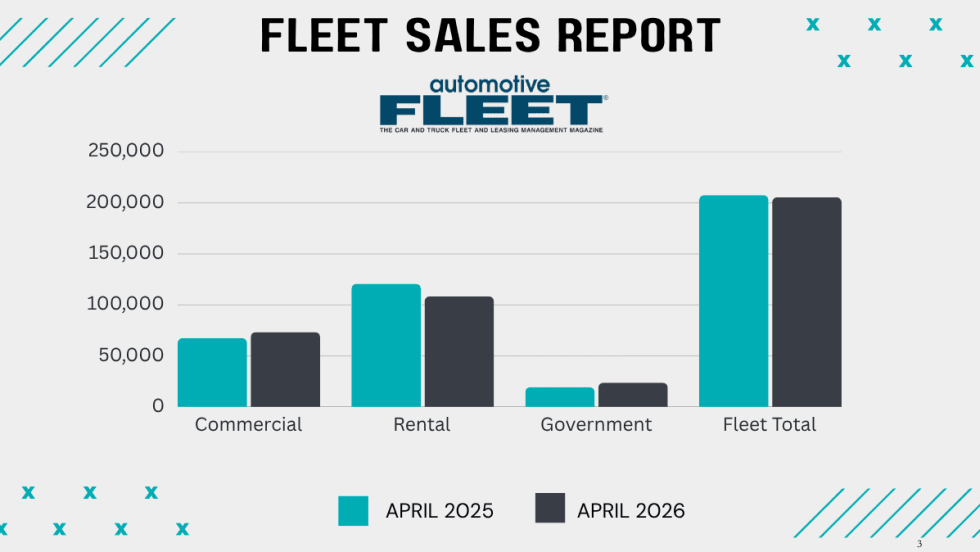
Commercial Fleet Sales Show Healthy Gains
So far, the fleet sector is outshining government and rental fleet sales this year as economic growth spurs more business investment.
Read More →
CAR 2026 Recap Part 2: Closing the Gap Between Data & Remarketing Value
The second half of CAR 2026 examined how fleets can translate lifecycle strategy, vehicle data, and market shifts into higher real-world results.
Read More →