



EV Prices Moving Up from March Bottom While Q2 EV Sales Hit Record
Q2 new electric vehicle sales are up 11% from EV sales in Q2 2023 due mostly to improved availability, higher discounts, and elevated levels of leasing.

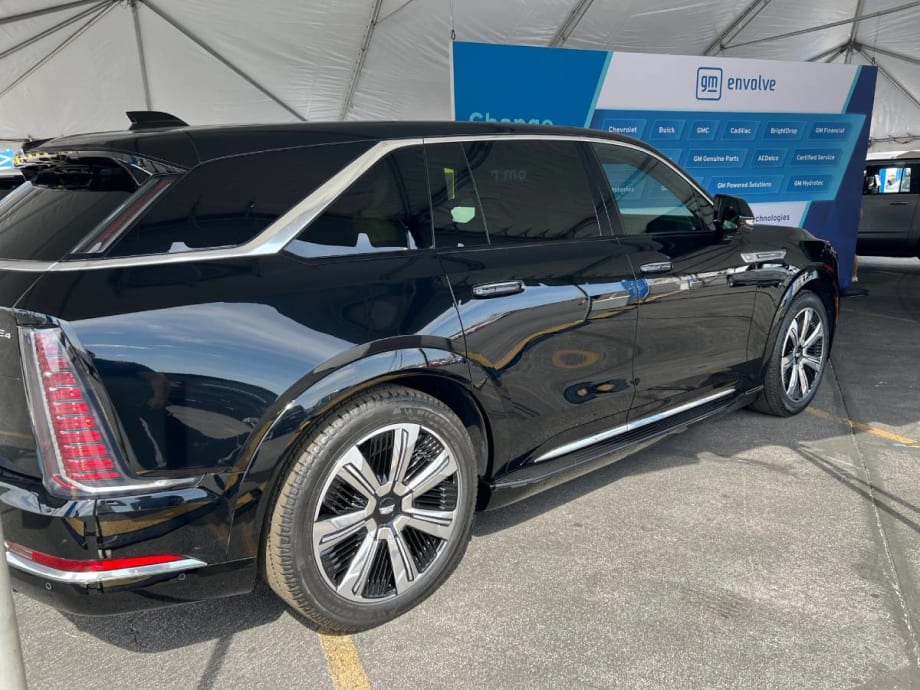
About 330,000 EVs were sold in Q2 in the U.S. Pictured: A Cadillac LYRIQ all-electric luxury vehicle.
Photo: Martin Romjue / Bobit
Electric vehicle sales in the U.S. grew by 11.3% year over year in the second quarter, reaching a record-high volume of 330,4631 units, according to new estimates from Kelley Blue Book released July 11.
This growth was driven partly by improved availability, higher discounts and elevated levels of leasing. Total EV sales last quarter were higher than Q1 sales by 23%.
The average price paid for a new electric vehicle in June was $56,371, an increase of 0.9% compared to May, which left EV prices lower by 2.5% versus June 2023, Kelley Blue Book data shows. New EV prices have been trending higher since the spring, when transaction prices fell to $53,235 in March. In large part, the higher prices for EVs are being driven by market leader Tesla, which has seen prices increase 13% since January.
By comparison, the average transaction price (ATP) for a new vehicle in the U.S. was $48,644. The June ATP was higher by $266 (0.6%) from the revised May ATP and lower by $307 (0.6%) compared to June 2023. In June, the new-vehicle ATP was lower year over year for the ninth straight month.
The sales estimates from Kelley Blue Book show that electric vehicles accounted for about 8% of total new-vehicle sales in the second quarter, higher than the 7.1% share in the first quarter of the year and higher than the 7.2% recorded in Q2 last year. Despite prices trending higher, EV sales in Q2 improved versus Q1 and were higher year over year by more than 11%. In fact, 330,000 EVs were sold in Q2 in the U.S., a record quarter for electric vehicle volume.
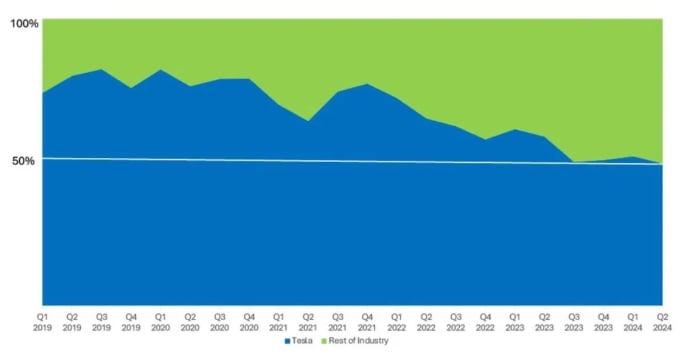
Despite Tesla’s declining sales, with its EV sales share now below 50% for the first time, the overall competitive landscape for electric vehicles is intensifying.
Graphic: Cox Automotive
While prices for the popular Model Y and Model 3 held relatively steady month over month in June – although both have increased significantly since January – the new Cybertruck is likely one reason Tesla ATPs have increased. In June, the Cybertruck was the best-selling vehicle priced over $100,000 – average transaction price: $112,696 – with more than 3,200 units sold.
Cox Automotive industry insights director Stephanie Valdez Streaty commented: “EV sales exceeded expectations during a record-breaking quarter. Despite Tesla’s declining sales, with its EV sales share now below 50% for the first time, the overall competitive landscape for electric vehicles is intensifying. This increased competition is leading to continued price pressure, gradually boosting EV adoption. Automakers that deliver the right product at the right price and offer an excellent consumer experience will lead the way in EV adoption.”
While Tesla remains the dominant player in the EV segment, new electric offerings by mainstream competitors – and more aggressive pricing – continue to provide shoppers with interesting alternatives. Notable new entries in Q2 include the BMW i5, Cadillac Lyriq, Honda Prologue, and Kia EV9 SUV. Higher volumes of the Ford Mustang Mach-E and F-150 Lightning helped the Ford brand retain its No. 2 position, behind Tesla, in the EV market.
New EVs from General Motors are also helping grow industry volume. In Q2, GM added more than 21,000 EVs to the market. New models include electric versions of the Chevy Blazer, Equinox and Silverado, which tallied more than 10,000 sales in Q2, although the extra volume was not enough to offset the discontinued Chevy Bolt. In Q2, Chevrolet’s EV sales were lower by 19% year over year. Other major players who lost ground year over year in Q2 include Mercedes-Benz, Polestar, Porsche, Volvo, and VW.
“We remain bullish on electric vehicle sales in the long term. The growth will, at times, be very slow, as all-time horizons in the automobile business are vast, but the long-term trajectory suggests that higher volumes of EVs will continue over time," Streaty added. "As EV infrastructure and technology improve, and more models are launched, many shoppers sitting on the fence will eventually choose an EV.”
Originally posted on Charged Fleet
More Fleet

Acertus Acquires Fisher Shipping, CEO to Join Acertus
Fisher Shipping will retain its brand and team, while its customers gain access to Acertus’ transportation, storage, vehicle care, and title and registration services.
Read More →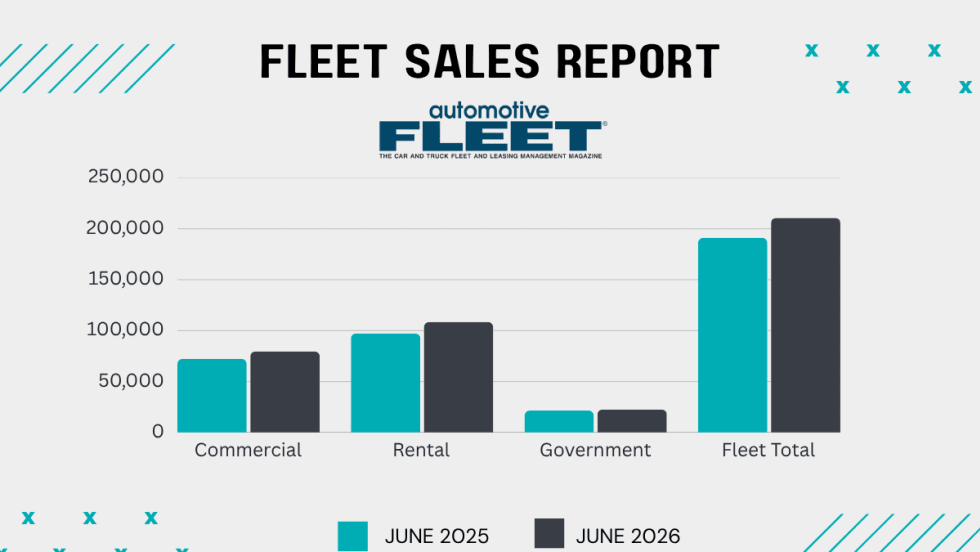
Commercial Fleet Sales Contribute To June, YTD Gains
The fleet sector has boosted its vehicle purchases at a reliable pace in the first half of this year compared with 1H 2025.
Read More →
Registration Opens for 2026 Fleet Forward Conference
Held on the East Coast for the first time, the Washington, D.C.-area event features expert-led education, a new IIHS Crash Test Experience, and collocation with the NAFA’s Fleet Safety Symposium.
Read More →
AP Fleet Management Expands Remarketing Program for Commercial Work Trucks
AP Fleet Management expanded its commercial vehicle remarketing program with dedicated resale services and an online marketplace for used work trucks.
Read More →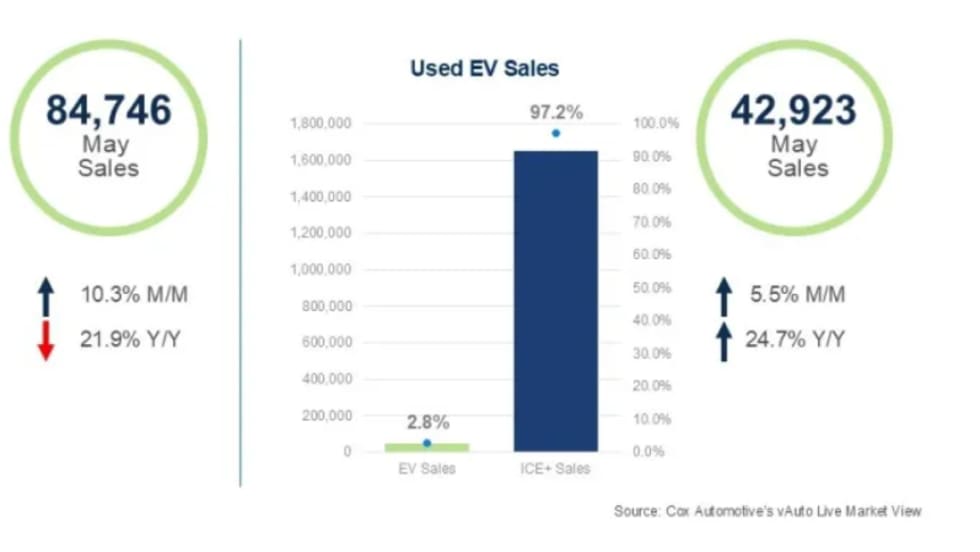
Used EVs Strengthen Overall Electric Vehicle Market
The latest sales data point to several reasons for the divergent trends in new and used EVs that can factor into fleet cycling decisions.
Read More →
Wholesale Used Vehicle Market Sustains Moderate Rise In Values, Prices
Trends continue to normalize after a strong start to the year, as consumers contend with higher gas prices in the coming summer months.
Read More →
Commercial Fleet Sales Still Lead Sectors Despite May Mini Dip
The U.S. economy's continued growth and positive business investment are creating a favorable environment for fleet vehicle demand.
Read More →
The Data-Driven Haul: 5 Ways AI is Leveling the Playing Field in Auto Transport
Large and small transport fleets are becoming more competitive as predictive analytics and real-time data inform the logistics decision chain.
Read More →
Commercial Fleet Sales Show Healthy Gains
So far, the fleet sector is outshining government and rental fleet sales this year as economic growth spurs more business investment.
Read More →
CAR 2026 Recap Part 2: Closing the Gap Between Data & Remarketing Value
The second half of CAR 2026 examined how fleets can translate lifecycle strategy, vehicle data, and market shifts into higher real-world results.
Read More →