




More News: Making Money on EVs Just Got Harder
EV Prices Dip Slightly in January Thanks to Tesla
Future pricing trends of new electric vehicles and resale values of used ones remain undefined and unpredictable for the long-term.
February 17, 2023
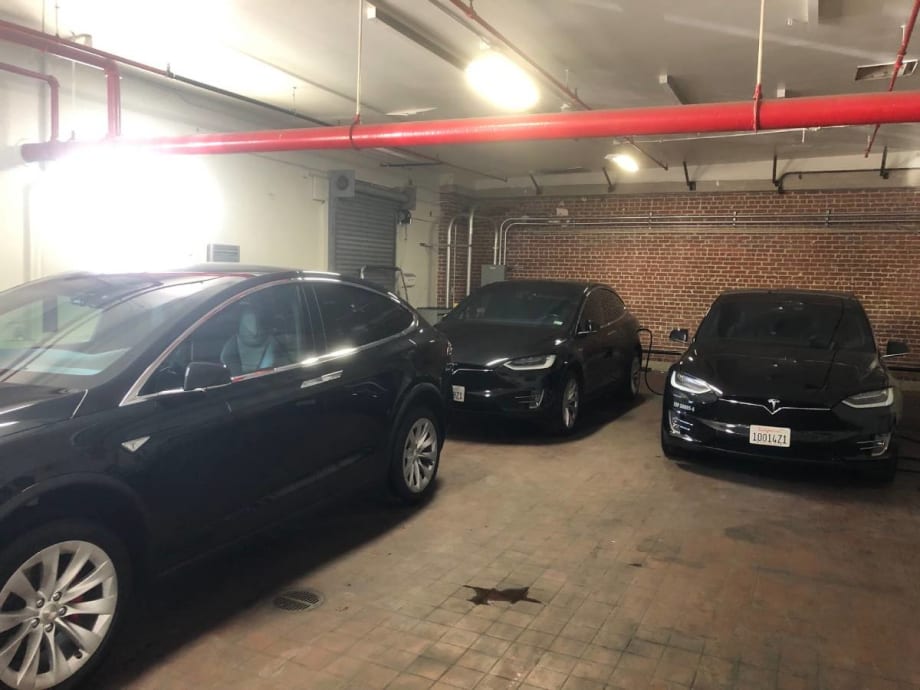
Price cuts to Tesla models have driven down the average transaction price for electric vehicles, but average EV prices still remain higher than those for ICE vehicles.
Photo: Martin Romjue / Bobit
3 min to read
The average price for highly sought-after electric vehicles eased down in January, but only because Tesla, with about 60% of EV market share, cut prices to keep customers, according to the latest numbers from Kelley Blue Book.
The average new EV in the U.S. sold for $58,725, down by $3,363 (5.4%) compared to December but still well above the industry average, according to Kelley Blue Book estimates.
That decline can be attributed mostly to a decrease in the average Tesla transaction prices of $5,440, down 8.4% month over month and down 5.5% year over year. As a result, Tesla sales in January increased YOY by more than 30%.
The average listing price — or the asking price — for all new vehicles leaped to another record $47,743 as of Jan. 31, up from a revised $47,531 at the end of December, according to Cox Automotive’s analysis of data. The listing price was 6% higher than in January 2021.
The average transaction price (ATP) — or the price paid — declined slightly in January to $49,388, down 0.6% or $310 from December’s record. The January ATP was up nearly 6% from a year ago, and the share of luxury brand sales was at a record high near 20%.
Because Tesla reigns in the electric vehicles market, it ends up bringing average EV prices down slightly, said Brian Moody, editor of Kelley Blue Book. The wide gulf between top-ranked Tesla and the second and below ranked EV-makers in sales means it will influence the market the most.
“When someone is that dominant, it will affect everyone,” Moody said. “There’s a lot of demand for new cars of all kinds. The one barrier to people getting them is price. The lower the price, the more buyers you get.”
While Tesla and Ford are so far the only OEMs on record for cutting EV prices, it doesn’t mean other carmakers haven’t done the same either quietly or with incentives, Moody said.
Long-term, EV prices could still vary as automakers and sellers balance limited supply against maintaining profitable demand.
“There is a presumption that prices could come down due to abundance,” Moody said of anticipated growth in makes and models of EVs. “There may be an overabundance of electric cars during the next few years.”

Brian Moody, editor of Kelley Blue Book, says the current market for EVs is not inclined toward significant discounting or incentives for fleets.
Photo: Kelley Blue Book
Fleets Not a Priority
Moody doesn’t foresee many discounted EVs for the fleet market, however, given that OEMs with limited supply will prefer higher-paying consumers in the retail market.
While EVs are a good fit for the routes and duty cycles of fleet vehicles, especially in the public sector, fleet EV sales don’t deliver the profit margins for OEMs that they get from retail buyers, he said. Since fleet vehicles generally run on local, predictable routes, an EV eventually can save time and money even at a higher price point by charging at night and staying within fixed service cycles.
Mixed Values for Used EVs
In the used EV market, resellers are finding that EVs hold more value within the first few years but then drop off steeper when compared to ICE vehicles, especially if they are out of warranty.
“Electric vehicles depreciate quite a bit,” Moody said. “When you have uncertainty about new technology, people will not seek the vehicle much unless it’s under warranty.”
After five years, a used Chevrolet Bolt retains about 55% of its original value, compared to 45% for the Audi eTron GT, 41% for the Nissan LEAF, and 27% for the Hyundai Kona, said Moody, citing KBB figures.
Tesla models sell for about 40-45% of their original value after five years.
Topics:Used Vehicle PricesNew Vehicle PricesElectric VehiclesFleet electrificationUsed Vehicle ValuesFleet
Originally posted on Charged Fleet
More Used Vehicle Values
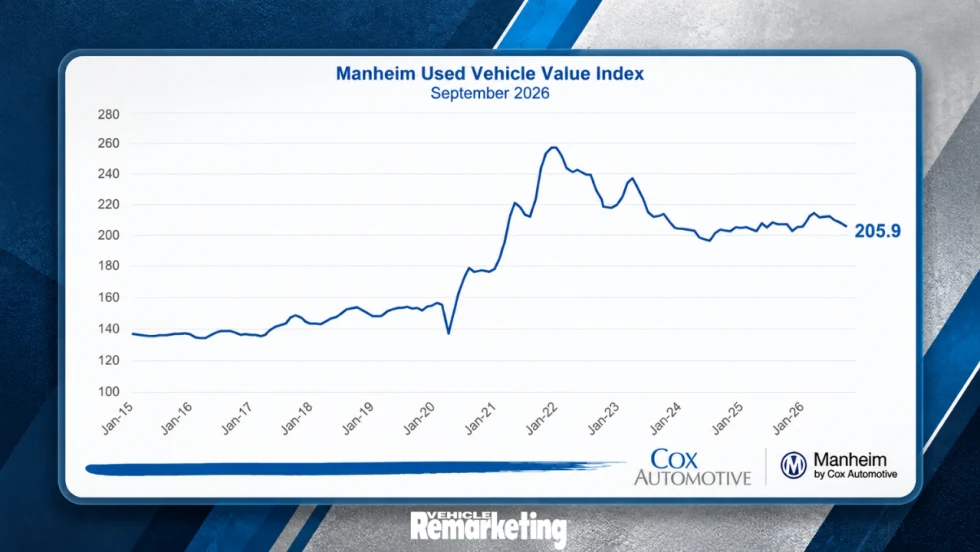
Wholesale Used-Vehicle Values Fall as Cox Automotive Cuts 2026 Forecast
Wholesale used-vehicle prices declined in September as depreciation accelerated, prompting Cox Automotive to lower its year-end forecast.
Read More →
Ford Pro Launches Certified Pre-Owned Program for Commercial Vehicles
Ford Pro Advantage will offer certified pre-owned Class 1-7 commercial vehicles through more than 700 Ford Pro Commercial Vehicle Centers.
Read More →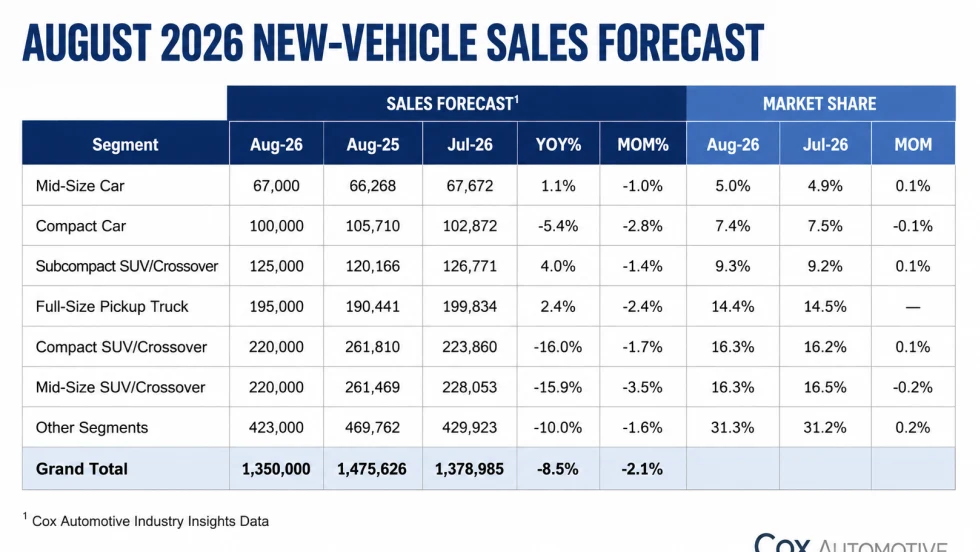
August New-Vehicle Sales Pace Forecast to Hold Above 16 Million
Despite an expected 8.5% year-over-year decline in August volume, Cox Automotive forecasts a 16.3 million SAAR, with full-size pickups outperforming several major crossover segments.
Read More →
Trade Strategy Now Starts Long Before Turn-In
The strongest trade values aren't built at turn-in. Discover how maintenance, lifecycle planning, and shared risk protect truck resale value.
Read More →
What Happens When Residual Values Meet Real-World Markets
A truck's trade value isn't determined on turn-in day. Learn how market cycles, maintenance, and timing shape the gap between residuals and reality.
Read More →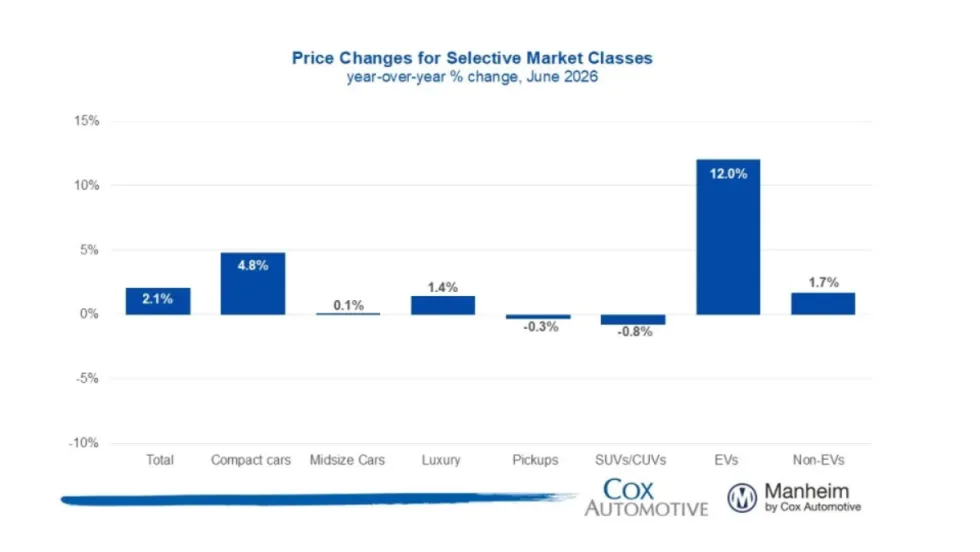
Manheim Index Shows Used-Vehicle Wholesale Prices Up 2.1% in June
The market is seeing stronger appreciation in older used vehicles this year, and the most affordable segments have been among the year’s best performers.
Read More →
Stop Remarketing Electric Vehicles Like Gas Cars
The advantages and attributes of electric vehicles are upending the traditional remarketing cycle, requiring fleet sellers to rely on new factors and approaches detailed below.
Read More →
Used Vehicle Prices Climb Higher As Sales Pace Slows
The higher prices at used retail reflect strong wholesale values earlier in the spring, particularly for older, more affordable vehicles.
Read More →
Wholesale Used Vehicle Market Sustains Moderate Rise In Values, Prices
Trends continue to normalize after a strong start to the year, as consumers contend with higher gas prices in the coming summer months.
Read More →
Used EV Sales Grow In April
While EV sales declined, used EV sales grew, as tighter inventory and rising prices reflected a more normalized pace for the EV market.
Read More →