




Related news: Vehicle Demand Vs. Inventory
Don't Look for Vehicle Incentives This 4th of July Weekend
Guaranteed cash-back money that any buyer qualifies for and is often the fodder of headline advertising has all but dried up.
July 2, 2021
Graphic: Cox Automotive
2 min to read
With the Independence Day holiday weekend here, industry observers might rightly expect a new round of special, can’t-pass-up Fourth of July incentives at dealerships across the U.S.
But according to an analysis of June program data by the Cox Automotive Rates & Incentives team, consumer cash – the guaranteed cash-back money that any buyer qualifies for and is often the fodder of headline advertising – has all but dried up. Notably, there are few national Fourth of July-specific incentives to speak of; deals advertised as holiday specials have likely been in place since June 1. A holiday without incentives, an unheard-of situation according to our analysts.
“The supply-and-demand curve in the new car business has been completely flipped upside down,” notes Brian Finkelmeyer, senior director of new vehicle solutions at Cox Automotive. “Demand for new cars is significantly stronger than supply, and the need for traditional cash incentives to spur sales is all but gone.”
In general, each manufacturer is incentivizing with a great deal of selectivity when it comes to, as they say, “cash on the hood.” Very few 2021 models have guaranteed customer cash; there is some, but not much, cash available for the remaining 2020 models. In fact, incentive spending has been dropping throughout 2021. In May, the average incentive spend as a percent of average transaction price (ATP) dropped to a decade low of 7.4%.
In the current market, most of the incentive programs in place are of two types, special financing deals offered by captive lenders and dealer cash. Dealer cash is money provided by the automakers directly to the dealers for added flexibility in deal-making. Dealer cash is not transparent to the customer, unlike guaranteed customer cash, and can be used by dealers to cover sales shortfalls (common right now), cover expenses, make payroll, etc.
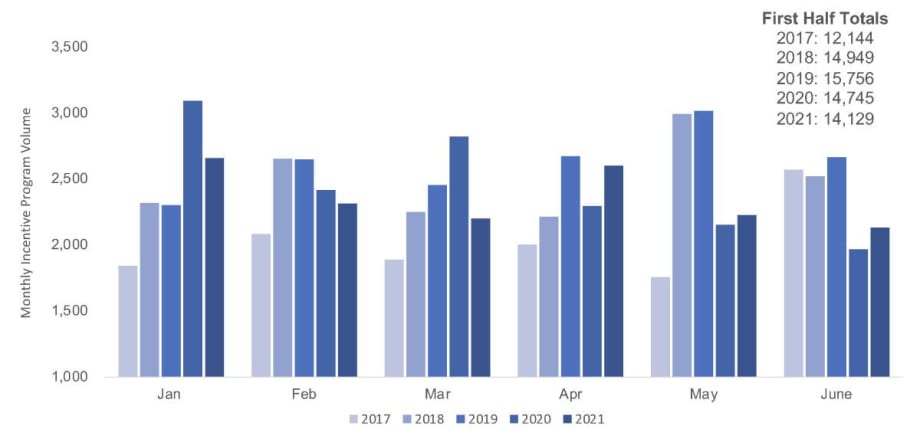
The number of incentive programs each month during the first half of 2021 has also been lower than in recent years. The volume of incentives – literally a count of the number of different incentive programs in the market in each month – during the first six months peaked in 2019, was lower in 2020, and lower still in 2021. Incentive activity – program count – is a measure of how much automakers feel they need to be to help stimulate sales.
Of late, and in a market with extremely low inventory, we’ve seen lower program activity along with lower spending. MSRP deals – deals at or above the manufacturers’ suggest retail price – are the new norm, for the first time in living memory, and big discounts are far and few between. Fortunately, most consumers are well aware.
More Fleet

Acertus Acquires Fisher Shipping, CEO to Join Acertus
Fisher Shipping will retain its brand and team, while its customers gain access to Acertus’ transportation, storage, vehicle care, and title and registration services.
Read More →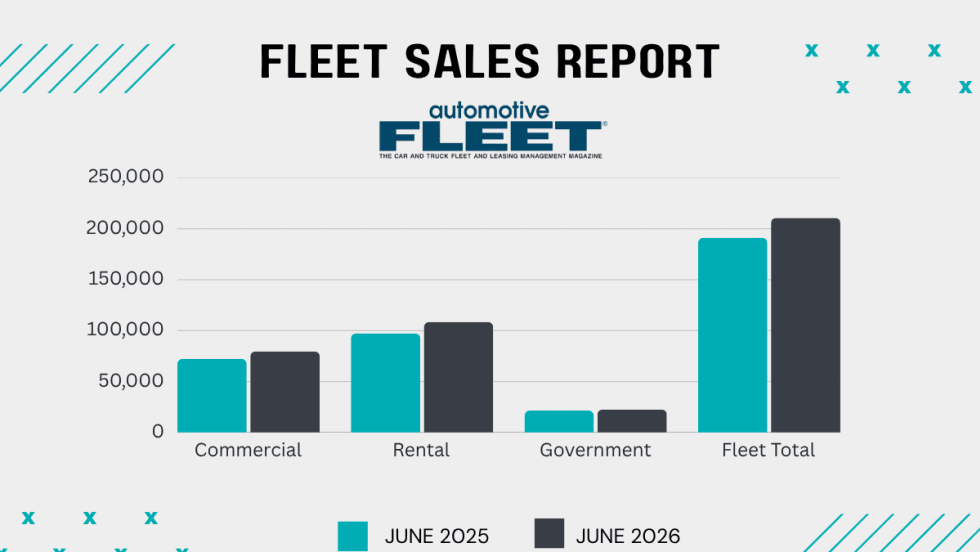
Commercial Fleet Sales Contribute To June, YTD Gains
The fleet sector has boosted its vehicle purchases at a reliable pace in the first half of this year compared with 1H 2025.
Read More →
Registration Opens for 2026 Fleet Forward Conference
Held on the East Coast for the first time, the Washington, D.C.-area event features expert-led education, a new IIHS Crash Test Experience, and collocation with the NAFA’s Fleet Safety Symposium.
Read More →
AP Fleet Management Expands Remarketing Program for Commercial Work Trucks
AP Fleet Management expanded its commercial vehicle remarketing program with dedicated resale services and an online marketplace for used work trucks.
Read More →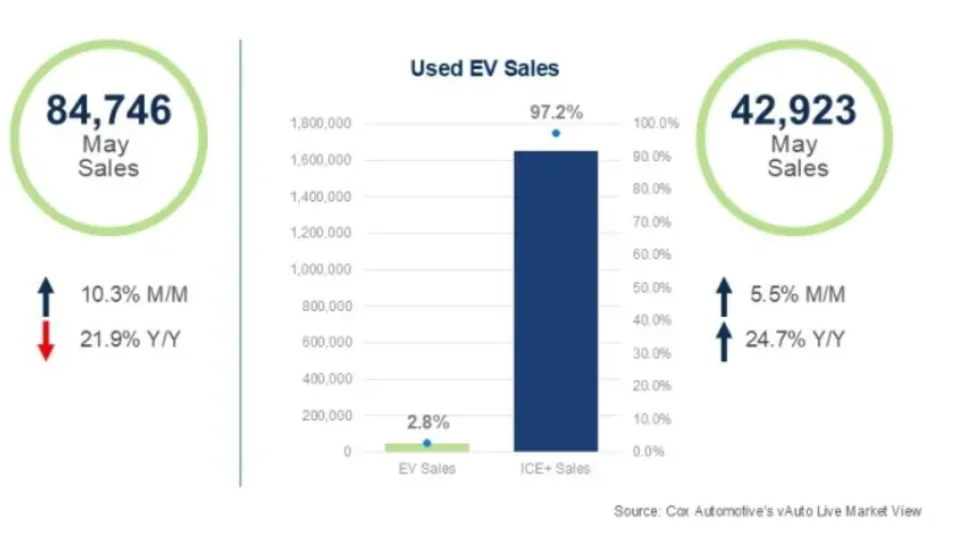
Used EVs Strengthen Overall Electric Vehicle Market
The latest sales data point to several reasons for the divergent trends in new and used EVs that can factor into fleet cycling decisions.
Read More →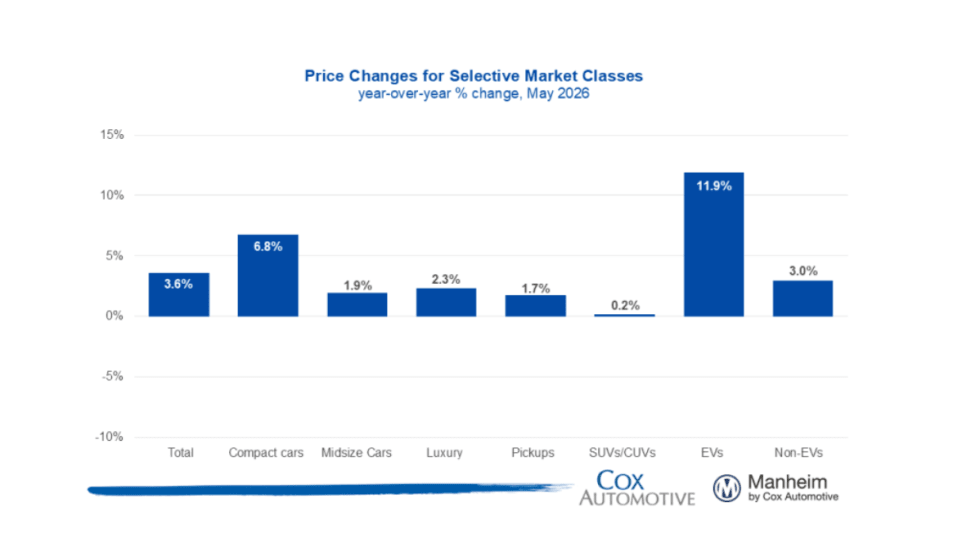
Wholesale Used Vehicle Market Sustains Moderate Rise In Values, Prices
Trends continue to normalize after a strong start to the year, as consumers contend with higher gas prices in the coming summer months.
Read More →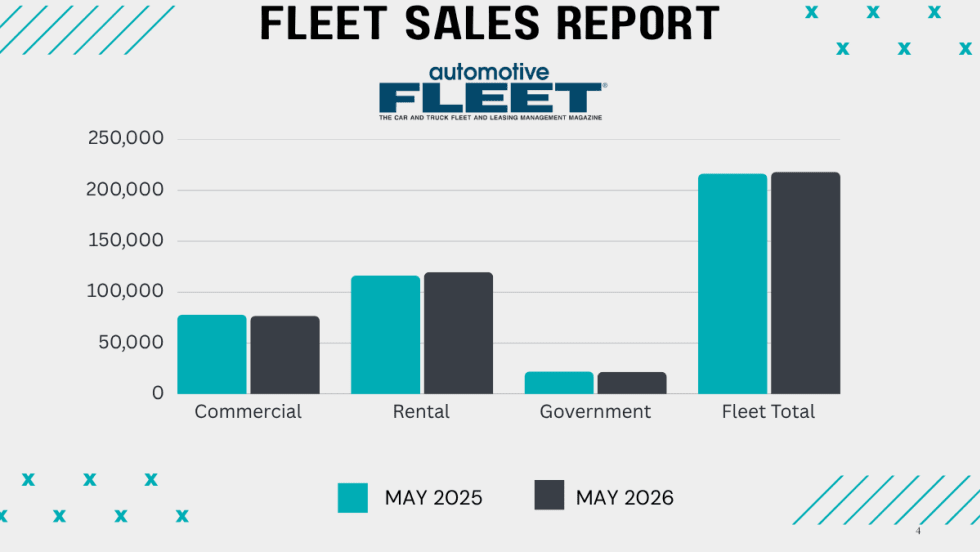
Commercial Fleet Sales Still Lead Sectors Despite May Mini Dip
The U.S. economy's continued growth and positive business investment are creating a favorable environment for fleet vehicle demand.
Read More →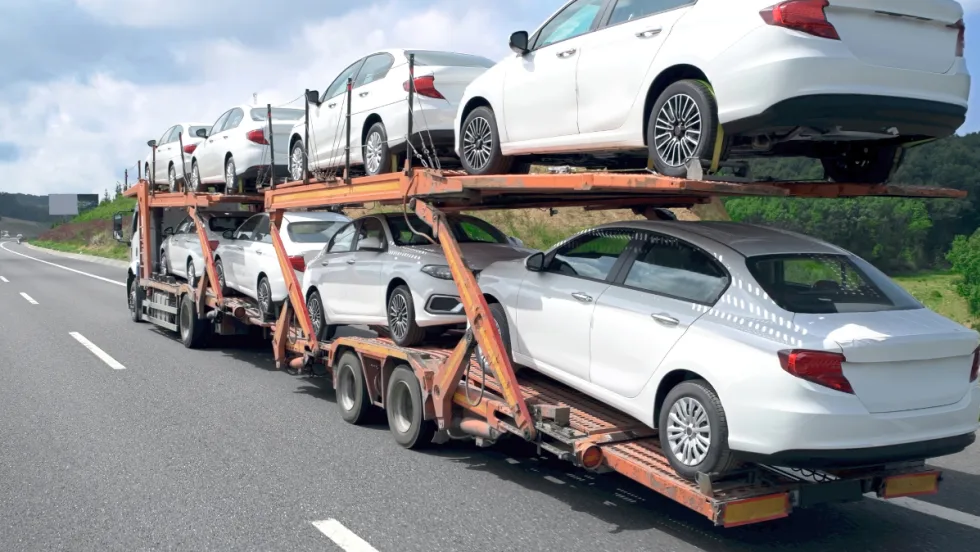
The Data-Driven Haul: 5 Ways AI is Leveling the Playing Field in Auto Transport
Large and small transport fleets are becoming more competitive as predictive analytics and real-time data inform the logistics decision chain.
Read More →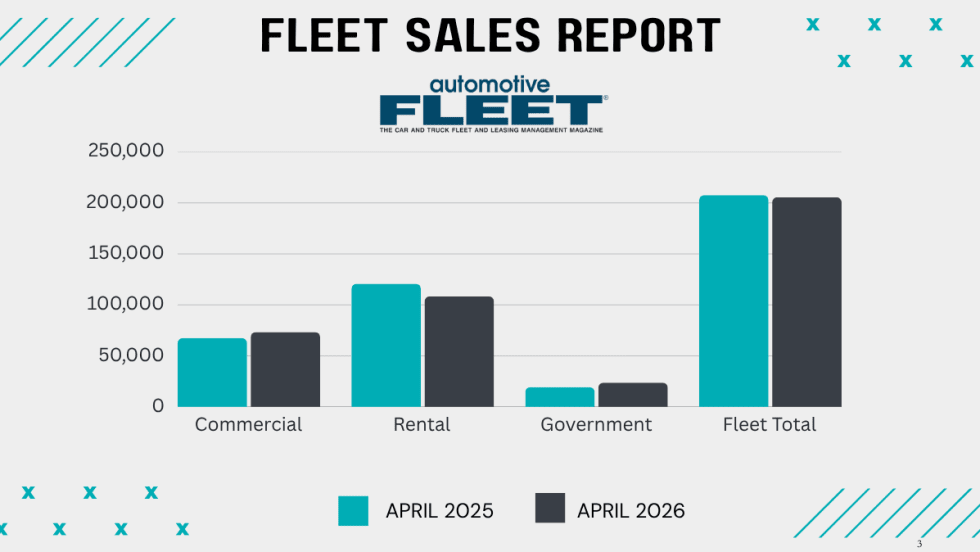
Commercial Fleet Sales Show Healthy Gains
So far, the fleet sector is outshining government and rental fleet sales this year as economic growth spurs more business investment.
Read More →
CAR 2026 Recap Part 2: Closing the Gap Between Data & Remarketing Value
The second half of CAR 2026 examined how fleets can translate lifecycle strategy, vehicle data, and market shifts into higher real-world results.
Read More →