



CarMax Reports Second Quarter Results
CarMax, Inc. has reported results for the fiscal 2005 second quarter and six-month period ended August 31, 2004.
RICHMOND, VA -- CarMax, Inc. has reported results for the fiscal 2005 second quarter and six-month period ended August 31, 2004.
Total sales increased 7 percent to $1.32 billion from $1.24 billion in the second quarter of last year.
Second quarter net earnings were $29.9 million, or 28 cents per share, compared with $39.6 million, or 37 cents per share, earned in the second quarter of fiscal 2004.
For the third quarter of fiscal 2005 ending November 30, 2004, CarMax expects comparable store used unit sales performance in the range of -8 percent to -2 percent, and earnings per share in the range of 12 cents to 17 cents.
"Our used-car business continued to experience widespread sales volatility and softness throughout the quarter," said Austin Ligon, president and chief executive officer. "We believe these effects are occurring broadly across the late-model used-car market. We also believe current economic factors, such as higher gas prices, have contributed to the market environment. Newer model used cars also appear to be affected by the unusually intense and volatile incentive competition among new car manufacturers -- particularly the domestic manufacturers. The sales softness in the second quarter was exacerbated by the severe weather experienced in Florida and the southeastern United States in August. Despite the sales softness, our best information indicates that we are maintaining or gaining used car market share.
"Wholesale sales continued to benefit from the steps we've taken to improve our 'buy rate,' or the ratio of appraisal purchases completed to appraisal offers made, and from higher wholesale prices," said Ligon. "Similar to the first quarter, enhanced systems support and a new, more consistent appraisal delivery process contributed to a year-over-year increase in our buy rate.
"Other sales and revenues increased approximately 3 percent, as growth in our service revenue was partially offset by a decrease in third-party finance fees," Ligon said. "In August, we rolled out Drive Financial Services, a new third-party finance provider focused on subprime customers. As is customary in the subprime finance industry, Drive purchases the loan contracts at a discount. This discount is reflected in our income statement as an offset to the fees received from third-party providers lending to prime and nonprime customers."
"Used-car gross profit dollars per unit declined modestly compared with the second quarter of last year, reflecting the impact of the slower overall used-car sales pace," said Ligon. "We adjust vehicle prices based on our proprietary inventory pricing model in order to maintain high inventory turns. However, during the first two months of the quarter, we maintained inventories at lower than original plan but higher than current sales rates. We did this in order to be able to take advantage of an upturn in sales during the peak sales months of the summer, if that were to occur. This reduced our turns and pressured gross margin. However, in August we reduced our inventory levels, as is our practice. We target having our lowest inventory position of the year during the week following Labor Day, in order to minimize the inherent inventory risk associated with the new car model year changeover in the fall. Despite the soft used car sales trends, we were successful in reducing inventories to target levels at August 31."
The lower margin on other sales and revenues resulted primarily from lower service margin and the inclusion of the Drive discount in third-party finance fee revenue.
"As expected, CarMax Auto Finance (CAF) income was lower than last year," said Ligon. "The CAF gain as a percent of loans sold was 3.9 percent in this year's second quarter, which is in line with our expectations for a normalized gain spread, compared with 4.8 percent in last year's second quarter. The decline in the gain spread reflects the change in the underlying interest rate environment, with funding costs having risen faster than consumer rates. For the balance of the year, we expect that CAF gain spreads will be at the lower end of the 3.5 percent to 4.5 percent normalized range."
"Our second quarter SG&A ratio increased to 10.2 percent in this year's second quarter compared with a 9.8 percent ratio in last year's second quarter," said Ligon. "The higher ratio resulted from the de-leveraging associated with negative used unit comps."
More Operations
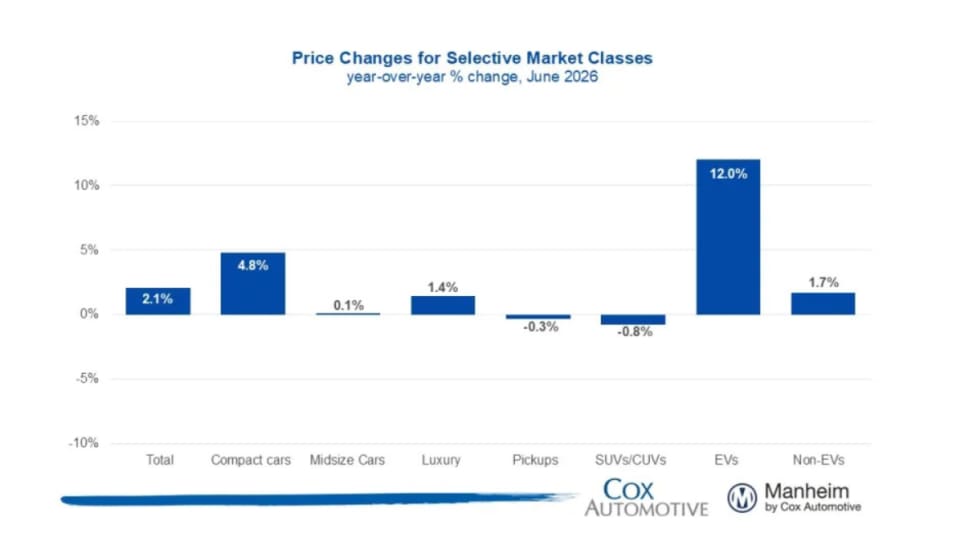
Manheim Index Shows Used-Vehicle Wholesale Prices Up 2.1% in June
The market is seeing stronger appreciation in older used vehicles this year, and the most affordable segments have been among the year’s best performers.
Read More →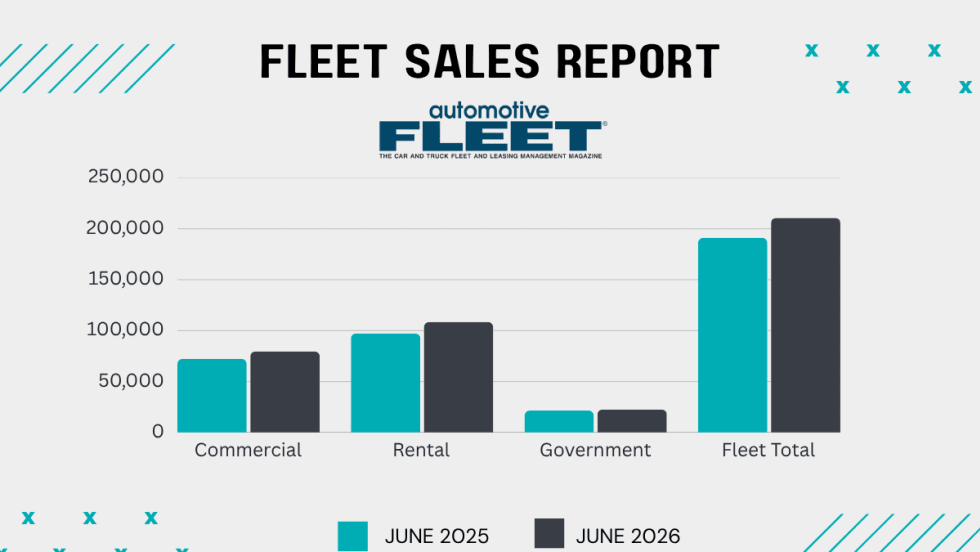
Commercial Fleet Sales Contribute To June, YTD Gains
The fleet sector has boosted its vehicle purchases at a reliable pace in the first half of this year compared with 1H 2025.
Read More →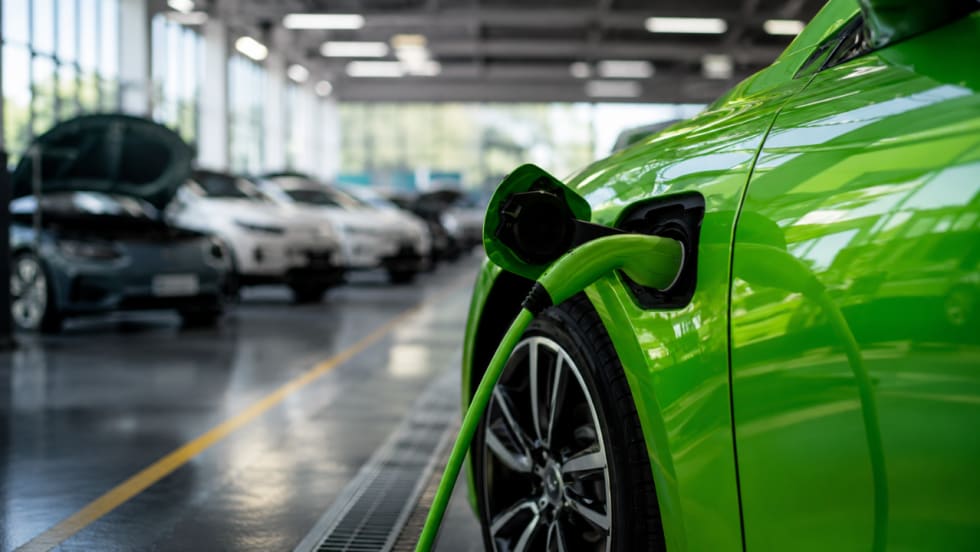
Stop Remarketing Electric Vehicles Like Gas Cars
The advantages and attributes of electric vehicles are upending the traditional remarketing cycle, requiring fleet sellers to rely on new factors and approaches detailed below.
Read More →
AP Fleet Management Expands Remarketing Program for Commercial Work Trucks
AP Fleet Management expanded its commercial vehicle remarketing program with dedicated resale services and an online marketplace for used work trucks.
Read More →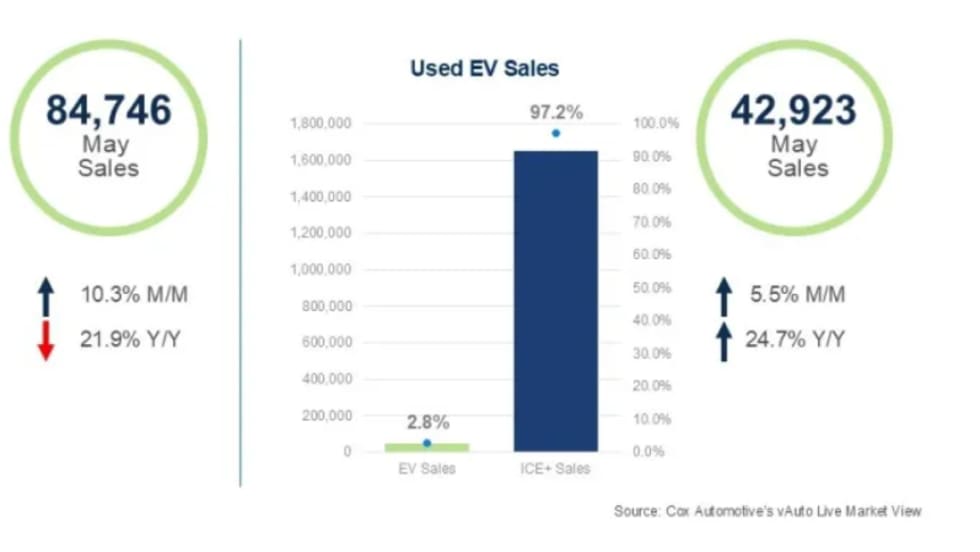
Used EVs Strengthen Overall Electric Vehicle Market
The latest sales data point to several reasons for the divergent trends in new and used EVs that can factor into fleet cycling decisions.
Read More →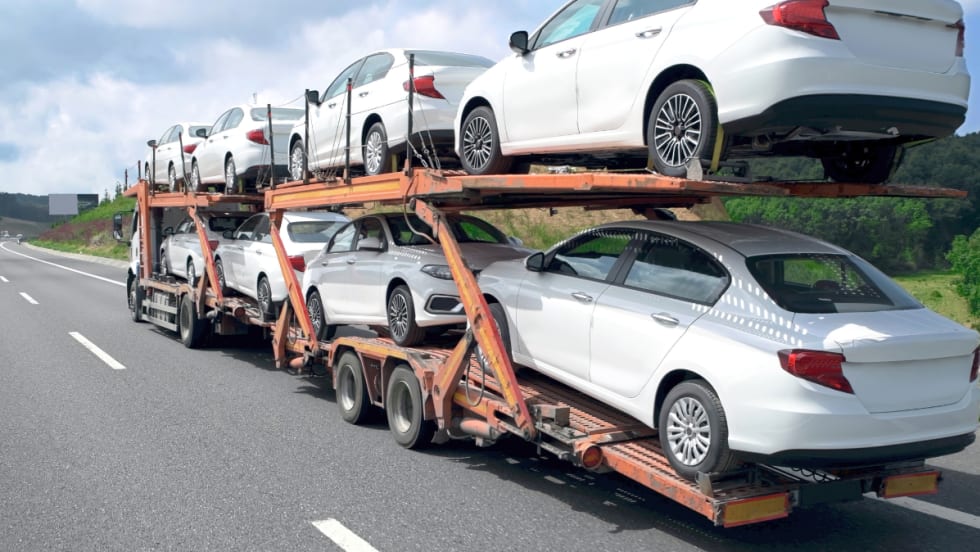
The Data-Driven Haul: 5 Ways AI is Leveling the Playing Field in Auto Transport
Large and small transport fleets are becoming more competitive as predictive analytics and real-time data inform the logistics decision chain.
Read More →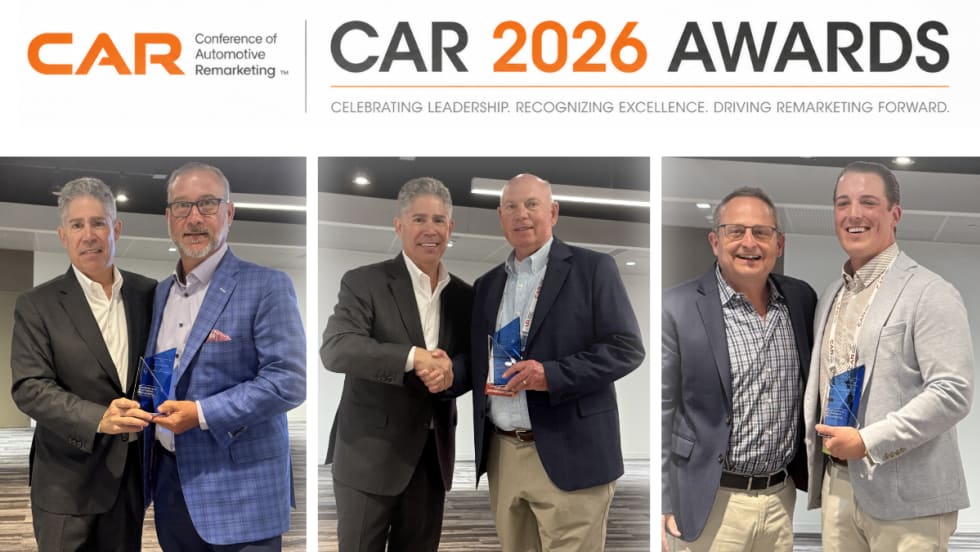
2026 CAR Awards Celebrate Industry Excellence
CAR’s annual Fleet Remarketing Awards opened a reimagined 2026 conference designed to bridge the worlds of fleet management and automotive remarketing.
Read More →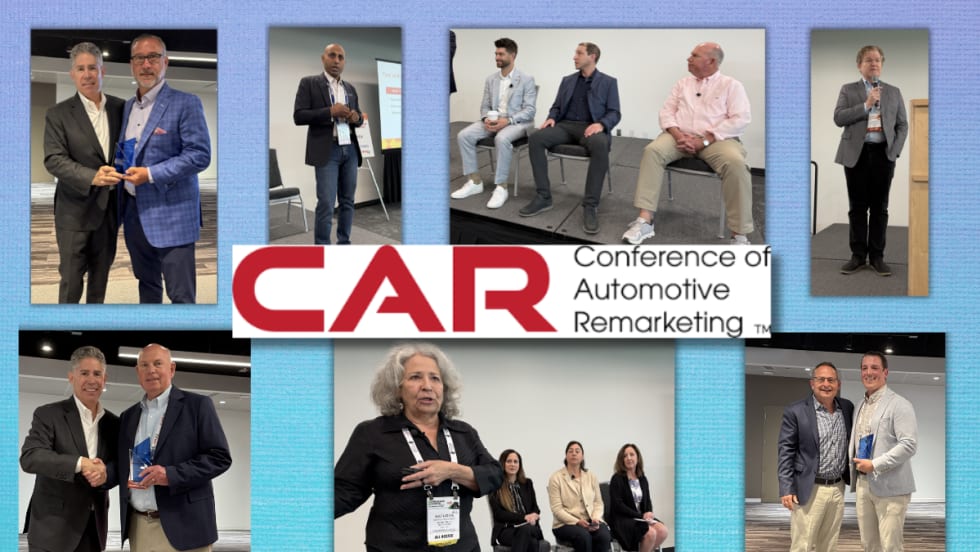
CAR 2026 Recap Part 2: Closing the Gap Between Data & Remarketing Value
The second half of CAR 2026 examined how fleets can translate lifecycle strategy, vehicle data, and market shifts into higher real-world results.
Read More →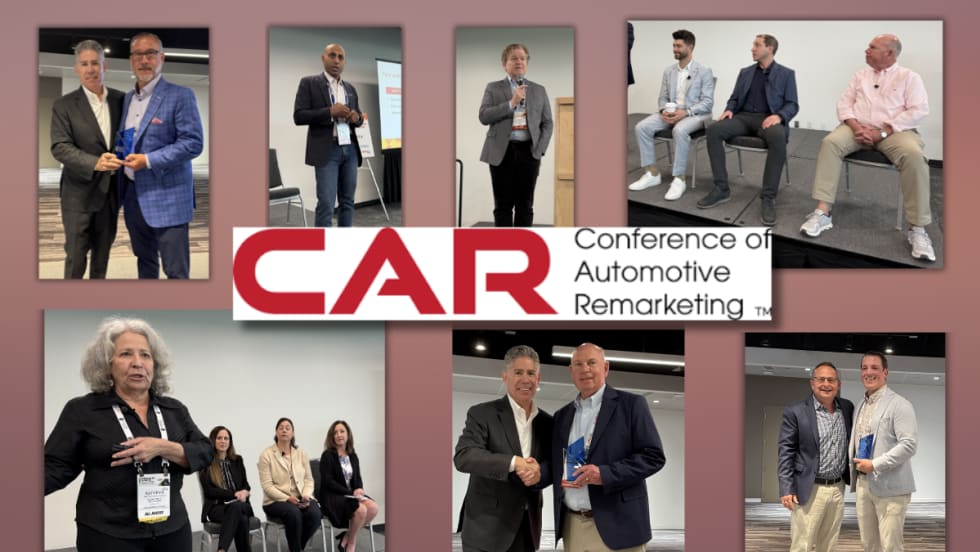
CAR2026 in Two Words: Velocity, Value (Part 1)
The 2026 Conference of Automotive Remarketing convened with a mandate to involve a new constituency — fleet managers — and an updated mission to demonstrate unrealized value in de-fleeted vehicles.
Read More →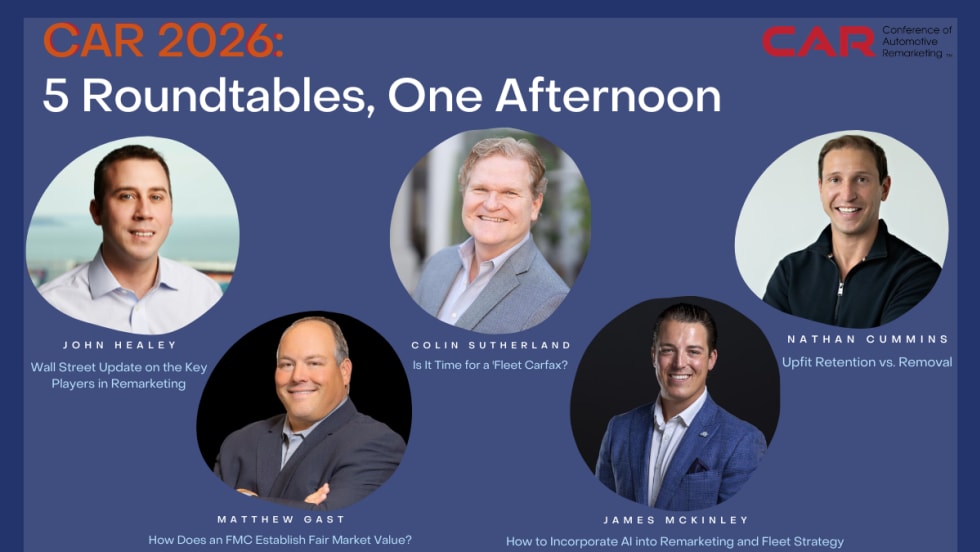
CAR 2026: Get the Wall Street Update on the Key Players in Remarketing
From a Wall Street analyst's take on remarketing's key players to whether fleets need their own version of Carfax, CAR 2026's afternoon roundtables will answer key operational and industry questions.
Read More →