



Avis Grows Q3 Revenue to $2.8B
Revenues grew to a record $2.8 billion in the third quarter on both higher volume and increased underlying pricing in the Americas.

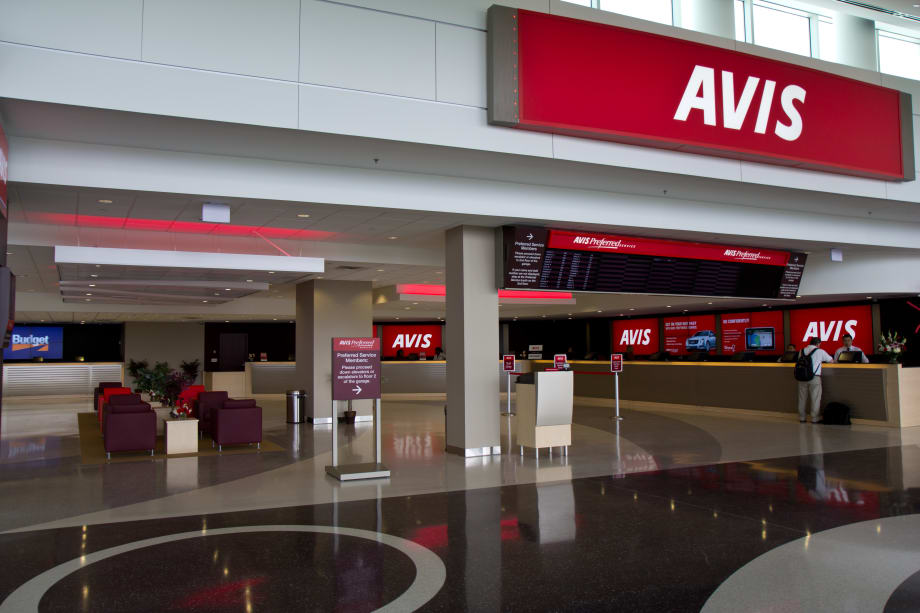
The company's corporate debt was approximately $3.6 billion at the end of the third quarter.
Photo by Atomic Taco/flickr
Avis Budget Group released its Q3 results today, reporting a revenue of $2.8 billion, a new record for the company.
"Our Americas segment delivered record profits and a 50 basis point margin improvement in the third quarter driven by increased volume, higher underlying pricing, and substantially lower per-unit fleet costs, partially offset by a challenging European environment this summer," Larry De Shon, Avis Budget Group president and chief executive officer, said in a statement. "As we enter the fourth quarter, industry fleet levels in the Americas are tight, leading to the best pricing environment we’ve seen in some time. As a result, we currently anticipate Americas revenue per day to increase for the fourth quarter and initial expectations for 2019 are looking good, helped by our new revenue management system, improving ancillary revenues, and the absence of the impact of loyalty accounting."
The company's corporate debt was approximately $3.6 billion at the end of the third quarter and cash and cash equivalents totaled $605 million, compared to $3.6 billion of corporate debt and $611 million of cash and cash equivalents at Dec. 31, 2017.
Avis reported the following results:
Revenues grew to a record $2.8 billion in the third quarter on both higher volume and increased underlying pricing in the Americas
Americas per-unit fleet costs reduced by 10%
Net income of $213 million and earnings per diluted share of $2.68
Adjusted net income increased 2% to $265 million and adjusted earnings per diluted share of $3.33 were 7% higher
Adjusted EBITDA was $476 million with Americas delivering a record quarter
Revenues during the quarter were essentially in-line with the prior year, with 1% higher rental volumes being offset by a $9 million negative effect from currency exchange rate movements. Revenue per day was unchanged primarily due to the change in loyalty accounting, but pricing under our historical T&M per day metric increased 1%.
Adjusted EBITDA increased 3% to a record $313 million in the quarter with the benefit of volume growth and 10% lower per-unit fleet costs being partially offset by increased vehicle interest expense, higher gasoline expense, and lower utilization related to record number of vehicle recalls.
Revenue growth in the quarter was driven by 7% higher volume, despite the challenging European leisure environment this summer, partially offset by 2% lower Revenue per day excluding exchange rate effects and a $22 million, or 2% impact from currency exchange movements.
Adjusted EBITDA was $178 million for the quarter with the benefit of revenue growth being offset by a 3% increase in per-unit fleet costs excluding exchange rate effects, higher airport concession fees, increased marketing and a $5 million impact from currency.
The company today updated its estimated full-year 2018 results as follows (estimates in millions):
Revenues: $9,100 - $9,200
Adjusted EBITDA: $760 - $800
Adjusted pretax income: $370 - $410
Adjusted net income: $265 - $300
Adjusted diluted earnings per share: $3.30 - $3.70
Adjusted free cash flow: $325 - $375
Originally posted on Auto Rental News
More Fleet

Acertus Acquires Fisher Shipping, CEO to Join Acertus
Fisher Shipping will retain its brand and team, while its customers gain access to Acertus’ transportation, storage, vehicle care, and title and registration services.
Read More →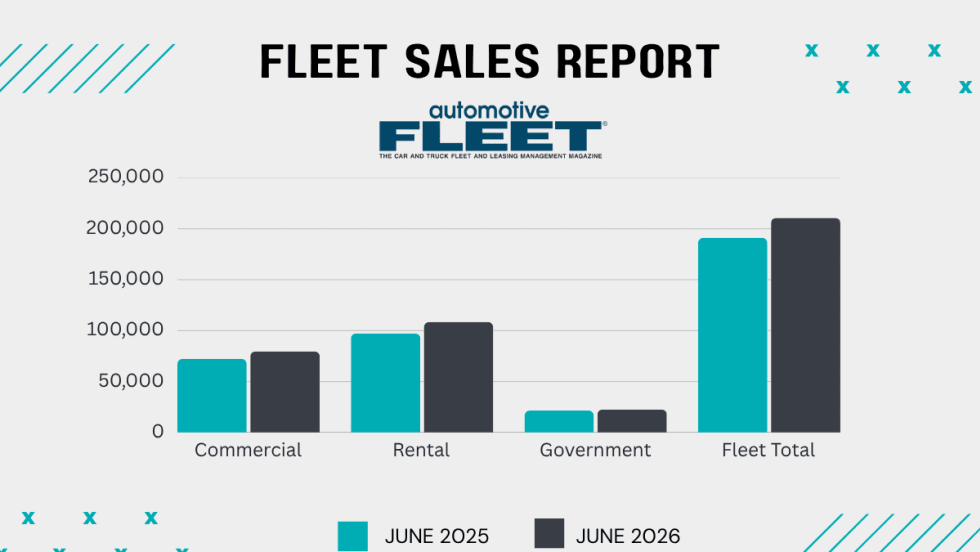
Commercial Fleet Sales Contribute To June, YTD Gains
The fleet sector has boosted its vehicle purchases at a reliable pace in the first half of this year compared with 1H 2025.
Read More →
Registration Opens for 2026 Fleet Forward Conference
Held on the East Coast for the first time, the Washington, D.C.-area event features expert-led education, a new IIHS Crash Test Experience, and collocation with the NAFA’s Fleet Safety Symposium.
Read More →
AP Fleet Management Expands Remarketing Program for Commercial Work Trucks
AP Fleet Management expanded its commercial vehicle remarketing program with dedicated resale services and an online marketplace for used work trucks.
Read More →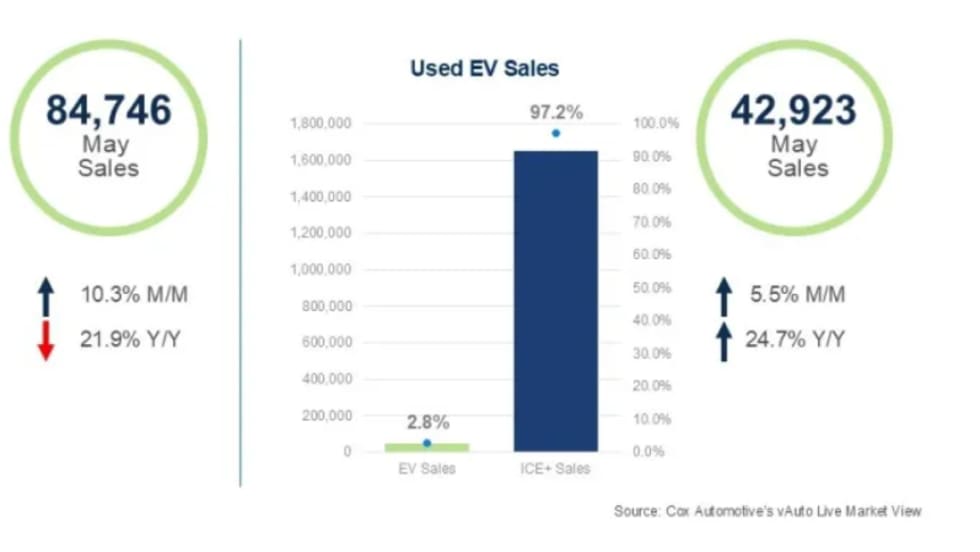
Used EVs Strengthen Overall Electric Vehicle Market
The latest sales data point to several reasons for the divergent trends in new and used EVs that can factor into fleet cycling decisions.
Read More →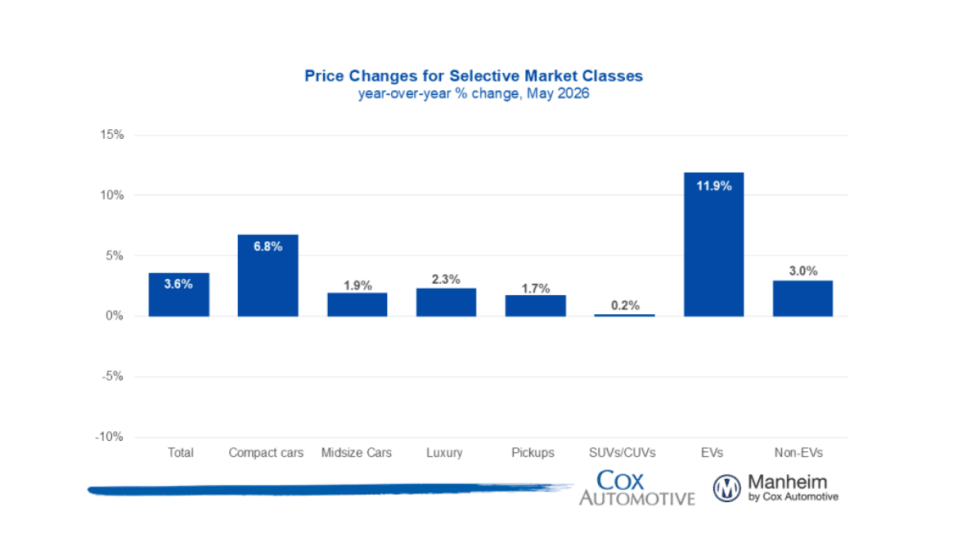
Wholesale Used Vehicle Market Sustains Moderate Rise In Values, Prices
Trends continue to normalize after a strong start to the year, as consumers contend with higher gas prices in the coming summer months.
Read More →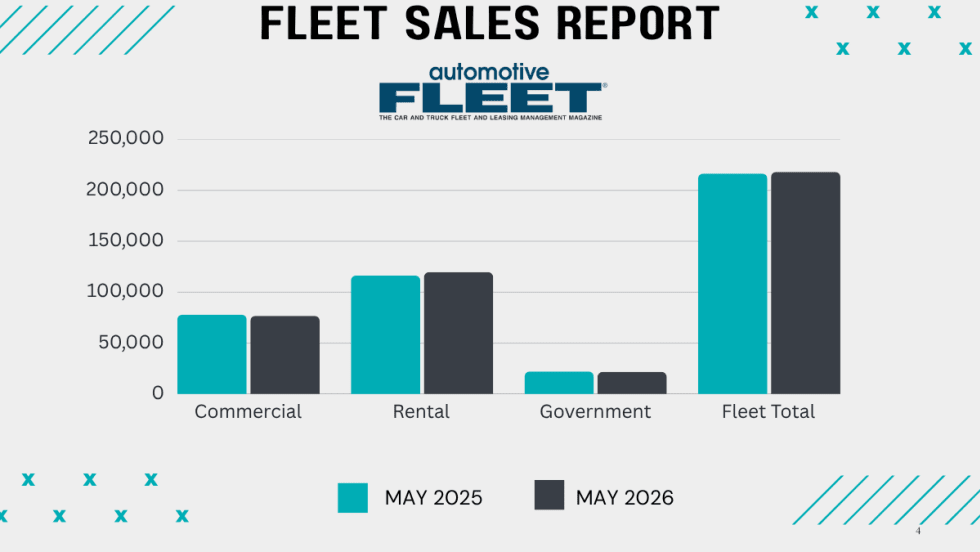
Commercial Fleet Sales Still Lead Sectors Despite May Mini Dip
The U.S. economy's continued growth and positive business investment are creating a favorable environment for fleet vehicle demand.
Read More →
The Data-Driven Haul: 5 Ways AI is Leveling the Playing Field in Auto Transport
Large and small transport fleets are becoming more competitive as predictive analytics and real-time data inform the logistics decision chain.
Read More →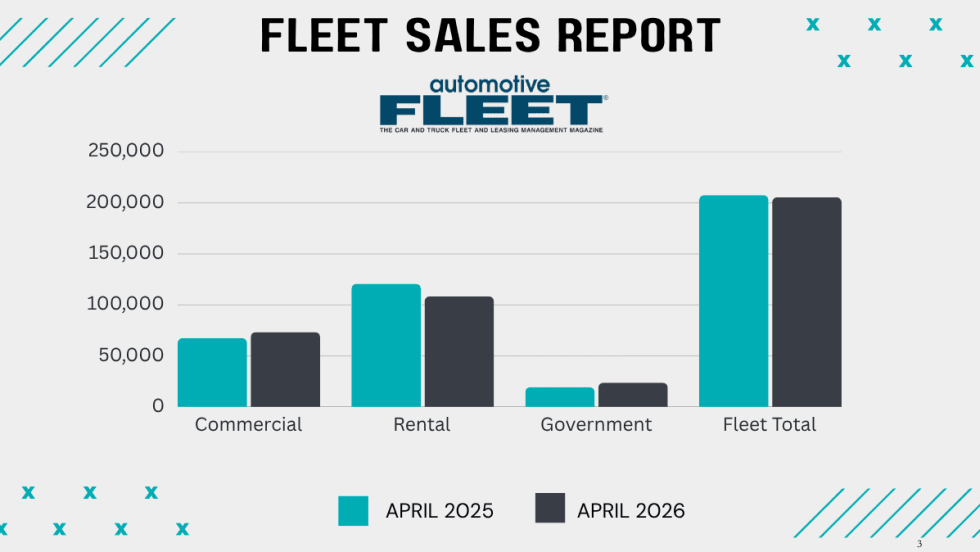
Commercial Fleet Sales Show Healthy Gains
So far, the fleet sector is outshining government and rental fleet sales this year as economic growth spurs more business investment.
Read More →
CAR 2026 Recap Part 2: Closing the Gap Between Data & Remarketing Value
The second half of CAR 2026 examined how fleets can translate lifecycle strategy, vehicle data, and market shifts into higher real-world results.
Read More →