




Related News:Flat May Fleet Sales Push YTD Total Down
A Spike, A Plunge, and A Flatline Define July Fleet Sales
Once again, higher rental fleet sales come to the rescue making year-to-date sales level a dead break even.
August 12, 2025
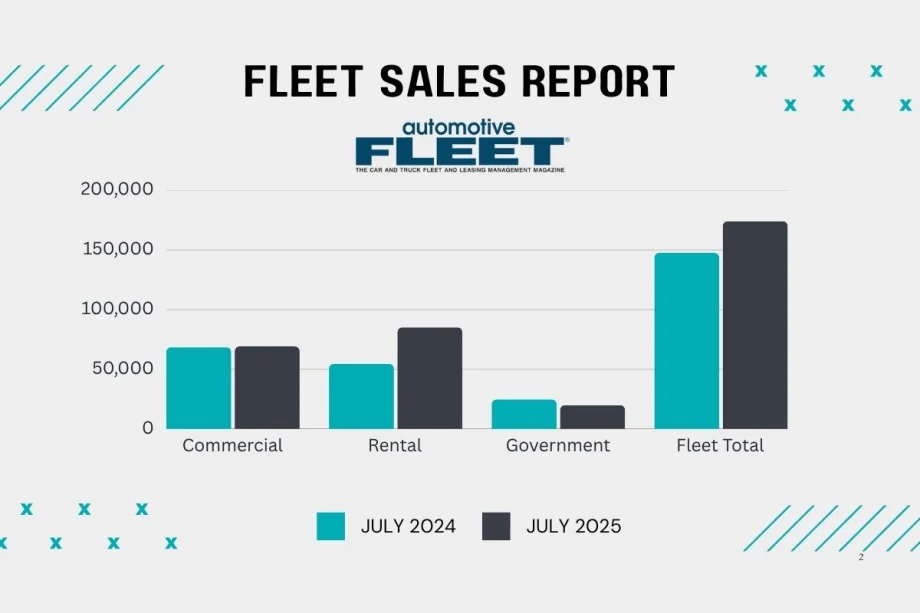
Statistically, combined fleet sales evened out to a 0% shift, making it an official flatline.
Graphic: Bobit Business Media
2 min to read
Vehicle sales for the three main fleet sectors showed widely varied results in July.
Commercial fleet sales reversed a months-long trend of declines but remained near flat, rising only 1.1%.
Rental fleet sales, the more potent engine of the year, leaped by 56%, propping up an overall total increase.
Government fleet sales served as the spoiler, sinking 20%.
Combined, the three sectors in July totaled 173,992 fleet vehicles sold, up 17.9% from 147,543 in July 2024, according to Bobit Business Media fleet numbers released on Aug. 4.
July fleet sales by sector were:
Commercial fleet sales numbered 69,165 vehicles in July compared to 68,410 in July 2024, up 1.1%.
Rental fleet sales saw the biggest leap to 85,029 vehicles sold, up a whopping 56.2% from 54,439 rental cars sold in July 2024.
Government fleet sales fell 19.8% last month, from 24,694 vehicles in July 2024 to 19,798 last month. [Government fleet totals included only Ford, GM, Stellantis, and Mazda numbers. The other five major Asian-based automakers did not report any monthly government fleet sales].
The rental fleet surge was barely enough to restore total fleet sales YTD as of July 31 to 1,372,769 vehicles sold, only 582 more than the 1,372,187 vehicles sold in the first seven months of 2024. Statistically, that evened out to a 0% shift, making it an official flatline.
Bobit Business Media (BBM), owner of Automotive Fleet, Vehicle Remarketing, Government Fleet, and Auto Rental News, compiles fleet sales numbers that reflect aggregate figures from the three major Detroit-based auto manufacturers and the Asian Big 6 automakers. The statistics include cars, SUVs, and trucks.
Topics:Government FleetsFleet SalesCommercial FleetsRental FleetsVehicle Acquisitionvehicle purchasingFleet
Originally posted on Automotive Fleet
More Fleet

Acertus Acquires Fisher Shipping, CEO to Join Acertus
Fisher Shipping will retain its brand and team, while its customers gain access to Acertus’ transportation, storage, vehicle care, and title and registration services.
Read More →
Commercial Fleet Sales Contribute To June, YTD Gains
The fleet sector has boosted its vehicle purchases at a reliable pace in the first half of this year compared with 1H 2025.
Read More →
Registration Opens for 2026 Fleet Forward Conference
Held on the East Coast for the first time, the Washington, D.C.-area event features expert-led education, a new IIHS Crash Test Experience, and collocation with the NAFA’s Fleet Safety Symposium.
Read More →
AP Fleet Management Expands Remarketing Program for Commercial Work Trucks
AP Fleet Management expanded its commercial vehicle remarketing program with dedicated resale services and an online marketplace for used work trucks.
Read More →
Used EVs Strengthen Overall Electric Vehicle Market
The latest sales data point to several reasons for the divergent trends in new and used EVs that can factor into fleet cycling decisions.
Read More →
Wholesale Used Vehicle Market Sustains Moderate Rise In Values, Prices
Trends continue to normalize after a strong start to the year, as consumers contend with higher gas prices in the coming summer months.
Read More →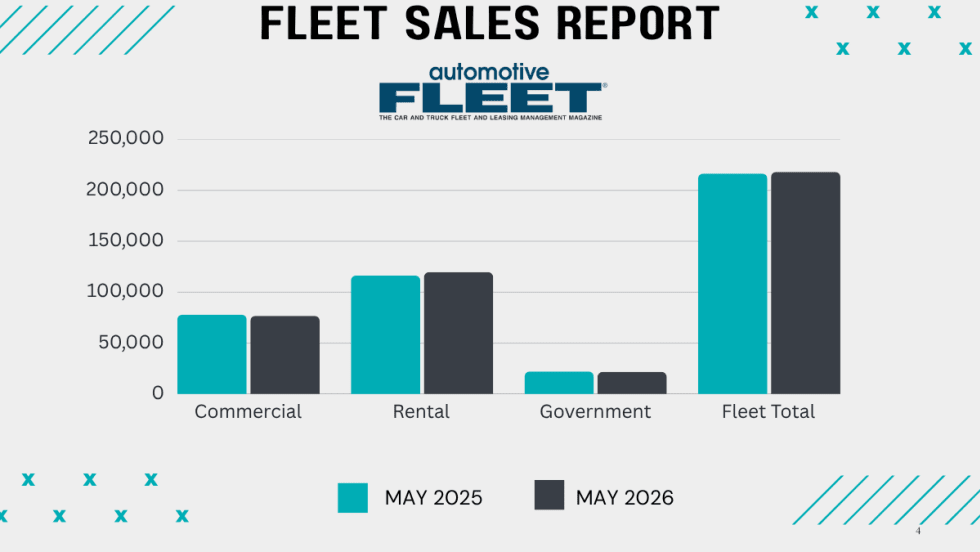
Commercial Fleet Sales Still Lead Sectors Despite May Mini Dip
The U.S. economy's continued growth and positive business investment are creating a favorable environment for fleet vehicle demand.
Read More →
The Data-Driven Haul: 5 Ways AI is Leveling the Playing Field in Auto Transport
Large and small transport fleets are becoming more competitive as predictive analytics and real-time data inform the logistics decision chain.
Read More →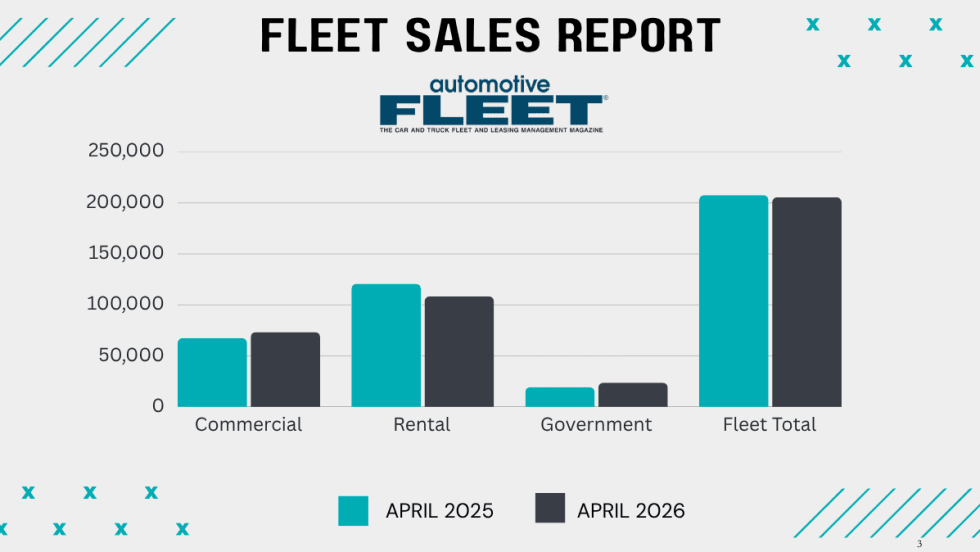
Commercial Fleet Sales Show Healthy Gains
So far, the fleet sector is outshining government and rental fleet sales this year as economic growth spurs more business investment.
Read More →
CAR 2026 Recap Part 2: Closing the Gap Between Data & Remarketing Value
The second half of CAR 2026 examined how fleets can translate lifecycle strategy, vehicle data, and market shifts into higher real-world results.
Read More →