



How to Speak the Same Language on Fleet Safety
Drivers, supervisors, and data often speak different safety “languages.” Getting on the same page will drive better results.
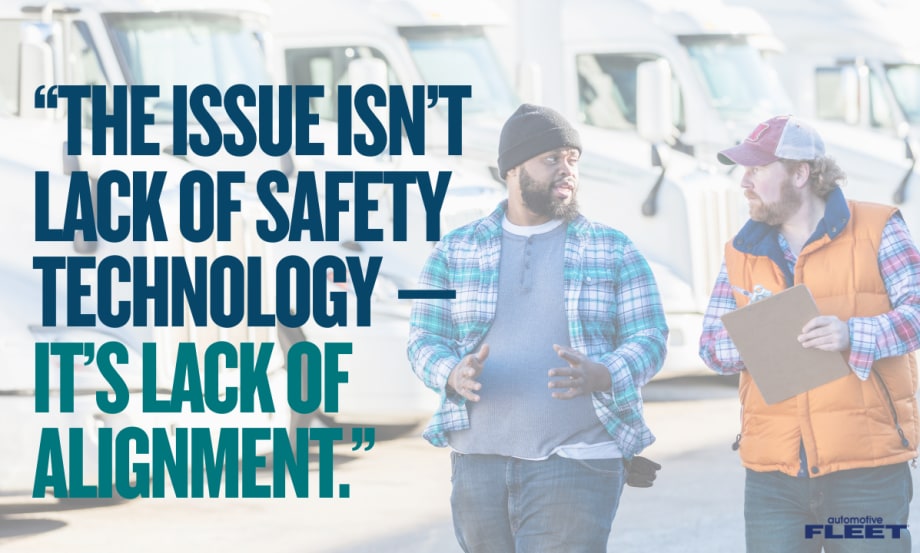
Fleet safety programs don’t fail because of missing technology—they fail when drivers, supervisors and leaders aren’t speaking the same language about safe driving.
Automotive Fleet
- Aligning the communication among drivers, supervisors, and data systems is crucial for effective fleet safety management.
- Understanding and harmonizing different safety perspectives can lead to improved safety outcomes.
- Collaborative efforts in speaking a unified safety "language" increases efficiency and decreases miscommunication.
*Summarized by AI
Ask a safety leader at a large fleet what their biggest challenge is. They will never say, “We don’t have enough data,” because most already use cameras, telematics, scorecards, and dashboards.
What they often lack and need to solve for is difficult to measure and is often hidden in plain sight: a common language that extends from the training room to the cab and into coaching conversations.
When this language is missing, safety programs fall apart at the most critical point: when supervisors coach drivers. Without a shared framework, these conversations are shaped by supervisors’ own experiences, leading to wildly varying results across the fleet.
When the variation is multiplied across dozens of locations and hundreds of coaches, drivers receive different messages about the same behaviors, and nothing sticks.
Consistency is the key, and it starts before the first safety alert is triggered. It takes shape when drivers, supervisors, and leaders share a clear understanding of what safe driving looks like. Only then is safe driving described in the same terms, coached using the same vocabulary, and measured against the same behaviors.
When fleets share a common understanding of safe driving and have the right structural conditions in place, their safety programs and results continue to improve over time rather than plateau after the first year.
Why Language Breaks Down in the Field
Fleet safety programs often struggle not from a shortage of tools, but from a surplus of disconnected messages. A driver may see one vocabulary in an eLearning module, another in a telematics alert, a third in an incident-triggered review, and a fourth in AI-generated coaching prompts. Each is delivered on a different timeline and within a different frame of reference. The result is not reinforcement. It is noise.
The problem compounds at scale. A fleet operating across multiple regions relies on dozens of supervisors to translate telematics data into coaching drivers can act on. Without a shared behavioral framework, each supervisor must build that bridge by translating alerts into teaching points, finding language the driver will recognize, and ensuring the conversation leads to actionable steps.
Without a common structure, even capable supervisors will struggle to consistently connect events to behaviors and principles. The variation in coaching is not a skill problem but a structural one, because their safety program has never provided a coaching model.
A common framework changes that. It gives coaches a defined set of behaviors to reference, a consistent vocabulary to use, and a clear line from event to principle to corrective action. That is what turns coaching from improvisation into a repeatable practice that raises the quality of every conversation, regardless of who is having it.
Establishing a common language is not primarily a training design decision. It requires choosing a behavioral framework, embedding it in every touchpoint of the program, and holding everyone, from coaches to managers and trainers, accountable for using it.
What Inconsistency Looks Like in Practice
Inconsistency is easier to spot in its effects than in its causes. Ask a driver with three years on the job what principle they apply when traffic becomes unpredictable, and the answer is often not a principle but a recap of recent feedback, or silence. That driver has not failed to learn, but the program has failed to teach a principle consistently across contexts, so it has not become the way he or she thinks about driving.
The supervisor coaching scenario illustrates the same gap. When a fleet lacks a unified behavioral framework, three coaches reviewing the same telematics event will frame it differently. One focuses on the number: “You had 14 harsh-braking events this month.” Another focuses on the symptom: “You’re following too closely.” A third focuses on the rule: “You need to slow down.”
Each of these is a valid observation, but none connects to a principle the driver was trained on. Without that connection, coaching becomes a conversation about an event rather than about behavior, and drivers leave with a vague directive instead of a clear practice they can apply in the next situation.
From the driver’s perspective, each program touchpoint arrives as a separate event with no clear connection to the others:
• Telematics alerts
• Periodic or annual refresher training
• Safety reviews and training following incidents
• Coaching that differs by supervisor or location
Each touchpoint has value. But without a shared framework connecting them, the driver receives a series of separate messages rather than a single, reinforced message. A common language transforms these interactions into a coherent system because drivers recognize the same principles in every context, and that recognition compounds over time.
Building that coherence requires two elements that work together: behavior-based training/coaching, and a shared methodology that every role in the program can speak fluently. When both are in place, the program stops relying on individual effort and starts operating as a system.
Behavior-Focused Training and Coaching
Behavior-based training specifies what drivers are expected to do. Rather than training on rules, such as “maintain four seconds of following distance,” behavior-based programs teach observable actions: what scanning looks like, how space cushions are maintained, and what hazard anticipation entails in practice. These decisions show up in driving data and can be coached directly.
The language of the training becomes the language of the coaching. When a supervisor reviews a telematics alert with a driver, they are not improvising but instead referencing principles the driver already knows. The coaching conversation has a shared starting point, which changes everything about how it lands.
The pattern in the data is consistent. Industry research, including 2025 benchmarking from the Network of Employers for Traffic Safety (NETS), shows that fleets pairing telematics with structured coaching reduce collisions at roughly twice the rate of fleets relying on telematics signals alone. The differentiator is not the data itself but whether coaches have a behavioral framework to guide their interactions with drivers.
A Shared Methodology
A shared methodology gives the entire program its vocabulary. It answers the question every driver will ask, consciously or not: “What am I actually supposed to do differently?”
The answer must be consistent whether they heard it in training, read it in a scorecard note, or discussed it with a supervisor after an incident. When it is, the program builds toward something. When it isn’t, it generates activity without direction.
The most effective methodologies are specific enough to coach and simple enough to remember in the cab. They describe driving decisions, not rules, metrics, or compliance requirements, and provide both drivers and coaches with a common reference point for every conversation.
Smith5Keys® is one example: five observable driving decisions that map directly to the events telematics already captures. A driver who scans far ahead will not experience harsh braking events. A driver who manages space will not trigger following-distance alerts. The framework does not replace what cameras and telematics measure; rather, it explains the behavior behind the data and gives every coach a structured way to address it.
Three Questions That Reveal Whether Your Program Has a Common Language
Most fleet leaders believe their program is more consistent than it is. The following diagnostic quickly surfaces the gap:
- If you asked three of your supervisors how they would coach the same telematics event, would they say the same thing, use the same words, and apply the same standard?
- Can your drivers name the principles they were trained on without prompting and explain how those principles apply to the alerts they receive?
- Does your scorecard use the same vocabulary as your training and coaching, so a driver can trace a score back to a behavior they have been taught to change?
If the honest answer to any of these questions is no, the program is producing data without a shared interpretation, and coaching will continue to depend on individual effort rather than a consistent standard.
What a Common Language Makes Possible
The benefits of a shared safety language extend beyond collision rates. They also show up in onboarding, where new drivers reach proficiency faster by learning defined principles rather than absorbing disconnected policies.
Additionally, they show up in supervisor development, where managers coach more consistently because they have a framework to work from. Finally, they show up in accountability. When expectations are specific and shared, it becomes clear when a driver is not meeting them and when a coach is not reinforcing them.
Fleets building durable safety cultures are not the ones adding the most programs. Instead, they are committing to a single framework and using it everywhere — in training, in coaching, and in the everyday language used to discuss safety. That commitment is what turns individual touchpoints into a system that sustains improvement.

About the Author: Derek Dunaway is CEO of Smith System, a provider of driver safety training and risk management solutions for commercial fleets and creator of Smith5Keys, a behavior-based collision-prevention methodology.
Derek Dunaway
Originally posted on Automotive Fleet
More Fleet
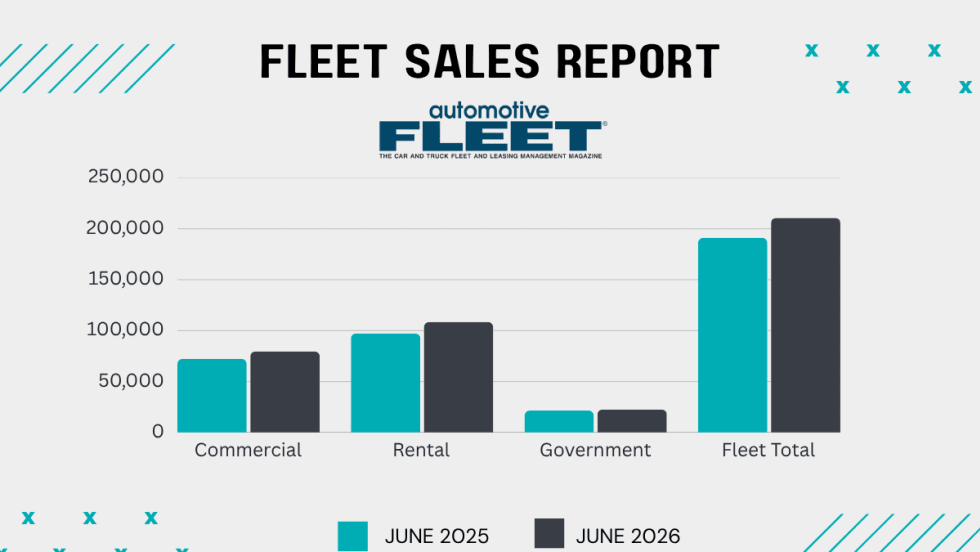
Commercial Fleet Sales Contribute To June, YTD Gains
The fleet sector has boosted its vehicle purchases at a reliable pace in the first half of this year compared with 1H 2025.
Read More →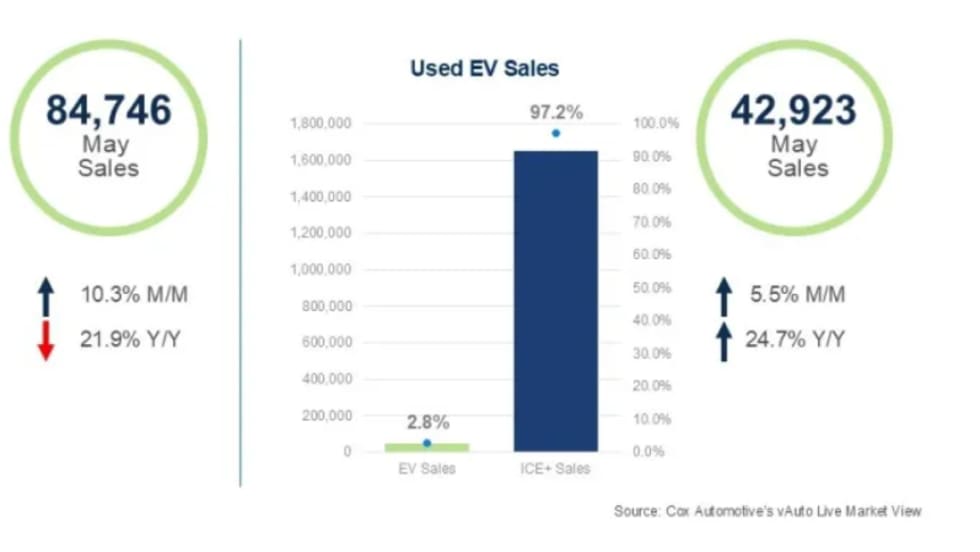
Used EVs Strengthen Overall Electric Vehicle Market
The latest sales data point to several reasons for the divergent trends in new and used EVs that can factor into fleet cycling decisions.
Read More →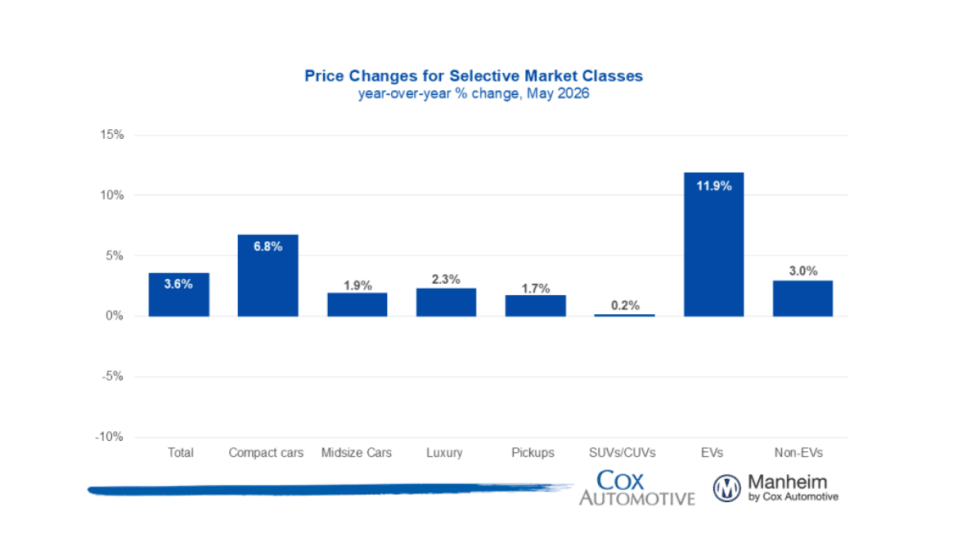
Wholesale Used Vehicle Market Sustains Moderate Rise In Values, Prices
Trends continue to normalize after a strong start to the year, as consumers contend with higher gas prices in the coming summer months.
Read More →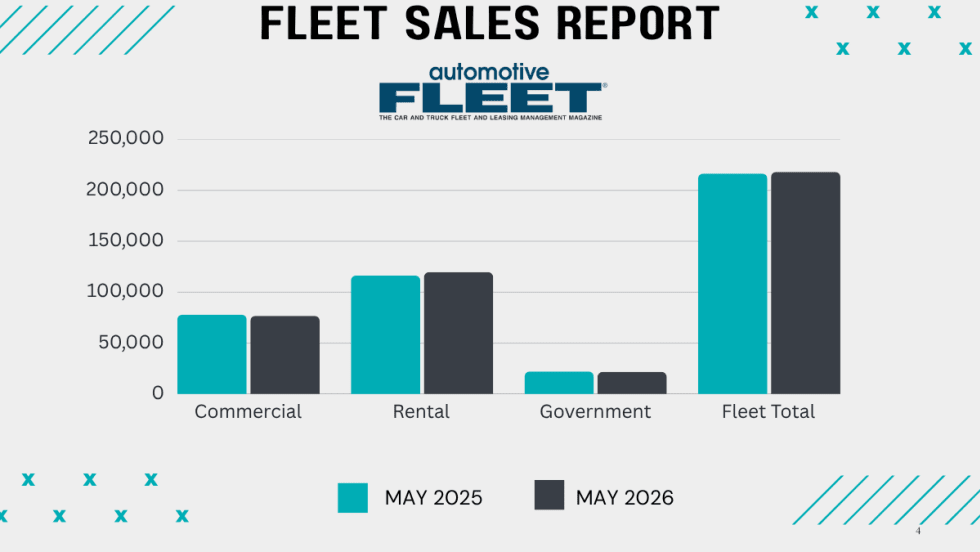
Commercial Fleet Sales Still Lead Sectors Despite May Mini Dip
The U.S. economy's continued growth and positive business investment are creating a favorable environment for fleet vehicle demand.
Read More →
The Data-Driven Haul: 5 Ways AI is Leveling the Playing Field in Auto Transport
Large and small transport fleets are becoming more competitive as predictive analytics and real-time data inform the logistics decision chain.
Read More →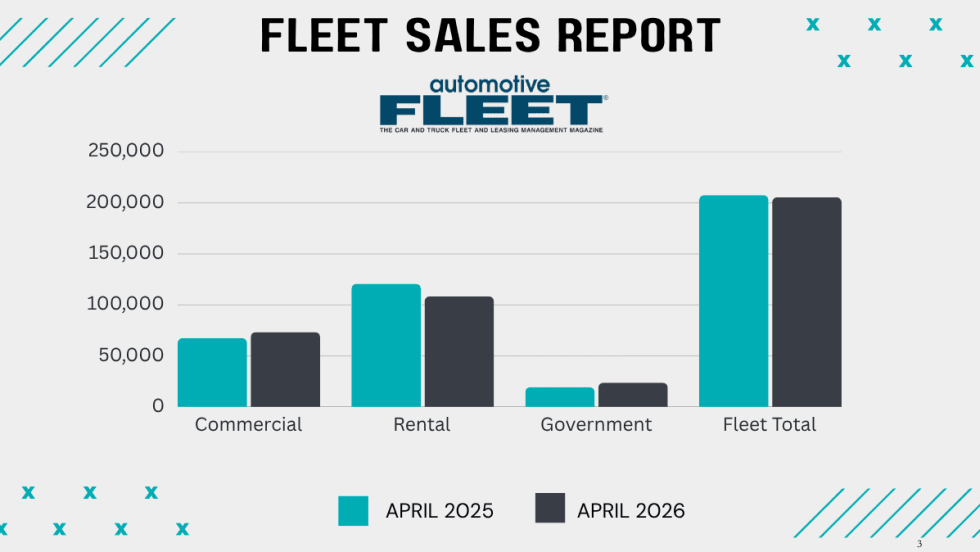
Commercial Fleet Sales Show Healthy Gains
So far, the fleet sector is outshining government and rental fleet sales this year as economic growth spurs more business investment.
Read More →
The Predictive Pivot: How AI and Data Are Redefining Auto Logistics in 2026
AI is no longer a luxury but the baseline for profitability in 2026. Auto haulers that adopt these tools now will quickly outpace those using manual workflows and taking a wait-and-see approach.
Read More →
CAR 2026 Recap Part 2: Closing the Gap Between Data & Remarketing Value
The second half of CAR 2026 examined how fleets can translate lifecycle strategy, vehicle data, and market shifts into higher real-world results.
Read More →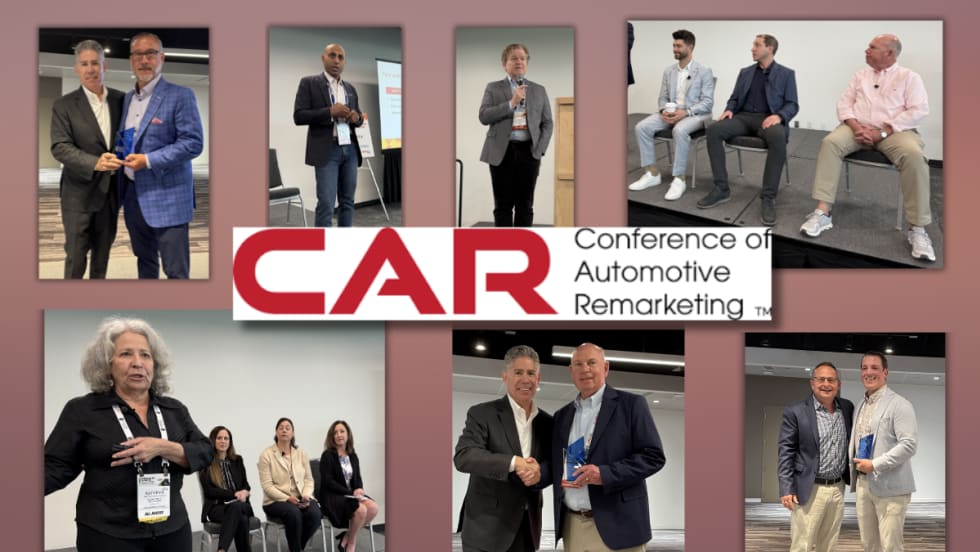
CAR2026 in Two Words: Velocity, Value (Part 1)
The 2026 Conference of Automotive Remarketing convened with a mandate to involve a new constituency — fleet managers — and an updated mission to demonstrate unrealized value in de-fleeted vehicles.
Read More →
Launch of Fleet Remarketing Association Signals New Era for Vehicle Lifecycle Value and Data Stewardship
The Association, dedicated to advancing the remarketing phase of the vehicle lifecycle, held its kick-off meeting on April 16 at the 2026 Conference of Automotive Remarketing (CAR) in Cleveland.
Read More →