



How Fleets Can Adjust Approaches To EV Adoption
With the expiration of federal incentives, EV success now hinges less on government policy and more on discounts, battery tech progress, increased range, and broader infrastructure.


EV experts delved into the post-federal credit wholesale EV market during the Fleet Forward Conference: (L to R) Stephanie Valdez-Streaty, director of industry insights at Cox Automotive; Scott Case, CEO of Recurrent; and Jimmy Douglas, CEO of Plug.
Photo: Jonathan Robbins / Bobit Business Media
- Fleets must now focus on vendor discounts as federal incentives for EVs expire.
- Advances in battery technology and increased vehicle range are crucial for EV adoption.
- Expanding charging infrastructure is essential for supporting the transition to electric vehicles.
*Summarized by AI
The training wheels have flown off the electric vehicle market.
Those wheels rolled in the form of a $7,500 federal tax credit that expired Sept. 30, pivoting and reordering how EVs are valued and sold.
Since then, EV sales have plunged in the consumer retail market. But electric fleets still make as much sense when considering the more predictable routines of fleet operations and the accelerating advantages of EV technology.
A session at the 2025 Fleet Forward Conference on Oct. 21-23, EV Remarketing in the Post-Biden Era: Balancing Risk, Policy, and Price Shifts, offers an overview and tipsheet for fleet managers in the post-credit era for electric vehicles.
Fleets can still adapt to an evolving EV marketplace despite the expiration of federal incentives.
EV experts Jimmy Douglas of Plug, Scott Case of Recurrent, and Stephanie Valdez-Streaty of Cox Automotive detailed how the new economic and policy landscape will shift EV prices and remarketing based on criteria beyond the crutch of federal incentives.
EV Dynamics Reset in Q4
Data doesn’t lie, and the EV story of 2025 clearly shows a surge in buying that drove all-time sales highs leading up to Sept. 30.
In Q3 2025, U.S. EV sales reached a record 438,000 vehicles for a 10.5% market share. September alone saw an 11.7% share, the highest on record.
However, with the end of the credit, a Q4 slowdown is likely to yield an 8.5% EV market share for the year.
A major driver of this growth was the leasing loophole, which allowed OEMs to pass federal credits to consumers through lease programs.
More than 1.1 million EVs have been leased since 2023, and about 55% of new EVs are now leased. This trend will reshape the used market as these vehicles return off lease between 2025 and 2027, an influx expected to triple EV volumes in wholesale and retail channels over the next two years.
New EV Fleet Realities
What are the far-reaching implications for OEMs and fleets?
Fleet growth in EVs softened this year, mostly due to the steep decline in rental fleet demand following Hertz’s high-profile disposal of unprofitable rental car customers did not want. Government fleet purchases have also dipped, reflecting caution amid economic uncertainty.
But the used EV sector soared, with two consecutive quarters surpassing 100,000 used EV sales. Manheim auctions: year-to-date sales handle 90,000 EVs, exceeding 2024’s total.
That means used EVs and ICE vehicles have reached near price parity. In September 2025, the average used EV was only $700 more expensive than a comparable gas car, creating a strong value proposition for buyers and fleet drivers able to charge at home.
Many OEMs have introduced direct incentives to match the loss of the federal credit. Tesla, for instance, offered $6,500 price cuts while Hyundai discounted the Ioniq 5 by up to $10,000. OEMs are finding new ways to compete.
Tariffs Hurting EV Battery Supply
Rising tariffs are making EV and automotive markets overall more uncertain. China dominates the battery supply chain, leaving the U.S. vulnerable to cost shocks tied to rare-earth minerals.
Until domestic battery manufacturing expands, EVs will face higher production costs than ICE vehicles.
Recent trade measures have already prompted some OEMs to end or delay EV launches, such as Chevrolet’s BrightDrop program and Ford’s all-electric F-150 Lightning.
Global competition from Chinese automakers, which exported more than 6 million vehicles last year at lower prices and higher tech sophistication, is pressuring U.S. manufacturers to innovate.
Tariffs will increasingly affect 2026 and 2027 model-year EVs, particularly those that depend on foreign battery components.
Manufacturers may respond with cost-cutting through lower trim levels or domestic assembly.
Used EV Sales Prove Sturdy
Wholesale auction data at Plug shows that dealer demand, measured by unique bidders per vehicle, surged in the nine weeks leading up to Sept. 30.
Activity briefly plummeted when the IRS changed its portal for credit claims, sparking panic among dealers who feared losing refunds. Once resolved, bidding rebounded sharply, but after the incentive expired, demand plateaued. It did not collapse.
Nearly two-thirds of used EVs sold at auction did not qualify for the $25,000 limit. Instead, older models benefited most: 2018–2020 EVs rose in value as buyers sought affordable options, while newer models softened amid competition from discounted new EVs.
The market is seeing an inversion in pricing, where older models are selling above MMR, while late-model EVs lag behind.
But affordability remains the critical bottleneck. With average monthly payments of nearly $800, used EVs will play a vital role in sustaining adoption.
Fleet operators need to rethink depreciation assumptions and extend holding periods. EVs typically have longer lifespans than the three-year fleet cycle, and TCO improves over time. EV-specific value features, such as battery condition, software history, and hardware upgrades, capture true market value during resale.
EV Improvements and Progress Ahead
Fleet managers should consider the following developments in planning fleet electrification:
The used EV market has struggled with a confidence gap, with buyers concerned about the remaining battery capacity. Perceived battery performance is the biggest barrier to higher resale values. Buyers need reliable reports to help understand range and battery health before purchasing.
The performance record of EVs so far indicates minimal battery degradation with typical usage. After three to five years, most batteries still test at or above 90% capacity. Manheim will have conducted nearly 100,000 VIN-specific battery tests by year-end 2025, underscoring that most EV batteries stay durable.
Plug-in hybrids now represent 25% of all EV sales, and while the loss of the $7,500 credit may slow their growth, they will remain a crucial compromise for buyers not ready to go fully electric. Hybrid sales rose 55% year over year in Q2 2025, providing fleets with a viable bridge strategy. Hybrids offer lower fuel costs and emissions without relying on charging infrastructure. However, fleet managers should be aware that plug-in hybrids may depreciate faster in a few years as battery prices fall and new full EVs become cheaper.
Public fast charging infrastructure is improving faster than media reports suggest. More than 17,000 new DC fast chargers are slated to come online in 2025, marking a 35% year-over-year increase, exceeding EV growth. Meanwhile, non-Tesla owners are gaining access to Tesla’s Supercharger network, expanding charging nationwide.
As range and charging times improve more slowly, approaching 300 miles and five-minute charging, the depreciation rate of used EVs will stabilize. As new models deliver diminishing returns in performance, the appeal of nearly new EVs will strengthen.
Fleets should prioritize Level 2 depot and home charging over public networks since the barrier to entry is low with easy permitting and affordable equipment.
Bidirectional charging will soon allow fleets to use parked EVs as energy storage, reducing costs and helping stabilize the power grid.
Underlying demand for EVs remains strong. A recent McKinsey survey showed that 38% of drivers in the CARB (California Air Resources Board) state plan to buy an EV for their next vehicle, for an adoption rate three times the average.
Originally posted on Automotive Fleet
More Used Vehicle Values
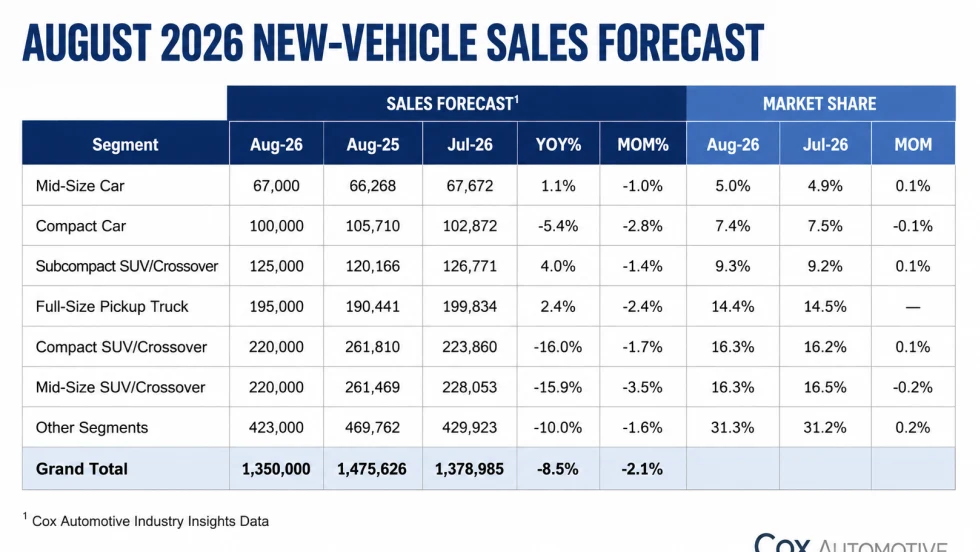
August New-Vehicle Sales Pace Forecast to Hold Above 16 Million
Despite an expected 8.5% year-over-year decline in August volume, Cox Automotive forecasts a 16.3 million SAAR, with full-size pickups outperforming several major crossover segments.
Read More →
Trade Strategy Now Starts Long Before Turn-In
The strongest trade values aren't built at turn-in. Discover how maintenance, lifecycle planning, and shared risk protect truck resale value.
Read More →
What Happens When Residual Values Meet Real-World Markets
A truck's trade value isn't determined on turn-in day. Learn how market cycles, maintenance, and timing shape the gap between residuals and reality.
Read More →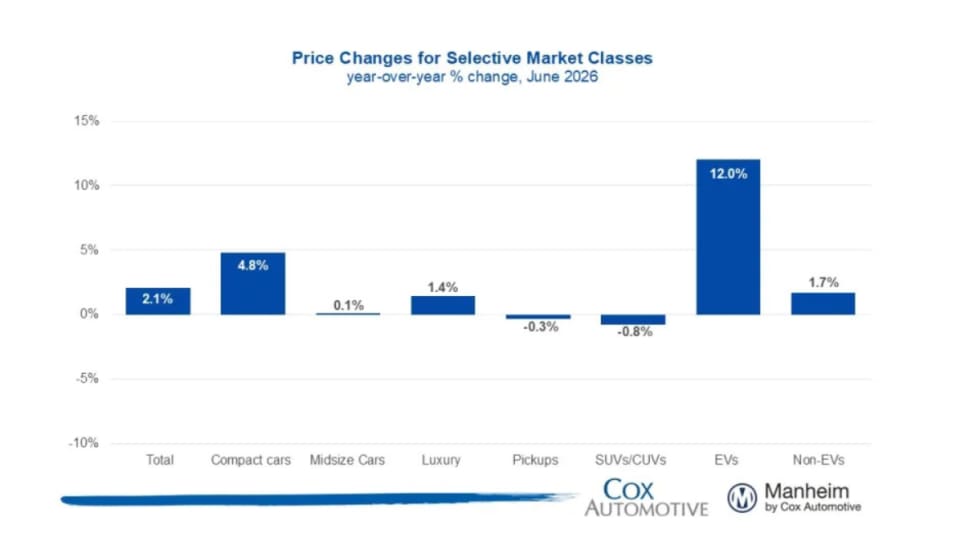
Manheim Index Shows Used-Vehicle Wholesale Prices Up 2.1% in June
The market is seeing stronger appreciation in older used vehicles this year, and the most affordable segments have been among the year’s best performers.
Read More →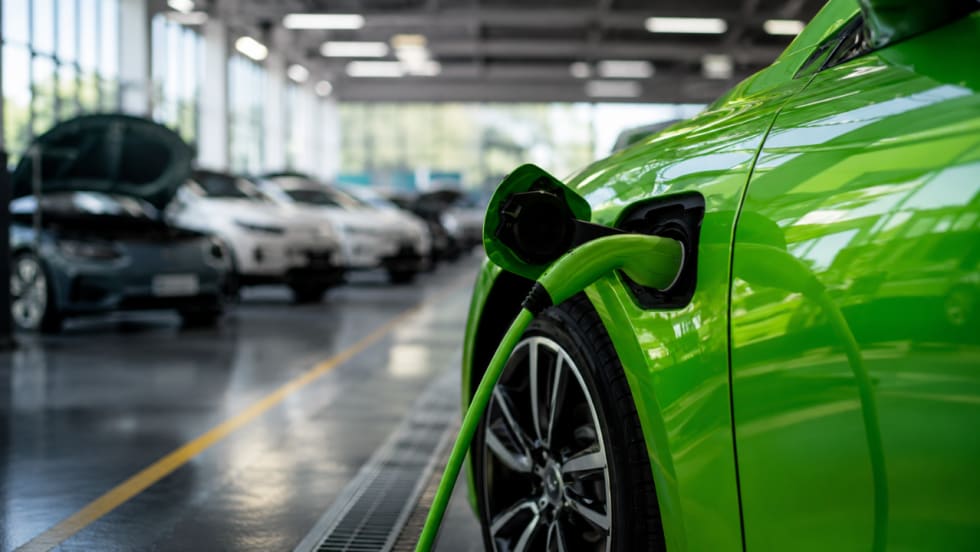
Stop Remarketing Electric Vehicles Like Gas Cars
The advantages and attributes of electric vehicles are upending the traditional remarketing cycle, requiring fleet sellers to rely on new factors and approaches detailed below.
Read More →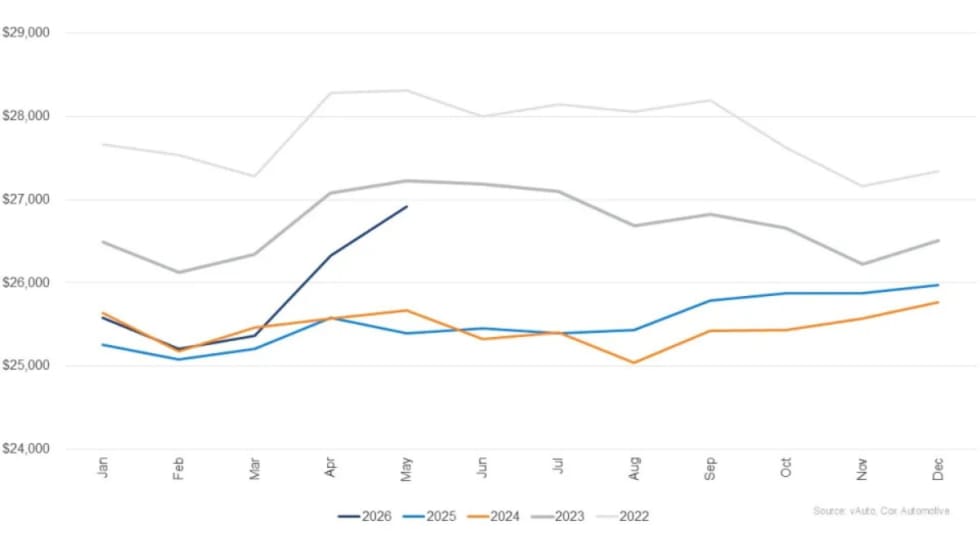
Used Vehicle Prices Climb Higher As Sales Pace Slows
The higher prices at used retail reflect strong wholesale values earlier in the spring, particularly for older, more affordable vehicles.
Read More →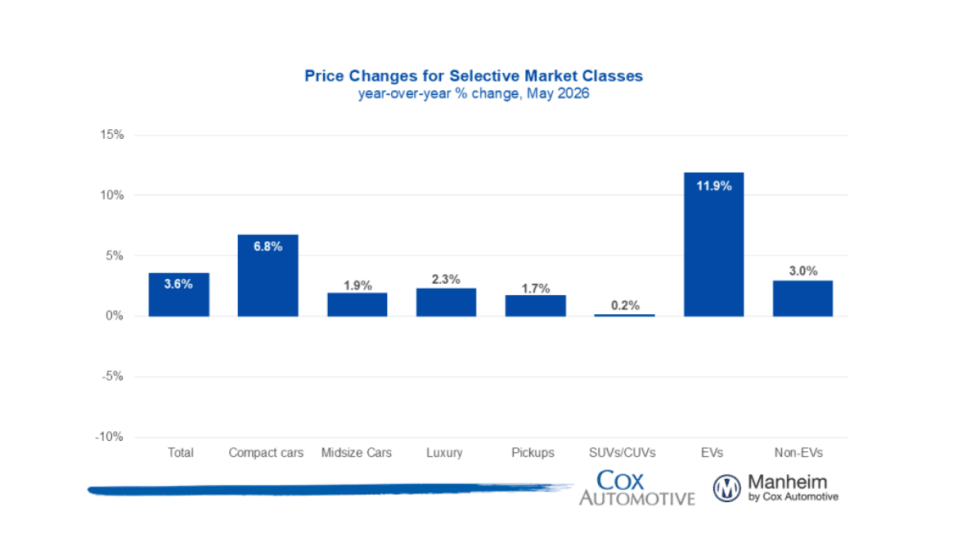
Wholesale Used Vehicle Market Sustains Moderate Rise In Values, Prices
Trends continue to normalize after a strong start to the year, as consumers contend with higher gas prices in the coming summer months.
Read More →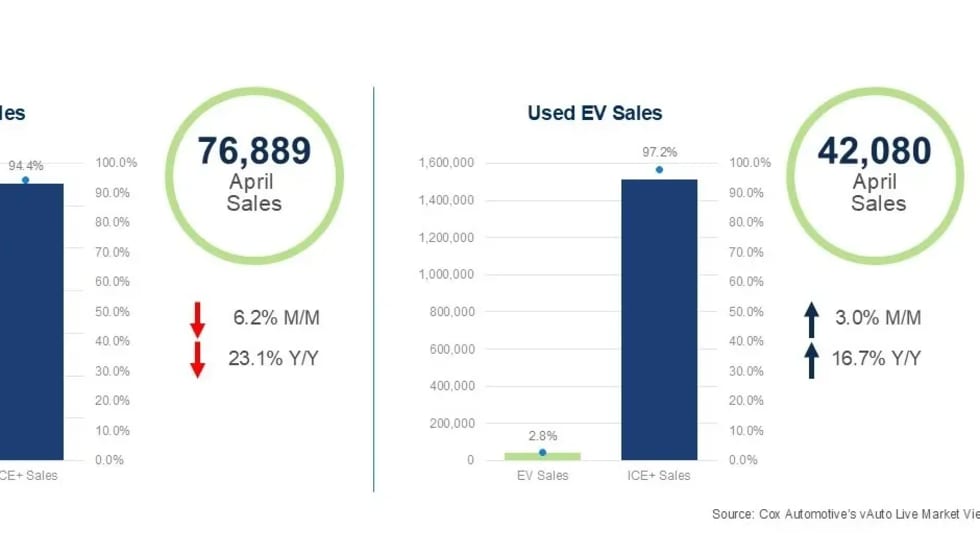
Used EV Sales Grow In April
While EV sales declined, used EV sales grew, as tighter inventory and rising prices reflected a more normalized pace for the EV market.
Read More →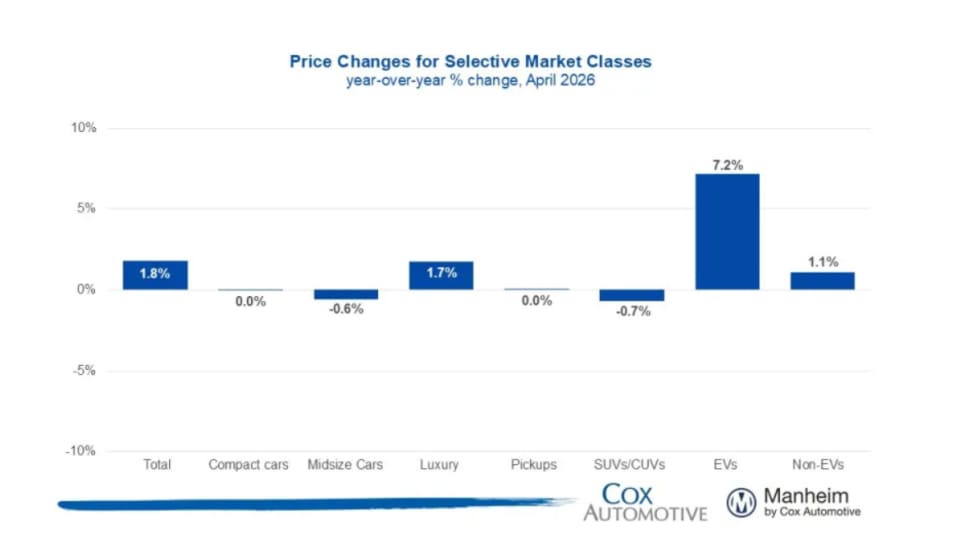
Wholesale Used Vehicle Prices Slightly Up In April
The Iranian conflict and rising gas prices inject much uncertainty into the future wholesale used vehicle markets, as higher gas prices soak up spendable income from vehicle buyers.
Read More →
CAR 2026 Recap Part 2: Closing the Gap Between Data & Remarketing Value
The second half of CAR 2026 examined how fleets can translate lifecycle strategy, vehicle data, and market shifts into higher real-world results.
Read More →