Vehicle Remarketing Logo

Get Ready for a Revamped Remarketing Industry

CAR 2022 IARA Session: Look for new avenues and platforms for buying and selling used vehicles among consignors, auctions, and dealers.

April 18, 2022
Get Ready for a Revamped Remarketing Industry

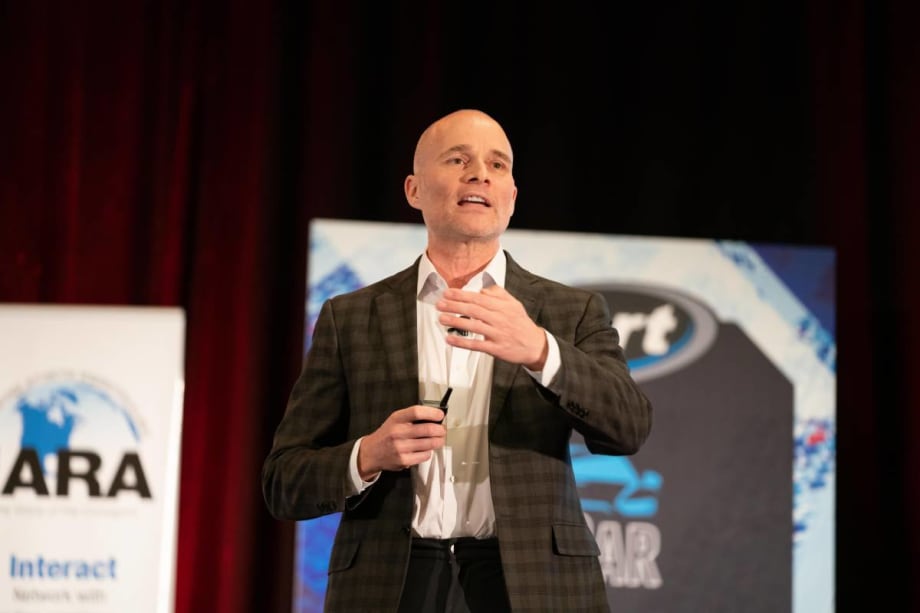
Steve Greenfield of Automotive Ventures provided an overview of remarketing industry changes on March 23, 2022 during the Conference of Automotive Remarketing in Las Vegas.

Ross Stewart / Stewart Digital Media

4 min to read


Get out of the silos while you can before they implode into plumes of dust. What was once defined as segmented auctions, dealers, marketplaces, and wholesalers will blend this decade in ways never seen before.

Remarketing industry leaders and professionals learned more about that sobering prediction during a general session March 23 at the Conference of Automotive Remarketing. Industry analyst and forecaster Steven Greenfield, the CEO and founder of Automotive Ventures, led the presentation, held during the International Automotive Remarketers Alliance series.

Ad Loading...

“There will be more change in next five to 10 years than we’ve ever seen,” Greenfield told the audience in a sweeping overview of industry changes. “The silos are breaking down.”

Technology innovation now alters the vehicle lifecycle across the entire spectrum, he said, while entrepreneurs are innovating in every facet of that lifecycle. Among leading changes is the advance of artificial intelligence, which spurs an automated vehicle reporting-writing process used for condition reports.

Greenfield walked through a wave of industry acquisitions and partnerships in the AI, digital and sourcing tools space. Historical boundaries between auctions and third-party marketplaces are dissolving and shifting, he said.

KAR Global, for example, has invested in Ravin, an international provider of automated, mobile and CCTV-based artificial intelligence solutions for vehicle inspections. KAR Global is also investing heavily to consolidate larger B2B marketplaces, including the purchases of CarWave and Backlot Cars, Greenfield said.

That followed XLerate Group’s purchase earlier this year of America’s Auto Auction, creating a critical mass of independent auctions. Meanwhile, OEMs like General Motors are adding third party marketplaces.

Ad Loading...

“It’s only a matter of time before we see more consolidators,” he said. “More private equity money is coming into the space.”

As Greenfield explained: Buyers increasingly want access to inventory that will sell at solid values without paying burdensome fees. They also expect accurate prices, less uncertainty, and quicker sales in the auction lanes. Vehicle quality should be consistent and up to date while all transactors should be able to easily access arbitration and fund transfers.

Such tech-driven demand means the realms of dealers, auctions, marketplaces, and wholesalers are combining into new business models, he said. “These silos are being redefined before our eyes. We won’t see any more silos in each of those four categories.”

Greenfield underscored how Carvana’s recent $2.2 billion purchase of ADESA has shocked the remarketing sector more than any other deal. KAR Global was motivated to hold onto and grow its online assets and services while shedding physical ones, he said.

Carvana, facing supply constraints, was “ravenously buying” inventory, he said. Under this deal, it goes from operating facilities within in 200 miles of 56% of the population to 94% of the population. They now have 56 locations over 4,000 acres.

Ad Loading...

With two million dealer consignment cars running through ADESA, Carvana saw an opportunity to expand within a reasonable distance of much of the U.S. population so they can more efficiently park, prepare and deliver vehicles to customers, Greenfield said. Hertz, for example, plans to sell vehicles directly to consumers via Carvana.

“Why settle for wholesale prices when they can get retail prices?” Greenfield asked. “80% of Hertz cars could be sold to end retail consumers. Carvana will circle back to sellers for new value propositions with retail prices, changing the dynamics in the B2B marketplace entirely. . . Will there be dealer pushback? Things are changing very quickly.”

Larger remarketing operations will see more opportunities for managed fleet services, de-fleeting services, and more locations to park and maintain vehicles awaiting sales as more sales go online, he said. “They will be bringing fleet services to the fleets.”

Greenfield reminded the audience that without a healthy dealer base, none of the industry will be in business. With new business models emerging from consolidation, dealers operating margins face increased pressure.

Electric vehicles also will cramp dealer profits, since EVs tend to be more reliable and don’t need as much maintenance and servicing, Greenfield said. “They will get over-the- air software updates and billions in new subscription services will be generated.”

Ad Loading...

One key challenge is how dealers will participate in vehicle transactions when consumers embrace more options. “Running a car dealership is like squeezing a water filled balloon, with five to six different profit and loss components that can be balanced,” Greenfield said. Those include new and used cars, parts, service, finance and insurance, accessories, and collision repair. They can allocate resources and people around as areas face challenges. “It may look different in the future.”


Remarketing Industry Factoids

Steven Greenfield shared the following stats and numbers during his presentation on the future of the remarketing industry:

The Automotive Ventures Mobility Index is a group of publicly traded mobility stocks that tracks the health of the mobility market, composed of the global publicly traded mobility companies, weighted by market capitalization of each company and indexed back to 100 as of January 1, 2015.

Weighted market cap extending back to January 2015:

  • AV Mobility Index: 234.7 as of Feb. 28, 2022

  • Sub-Index: B2B Auctions: 290.1 as of Feb. 28, 2022

  • S&P 500 Performance: 212.6 as of March 2, 2022

What matters most to a consignor (seller)?

  • Retention

  • Cost

  • Reputation/Brand

  • Speed

What matters most to a buyer?

  • Fees

  • Vehicle price

  • Speed

  • Vehicle quality

  • Selling ability

  • Easy process

Tidbits:

  • 42 million used vehicles are sold each year in the U.S.

  • 12 million vehicles pass through wholesale auction houses

  • More than four out of five cars sold last year contained personal data.

  • Amazon's share of third-party seller revenue was 34% in 2021.


Subscribe to Our Newsletter

More Operations

Vertical dark blue graphs showing new and used EV sales
Fleetby News/Media ReleaseJune 16, 2026

Used EVs Strengthen Overall Electric Vehicle Market

The latest sales data point to several reasons for the divergent trends in new and used EVs that can factor into fleet cycling decisions.

Read More →
A double-decker stinger car hauler carries a full load of new white vehicles along an interstate highway.
FleetJune 1, 2026

The Data-Driven Haul: 5 Ways AI is Leveling the Playing Field in Auto Transport

Large and small transport fleets are becoming more competitive as predictive analytics and real-time data inform the logistics decision chain.

Read More →
Two trucking industry workers talk in front of semi-trucks beside text reading, “The issue isn’t lack of safety technology — it’s lack of alignment.”
FleetMay 12, 2026

How to Speak the Same Language on Fleet Safety

Drivers, supervisors, and data often speak different safety “languages.” Getting on the same page will drive better results.

Read More →
Ad Loading...
Image of three award winners at 2026 CAR
Operationsby Faith HowellMay 6, 2026

2026 CAR Awards Celebrate Industry Excellence

CAR’s annual Fleet Remarketing Awards opened a reimagined 2026 conference designed to bridge the worlds of fleet management and automotive remarketing.

Read More →
A manual, traditional logistics dispatch center versus a futuristic AI-driven illustrative diagram of a future logistics operation.
OperationsMay 1, 2026

The Predictive Pivot: How AI and Data Are Redefining Auto Logistics in 2026

AI is no longer a luxury but the baseline for profitability in 2026. Auto haulers that adopt these tools now will quickly outpace those using manual workflows and taking a wait-and-see approach.

Read More →
A man standing in front of transparent tech screen with a the outline of a delivery truck.
TechnologyMay 1, 2026

The Predictive Pivot: How AI and Data Are Redefining Auto Logistics in 2026

AI is no longer a luxury but the baseline for profitability in 2026. Auto haulers that adopt these tools now will quickly outpace those that use manual workflows or take a wait-and-see approach.

Read More →
Ad Loading...
collage of conference speakers
Operationsby Chris BrownApril 30, 2026

CAR 2026 Recap Part 2: Closing the Gap Between Data & Remarketing Value

The second half of CAR 2026 examined how fleets can translate lifecycle strategy, vehicle data, and market shifts into higher real-world results.

Read More →
Collage of CAR speakers
Used Vehicle Valuesby Chris BrownApril 27, 2026

CAR2026 in Two Words: Velocity, Value (Part 1)

The 2026 Conference of Automotive Remarketing convened with a mandate to involve a new constituency — fleet managers — and an updated mission to demonstrate unrealized value in de-fleeted vehicles.

Read More →
Graphic promoting CAR 2026 roundtables featuring headshots of five speakers and topics including Wall Street trends, fleet data, upfits, fair market value, and AI in remarketing.
Operationsby Chris BrownMarch 31, 2026

CAR 2026: Get the Wall Street Update on the Key Players in Remarketing

From a Wall Street analyst's take on remarketing's key players to whether fleets need their own version of Carfax, CAR 2026's afternoon roundtables will answer key operational and industry questions.

Read More →
Ad Loading...
Promotional graphic for CAR 2026 panel on data-driven value in commercial vehicles, featuring five industry experts and session details for April 16 in Cleveland.
Fleetby Chris BrownMarch 31, 2026

CAR 2026 Session to Uncover the Missing Data That's Costing Fleets at Disposal

Work trucks lose value at remarketing, not because they aren't worth more, but because the data to prove it rarely makes it to the auction.

Read More →