



Commercial Fleets Identify Vehicle Remarketing ‘Pain Points’
Pressures assailing the wholesale used-vehicle market are affecting the important “days-to-sales” figures, a source of depreciation losses.

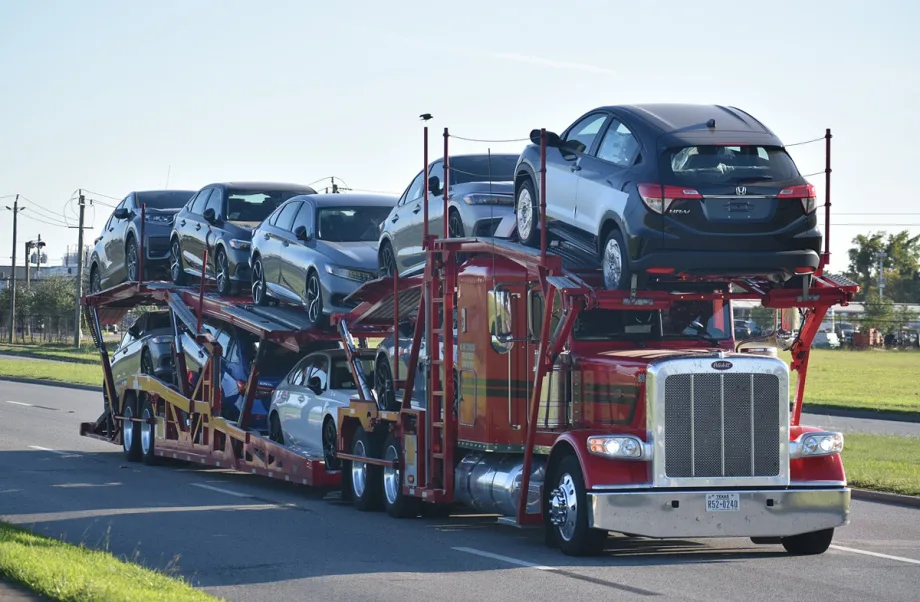
Among frustrations in fleet remarketing today are critical delays in transporting vheicles to auction.
Photo: F. Muhammad
Forces besetting today’s wholesale used-vehicle market have created points of pain for fleet managers and auctions, where most commercial fleets remarket their out-of-service company vehicles.
These frustrating difficulties in vehicle transportation, de-identification and condition reports heighten the impact of depreciation losses on fleet budgets.
The Wholesale Used-Vehicle Market
What is the state of today’s wholesale used-vehicle market?
It is important to understand that the used-vehicle market tends to be seasonal in nature, with traditional ebbs and flows depending on the time of year.
For instance, the current spring market traditionally represents an uptick in resale activities, primarily because many retail consumers use their income tax returns as down payments to buy a used vehicle. Consequently, this time of year, used-vehicle dealers are very active in auction lanes bidding on vehicles to restock inventories to meet the increase in retail buyers.
Indications are spring market activity will be respectable, especially compared to the preceding several months, which have been a bit lackluster.
Drilling deeper, identifying vehicles in high demand by dealers buying at auction, helps assess today’s used-vehicle market.
What continues to be hot are full-size pickups, vans and SUVs, all selling extremely well at auction. It doesn’t hurt that the serious shortage of cargo vans is prompting bids beyond a vehicle’s floor price. Vans, in general, are scarce in the wholesale market.
In another trend, dealers are bidding more for vehicles equipped with advanced driver assistance system (ADAS) equipment versus comparable vehicles not ADAS-equipped.
ADAS includes safety devices such as automatic emergency braking, lane keeping, etc. The demand for this safety equipment is growing among used-vehicle buyers.
Obstructions in Transport
While the used-vehicle market is strong for commercial fleets, pain points continue to impact fleet vehicle remarketing.
One major pain point is the delay in transporting out-of-service fleet vehicles to auction, reflected in a metric — “days-to-sale” — that gauges the efficiency of a fleet’s remarketing program. The faster a fleet vehicle is picked up and sold at auction — incurring fewer days of depreciation —the higher the net resale proceeds. Conversely, the longer the transport process takes, the more days of depreciation, which reduces the net resale proceeds.
One key factor influencing days-to-sale is the speed of getting a vehicle to auction. Today, this has become a big issue for commercial fleet managers, who report it is taking longer than ever to transport vehicles to auction.
These fleet managers say the significant struggles in transporting vehicles have forced them to micromanage the logistics process.
Fleet managers complain transport companies aren’t picking up their vehicles as scheduled. ETAs are given and missed.
Fleet managers joke they’ve heard every excuse: the truck broke down, the driver is sick, drivers aren’t answering the phone. They hear a continual barrage of reasons why vehicles are not being picked up on schedule.
In fairness to transport companies, the primary reason for these logistics delays is the lack of available drivers. During the past three years, the pandemic has scared away many transport truck drivers, and these former employees are now employed in different jobs in other industries.
In addition, transport companies, like everyone else, are having difficulty keeping their vehicles fixed due to replacement part shortages and longer repair turnarounds caused by the ongoing technician shortage. The situation is even worse when roadside problems occur; the shortage of emergency roadside assistance tow trucks results in long delays.
Fleet managers are upset with these delays because most fleet lease vehicles are funded on open-end lease, in which the end-user, namely the fleet, carries the equity in the resale. When days-to-sale increases, so do depreciation losses. A simple metaphor helps illustrate this relationship: a used vehicle is a block of ice; the longer it sits, the more the resale value melts away.
Nothing is more aggravating to a fleet manager than seeing a vehicle sit day after day in the company parking lot waiting to be transported or getting a call from an irate driver inquiring when their out-of-service vehicle will be removed from their driveway.
Delays in De-Identifying Vehicles
The backlog in de-identifying fleet vehicles is another major pain point for commercial fleets remarketing vehicles at auction. Fleets require their vehicles de-identified of all logos and signage before they can be sold at auction.
The primary reason for the backlog is labor shortages at auctions. A significant number of auction recon shops that de-identify fleet vehicles are understaffed. Some fleets are waiting as long as four weeks to get vehicles de-identified.
Using the melting block of ice metaphor, these types of delays cost fleets in higher depreciation expenses. The delays in de-identifying fleet vehicles is a major fleet management gripe.
In addition, auction recon departments perform other work on vehicles and are impacted by replacement part shortages, lengthening the time to recon a vehicle, which, again, keeps a vehicle waiting and results in extra depreciation.
Inconsistencies in Condition Reports
A third major pain point for fleet consignors is the lack of consistency at auctions in writing condition reports — an important consideration because the report forms the basis of a vehicle’s grading at auction and is a direct factor in dealer bidding and the ultimate resale price.
Again, the root cause of condition report inconsistencies, according to fleets, is staffing constraints. Newer employees don’t have the depth of experience required to accurately write condition reports.
A huge eye-opener illustrating the subjectivity in writing vehicle condition reports occurred at a very famous NAFRD meeting — the old National Association of Fleet Resale Dealers. NAFRD officials brought in a car from a local auction and asked several resale dealers to each prepare their own condition report on the one car.
Now, these were the pros — people who buy used vehicles day-in and day-out. However, when the completed conditions reports were compared, there was no consistency among all condition reports for the same car.
Changes in Fleet-Consigned Vehicle Inventory
In addition to these pain points, another remarketing market change is occurring: a shift in the inventory of commercial fleet vehicles consigned to auction.
For example, commercial fleets, in general, are finding the types of vehicles they consign to auction are, on average, older with greater mileage, a consequence of sourcing constraints forcing fleets to extend vehicle service life.
However, in an interesting consequence, as more higher-mileage vehicles are consigned to auction, a greater acceptance to buying these units has been found among dealers.
Traditionally, deducts have been taken for higher mileage, but today’s deducts for higher mileage are smaller than those in pre-pandemic times.
The amount of recon required to make these higher-mileage vehicles front-line ready appears to be influencing dealer buying decisions.
The anticipation of post-sale recon work is exerting downward pressure on fair market value of higher-mileage units. In fact, some higher-mileage vehicles are now red-lighted on sale day at auction — in other words, they are auctioned as-is. While this practice varies by auction, some auctions say if a vehicle has more than 120,000 or 150,000 miles, it is automatically sold as-is.
Increasingly today, a reduced inventory of low-mileage vehicles can be found in auction fleet lease lanes. Demand for low-mileage vehicles is robust, primarily because the rental companies have been coming to auction and buying all vehicles with 20,000 miles or less on them.
Forecast for Calendar-Year 2024
What is the forecast for the used-vehicle market in the 2024 calendar-year?
The volume of fleet vehicles is growing because the availability of replacement vehicles is increasing , although the volume has not returned to pre-pandemic levels.
Additionally, if an economic downturn occurs in the second half of 2023 or the first half of 2024, demand in the used-vehicle market will most likely increase, a positive impact for fleet vehicle resale prices.
I predict wholesale market inventory levels will remain below pre-pandemic numbers for at least the next 24 to 36 months — a prediction based on the supposition that if today’s new vehicles are tomorrow’s used vehicles, the shortage of replacement units experienced in the past several years will remain below demand in the wholesale market, which is good news for fleets.
Originally posted on Automotive Fleet
More Fleet

Acertus Acquires Fisher Shipping, CEO to Join Acertus
Fisher Shipping will retain its brand and team, while its customers gain access to Acertus’ transportation, storage, vehicle care, and title and registration services.
Read More →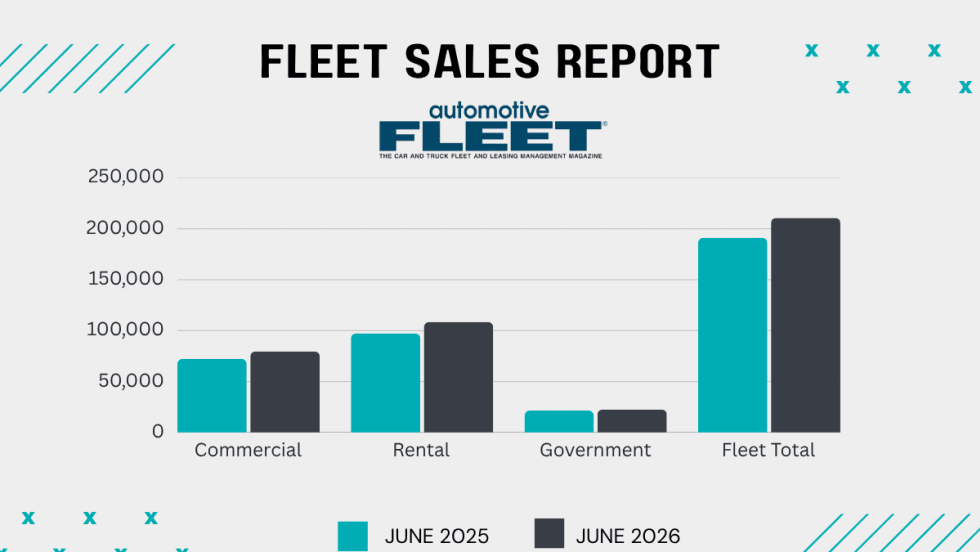
Commercial Fleet Sales Contribute To June, YTD Gains
The fleet sector has boosted its vehicle purchases at a reliable pace in the first half of this year compared with 1H 2025.
Read More →
Registration Opens for 2026 Fleet Forward Conference
Held on the East Coast for the first time, the Washington, D.C.-area event features expert-led education, a new IIHS Crash Test Experience, and collocation with the NAFA’s Fleet Safety Symposium.
Read More →
AP Fleet Management Expands Remarketing Program for Commercial Work Trucks
AP Fleet Management expanded its commercial vehicle remarketing program with dedicated resale services and an online marketplace for used work trucks.
Read More →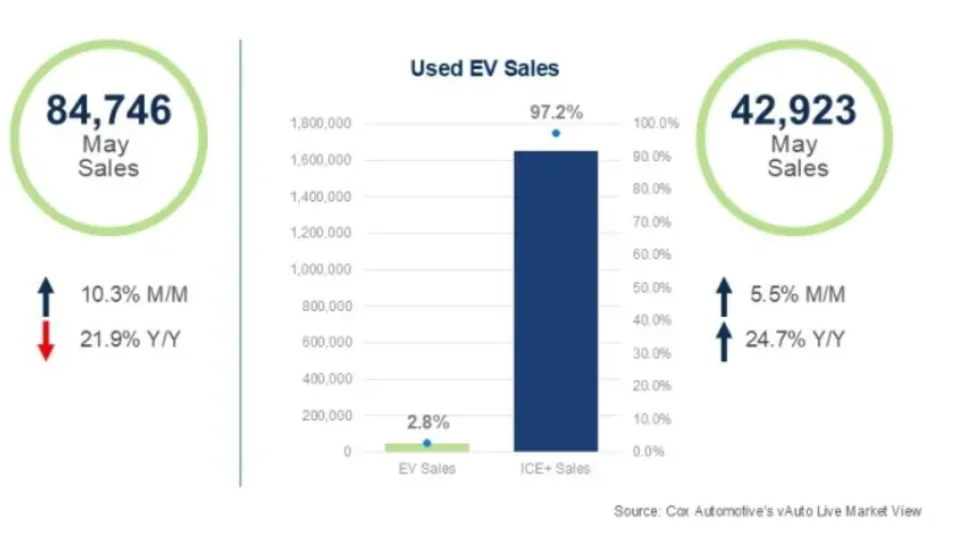
Used EVs Strengthen Overall Electric Vehicle Market
The latest sales data point to several reasons for the divergent trends in new and used EVs that can factor into fleet cycling decisions.
Read More →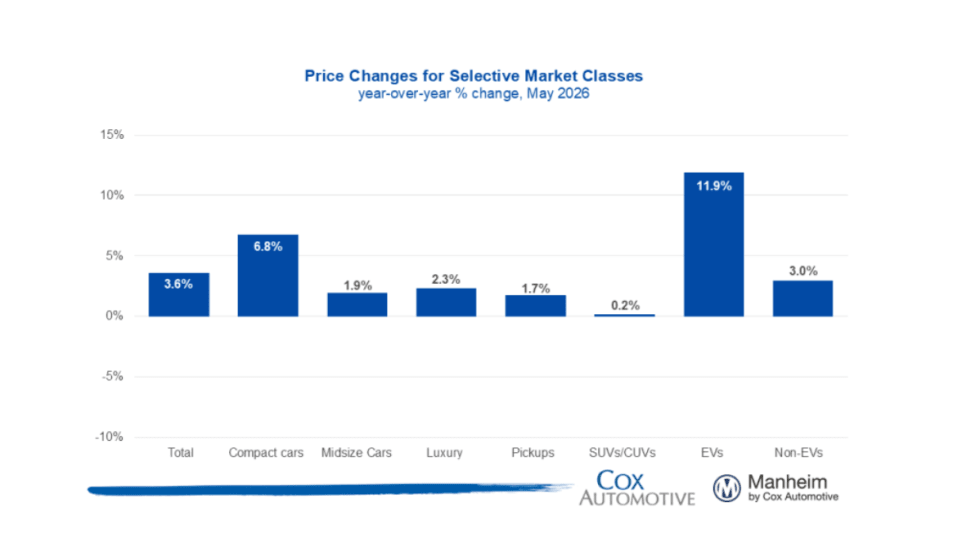
Wholesale Used Vehicle Market Sustains Moderate Rise In Values, Prices
Trends continue to normalize after a strong start to the year, as consumers contend with higher gas prices in the coming summer months.
Read More →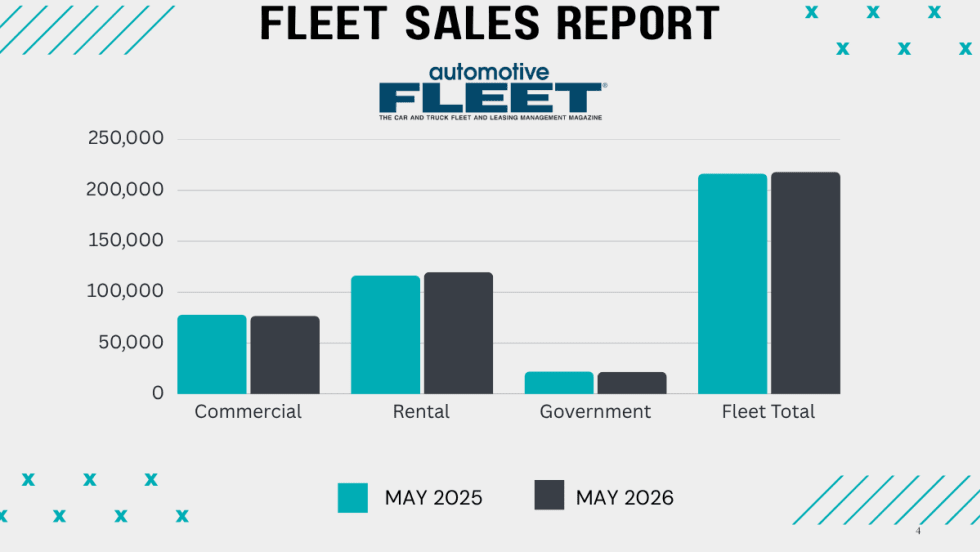
Commercial Fleet Sales Still Lead Sectors Despite May Mini Dip
The U.S. economy's continued growth and positive business investment are creating a favorable environment for fleet vehicle demand.
Read More →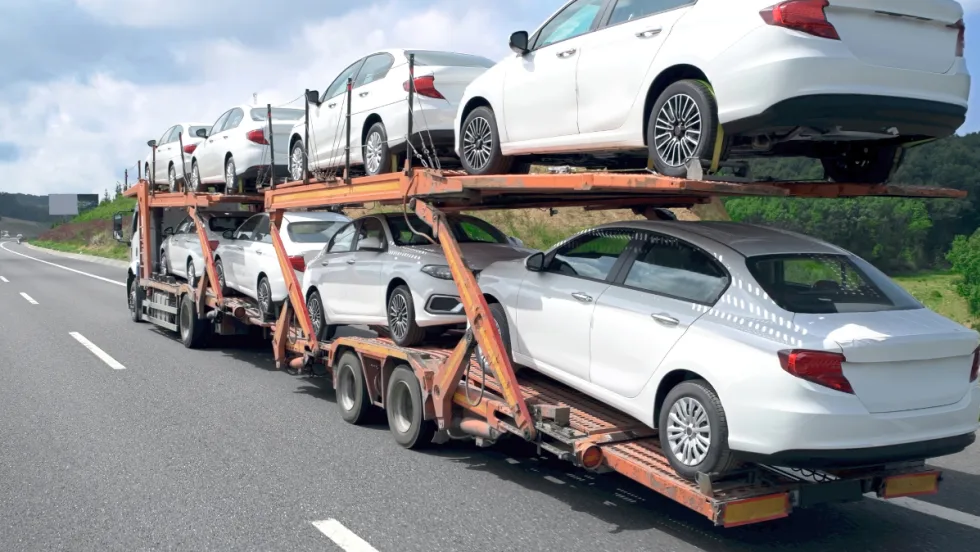
The Data-Driven Haul: 5 Ways AI is Leveling the Playing Field in Auto Transport
Large and small transport fleets are becoming more competitive as predictive analytics and real-time data inform the logistics decision chain.
Read More →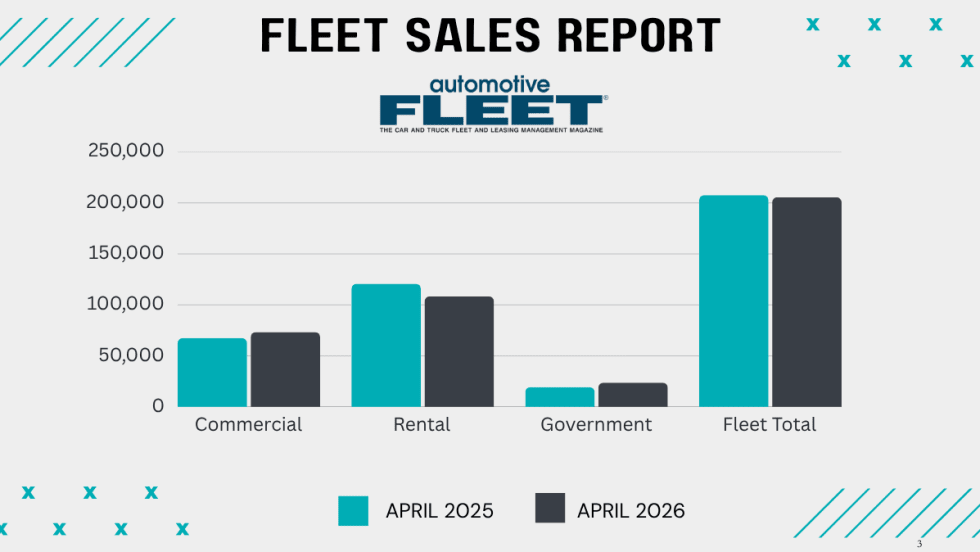
Commercial Fleet Sales Show Healthy Gains
So far, the fleet sector is outshining government and rental fleet sales this year as economic growth spurs more business investment.
Read More →
CAR 2026 Recap Part 2: Closing the Gap Between Data & Remarketing Value
The second half of CAR 2026 examined how fleets can translate lifecycle strategy, vehicle data, and market shifts into higher real-world results.
Read More →