



Tariffs Prompt EV Buying That Tightens Inventory
With over 70 models available, competition in the EV market is fierce. The new EV price premium over ICE+ vehicles increased to $12,229, the highest in two years.

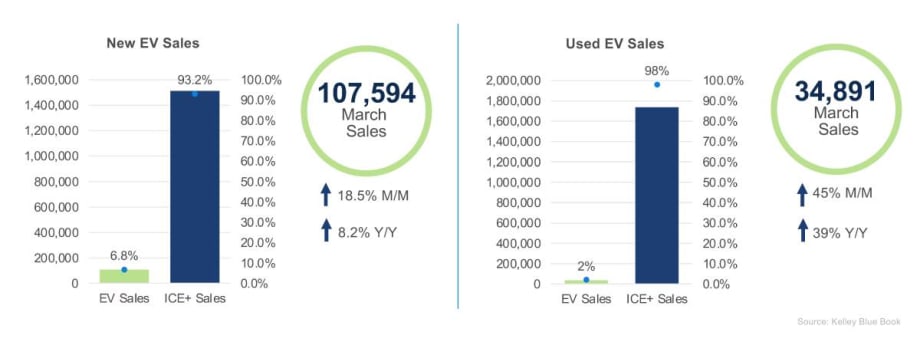
In March, used electric vehicle sales surged by 45% month over month, while yearly used EV sales rose 39%.
Graphic: Cox Automotive
While sales increased for both new and used EVs in March, the market share for new EVs saw a slight decline as inventory levels tightened across the board due to tariffs influencing consumer behavior.
However, new EV prices rose, whereas used EV prices decreased slightly, and many affordable options remained.
Used EV Sales Surge and Gain Market Share
New EV Sales: In March, new electric vehicle (EV) sales increased by 18.5% monthly to 107,594 units, although the EV market share dropped to 6.8%. Year over year, the new EV sales volume increased by 8.2%. Tesla’s market share fell by 5 percentage points to 42%, although the Model Y and Model 3 remained the top-selling vehicles. It was a strong month for Chevrolet, Hyundai, Genesis, and Cadillac, with each brand experiencing a month-over-month volume increase of 50% or more. The top five selling new EV models, ranked by sales volume, were the Tesla Model Y, Tesla Model 3, Ford Mustang Mach-E, Chevrolet Equinox and Hyundai Ioniq 5. With over 70 models available, competition in the EV market is fierce.
Used EV Sales: In March, used electric vehicle sales surged by 45% month over month, reaching a total of 34,891 units, up from 24,875 in February. Retail share for EVs in the used market hit 2% for the first time ever. Year-over-year used EV sales growth was 39%. Tesla continued to dominate the used EV market with a 54.5% share. The EV pioneer increased its share of the used EV market by 300 basis points to 43%, partly thanks to a growing availability of used Tesla models. Chevrolet and Ford followed, holding market shares of 9.2% and 6.8%, respectively. The top five selling models by volume were the Tesla Model 3, Model Y and Model S, followed by the Ford Mustang Mach-E and Chevrolet Bolt, collectively accounting for 48% of the market share for the month.
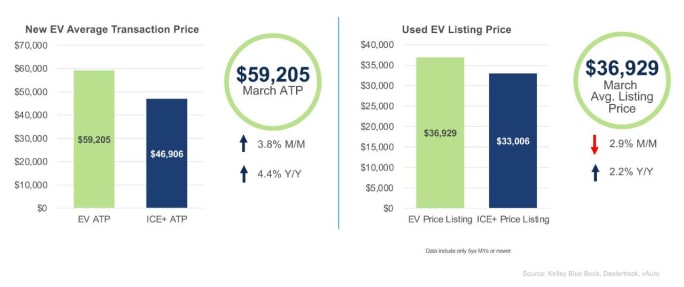
The average listing price for used electric vehicles (EVs) was $36,929, marking a 2.9% decrease from the previous month and a 2.2% increase compared to last year.
Graphic: Cox Automotive
Chinese Battery Tariffs Could Increase EV Prices
New EV Average Transaction Price: In March, the average transaction price (ATP) for new electric vehicles was $59,205, showing a 3.8% increase from the previous month and a 4.4% increase from the previous year. The EV price premium over ICE+ vehicles increased to $12,229, the highest it’s been in a couple of years. Incentives continue to be above the industry average at 13.3%, slightly down one percentage point from the prior month. The Nissan Leaf, Kia EV6, Mercedes EQB and Nissan Ariya had incentive levels exceeding 30% of their ATP. Recent tariffs on imported EV batteries and components from China, which accounted for about $1.9 billion worth of lithium-ion batteries in 2024, could further increase transaction prices, as these tariffs could raise the cost of imported materials by up to 82%.
Used EV Average Listing Price: The average listing price for used electric vehicles (EVs) was $36,929, marking a 2.9% decrease from the previous month and a 2.2% increase compared to last year. This adjustment has brought the price premium to under $4,000. Notably, 12 brands had listing prices lower than their internal combustion engine (ICE) counterparts. Affordable options are still available, with 40% of units sold priced below $25,000.
Buying Surge Cuts Supply Availability
New EV Days’ Supply: In March, the new EV days’ supply declined by 12.5% month over month, dropping to 93 days. The new EV days’ supply is down 26% yearly. The gap between days’ supply for EVs and ICE+ models doubled in March, reaching 24 days. Days’ supply varied a lot by make. GMC had the highest days’ supply at 170 days, while Kia had the lowest at 23 days. BMW experienced the largest month-over-month decline in days’ supply, dropping by 49 days to end the month at 80 days. In contrast, Volkswagen saw the highest increase, from 47 days to 82 days, which remains below the monthly average. The recent tariff announcements have influenced buying behavior, leading to a surge in vehicle purchases and impacting inventory levels.
Used EV Days’ Supply: In March, the days’ supply of used electric vehicles declined by 4.4% month over month and decreased by 10.9% year over year. Last month, used EVs had a one-day higher supply than ICE+ vehicles. However, with ICE+ days’ supply declining by 18.1% month over month, the gap has now increased to seven days. Similar to the new EV market, the days’ supply for used EVs varies by popular makes. Similar to the new EV days’ supply, inventory is tightened in the used EV marketplace.
Originally posted on Automotive Fleet
More Used Vehicle Values
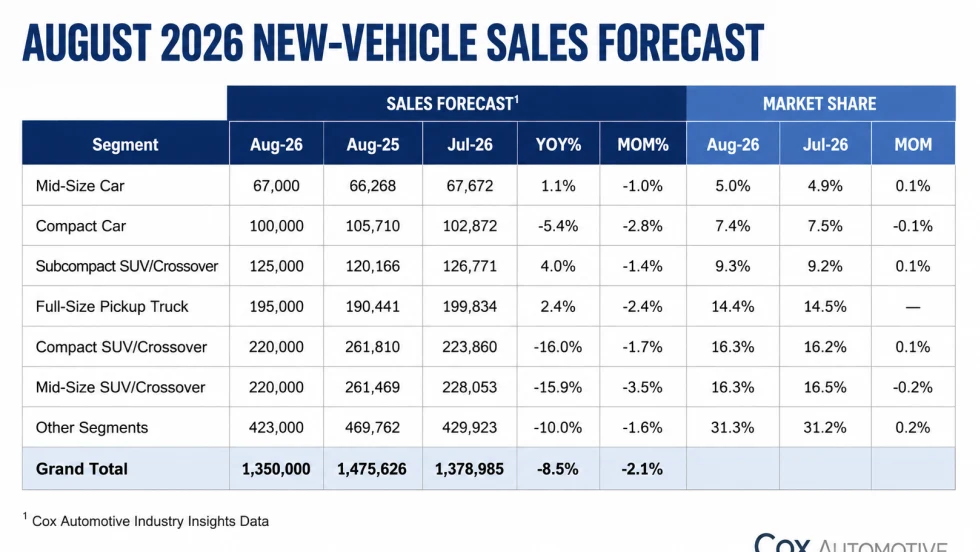
August New-Vehicle Sales Pace Forecast to Hold Above 16 Million
Despite an expected 8.5% year-over-year decline in August volume, Cox Automotive forecasts a 16.3 million SAAR, with full-size pickups outperforming several major crossover segments.
Read More →
Trade Strategy Now Starts Long Before Turn-In
The strongest trade values aren't built at turn-in. Discover how maintenance, lifecycle planning, and shared risk protect truck resale value.
Read More →
What Happens When Residual Values Meet Real-World Markets
A truck's trade value isn't determined on turn-in day. Learn how market cycles, maintenance, and timing shape the gap between residuals and reality.
Read More →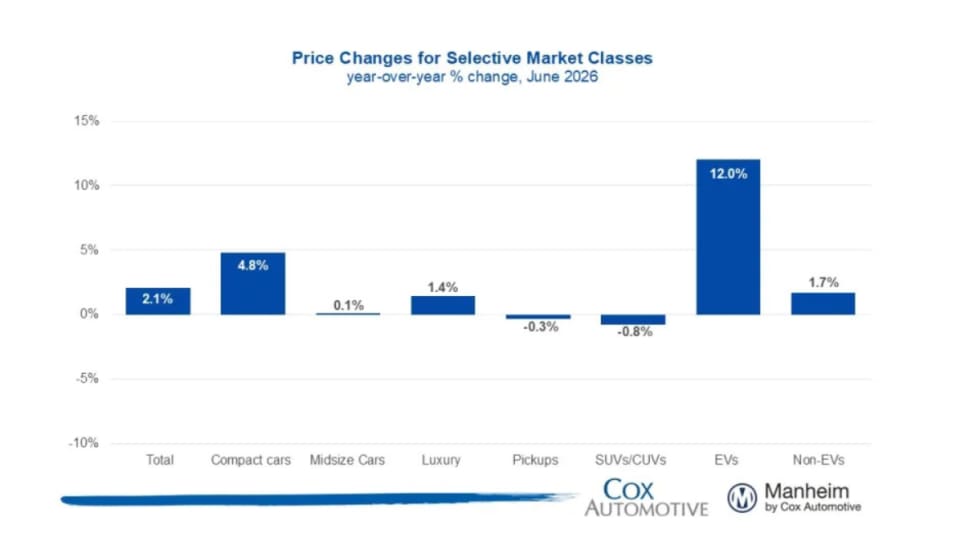
Manheim Index Shows Used-Vehicle Wholesale Prices Up 2.1% in June
The market is seeing stronger appreciation in older used vehicles this year, and the most affordable segments have been among the year’s best performers.
Read More →
Stop Remarketing Electric Vehicles Like Gas Cars
The advantages and attributes of electric vehicles are upending the traditional remarketing cycle, requiring fleet sellers to rely on new factors and approaches detailed below.
Read More →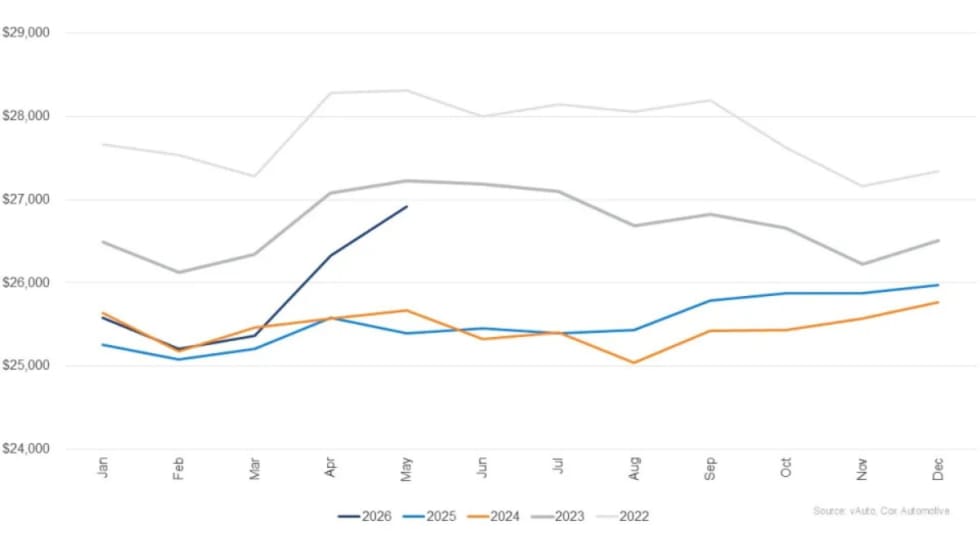
Used Vehicle Prices Climb Higher As Sales Pace Slows
The higher prices at used retail reflect strong wholesale values earlier in the spring, particularly for older, more affordable vehicles.
Read More →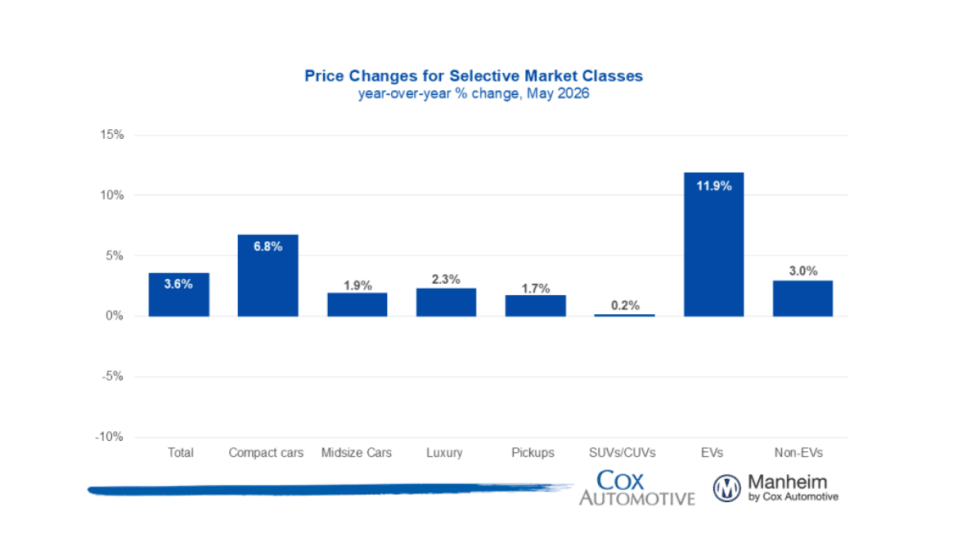
Wholesale Used Vehicle Market Sustains Moderate Rise In Values, Prices
Trends continue to normalize after a strong start to the year, as consumers contend with higher gas prices in the coming summer months.
Read More →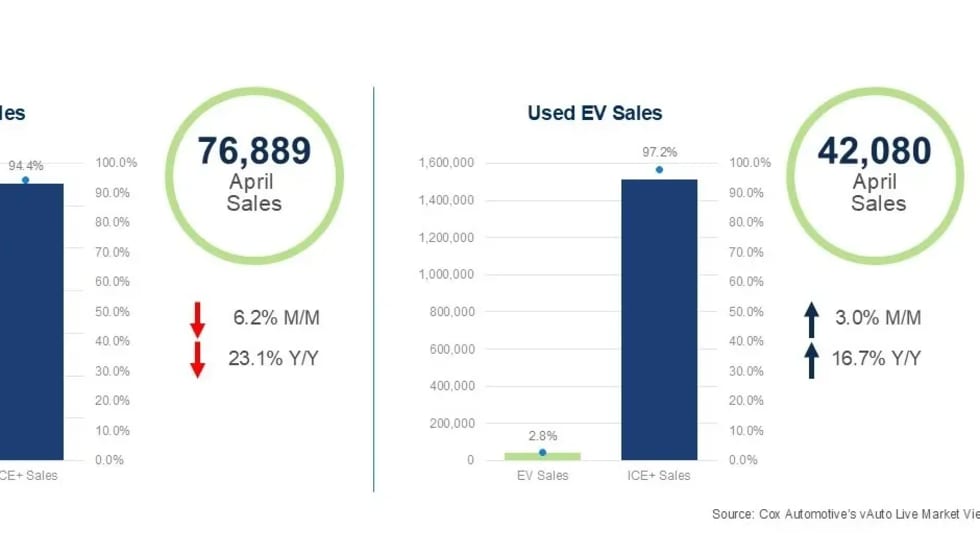
Used EV Sales Grow In April
While EV sales declined, used EV sales grew, as tighter inventory and rising prices reflected a more normalized pace for the EV market.
Read More →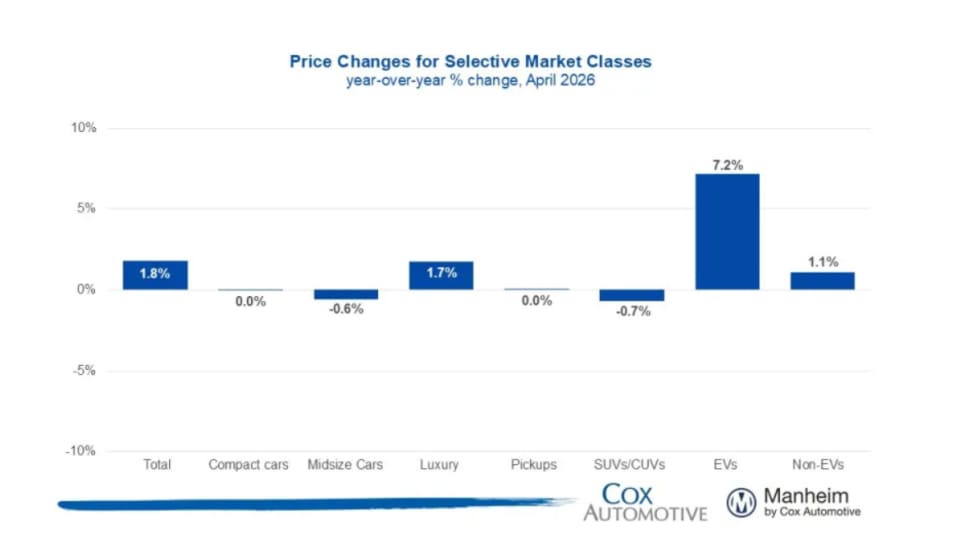
Wholesale Used Vehicle Prices Slightly Up In April
The Iranian conflict and rising gas prices inject much uncertainty into the future wholesale used vehicle markets, as higher gas prices soak up spendable income from vehicle buyers.
Read More →
CAR 2026 Recap Part 2: Closing the Gap Between Data & Remarketing Value
The second half of CAR 2026 examined how fleets can translate lifecycle strategy, vehicle data, and market shifts into higher real-world results.
Read More →