




Residual Value:Risk Transitioning to Electric Vehicles — Will History Repeat Itself?
Developing TCO on Electric Vehicles Spans Many Factors
The push to accurately quantify the costs of an EV fleet will depend on line items both fixed and variable, with some yet to be standardized.
December 14, 2022

Matt Horton (L), CEO of Voltera, a developer of charging sites and facilities for EVs, and Dr. Alex Yurchenko, chief data science officer for Black Book, a vehicle pricing and inventory data analytics company for the automotive sector detailed the metrics needed to calculate the total cost of ownership for electric fleet vehicles. They spoke Nov. 10, 2022 at the Fleet Forward Conference in Santa Clara, California.
Photo: Ross Stewart Digital Photography
9 min to read
If an electric vehicle fleet saves an operation money, then it will happen only if a fleet manager works to figure it out.
An EV will not automatically run cheaper than a traditional vehicle just because you plug it in. Getting to an accurate cost of ownership takes a lot of data and a deep dive into the analysis along with a plan to apply it daily.
Two EV experts drove those points home on Nov. 10 during a session, “Calculating TCO for EV Fleets,” held at the Fleet Forward Conference in Santa Clara, California.
Alex Yurchenko, chief data science officer for Black Book, a vehicle pricing and inventory data analytics company for the automotive sector, and Matt Horton, CEO of Voltera, a developer of charging sites and facilities for EVs, laid out the expenses and cost realities for electric fleet vehicles.
Electric Fleets Set to Grow This Decade
Yurchenko started the session with an overview of the state of the present and future electric vehicle market. Black Book is known for forecasting how much every vehicle on the road will be worth in five to six years.
Looking at the overall electrification market, the share of new light-duty vehicles that will be electric should rise steadily this decade from 2% to 5% to 6% and to 25% by 2030, Yurchenko said. Percentages will vary widely by region, with California reaching the higher percentages and charging infrastructure determining how quickly the market converts to electric vehicles.
OEMs are investing billions of dollars in new vehicles with more models coming into the market, Yurchenko said. “We're not expecting a revolution, but we are expecting a gradual shift to EVs.”
EV Market Still Emerging
Since EVs came to market, their higher expense compared to ICE vehicles has been a challenge to commercial and consumer buyers, he said. “We are starting to see the prices of EVs get more in line with gas vehicles, but there's still a large difference that needs to be overcome before any mass adoption on the retail side and obviously on the fleet side.”
The number of used EVs on the market is growing slowly. “I think it's a good problem to have because a used market for EVs is not developed yet,” Yurchenko said. “Moving these used EVs is not the same as moving gas vehicles, and it's going to take time to adopt our transportation network to move many EVs. They are heavier and they require different insurance.”
Most of the damage vehicles sustain during transport occurs in the undercarriage, where the expensive EV batteries lie. “We have time as an industry to adapt to invest in transportation that gets millions of electric vehicles back on the road.”
One of the biggest parts of total cost of ownership is depreciation, Yurchenko said. “Earlier this year was the first time EVs on average price retention were outperforming the market. And that's where we still had $5 per gallon gas prices.”
Retention is a crucial part of TCO and will likely match that of typical gas vehicles as OEMs grow their portfolio of electric vehicles, he said. “Remarketing is an extremely important part of retention and TCO computations. As an industry maturing, we expect that difference between your typical electric and gas vehicles to shrink.”
Even older electric vehicles are doing better now than historically, he added. “The expectation is that electric vehicles will perform much better compared to history and compared to the whole market.”
Yurchenko and Horton outlined some key points and trends in the discussion:
Q: What are some of the TCO basics and must have line items that should be on a fleet P&L spreadsheet?
Depreciation: Requires continuous calculations of according to changing market factors.
Battery condition and health: “There's still so much that we don't know about EVs, especially newer models, and how the batteries will hold their health over time,” Yurchenko said. “There are lots of new tools, such as companies doing analytics on battery health and battery life and how it degrades so that you can know more about these vehicles and about their longevity.”
Cost of energy/electricity: Electricity rates fluctuate based on location, utility, and season, but are generally cheaper than gas and diesel prices.
Charging infrastructure: This requires a significant capital investment, Horton said. Depot, public and at-home charging costs will all vary across the board. Setting up charging stations can involve financing and/or leasing equipment as well as the value of real estate, whether owned or rented. This can become a lower cost/higher value asset over time.
EV subscription-based options: Lease vehicles instead of owning them until EVs offer a solid track record
Maintenance: The promise of electric vehicles given the smaller number of moving parts and the simpler drive trains means they certainly have the promise of being much lower cost in terms of preventive maintenance and overall unplanned maintenance as well. Those are real drivers for the total cost of ownership for these vehicles.
Software features and value: Upgrades should be factored into incremental increases in value, as well as how to account for them.
Q: How do EVs change the metrics used to calculate TCO?
Cost per mile is a more accurate metric than miles per gallon. Fleet operators need to know their energy costs, infrastructure costs, dwell times for different electric vehicles — all of which will vary throughout the day. Operations must be synced with vehicle capabilities to minimize total cost of ownership in a way that will not disrupt operations.
Battery health will determine much of the value and price of an electric vehicle, factoring in how the EV was charged and driven. Although the industry lacks standards now, OEMs are trying to establish trustworthy common benchmarks. Buyers of used EVs, whether fleet or retail, need to trust the health of the battery and will pay for the information to be confident of the purchase.
Q: What have been some of the pain points or mistakes in accurately assessing the costs of fleet electrification?
EV fleets still lack extensive and thorough data on the true maintenance and reliability costs, especially in the heavier duty and commercial segments. That can lead to the mistake of taking a vendor’s word for how reliable an EV will be. It’s still challenging to model the costs so fleet managers better understand them. Current models that project costs haven’t always played out accurately.
The retail market for EVs is still not fully developed, with different types of buyers for new and used EVs. A secondary market for smaller fleet operators buying used EVs still must emerge, since many used ones will move among light-duty fleet operations. Buyer incentives also can help speed up adoption of EVs.
Many mistakes have been made with charging infrastructure. Customers generally don’t understand the difference between what it takes to deploy five EVs with five chargers on a site versus a fleet of 500 vehicles. The scale varies so much that the power costs and availability will differ radically. Fleets should be encouraged to start with the end in mind, and consider what full-scale electrification will look like and what kind of infrastructure it will require. Electrification should then occur in phases.
Fleets also experience sticker shock when they focus on the costs of the EVs. Just as important, what will be the energy and maintenance costs? Higher levels of demand charging can blow up an infrastructure model if fleet operations do not carefully plan electrification.
Fleets may consider charging as a service models where customers subscribe or designate a partner to pay for the upfront capital costs that can smooth out expenses over time, enabling the fleet customer to adopt a bigger fleet as they install the charging stations.
Q: What's the best way to track detailed energy costs for fleets with duty cycles that extend across an entire region with different utilities, equipment, and electricity rates that vary day and night?
Some energy companies provide tools and services to help a fleet manage its energy expenses across different regions. Many companies choose to manage that internally via spreadsheets, which can get complicated and change over time. New software offerings now can help a fleet optimize energy usage, both at the facility and at stations across the region.
One way EV operations become more complicated than those for ICE vehicles is that a charging depot can serve as an energy island, with many different energy sources on site, such as solar panels, large battery storage, and charging stations that handle vehicle-to-grid two-way charging. It's not just a matter of utility rates, but what times of day should solar and battery storage be used to complement direct charging? How should those energy flows be managed throughout the day?
Q: With future generations of EVs bringing more advances, how can you estimate residual values and turnover intervals as newer, better EVs come to market?
Since most EVs will offer ranges of about 300 miles that meet buyer expectations, the bigger question is how fast an EV charges. That part of the equation is changing fast. OEMs are bringing new technologies with continuous updates that will improve charging times and affect resale values. Such faster changes will accompany a wider mix of EV models with improving ranges, sizes, charging times, and data sets.
Five years from now, data will provide more insights into the operation and value of EVs. The key question is how do you evaluate this rapidly shifting technology world, where an EV resembles a smartphone on wheels with ever-faster technology upgrades?
Q: When you consider the data heavy EVs and the technology driving them, how should fleet operators factor in telematics and software costs versus those of ICE vehicles?
The more a fleet manager can manage energy consumption through telematics, the more likely they can save money, which can in turn be invested in technology or other areas of the operation.
Many OEMs are installing advanced technology on EVs first, which is included in the cost of the vehicle. That provides more opportunities for measurable data and insights that can inform cost decisions. The more measurements, the more connected the vehicle is to the operation and the bottom line.
The high volume of data generated by EVs offers a lot of data layers and complexity, but gives fleet managers more opportunity to analyze their duty cycles, vehicle performance and overall deployments. Navigation and routing can match charging locations and times with the most efficient duty cycles and make better use of navigation overall than with a traditional ICE vehicle.
Q: How do you get to a point where you have a certain level of standardization to create a baseline in computing the value and the health of a battery?
EV battery technologies now vary widely among vehicles and come with different performance, degradation curves, features, and characteristics. Eventually, the industry will reach a better shared understanding of how a battery should perform and how it should degrade.
Such complexity, however, offers a good challenge in that it will yield more competitive, less expensive EV batteries that will improve faster over time. Fleet managers should look at either second life applications or value when ready to turn over a fleet EV and evaluate how it competes against newer models coming onto the market.
Five years ago, the EV industry lacked even basic measures of battery health and is now moving in the right direction. One option is battery as a service where fleets buy the vehicle but lease the batteries from the OEMs. Consumers are demanding the confidence in knowing what will happen to an EV at the end of its fleet cycle, but the industry is not at that point yet.
The industry, including OEMs and third parties, still has a wide opportunity to devise benchmark standards on evaluating battery health and quality. Agreement will emerge on the most reliable way to assess an EV battery.
Topics:charging infrastructurefleet managementFleet electrificationTotal Cost of OwnershipUsed Vehicle ValuesFleet
Originally posted on Charged Fleet
Subscribe to Our Newsletter
More Used Vehicle Values
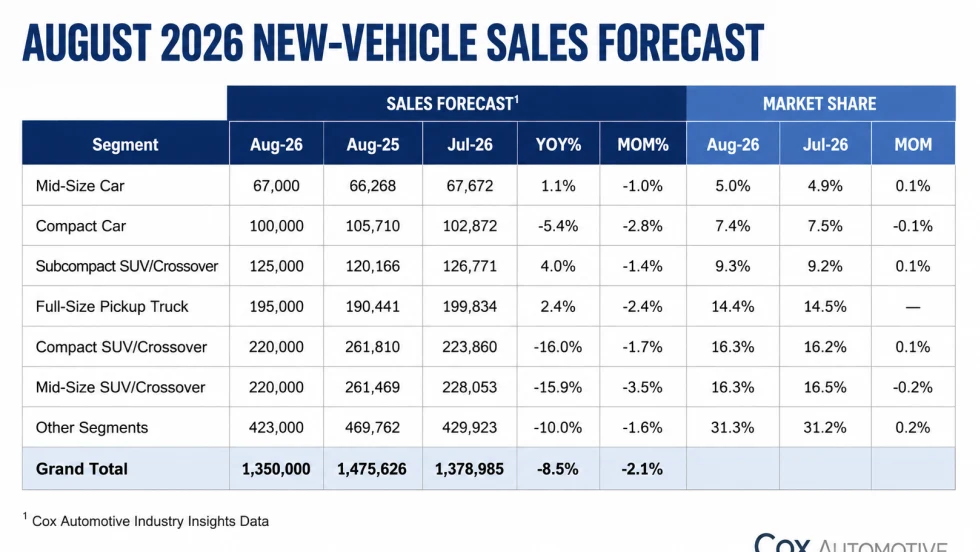
August New-Vehicle Sales Pace Forecast to Hold Above 16 Million
Despite an expected 8.5% year-over-year decline in August volume, Cox Automotive forecasts a 16.3 million SAAR, with full-size pickups outperforming several major crossover segments.
Read More →
Trade Strategy Now Starts Long Before Turn-In
The strongest trade values aren't built at turn-in. Discover how maintenance, lifecycle planning, and shared risk protect truck resale value.
Read More →
What Happens When Residual Values Meet Real-World Markets
A truck's trade value isn't determined on turn-in day. Learn how market cycles, maintenance, and timing shape the gap between residuals and reality.
Read More →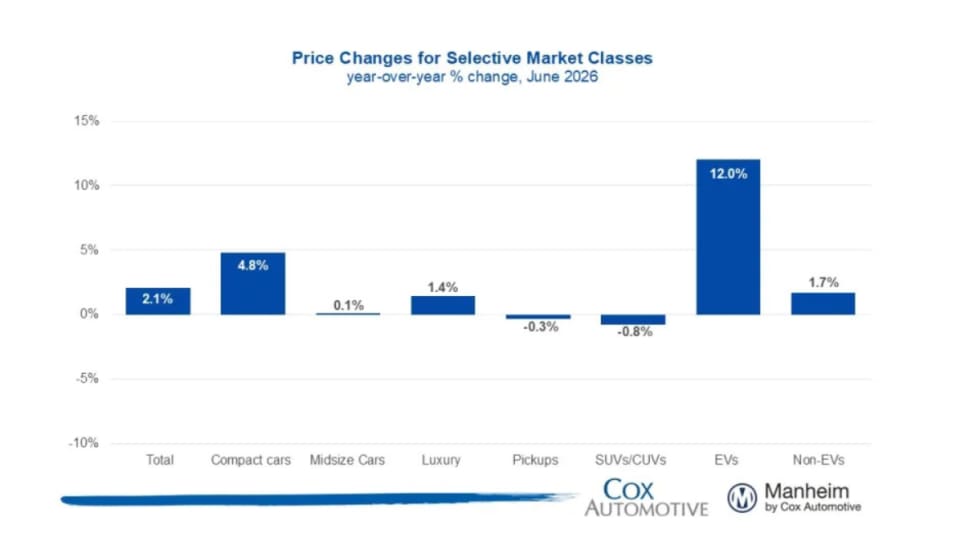
Manheim Index Shows Used-Vehicle Wholesale Prices Up 2.1% in June
The market is seeing stronger appreciation in older used vehicles this year, and the most affordable segments have been among the year’s best performers.
Read More →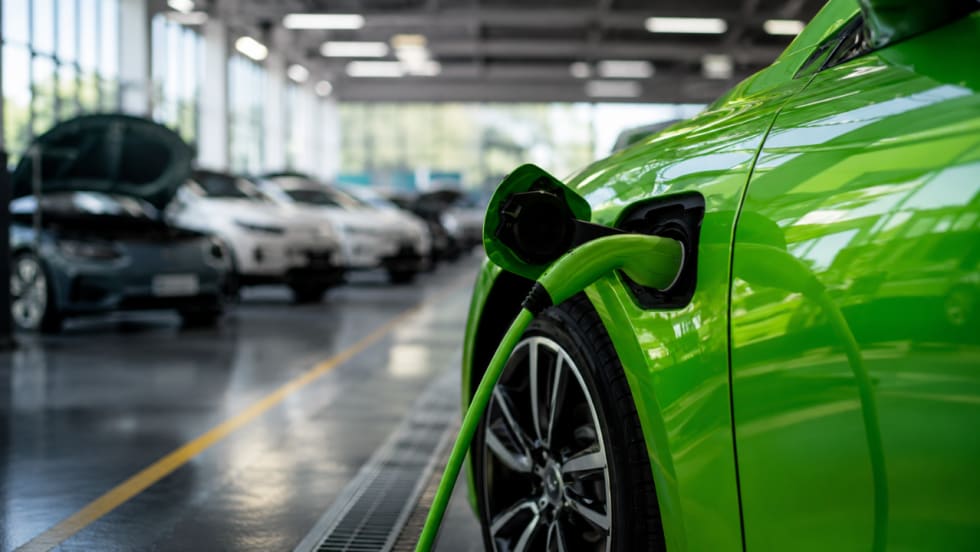
Stop Remarketing Electric Vehicles Like Gas Cars
The advantages and attributes of electric vehicles are upending the traditional remarketing cycle, requiring fleet sellers to rely on new factors and approaches detailed below.
Read More →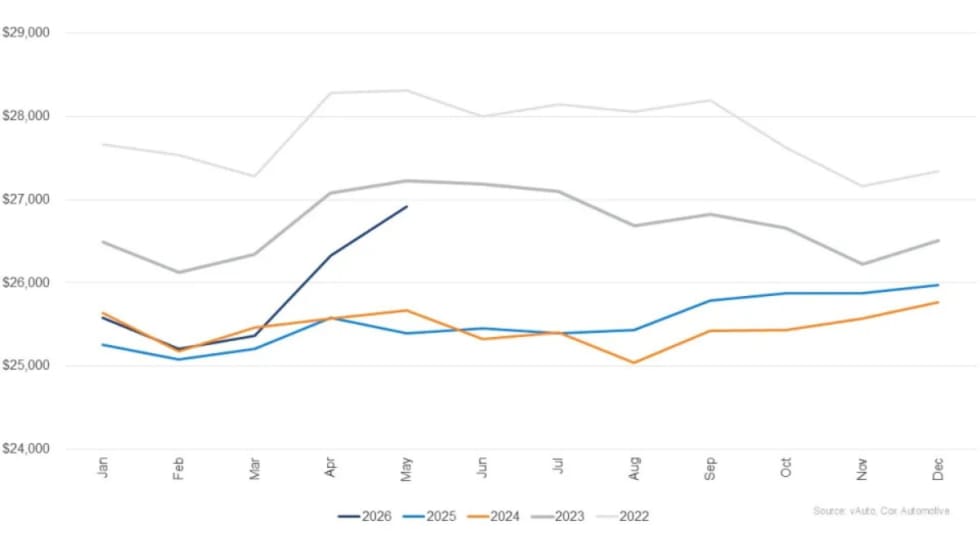
Used Vehicle Prices Climb Higher As Sales Pace Slows
The higher prices at used retail reflect strong wholesale values earlier in the spring, particularly for older, more affordable vehicles.
Read More →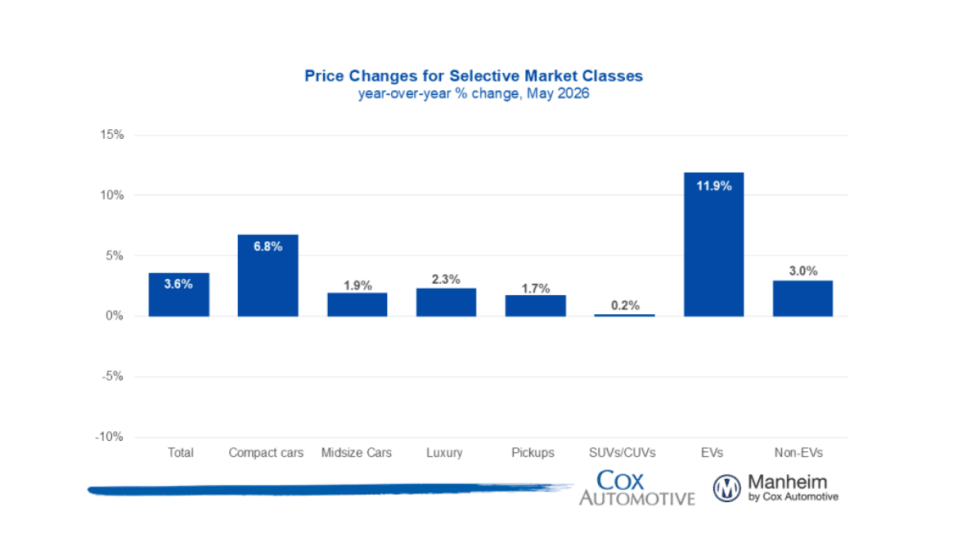
Wholesale Used Vehicle Market Sustains Moderate Rise In Values, Prices
Trends continue to normalize after a strong start to the year, as consumers contend with higher gas prices in the coming summer months.
Read More →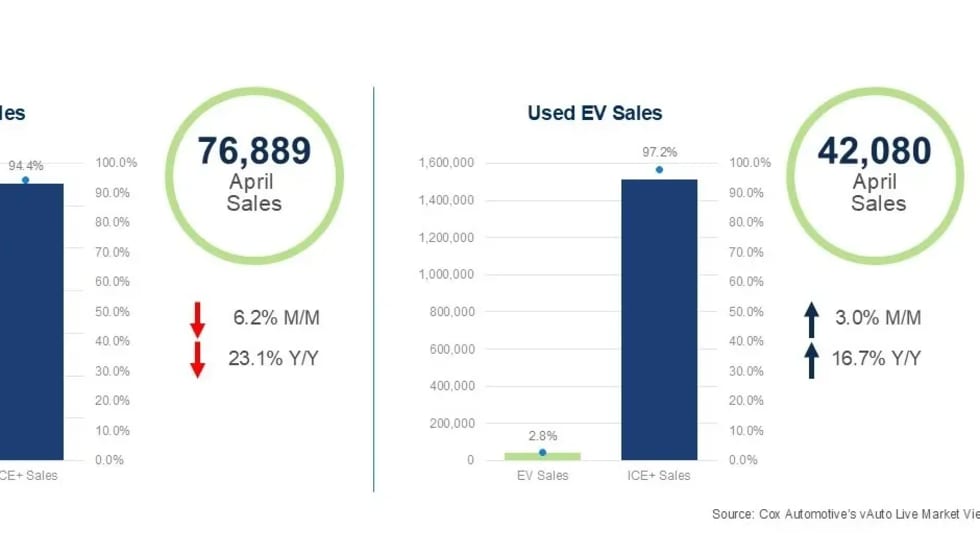
Used EV Sales Grow In April
While EV sales declined, used EV sales grew, as tighter inventory and rising prices reflected a more normalized pace for the EV market.
Read More →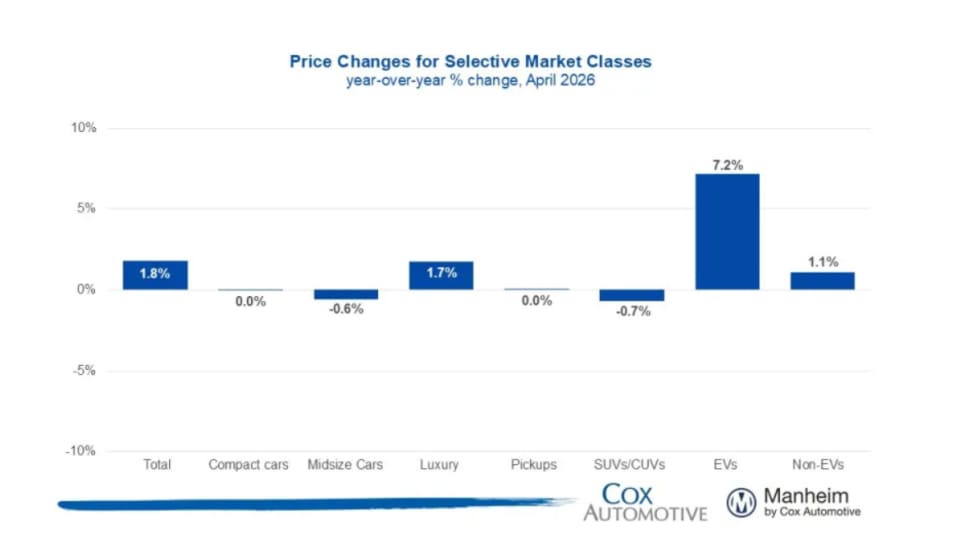
Wholesale Used Vehicle Prices Slightly Up In April
The Iranian conflict and rising gas prices inject much uncertainty into the future wholesale used vehicle markets, as higher gas prices soak up spendable income from vehicle buyers.
Read More →
CAR 2026 Recap Part 2: Closing the Gap Between Data & Remarketing Value
The second half of CAR 2026 examined how fleets can translate lifecycle strategy, vehicle data, and market shifts into higher real-world results.
Read More →