




More News: February Fleet Sales Rebound
New-Vehicle Supply Edges Higher, Prices Dip Again
The supply of unsold new vehicles as March opened was about 1.5 million vehicles less than the stock of a year ago and 2.4 million less than in 2020.
March 17, 2022
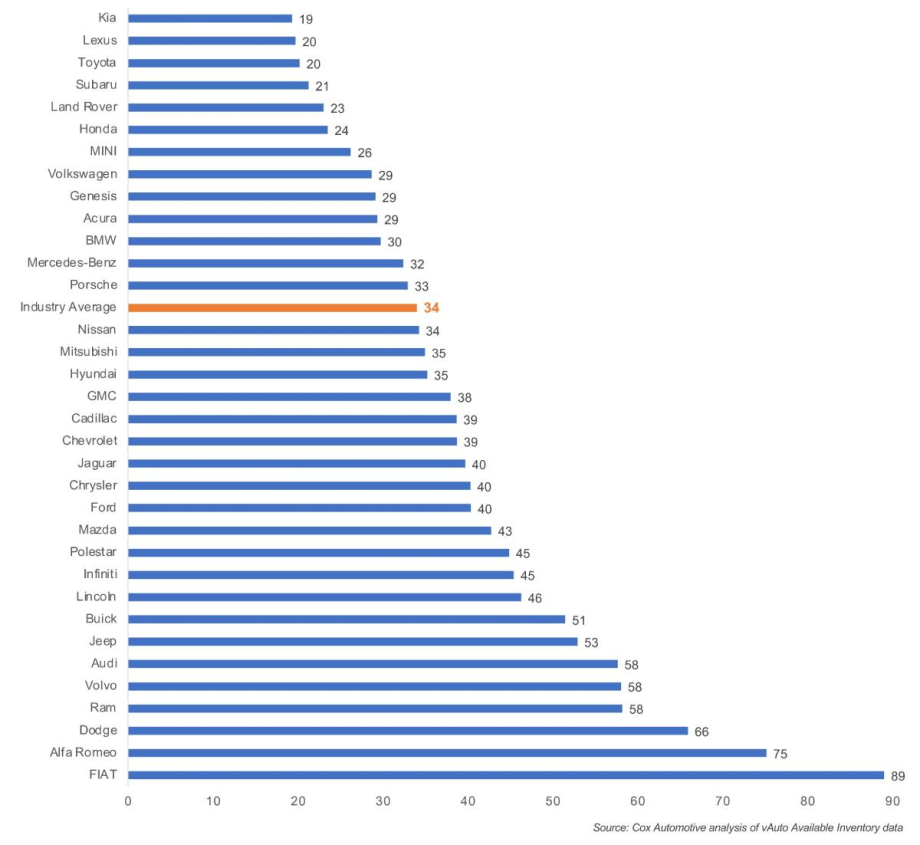
Non-luxury vehicles had a supply of 929,371 vehicles, for a 34 days’ supply. Available luxury vehicles totaled 141,501 vehicles for a 35 days’ supply.
Source: Cox Automotive
4 min to read
New-vehicle inventory edged higher in the last two weeks of February, although days’ supply fell from January, according to a Cox Automotive analysis of vAuto Available Inventory data released March 16. Prices slipped again, staying below $45,000.
The total U.S. supply of available unsold new vehicles stood at 1.07 million units at the start of March. That compared with the revised January available supply of 1.06 million vehicles.
Still, available supply was down 59% from the same period in 2021. In raw numbers, the supply of unsold new vehicles as March opened was about 1.5 million vehicles less than the stock of a year ago and 2.4 million less than in 2020.
“Supply has improved in recent weeks, but only marginally,” said Charlie Chesbrough, Cox Automotive senior economist, in a news release. “Sales in March will be higher than February, but that will be due to three more selling days and not a significant change in availability.”
The days’ supply of unsold new vehicles was 34 at the start of March, down from 37 in early February. The total days’ supply bottomed out at the end of September at 25. Still, the day’s supply at the start of March remained 50% below the end of February 2021.
The Cox Automotive days’ supply is based on the daily sales rate for the most recent 30-day period, in this case, ended March 1. Total light new vehicle sales in February were down 12% from a year ago with the same number of selling days compared to last year. By volume, February new-vehicle sales were up 6% over January, but the February light vehicle seasonally adjusted annual rate (SAAR) was 14.1 million, which was down from last year’s 15.9 million and 6% lower than January’s 15 million rate.
Lower sales are due to a lack of inventory, not a lack of demand, which remains robust. In fact, if not for near-record prices, demand might even be higher.
The auto industry is contending with multiple problems that are disrupting the supply chain: the stubborn and continued chip shortage; a surge in COVID-19 in Asia, specifically China, that has prompted lockdowns and plant closures; and now Russia’s invasion of Ukraine. They have combined to cause the number of vehicles cut from automakers’ production schedules to surge, especially in Europe and Asia.
Prices Slip Again
The average listing price – or the asking price – dropped by the end of February to $44,704, a decrease from the revised end-of-January price of $44,814. Still, that price was 12% above February 2021. The average listing price for luxury vehicles was $65,044, according to Cox Automotive data. The non-luxury average listing price was down to $41,572.
The average transaction price – the price people paid – also decreased again in February to $46,085, according to data from Kelley Blue Book, after reaching a record in December 2021. Prices fell due to fewer luxury vehicles being sold in February. Still, prices are elevated, with the average transaction price was about $5,000 higher in February than it was a year ago.
Import Brands Have Lowest Supply
Non-luxury vehicles had a supply of 929,371 vehicles, for a 34 days’ supply. Available luxury vehicles totaled 141,501 vehicles for a 35 days’ supply.
All brands with the below-average inventories were imports. Brands with the very lowest inventories held the same rankings as the previous week: Kia, Lexus, Toyota, Subaru, Land Rover and Honda. Brands with higher inventory were Ram, Volvo, Audi, Jeep, Buick and Lincoln.
Among segments, the lowest inventories were for high performance cars, minivans, compact and midsize cars, luxury crossovers and midsize SUVS. Of the six segments with the highest inventories, five were cars – luxury and larger cars. Full-size trucks, which require more inventory due to the large number of configurations, also were at the higher end.
The 16 most popular models with the lowest inventories were imports from Toyota, Honda, Kia, Lexus and Subaru. At the bottom, again, was the Subaru Forester followed by the Honda Civic.
Popular models with the highest inventory were mostly domestic trucks and SUVs. Popular models with the highest inventory were Ram 1500, Ford Escape, Chevrolet Silverado, Mazda CX-5 and Jeep Grand Cherokee L.
In terms of price categories, the highest days’ supply was for vehicles priced between $50,000 and $60,000 and above $80,000. Less expensive vehicles had the lowest days’ supply. Vehicles priced between $20,000 to $30,000 had the lowest days’ supply at 28.
More Fleet

Acertus Acquires Fisher Shipping, CEO to Join Acertus
Fisher Shipping will retain its brand and team, while its customers gain access to Acertus’ transportation, storage, vehicle care, and title and registration services.
Read More →
Commercial Fleet Sales Contribute To June, YTD Gains
The fleet sector has boosted its vehicle purchases at a reliable pace in the first half of this year compared with 1H 2025.
Read More →
Registration Opens for 2026 Fleet Forward Conference
Held on the East Coast for the first time, the Washington, D.C.-area event features expert-led education, a new IIHS Crash Test Experience, and collocation with the NAFA’s Fleet Safety Symposium.
Read More →
AP Fleet Management Expands Remarketing Program for Commercial Work Trucks
AP Fleet Management expanded its commercial vehicle remarketing program with dedicated resale services and an online marketplace for used work trucks.
Read More →
Used EVs Strengthen Overall Electric Vehicle Market
The latest sales data point to several reasons for the divergent trends in new and used EVs that can factor into fleet cycling decisions.
Read More →
Wholesale Used Vehicle Market Sustains Moderate Rise In Values, Prices
Trends continue to normalize after a strong start to the year, as consumers contend with higher gas prices in the coming summer months.
Read More →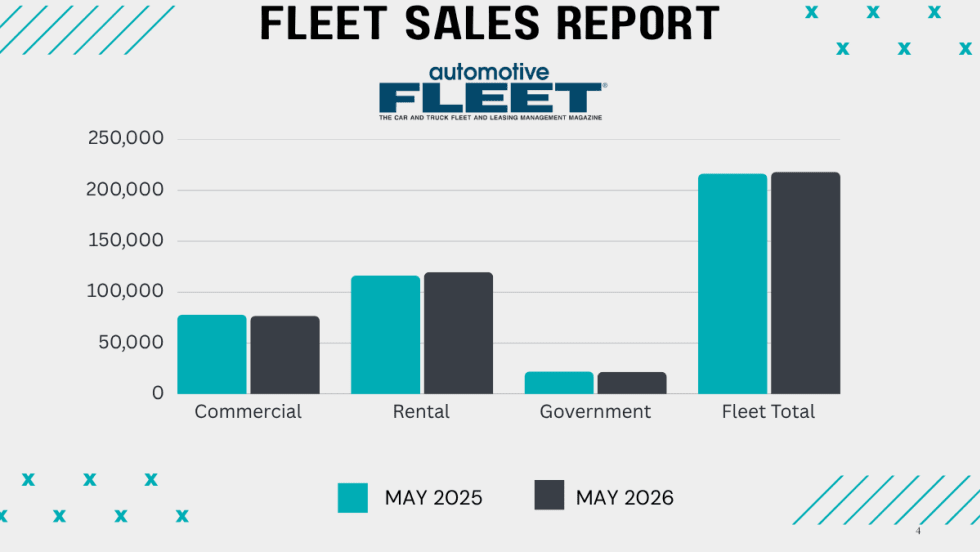
Commercial Fleet Sales Still Lead Sectors Despite May Mini Dip
The U.S. economy's continued growth and positive business investment are creating a favorable environment for fleet vehicle demand.
Read More →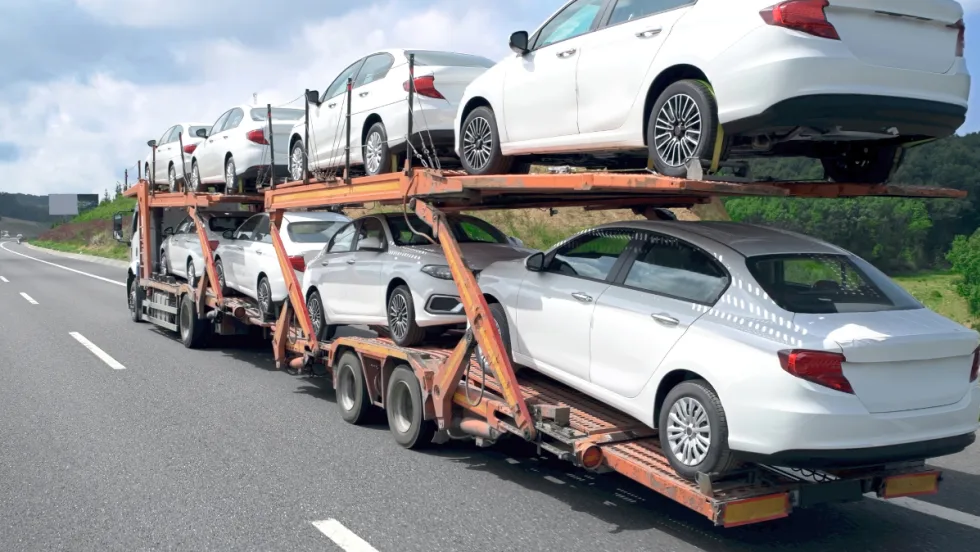
The Data-Driven Haul: 5 Ways AI is Leveling the Playing Field in Auto Transport
Large and small transport fleets are becoming more competitive as predictive analytics and real-time data inform the logistics decision chain.
Read More →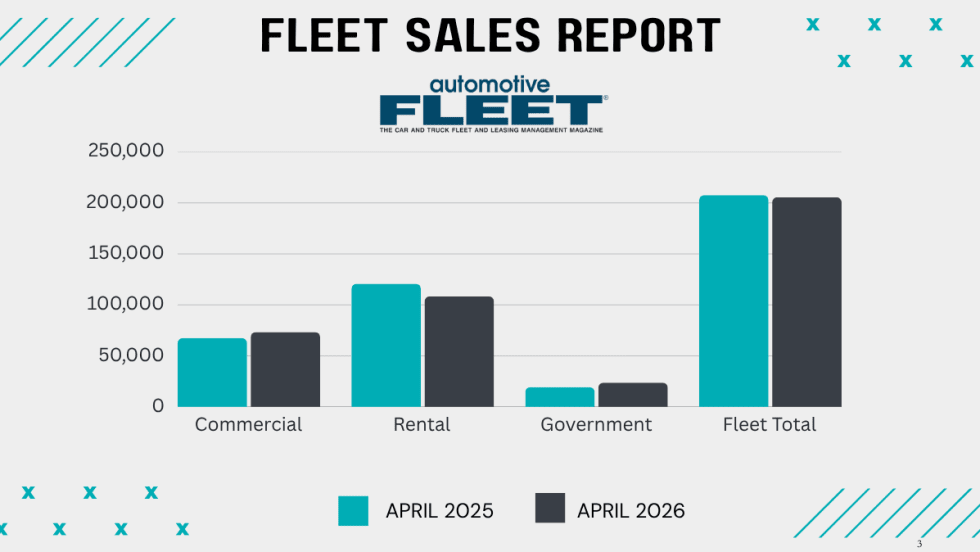
Commercial Fleet Sales Show Healthy Gains
So far, the fleet sector is outshining government and rental fleet sales this year as economic growth spurs more business investment.
Read More →
CAR 2026 Recap Part 2: Closing the Gap Between Data & Remarketing Value
The second half of CAR 2026 examined how fleets can translate lifecycle strategy, vehicle data, and market shifts into higher real-world results.
Read More →