




Related News: Five Previous Months of New Vehicle Price Surges
New Vehicle Prices Hit Record While Supply Falls
Double whammy: New-vehicle inventory falls below 1 million units in September while the average new vehicle price tops $45,000 for the first time.
October 20, 2021
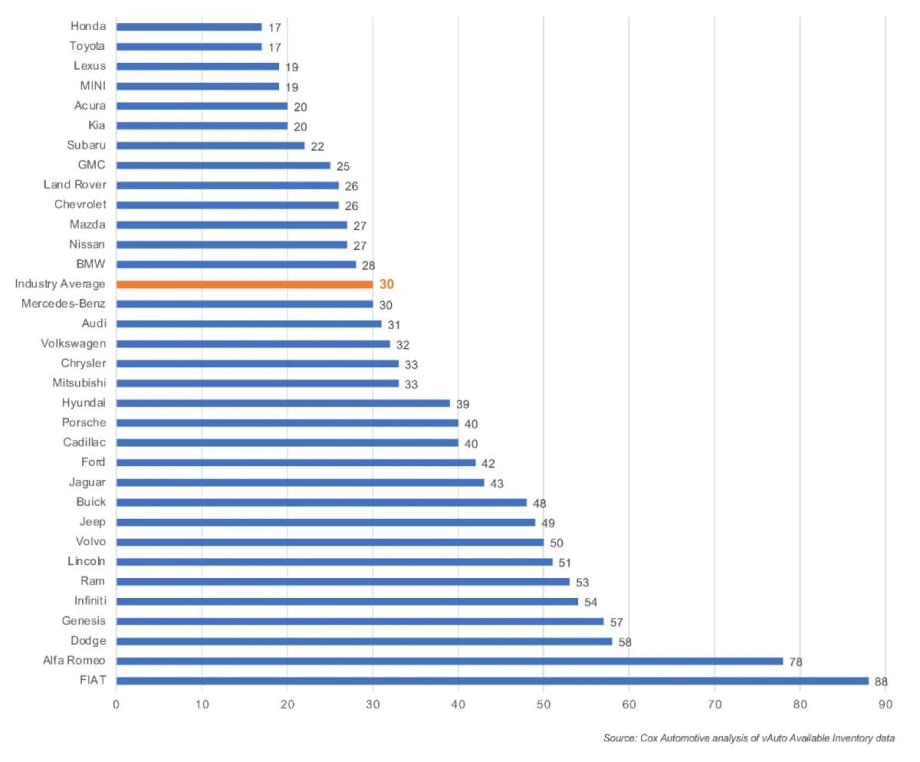
September 2021 Vehicle Inventory Chart, by brand.
Graphic: Cox Automotive
5 min to read
New-vehicle supply fell in September to new lows – fewer than a million vehicles were available for sale, according to a Cox Automotive analysis of vAuto Available Inventory data, while new-vehicle prices hit another all-time high last month, marking the sixth straight record-setting month and surpassing $45,000 for the first time, according to a new report from Kelley Blue Book. The findings were summarized in separate news releases Sept. 13 and 14.
Inventory Squeeze
The total U.S. supply of available unsold new vehicles stood at 915,089 vehicles as September drew to a close. That was down from 1.01 million vehicles a month earlier. Inventory nearing the end of September was 63% below a year ago, according to a Cox Automotive analysis. In raw numbers, the under 1-million vehicle supply compares with nearly 2.5 million in 2020 and 3.5 million in 2019.
The days’ supply of unsold new vehicles was 30 as October opened. The days’ supply has hovered in the range of 29 to 31 since mid-July. Still, the days’ supply in September was 47% below the same timeframe in 2020.
The Cox Automotive days’ supply is based on the daily sales rate for the most recent 30-day period. New-vehicle sales have been losing momentum since June. The September sales pace, or seasonally adjusted annual rate (SAAR), dropped to 12.1 million, compared with more than 16 million and 17 million in 2020 and 2019, respectively. The sales pace has been slowing since June.
Toyota, Honda Had Lowest Supply
Toyota and Honda, both of which made drastic production cuts, had the lowest inventory, each with 17 days of supply. Lexus had the lowest supply among luxury brands at 19 days. Most of Toyota’s volume models, like RAV4, Camry, Corolla, Highlander, Prius and Tacoma, had days’ supply under 20. Lexus’ volume model, the RX sport utility, had a scant 10 days’ supply.
Despite the lowest inventories, Toyota still outsold General Motors for the second consecutive quarter. Some analysts forecast Toyota will outsell GM for the year and possibly in 2022.
Similarly, Honda had only 17 days’ supply. Its volume models that make up the bulk of the brand’s sales – Accord, Civic and CR-V – had days’ supply in the teens. The best-selling CR-V utility had less than 10 days’ supply.
Perhaps, for Toyota and Lexus, the worst is behind it. The automaker plans to resume full production and make up as much as a third of the lost production. Toyota had cut its production target through the rest of its fiscal year, which ends March 31, 2022, by 300,000 vehicles to 9 million units globally. It plans an additional 97,000 vehicles between December and the end of March by scheduling weekend shifts. COVID-19 infection rates in southeast Asia, where the supply bottlenecks occurred, are declining and concerns about production risks are easing.
Kia had only a 20 days’ supply with the new Carnival minivan and popular Telluride SUV having days’ supply in the teens. Subaru had a 22 days’ supply with its best-selling Forester and Outback each having only a 14 days’ supply.
GMC and Chevrolet brands were at the low end of the inventory spectrum with a days’ supply of 25 and 26, respectively. Perhaps the worst is behind GM as well. The automaker confirmed production restart dates for several plants that make various models in North America after months of downtime. That would mean almost all of its plants would be up and running at full production in November.
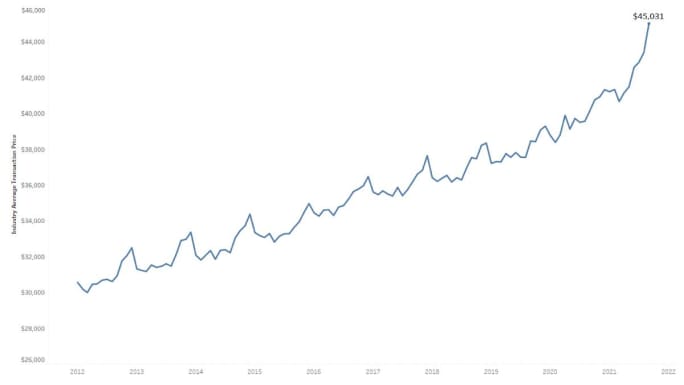
Average Vehicle Transaction Prices, through September 2021.
Graphic: Cox Automotive
High Vehicle Prices
At $45,031, the average transaction price (ATP) for a new vehicle was up 12.1% (or $4,872) from one year ago in September 2020 and up 3.7% (or $1,613) from August 2021.
The all-time-high prices accompanied the fifth straight month of a slowing sales pace. Total sales last month numbered just 1,012,797, a 7.3% month-over-month decrease and one of the lowest volumes in the past decade. On top of supply dynamics, the vehicle mix shifted in September away from lower-priced sedans, compacts and entry-level segments toward more-expensive pickups, SUVs and the luxury market.
“The record-high prices in September are mostly a result of the mix of vehicles sold,” said Kayla Reynolds, analyst for Cox Automotive. “Midsize SUV sales jumped in September compared to August and full-size pickup share moved up as well. Sales of lower-priced compact and midsize cars, which had been commanding more share during the summer, faded in September. As long as new-vehicle inventory remains tight, we believe prices will remain elevated.”
Incentive spending fell in September to another record low, dropping to 5.2% of ATP last month, a decrease from 5.6% in August 2021 and well below the 10.0% of ATP recorded in September 2020. Porsche, Land Rover, Genesis, Subaru and Toyota had among the lowest incentive spend last month, all 3% of ATP or lower. On the other hand, Alfa Romeo, Buick, Fiat and Infiniti each had incentive levels above 10% of ATP.
ATPs in September continued to be driven higher by strong luxury vehicle sales. Luxury sales accounted for 16.6% of total market sales, up from 15.1% in September 2020. Luxury share in September was among the highest in the past decade, and luxury buyers paid an average of $60,845 for a new vehicle last month.
Further, many luxury brands, notably Acura, Cadillac, Genesis and Mercedes-Benz, achieved year-over-year ATP gains in excess of 20%. Cadillac, for example, saw ATPs jump up more than 32% last month, reaching $81,939. Consumers continue to pay near $100,000 for a new Cadillac Escalade. More than 3,500 were sold in September 2021, a jump of more than 50% from August 2021.
More Fleet

Acertus Acquires Fisher Shipping, CEO to Join Acertus
Fisher Shipping will retain its brand and team, while its customers gain access to Acertus’ transportation, storage, vehicle care, and title and registration services.
Read More →
Commercial Fleet Sales Contribute To June, YTD Gains
The fleet sector has boosted its vehicle purchases at a reliable pace in the first half of this year compared with 1H 2025.
Read More →
Registration Opens for 2026 Fleet Forward Conference
Held on the East Coast for the first time, the Washington, D.C.-area event features expert-led education, a new IIHS Crash Test Experience, and collocation with the NAFA’s Fleet Safety Symposium.
Read More →
AP Fleet Management Expands Remarketing Program for Commercial Work Trucks
AP Fleet Management expanded its commercial vehicle remarketing program with dedicated resale services and an online marketplace for used work trucks.
Read More →
Used EVs Strengthen Overall Electric Vehicle Market
The latest sales data point to several reasons for the divergent trends in new and used EVs that can factor into fleet cycling decisions.
Read More →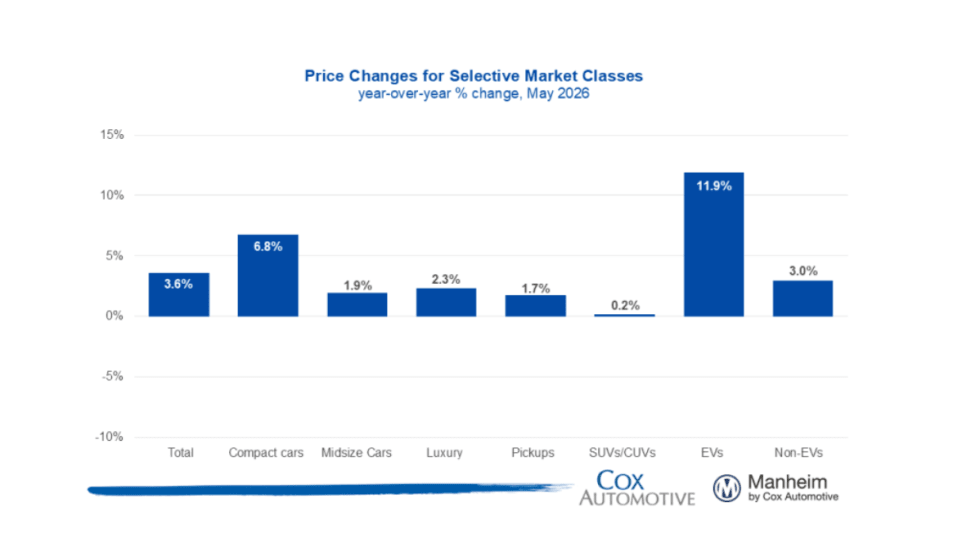
Wholesale Used Vehicle Market Sustains Moderate Rise In Values, Prices
Trends continue to normalize after a strong start to the year, as consumers contend with higher gas prices in the coming summer months.
Read More →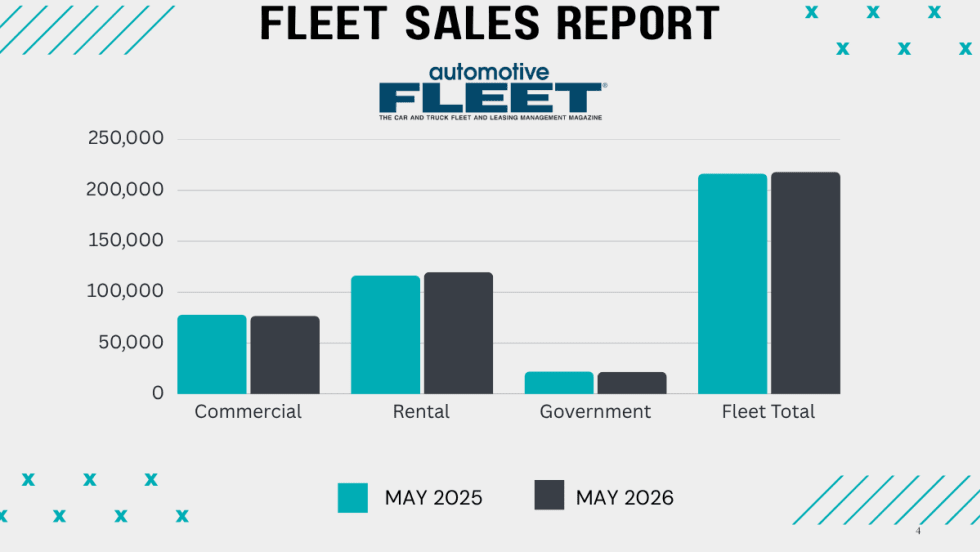
Commercial Fleet Sales Still Lead Sectors Despite May Mini Dip
The U.S. economy's continued growth and positive business investment are creating a favorable environment for fleet vehicle demand.
Read More →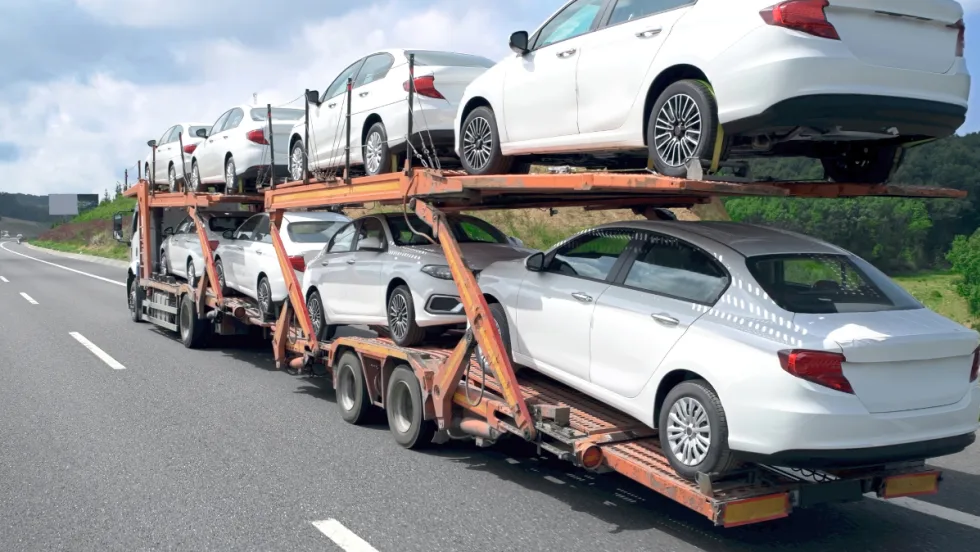
The Data-Driven Haul: 5 Ways AI is Leveling the Playing Field in Auto Transport
Large and small transport fleets are becoming more competitive as predictive analytics and real-time data inform the logistics decision chain.
Read More →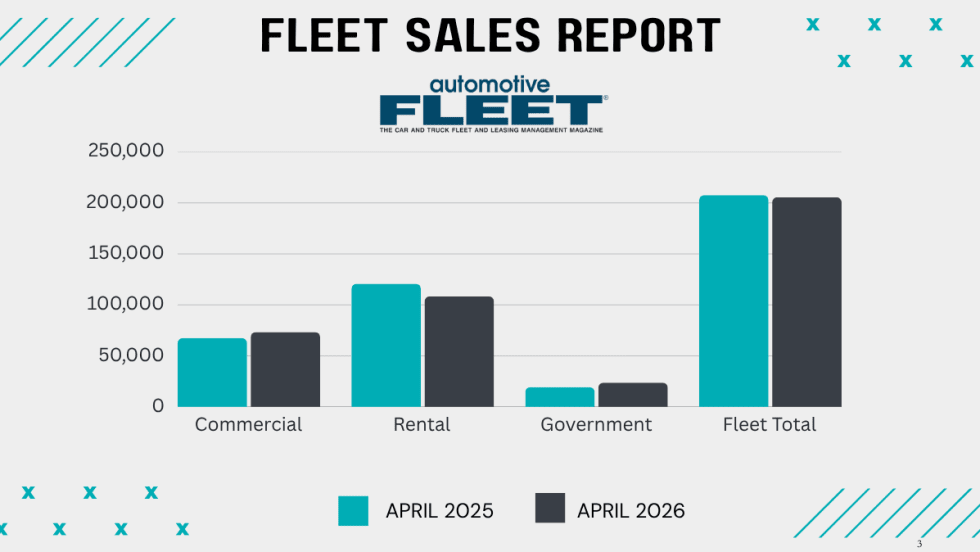
Commercial Fleet Sales Show Healthy Gains
So far, the fleet sector is outshining government and rental fleet sales this year as economic growth spurs more business investment.
Read More →
CAR 2026 Recap Part 2: Closing the Gap Between Data & Remarketing Value
The second half of CAR 2026 examined how fleets can translate lifecycle strategy, vehicle data, and market shifts into higher real-world results.
Read More →