Loading data...
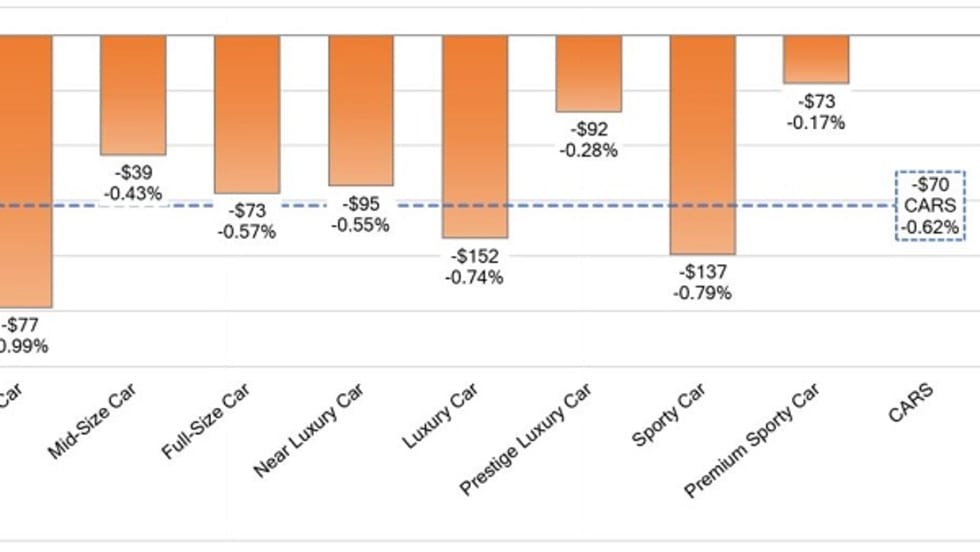
Volume-weighted, overall car and truck segments both experienced continued softening in values to round out the last full week of 2020, but are higher than seasonal averages of the previous three years.
Read More →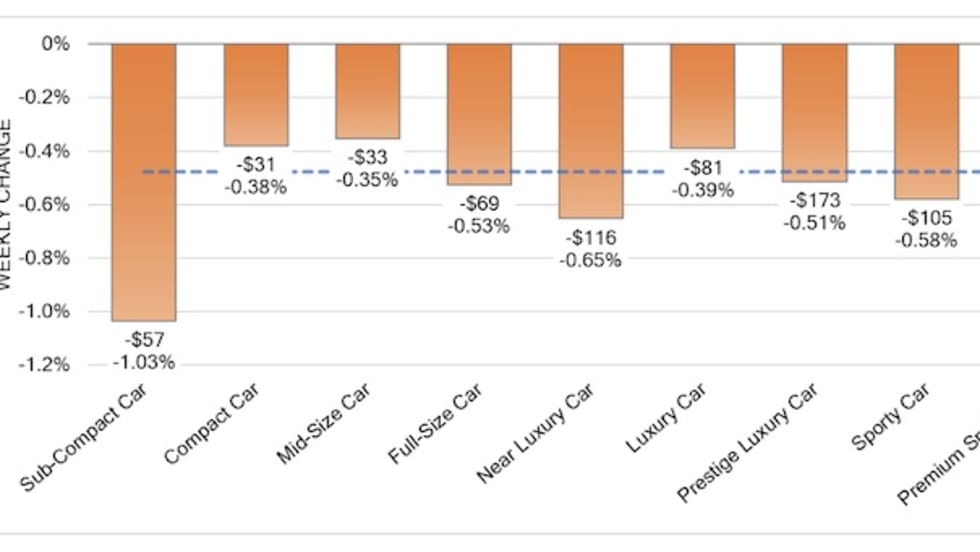
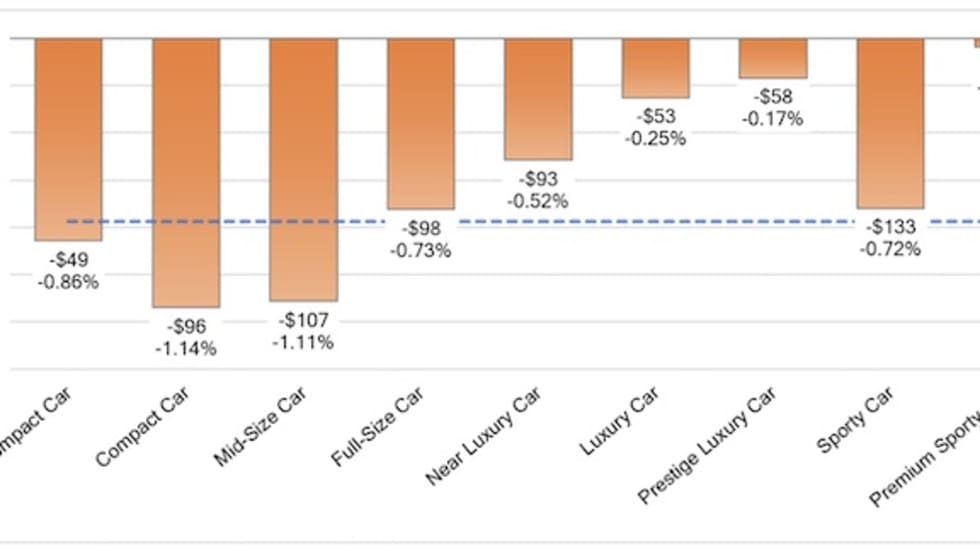
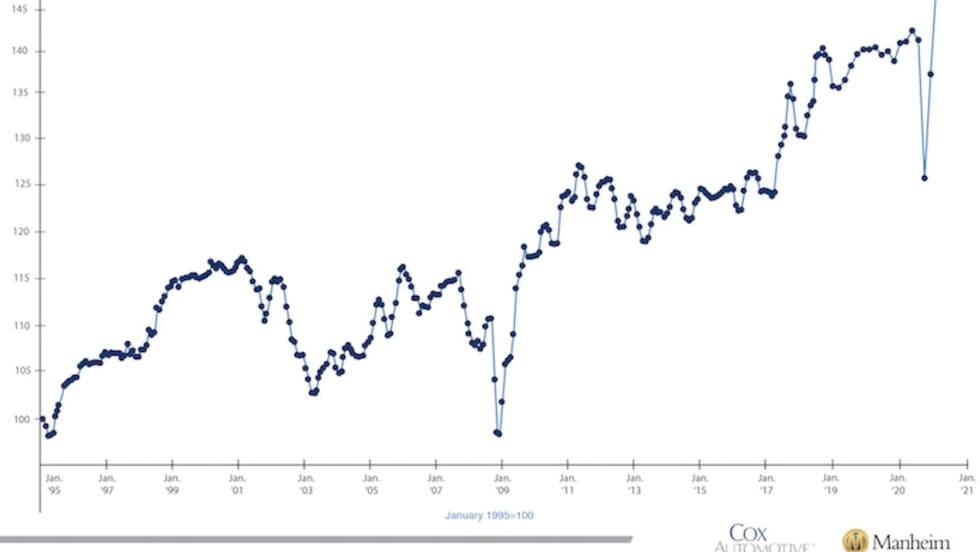
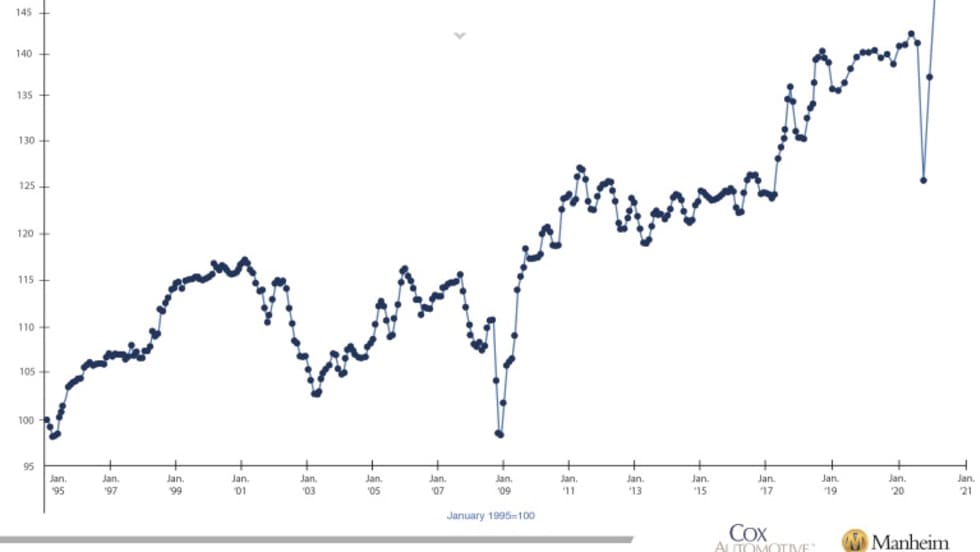

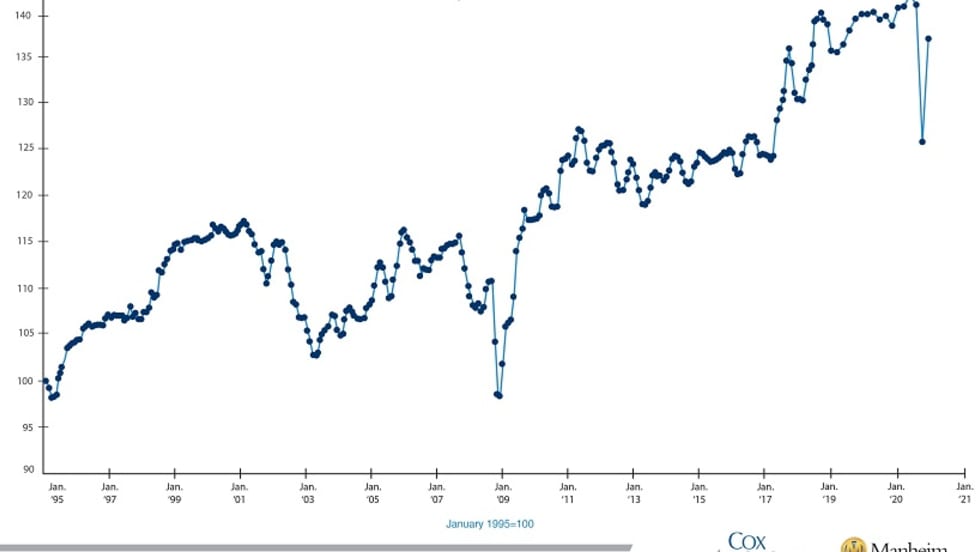
Volume-weighted, overall car and truck segments both experienced continued softening in values, decreasing by 0.38%. However, these overall values are slightly higher than seasonal norms of the last three years, which averaged around -0.75% between 2017 - 2019.
Read More →Volume-weighted, overall car and truck segments both experienced continued softening in values, with the overall market decreasing by 0.60% this past week.
Read More →Wholesale used vehicle prices (on a mix-, mileage-, and seasonally adjusted basis) increased 3.4% comparing the first 15 days of August to the full month of July, continuing record setting-performance for wholesale prices.
Read More →Wholesale used vehicle prices increased 5.84% month over month in July, bringing the Manheim Used Vehicle Value Index to 158 a 12.5% increase from a year ago and another record-high for the Index, which also occurred in June.
Read More →Wholesale used vehicle prices (on a mix-, mileage-, and seasonally adjusted basis) increased 4.4% comparing the first 15 days of July to the month of June, according to data published by Manheim.
Read More →Wholesale used vehicle prices increased 8.95% month over month in June, bringing the Manheim Used Vehicle Value Index to 149.3, a 6.3% increase from a year ago and a new record-high for the Index.
Read More →Wholesale used vehicle prices (on a mix-, mileage-, and seasonally adjusted basis) increased 6.6% comparing the first 15 days of June to the month of May.
Read More →Topics mentioned includes the state of the wholesale used-vehicle market; how an increase in employment will boost demand in the used-vehicle market; and sales activity at auctions starting to pick up.
Read More →Wholesale used vehicle prices increased 8.96% month-over-month in May 2020, bringing the Manheim Used Vehicle Value Index to 137%, which is 1.9% lower than it was at the same time in 2019.
Read More →