



Related News:EV Sales Growth Rate Slows as Tesla Stalls
How to Plan for Fleet Electrification Amid Challenges
Evaluating the workload, usage, and total cost of ownership of vehicles across a fleet helps managers understand where to incorporate EVs for the best results.
by Rachael Plant, Fleetio
May 30, 2024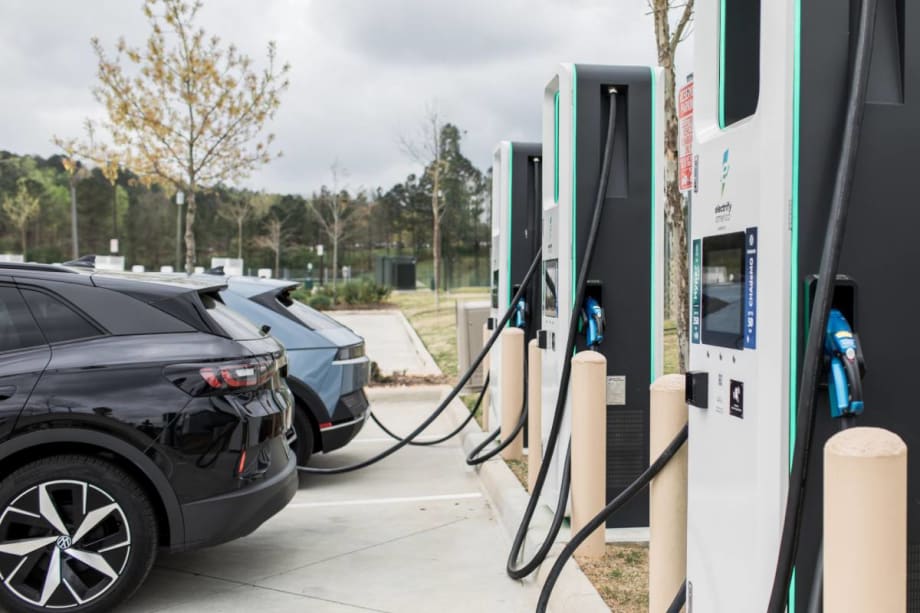
With EVs, fueling is a core concern. Slow charging is the ideal, as consistently quick charging degrades the battery faster, but quick charging can’t be avoided altogether.
Photo: Fleetio
5 min to read
A combination of regulatory actions and a general desire for sustainability drove electric vehicle (EV) sales to their highest point in 2023 — a trend that has not continued into 2024.
Major automotive manufacturers are moving back toward hybrid models, sales of which were up 45% in the first quarter of 2024, and Hyundai Motor is even reconsidering using “its planned $7.59 billion facility in Georgia” exclusively for manufacturing EVs.
Hertz, a rental car company, announced it was selling off 20,000 of its EVs back in January and has since announced the sale of 10,000 more, plus the stepping down of the CEO.
Additionally, the $3,750 and $7,500 tax credits meant to help offset the price barrier of EVs are being restricted. As of January, EVs using minerals or battery components made by Chinese, Russian, North Korean, or Iranian companies, will be ineligible for these credits, which puts the number of eligible EVs at 13, down from 24 in 2023.
That’s not to say the industry is down and out or even lacking in ideas to solve the current issues of sourcing battery materials. Current research into sodium-ion batteries using supercapacitors is expanding from Europe into the U.S., while interest has been growing in deep-sea mining.
“What we have alone from our resource in the Clarion Clipperton zone of the Pacific Ocean, is sufficient to bring the U.S. to independence in nickel, cobalt, and manganese,” said Craig Shesky, chief financial officer at The Metals Company.
Despite the hiccups, U.S. emissions regulations are barreling right along with the Environmental Protection Agency (EPA) having published its final rule for heavy-duty vehicles back on March 29, not even two weeks after it announced the final rule for light- and medium-duty vehicles.
As fleets look to move to electrification, strategic planning is pivotal. It’s important to procure assets that can meet or exceed current asset return on investment (ROI) and productivity without going into the red. Fleets can use historical data to help determine what EVs make the most sense for the fleet in terms of battery life and range, charge speed, and auxiliary power output for attachments.
Plan with Purpose
“It has four wheels and runs,” isn’t exactly the selling point it was back in the day. Procuring a vehicle is expensive, and when the vehicle doesn’t live up to the demands of the job, that expense can snowball. Evaluating the workload and usage of vehicles across the fleet helps fleet managers understand where to incorporate EVs for the best results.
Some things to consider include:
Battery Weight: EVs are considerably heavier than their ICE counterparts. This weight difference is important to consider for fleets that must adhere to specific GVWRs as the vehicle’s added weight must be offset by lightening the load. Additionally, the extra weight increases wear and tear on tires and brakes, so knowing the mileage and road conditions of specific set routes helps determine where to place an EV for the best ROI. For example, whereas ICE vehicles typically get better highway mileage, EVs are better for stop-and-go routes.
Charging Schedule: With EVs, fueling is a core concern. Slow charging is the ideal, as consistently quick charging degrades the battery faster, but quick charging can’t be avoided altogether. Answering the following questions can give you a better idea of how to schedule charging:
Are there peak charging hours in your service area and if so, what are they?
Will you be adding an on-site charging station?
Will you have restrictions on the amount of fast charging allowed?
For employees who take vehicles home, will they be compensated for charging there?
Storage: In colder climates — or during colder seasons — EV batteries are diminished, losing range, and increasing charge times. This means the chill equally affects charging and route schedules. If possible, parking EVs out of the elements will keep charge times like they are during warmer seasons. The range is a bit trickier to regulate, as using an EV’s heater draws on the battery supply.
Once you have a good idea of the best placement in the fleet for an EV, it’s time to start looking for the best one for the job, which can be a frustrating endeavor if you don’t know which metrics to compare or how to gain experience with it before the purchase. Consulting with industry peers who have deployed EVs in similar scenarios is a great way to get real-world insights, but something else you can do is follow the 10% rule — basically relying on OEM-provided specs minus 10% to build some flex room when calculating blindly.
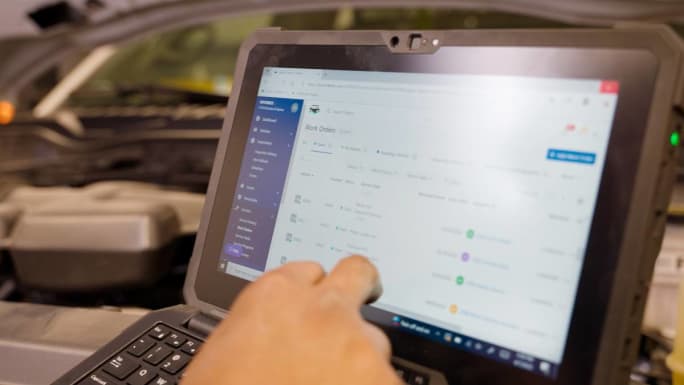
Fleet Management Software integrates with other fleet and business solutions, so data is consolidated on a single platform. Plus, it enables fleets to track and monitor key EV metrics, such as charging costs and duration, vehicle performance, and TCO, in real-time.
Photo: Fleetio
EV vs. ICE Comparative Cost Analysis
A comparative cost analysis is a great way to estimate cost and performance parity between a current vehicle and the EV that could replace it. When performing a comparative cost analysis, it’s important to consider the current vehicle’s total cost of ownership (TCO). That means capital, insurance, registration, fuel, maintenance and repair, and any other costs or fees the vehicle incurs.
If doing this manually or using data spread across several sources, it can be a bit time-consuming, but fleet solutions like fleet management software (FMS) simplify cost analysis and ensure clean data by automating data collection and aggregation.
FMS even integrates with other fleet and business solutions, so data is consolidated on a single platform. Plus, it enables fleets to track and monitor key EV metrics, such as charging costs and duration, vehicle performance, and TCO, in real-time.
When analyzing and comparing costs, pulling EV data can be a challenge, which is where input from industry peers running EVs comes in, as does the 10% rule. Fleets can create a dummy EV profile in FMS and populate it with manufacturer-provided details.
From there, add in charging costs for the area of operation and use insights gained from peers to adjust. This can provide a better idea of whether the EV in question is a good fit and can provide the same or better performance at the same or better TCO.
Originally posted on Charged Fleet
Subscribe to Our Newsletter
More Auctions

Copart to Acquire ACV in $1.9 Billion Deal
The acquisition would expand Copart beyond its traditional salvage business into dealer-to-dealer wholesale remarketing while adding ACV’s vehicle data, inspection, and valuation technology.
Read More →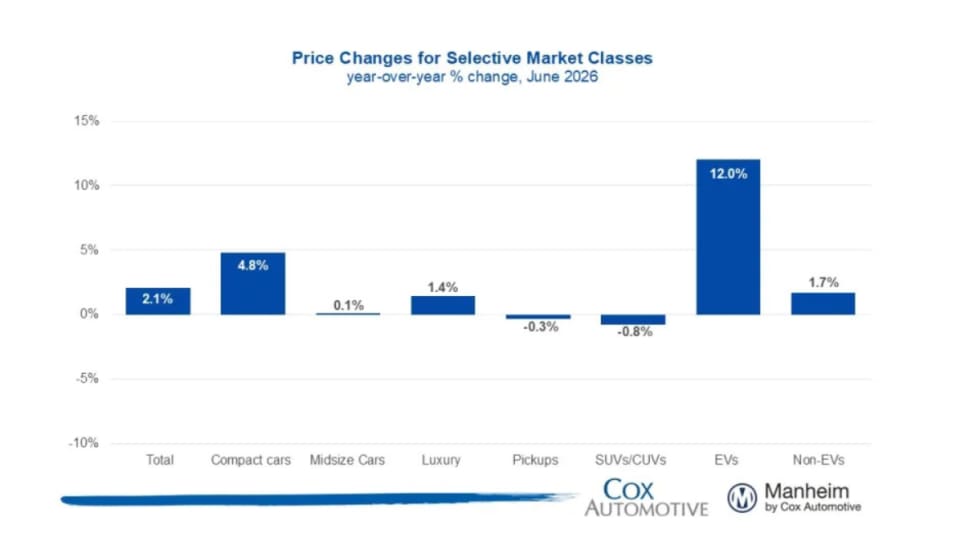
Manheim Index Shows Used-Vehicle Wholesale Prices Up 2.1% in June
The market is seeing stronger appreciation in older used vehicles this year, and the most affordable segments have been among the year’s best performers.
Read More →
Stop Remarketing Electric Vehicles Like Gas Cars
The advantages and attributes of electric vehicles are upending the traditional remarketing cycle, requiring fleet sellers to rely on new factors and approaches detailed below.
Read More →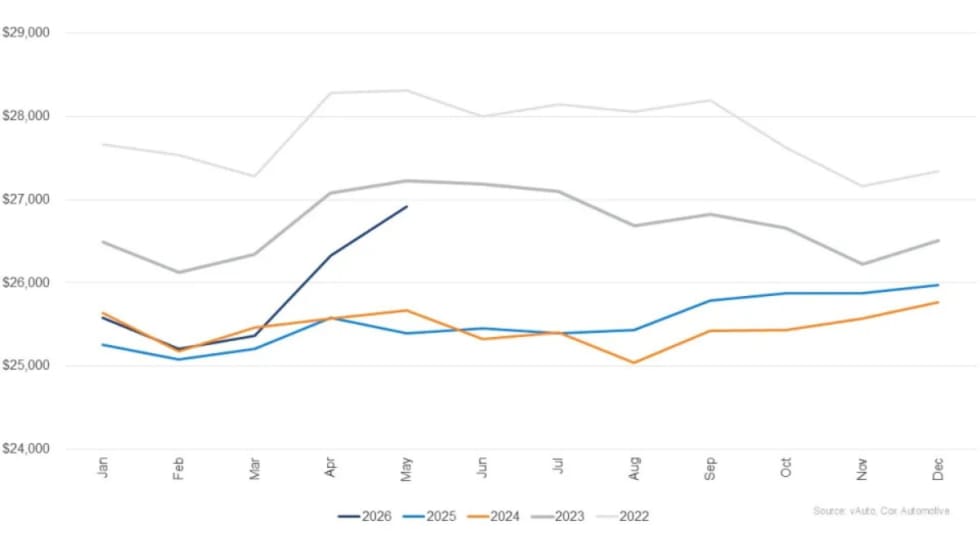
Used Vehicle Prices Climb Higher As Sales Pace Slows
The higher prices at used retail reflect strong wholesale values earlier in the spring, particularly for older, more affordable vehicles.
Read More →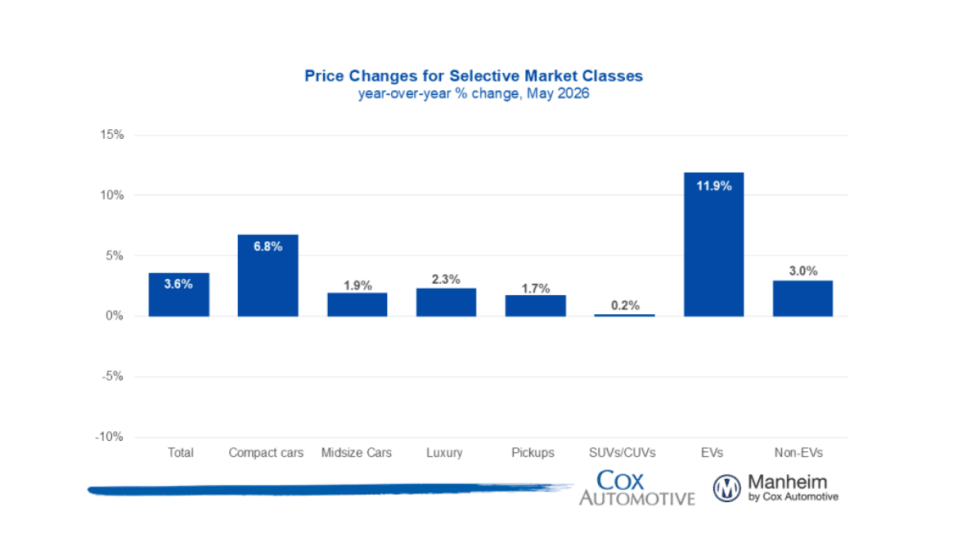
Wholesale Used Vehicle Market Sustains Moderate Rise In Values, Prices
Trends continue to normalize after a strong start to the year, as consumers contend with higher gas prices in the coming summer months.
Read More →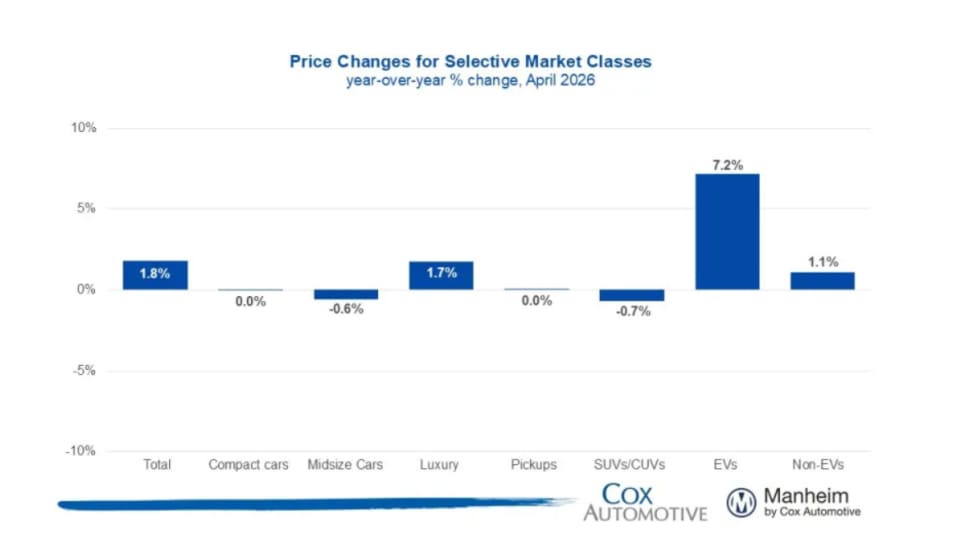
Wholesale Used Vehicle Prices Slightly Up In April
The Iranian conflict and rising gas prices inject much uncertainty into the future wholesale used vehicle markets, as higher gas prices soak up spendable income from vehicle buyers.
Read More →
CAR2026 in Two Words: Velocity, Value (Part 1)
The 2026 Conference of Automotive Remarketing convened with a mandate to involve a new constituency — fleet managers — and an updated mission to demonstrate unrealized value in de-fleeted vehicles.
Read More →
CAR 2026 Session to Uncover the Missing Data That's Costing Fleets at Disposal
Work trucks lose value at remarketing, not because they aren't worth more, but because the data to prove it rarely makes it to the auction.
Read More →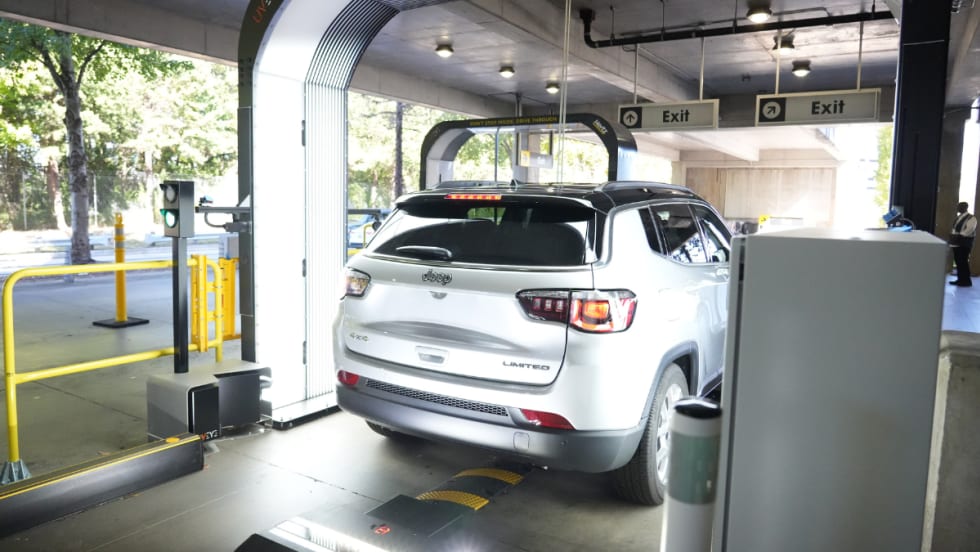
TSD Mobility, UVeye Partner On Automated Vehicle Inspections
The enhanced technology allows rental car operations, dealerships, and auctions to compare a vehicle’s condition at pickup and drop-off within the same rental or loaner record.
Read More →
Auction Sales Kick Off 2026 In High Step
Winter snowstorms and frosty freeze-overs could not slow down the hot vehicle auction action nationwide in January.
Read More →