



Related News:Ship.Cars Offers Tracking Feature
Auto Logistics in 2025: Carrier Pay, Driver Shortages, and Emerging Technologies
Carriers that can adapt with new strategies and invest in emerging technology will be able to position themselves for success.
by Vlad Kadurin, Ship.Cars
May 9, 2025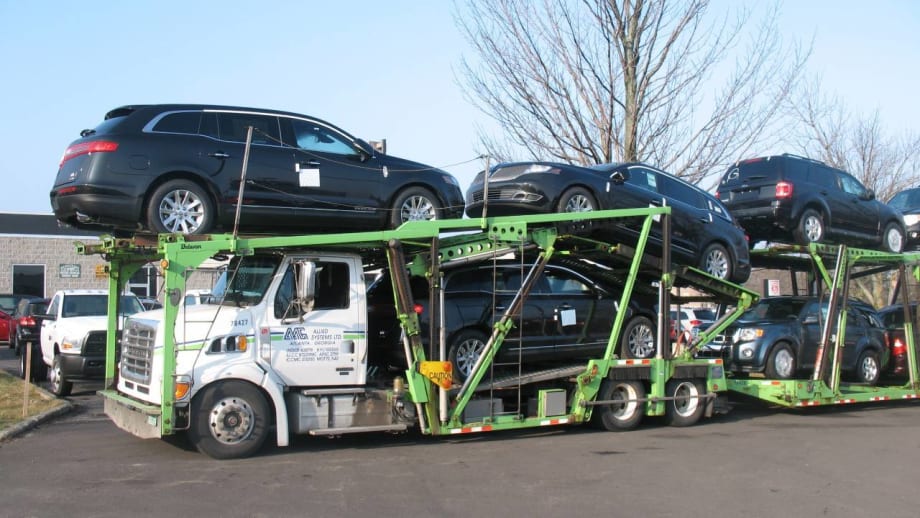
With inventory levels expected to remain stable, there will be a steady demand for carriers to transport used cars, EVs, and hybrids to/from dealership lots and auctions.
Photo: Towne Livery, Orchard Park, N.Y.
5 min to read
The last few years have been a time of change for the auto logistics industry. While the economy continued to fluctuate, dealer inventory levels managed to stabilize.
Meanwhile, customer purchasing habits have shifted, creating a greater demand for used vehicles over new ones.
To keep up with these changes and ensure competitive pay for carriers, auto logistics providers are embracing new strategies and exploring emerging technologies.
2025 Carrier Pay Cycle: A Return to Normal Patterns
After a period of low pay due to supply chain difficulties and economic fluctuations, carrier pay rates slowly increased as demand stabilized and the market regained balance in 2024.
Our internal carrier pay report shows the percentage change in carrier pay year over year. The trend line indicates the industry is entering a deflationary period, which bodes well for carrier pay.
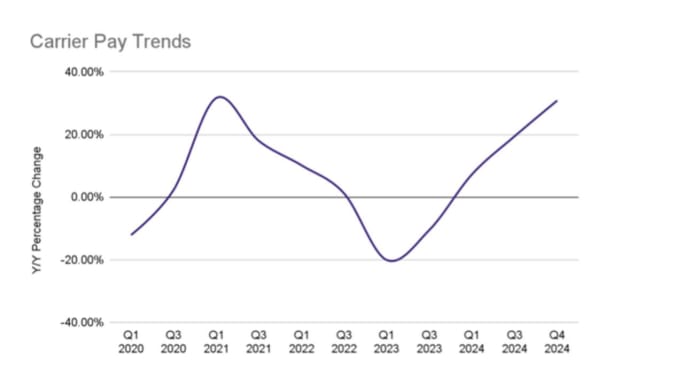
Carrier pay rates slowly increased as demand stabilized and the market regained balance in 2024.
Graphic: Ship.Cars
This trend is expected to continue as increased demand, operational cost pressures, and industry consolidation increase pay rates. Based on the current economic factors and consumer buying habits, increased carrier rates will continue to rise through the coming year and likely peak by late 2025 or early 2026.
The following chart shows the year-over-year carrier pay changes with an overlay of our forecasts for 2024 and 2025.
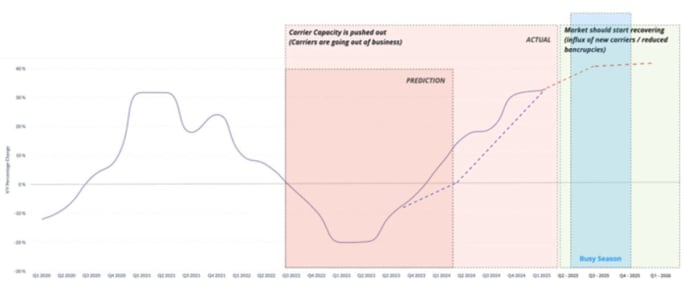
Increased demand, operational cost pressures, and industry consolidation push pay rates higher.
Graphic: Ship.Cars
Shifting Customer Demand and Economic Factors
New consumer buying habits and stable dealership inventories have benefited the auto industry, including carriers. With consumer demand shifting from new to used vehicles, auto transport remains an essential service in the industry. Furthermore, a growing interest in electric and hybrid vehicles presents new opportunities for carriers to expand their services.
Strategic Fleet Adjustments for EV Transportation
Globally, an estimated 85 million EVs are expected to be on the road in 2025, representing a 33% increase from 2024. EV production will drive new logistics needs, helping carriers that have the skills and equipment to handle those vehicles. With their heavier battery weight and unique safety requirements, electric and hybrid vehicles need special load configurations and handling.
Because EVs and hybrid vehicles are heavier than standard vehicles, carriers may need to limit their load capacity. If transporting smaller loads, EV shippers must book more shipments to move their inventories. We anticipate that carriers will continue updating their fleets to accommodate EV requirements, positioning their operations to meet the growing demand from auto manufacturers and dealerships.
Additionally, auto manufacturers' heavy investment in EVs has shifted some of their production efforts to hybrid vehicles. Hybrid vehicles address consumer concerns about limited charging infrastructure in rural areas and have seen a steady increase in sales alongside their fully electric counterparts. An uptick in hybrid vehicle production and sales contributes to the need for specialized carriers capable of transporting hybrid and electric vehicles.
Carriers Needed to Meet Growing Demand
The auto logistics industry still faces a driver shortage. The latest report from the American Trucking Association (ATA) showed the industry was short about 60,000 drivers in 2023 (estimates pending for 2024). While the number is down from 78,000 in 2022 and 81,000 in 2021, a driver shortage will continue to be a problem in the coming year as demand for their services increases.
This shortage has made carriers focus on retaining drivers. Carriers can attract more drivers with competitive pay, enhanced safety measures, and improved work-life balance. Logistics providers and carrier companies are exploring and investing in new technologies to implement these strategies and retain drivers.
Leveraging Technology to Boost Performance and Retain Drivers
One key development area is AI-powered solutions for vehicle inspections, predictive maintenance, and route optimization. With intelligent, automated technology handling these operations, logistics providers will be able to reduce costs and maximize fleet uptime, ultimately leading to better carrier pay.
AI is also being used to boost performance, and the carrier pay has to do with fuel prices. The cost of diesel fuel is a major economic factor affecting carrier pay. When fuel prices rise, carriers may face a reduction in profits and pay. To address fluctuating diesel prices in 2025, carriers are adopting dynamic pricing models (powered by AI and smart technology) to account for fuel costs and protect profitability — a strategy that could help stabilize pay for carriers even when fuel prices shift.
Our company uses an internal, automated pricing insights tool. This is an example of how automated technologies and AI tools can help manage operations and secure competitive wages for carriers.
Looking Ahead: 2025 and Beyond
Our annual carrier sentiment survey shows a very positive outlook for the year ahead, consistent with our predictions. Specifically, the survey indicates positive expectations for carrier pay rates and available loads when comparing Q1 2025 to Q4 2024 and 2025 to 2024. It also indicates expectations for fleet changes and technology investment in 2025.
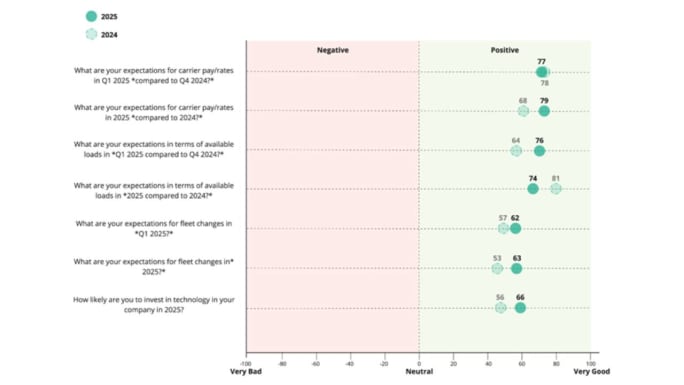
The automotive industry will navigate traditional challenges while exploiting new growth opportunities.
Graphic: Ship.Cars
With inventory levels expected to remain stable, there will be a steady demand for carriers to transport used cars, EVs, and hybrids to/from dealership lots and auctions. The driver shortage means hiring drivers will remain a top priority for carriers. This will encourage adopting and integrating new technology and software platforms to help improve operations and meet customer demand.
These new technologies include AI-powered solutions to help with vehicle inspections, route optimization, and maintenance, reducing costs and keeping fleets running smoothly. Additionally, AI-powered pricing models will assist carriers in stabilizing pay while fuel costs fluctuate.
We expect the automotive industry will navigate traditional challenges while taking advantage of new growth opportunities. Carriers that can adapt with new strategies and invest in emerging tech will be able to position themselves for success.
Originally posted on Automotive Fleet
Subscribe to Our Newsletter
More Auctions

Copart to Acquire ACV in $1.9 Billion Deal
The acquisition would expand Copart beyond its traditional salvage business into dealer-to-dealer wholesale remarketing while adding ACV’s vehicle data, inspection, and valuation technology.
Read More →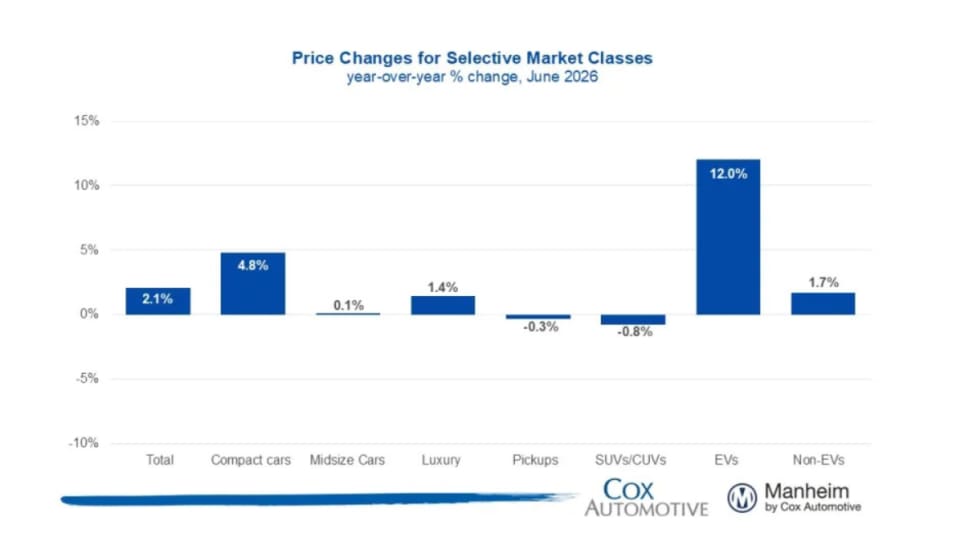
Manheim Index Shows Used-Vehicle Wholesale Prices Up 2.1% in June
The market is seeing stronger appreciation in older used vehicles this year, and the most affordable segments have been among the year’s best performers.
Read More →
Stop Remarketing Electric Vehicles Like Gas Cars
The advantages and attributes of electric vehicles are upending the traditional remarketing cycle, requiring fleet sellers to rely on new factors and approaches detailed below.
Read More →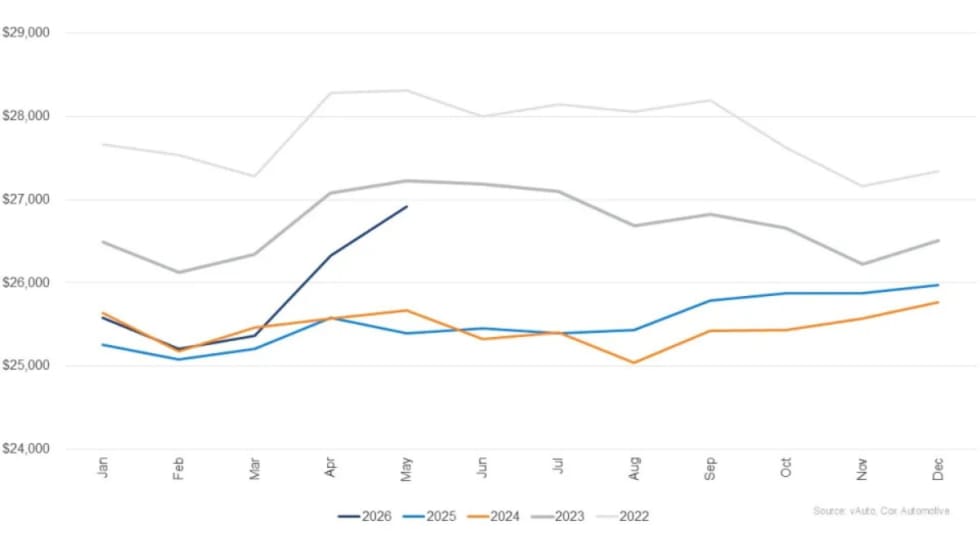
Used Vehicle Prices Climb Higher As Sales Pace Slows
The higher prices at used retail reflect strong wholesale values earlier in the spring, particularly for older, more affordable vehicles.
Read More →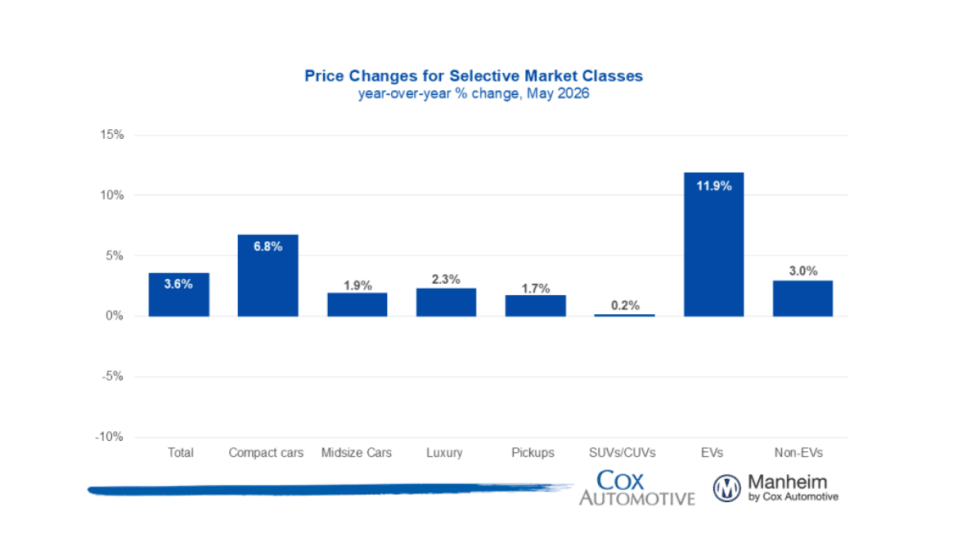
Wholesale Used Vehicle Market Sustains Moderate Rise In Values, Prices
Trends continue to normalize after a strong start to the year, as consumers contend with higher gas prices in the coming summer months.
Read More →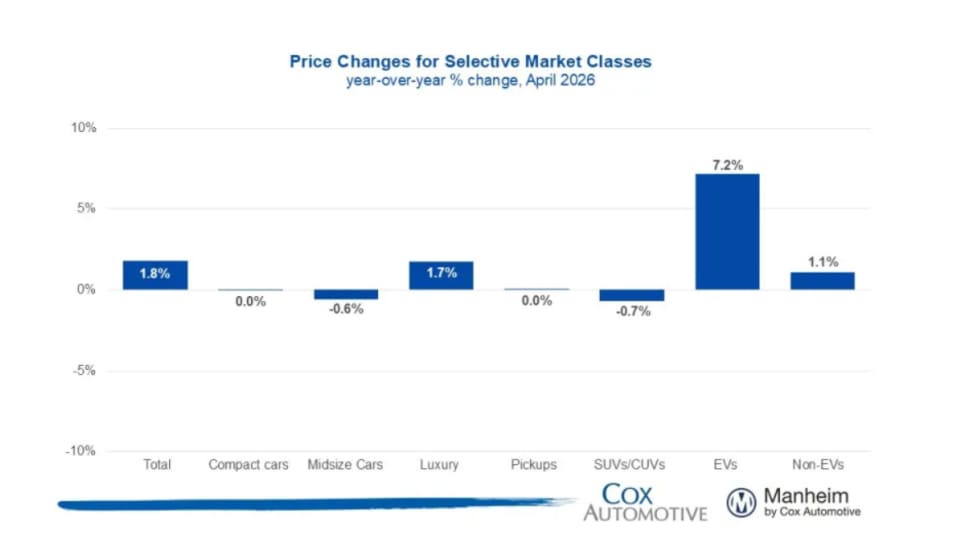
Wholesale Used Vehicle Prices Slightly Up In April
The Iranian conflict and rising gas prices inject much uncertainty into the future wholesale used vehicle markets, as higher gas prices soak up spendable income from vehicle buyers.
Read More →
CAR2026 in Two Words: Velocity, Value (Part 1)
The 2026 Conference of Automotive Remarketing convened with a mandate to involve a new constituency — fleet managers — and an updated mission to demonstrate unrealized value in de-fleeted vehicles.
Read More →
CAR 2026 Session to Uncover the Missing Data That's Costing Fleets at Disposal
Work trucks lose value at remarketing, not because they aren't worth more, but because the data to prove it rarely makes it to the auction.
Read More →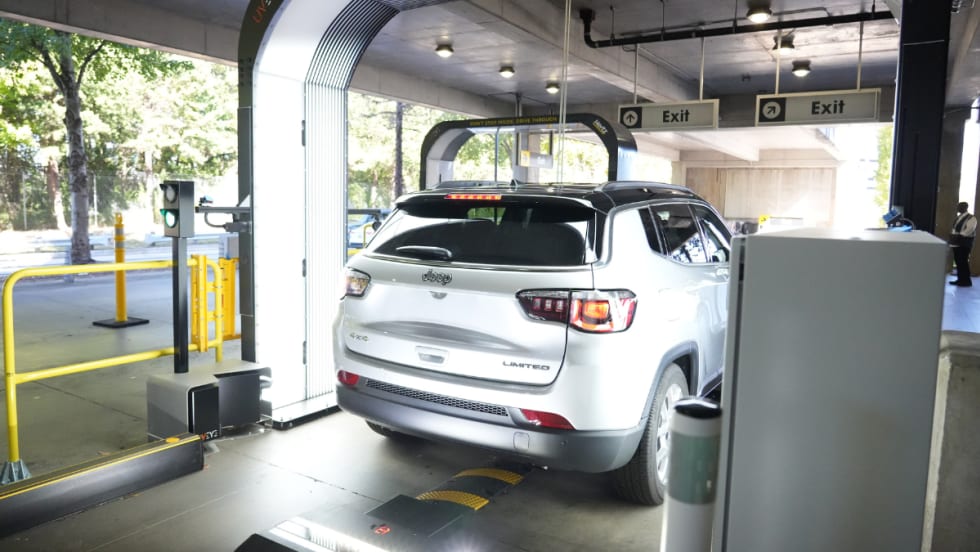
TSD Mobility, UVeye Partner On Automated Vehicle Inspections
The enhanced technology allows rental car operations, dealerships, and auctions to compare a vehicle’s condition at pickup and drop-off within the same rental or loaner record.
Read More →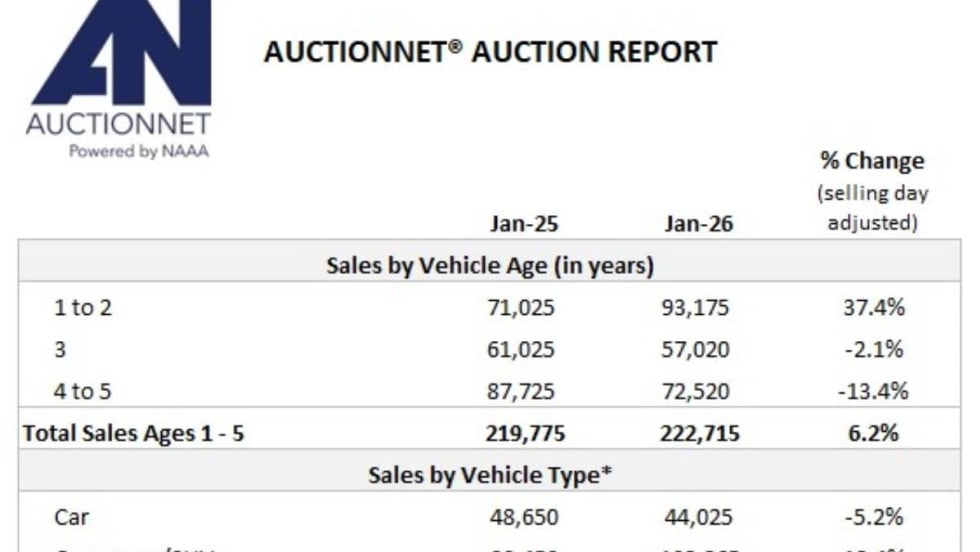
Auction Sales Kick Off 2026 In High Step
Winter snowstorms and frosty freeze-overs could not slow down the hot vehicle auction action nationwide in January.
Read More →