



Used Risk Car Crisis a Challenge for Rental Industry in 2003
Poor dealer demand and low bid prices are backing up the volume of car rental units in auction lanes. Average risk car sale prices were down almost 15 percent in December, and could remain low for months.
Fleet management is a good news/bad news scenario in the car rental industry today. The manufacturer programs are very favorable to car rental companies, but the used-car market is a major negative. With zero percent financing and rebates on the new car retail side, nearly-new and used rental cars are having a rough time in the auction lanes. Industry remarketers say that market conditions appear to be improving slightly, but there’s not a lot of positives on the horizon. In December, risk car average prices were down almost 15 percent from December 2001, according to ADESA data.
Most large car rental companies don’t have to worry a great deal about the soft used-car market, though they all have some risk units, and are taking residual losses with this part of the fleet. Since most car rental fleet purchases are buybacks, this large volume of units is starting to get backed up in the auction lanes as many of them go “no sale” due to poor dealer demand and low prices being bid for these low-mileage units. This glut of rental cars, and a concurrent glut of off-lease cars, will likely make the remarketing situation difficult in the next few months.
Enterprise Rent-A-Car, with its U.S. fleet of nearly 500,000 units, is particularly vulnerable to the used-car market since most of its fleet is risk units. Enterprise says it is not holding cars longer to ride out the bad market. The company is just doing its best to manage a difficult situation. Enterprise has a larger used-car remarketing operation than other car rental companies, since the company is so heavily invested in risk units, and will utilize all its contacts and resources to manage this residual value crisis. The good news for Enterprise is that on the new car purchase side, the company gets attractive fleet discounts, made even more attractive in the past year, which can partially offset back-end losses.
For car rental companies in the market to buy new vehicles, times couldn’t be better. The Big 3 manufacturers are offering good programs on the repurchase and risk sides, and availability and model mix is better than it has been since the early 1990s. This mainly applies to the Top 8 car rental companies. Independents and franchises still have trouble getting cars from The Big 3 and must look more to the import manufacturers, which has been the case for nearly 10 years.
Ford Motor Co. has lowered monthly depreciation rates on several of its models, making Ford more competitive with the other majors, which is not usually the case. The lower depreciation schedules, plentiful upfront money, and attractive model mix have put a good deal of pressure this fall on the import manufacturers, some of which have revised their programs or are planning to offer lucrative spring programs to catch up on lost volume this fall. Ford’s December 2002 sales experienced an uptick in car rental industry volume, driven by the attractive incentives and slowly improving rental industry conditions.
Unfortunately for the auto manufacturers, catching up on lost volume in the car rental industry probably won’t be happening any time soon. Car rental companies, especially the majors, are still operating fleets at about 10 percent below normal levels for this time of year; ANC Rental reports that its fleet level is down about 25 percent. This means that fall ordering was softer than usual. Until conditions in the overall travel industry and economy get better (and when that will happen is open to much debate), car rental companies won’t be in any position to ramp up their new-vehicle ordering.
Car rental companies, both large and small, are having to accept the fact that to be profitable right now, fleets must remain tight. It appears that the industry may have had an over-fleeting situation in several key markets in late summer 2002, when rental rates dipped, according to the Market Scan Rate Index. Car rental companies will need to carefully manage the fleet versus rental demand equation in this difficult operating environment. It may prove attractive to obtain more low-cost new cars to gain market share and volume, but the rental rate situation is still very sensitive to supply/demand imbalances.
Jon LeSage is vice president and director of research for Abrams Travel Data Services, a research company based in Long Beach, CA.
Risk Car Average Prices — 4th Quarter 2002 vs. 2001
Average Prices2002 versus 2001
Percent Change
20022001
Oct. Nov. Dec. Oct. Nov. Dec.Oct. Nov. Dec.
$9,487$9,209$8,611$10,221$9,718$10,094-7.2%-5.2%-14.7%
Source: ADESA Corp.
More Fleet
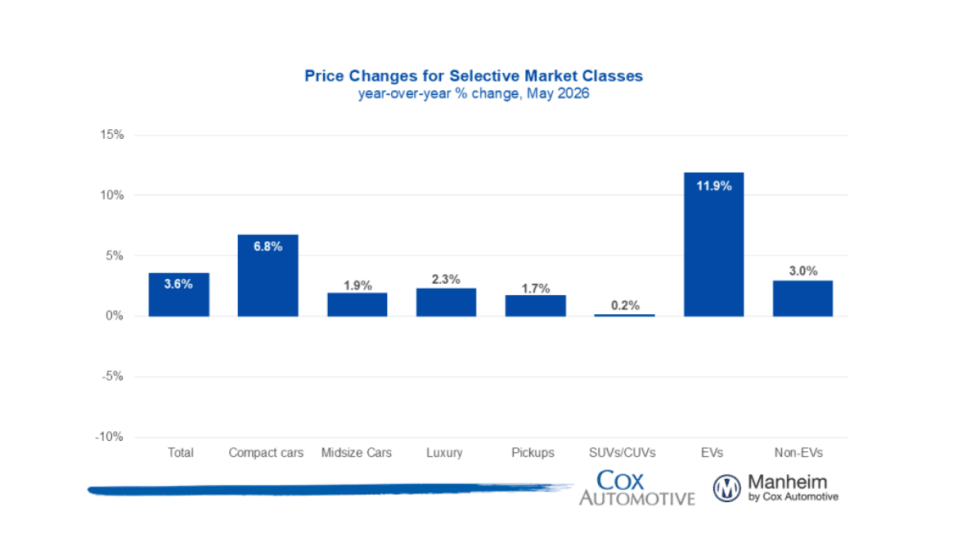
Wholesale Used Vehicle Market Sustains Moderate Rise In Values, Prices
Trends continue to normalize after a strong start to the year, as consumers contend with higher gas prices in the coming summer months.
Read More →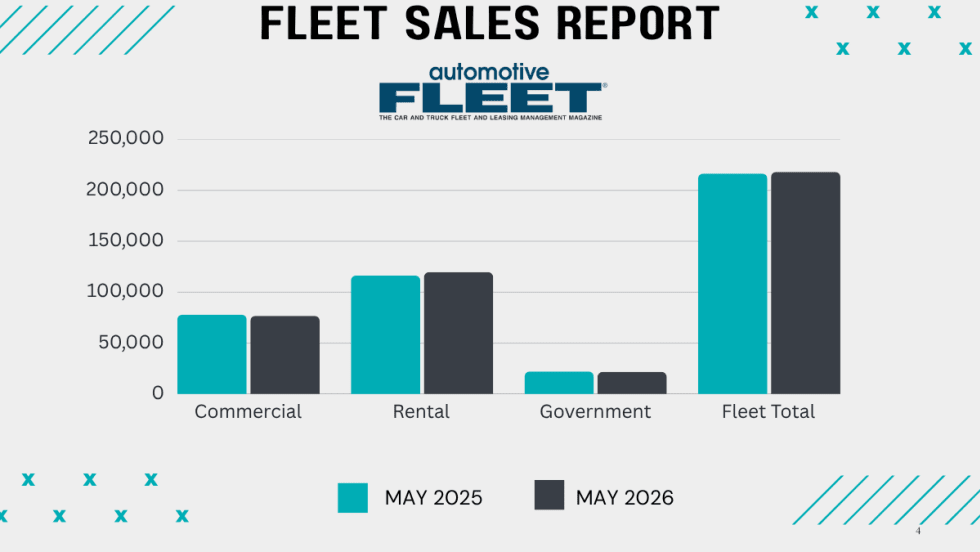
Commercial Fleet Sales Still Lead Sectors Despite May Mini Dip
The U.S. economy's continued growth and positive business investment are creating a favorable environment for fleet vehicle demand.
Read More →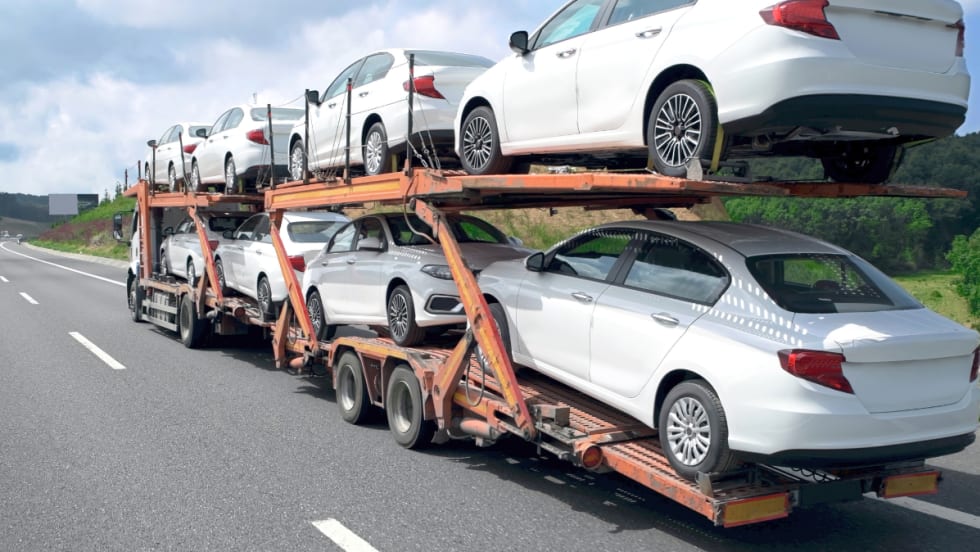
The Data-Driven Haul: 5 Ways AI is Leveling the Playing Field in Auto Transport
Large and small transport fleets are becoming more competitive as predictive analytics and real-time data inform the logistics decision chain.
Read More →
How to Speak the Same Language on Fleet Safety
Drivers, supervisors, and data often speak different safety “languages.” Getting on the same page will drive better results.
Read More →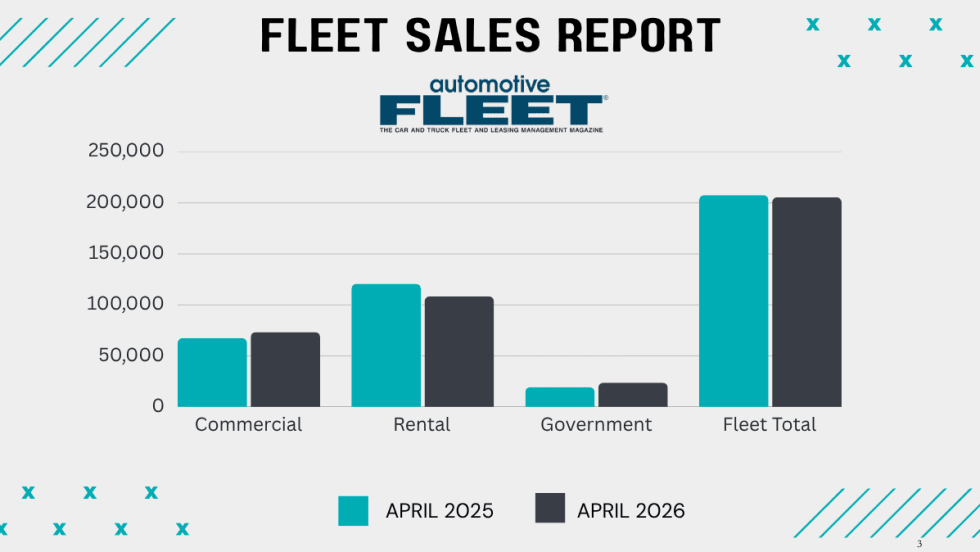
Commercial Fleet Sales Show Healthy Gains
So far, the fleet sector is outshining government and rental fleet sales this year as economic growth spurs more business investment.
Read More →
The Predictive Pivot: How AI and Data Are Redefining Auto Logistics in 2026
AI is no longer a luxury but the baseline for profitability in 2026. Auto haulers that adopt these tools now will quickly outpace those using manual workflows and taking a wait-and-see approach.
Read More →
The Predictive Pivot: How AI and Data Are Redefining Auto Logistics in 2026
AI is no longer a luxury but the baseline for profitability in 2026. Auto haulers that adopt these tools now will quickly outpace those that use manual workflows or take a wait-and-see approach.
Read More →
CAR 2026 Recap Part 2: Closing the Gap Between Data & Remarketing Value
The second half of CAR 2026 examined how fleets can translate lifecycle strategy, vehicle data, and market shifts into higher real-world results.
Read More →
CAR2026 in Two Words: Velocity, Value (Part 1)
The 2026 Conference of Automotive Remarketing convened with a mandate to involve a new constituency — fleet managers — and an updated mission to demonstrate unrealized value in de-fleeted vehicles.
Read More →
Launch of Fleet Remarketing Association Signals New Era for Vehicle Lifecycle Value and Data Stewardship
The Association, dedicated to advancing the remarketing phase of the vehicle lifecycle, held its kick-off meeting on April 16 at the 2026 Conference of Automotive Remarketing (CAR) in Cleveland.
Read More →