



The Importance of Performing Vehicle Inspections
There is a need to establish uniform, national standards for vehicle inspections. However, the different and specific needs of major consignors make it difficult for one format to be accepted as an industry standard.
The following article is based on a Roundtable Seminar conducted by the International Automotive Remarketers Alliance (IARA) on July 13, 2002 in Denver. The facilitators of the Roundtable discussion were Dick Dennis, president of RM Dennis & Associates; and Pierre Pons, president of TPC Management.
There are many important reasons why rental, retail leasing, and fleet leasing companies perform inspections for their out-of-service vehicles and repossessions.
Determining accountability for damage (where it occurs and who is responsible).
Evaluating equipment/condition.
Assessing excess wear and tear and billing the lessee accordingly.
Facilitating remarketing decisions (pricing, reconditioning, and sales channel).
Determining insurance/liability.
Instilling confidence in the purchaser of the used vehicle.
The use of Internet sales is another reason, with a greater need for more comprehensive, accurate inspection reports, including digital photographs. This inspection process is being used and supported by many auctions as well as independent Web-based remarketing companies.
While these reasons apply, in whole or in part, to the various market segments such as rental, retail leasing, and fleet leasing companies, it is agreed that the inspection process and subsequent activities are needed to result in a net/net gain to the company. This requires that data be collected and measured to track cost/benefit performance for the entire remarketing process.
Who’s on the Hook Financially?
In discussions with rental, retail leasing, and fleet leasing companies, they agree that there is no one specific entity that is responsible financially. It may be the transporter, auction, client, lessee, etc. The key here is the contractual agreement among relevant parties, spelling out financial and other applicable responsibilities.
Also, it is agreed that the relationship established among the parties is important in assessing responsibility. A key is the “spirit of the agreement” and the use of good common sense to resolve disputes. It is recognized that the better the inspection, the easier it is to resolve these disputes.
How are Inspections Measured?
Inspections can be done by a variety of sources, including auctions at their sites or independent (non-auction affiliated) companies in the field (customer’s home, business, dealership, marshaling site, ports, or auction locations). Performance of all these can be measured by technical accuracy (obtaining all the data required by the customer and accurately recording it in the designated format).
In addition, field inspections have two other performance measurement criteria: completion rate and cycle time. Completion rate is the percentage of confirmed inspection orders (from the client) that are in fact completed with the results reported back to the client. Cycle time is the number of business days to complete the order after the need for an inspection is confirmed.
In general, the group of rental, retail leasing, and fleet leasing companies acknowledged the need to measure inspection performance. However, there appears to be no measurable, objective assessment of inspections, either at auctions or in the field, by the market on a standardized, national basis. Thus, standardization seems to be the key.
How are Inspections Written?
The group of rental, retail leasing, and fleet leasing companies participating in the Roundtable Seminar mentioned the ambiguity of the terms “hard” or “light” since there are no specific definitions to what either of these mean, other than an anecdotal understanding. This particular inspection policy is determined by the client (manufacturer, captive, bank, etc.) depending on what their objectives are regarding their customer (lessee, fleet, etc.). The discussion consensus is that it varies tremendously, by design. Some inspections are “cursory” at best (repo agent inspection, for example) and others are very comprehensive (interior, exterior, mechanical, road test, etc. for certified programs). The key is what the customer wants and requires and is willing to pay for, based upon expected benefits from the inspection ordered.
Who Does it Best?
Based upon the fact that there is no standardized measurement process and established criteria used by the overall market, it cannot be determined “who does it best.” The group recognized that inspection quality varies “all over the lot” and that some auctions do an excellent job, while others do not. Many large consignors measure various aspects of auction performance (Ford, GM, DaimlerChrysler, Bank One, GECAL, etc.) but they all use different measurement tools and criteria. Accordingly, while inspections are measured by some of these consignors, they do not use standardized criteria and therefore, these are not useful in comparing relative auction inspection performance.
Comments were made by Roundtable participants about various third-party companies (ITS, VIS, etc.) performing inspections either very well or very poorly, but there was no objective, measurable data provided to validate these statements. It was recognized that a need exists for such data and, again, standardization of inspection process and reporting.
The Need for Standards?
The group recognized the need to establish uniform, consistent, national standards for inspections and measurement of inspections. They also recognized that, given the different needs of specific major consignors (Ford, GM, etc.), it is unlikely that one format would become standard for the market. However, it is still possible to establish measurement criteria for accuracy, completion rate, and cycle time to allow for meaningful performance comparisons among all of the inspection service providers in the industry.
More Operations
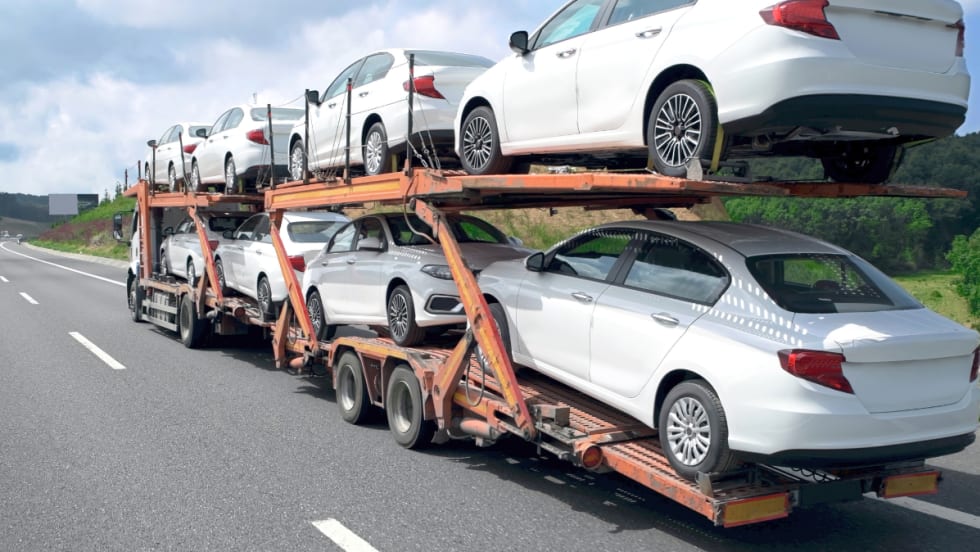
The Data-Driven Haul: 5 Ways AI is Leveling the Playing Field in Auto Transport
Large and small transport fleets are becoming more competitive as predictive analytics and real-time data inform the logistics decision chain.
Read More →
How to Speak the Same Language on Fleet Safety
Drivers, supervisors, and data often speak different safety “languages.” Getting on the same page will drive better results.
Read More →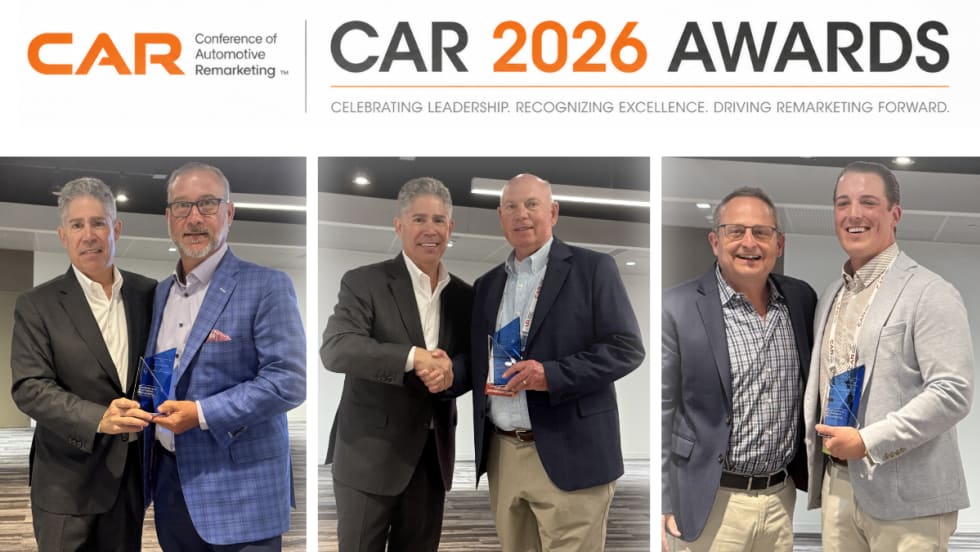
2026 CAR Awards Celebrate Industry Excellence
CAR’s annual Fleet Remarketing Awards opened a reimagined 2026 conference designed to bridge the worlds of fleet management and automotive remarketing.
Read More →
The Predictive Pivot: How AI and Data Are Redefining Auto Logistics in 2026
AI is no longer a luxury but the baseline for profitability in 2026. Auto haulers that adopt these tools now will quickly outpace those using manual workflows and taking a wait-and-see approach.
Read More →
The Predictive Pivot: How AI and Data Are Redefining Auto Logistics in 2026
AI is no longer a luxury but the baseline for profitability in 2026. Auto haulers that adopt these tools now will quickly outpace those that use manual workflows or take a wait-and-see approach.
Read More →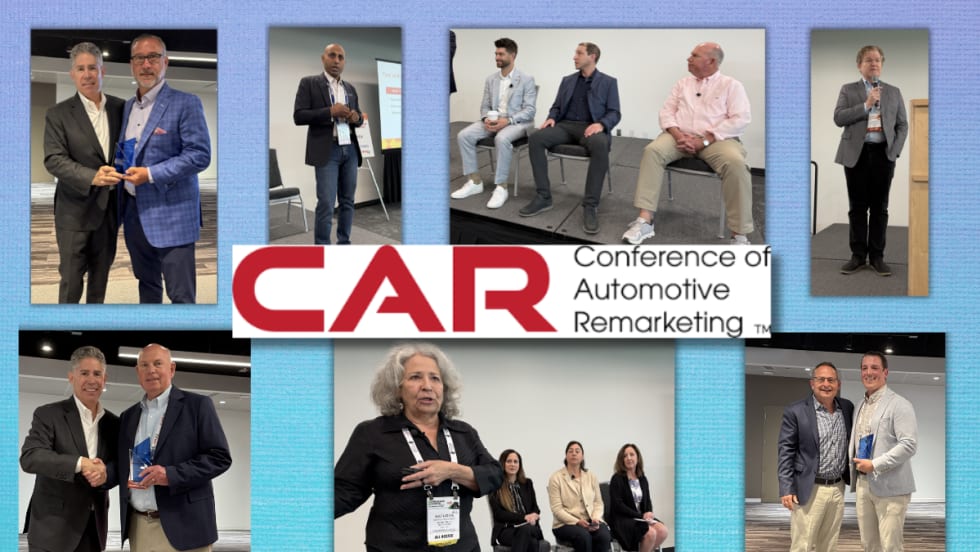
CAR 2026 Recap Part 2: Closing the Gap Between Data & Remarketing Value
The second half of CAR 2026 examined how fleets can translate lifecycle strategy, vehicle data, and market shifts into higher real-world results.
Read More →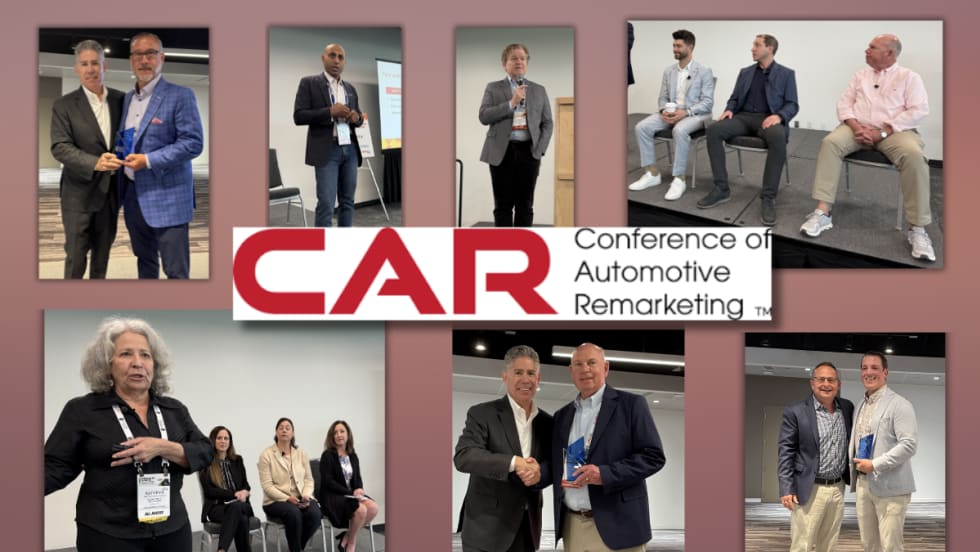
CAR2026 in Two Words: Velocity, Value (Part 1)
The 2026 Conference of Automotive Remarketing convened with a mandate to involve a new constituency — fleet managers — and an updated mission to demonstrate unrealized value in de-fleeted vehicles.
Read More →
CAR 2026: Get the Wall Street Update on the Key Players in Remarketing
From a Wall Street analyst's take on remarketing's key players to whether fleets need their own version of Carfax, CAR 2026's afternoon roundtables will answer key operational and industry questions.
Read More →
CAR 2026 Session to Uncover the Missing Data That's Costing Fleets at Disposal
Work trucks lose value at remarketing, not because they aren't worth more, but because the data to prove it rarely makes it to the auction.
Read More →
TSD Mobility, UVeye Partner On Automated Vehicle Inspections
The enhanced technology allows rental car operations, dealerships, and auctions to compare a vehicle’s condition at pickup and drop-off within the same rental or loaner record.
Read More →