



Used Vehicle Retention Weakens in December: Black Book
An index that tracks wholesale used vehicle values fell in December for the first time in four months at a time when the used vehicle market typically shows some weakness. It also reinforced 2017 as a growth year for used vehicle sales.

An index that tracks wholesale used vehicle values fell in December for the first time in four months at a time when the used vehicle market typically shows some weakness. It also reinforced 2017 as a growth year for used vehicle sales.
The Black Book Used Vehicle Retention Index fell 0.7% to 114.1 in December from November levels. It's last decline came in August. The index tracks sales of two- to six-year-old vehicles.
The decline was a result of higher depreciation among car and truck segments. Vehicle categories that led the depreciation included full-size luxury CUV/SUV (2.0%); mid-size luxury CUV/SUV (1.9%); full-size cars (1.7%); compact crossovers (1.7%); and compact cars (1.4%).
The index's 114.1 mark was the lowest in a December since 2010 when it reached 113.3. The used vehicle market began a run of strong retention that year from higher consumer demand and low supply levels, and finished December 2011 with a mark of 123, according to Black Book.
"While December finished on a slightly down note for the Index, the overall year in 2017 was filled with stronger-than-expected retention rates, mainly due to a continuously health economy and vehicle replacement activity following the major hurricanes," said Anil Goyal, Black Book's senior vice president of automotive valuation and analytics. "We expect to see depreciation rates return to normal levels in 2018, even though the recent tax changes may incentivize some additional spending, particularly during the spring tax season."
Originally posted on Automotive Fleet
More Used Vehicle Values
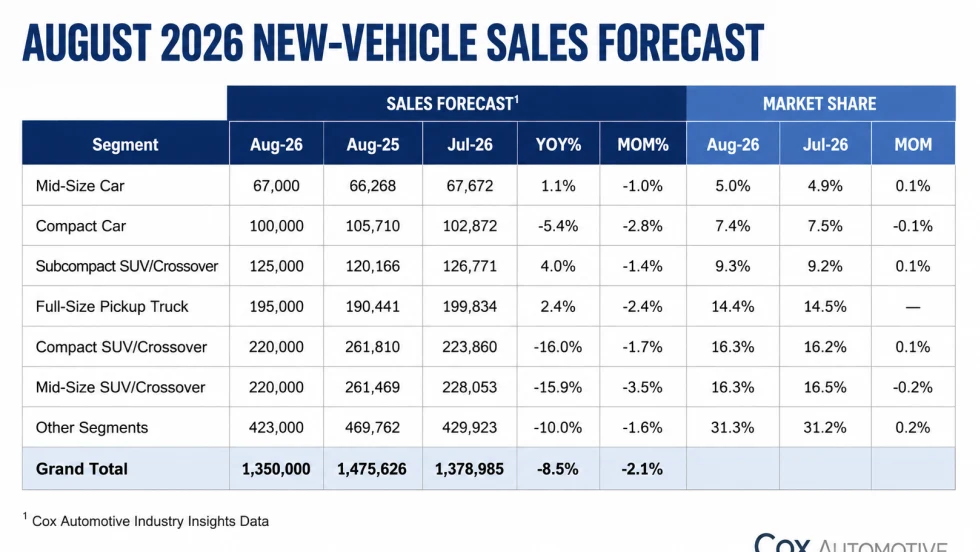
August New-Vehicle Sales Pace Forecast to Hold Above 16 Million
Despite an expected 8.5% year-over-year decline in August volume, Cox Automotive forecasts a 16.3 million SAAR, with full-size pickups outperforming several major crossover segments.
Read More →
Trade Strategy Now Starts Long Before Turn-In
The strongest trade values aren't built at turn-in. Discover how maintenance, lifecycle planning, and shared risk protect truck resale value.
Read More →
What Happens When Residual Values Meet Real-World Markets
A truck's trade value isn't determined on turn-in day. Learn how market cycles, maintenance, and timing shape the gap between residuals and reality.
Read More →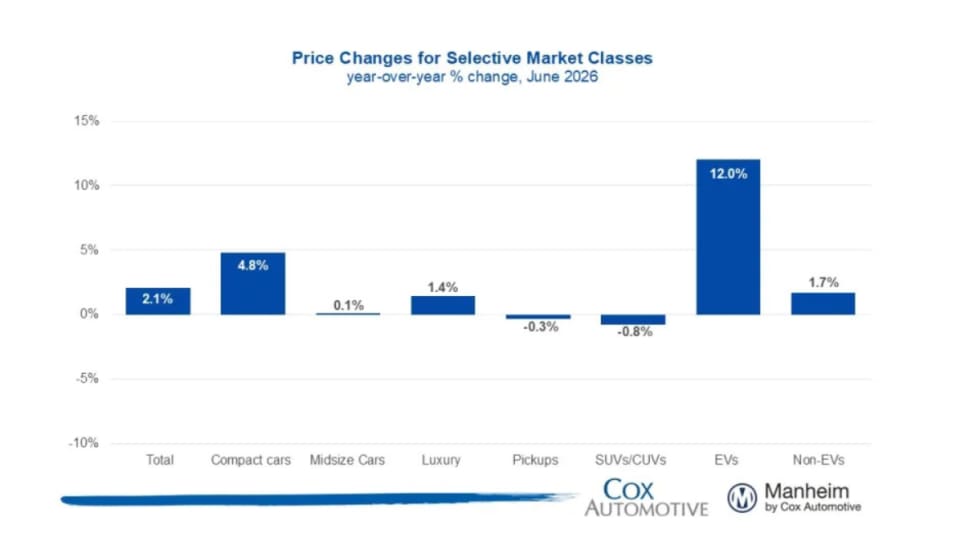
Manheim Index Shows Used-Vehicle Wholesale Prices Up 2.1% in June
The market is seeing stronger appreciation in older used vehicles this year, and the most affordable segments have been among the year’s best performers.
Read More →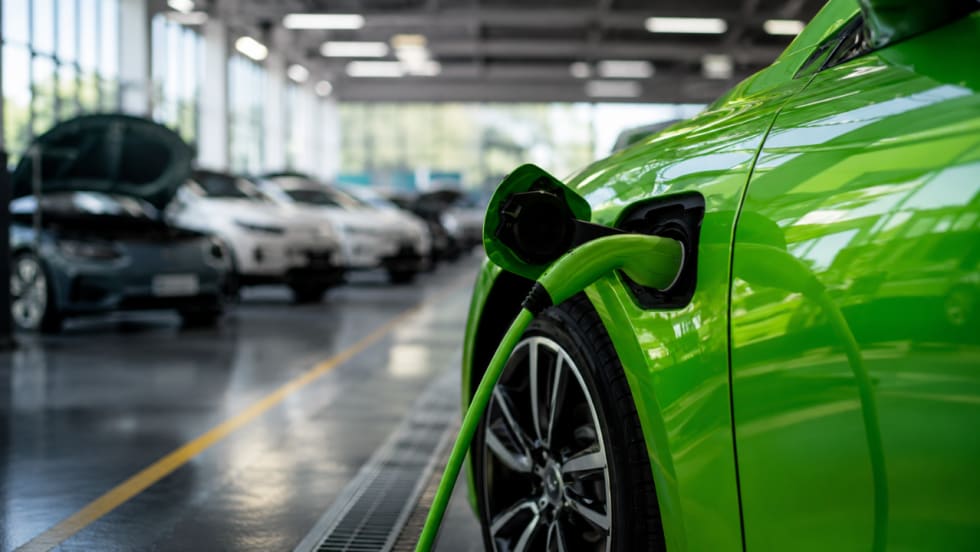
Stop Remarketing Electric Vehicles Like Gas Cars
The advantages and attributes of electric vehicles are upending the traditional remarketing cycle, requiring fleet sellers to rely on new factors and approaches detailed below.
Read More →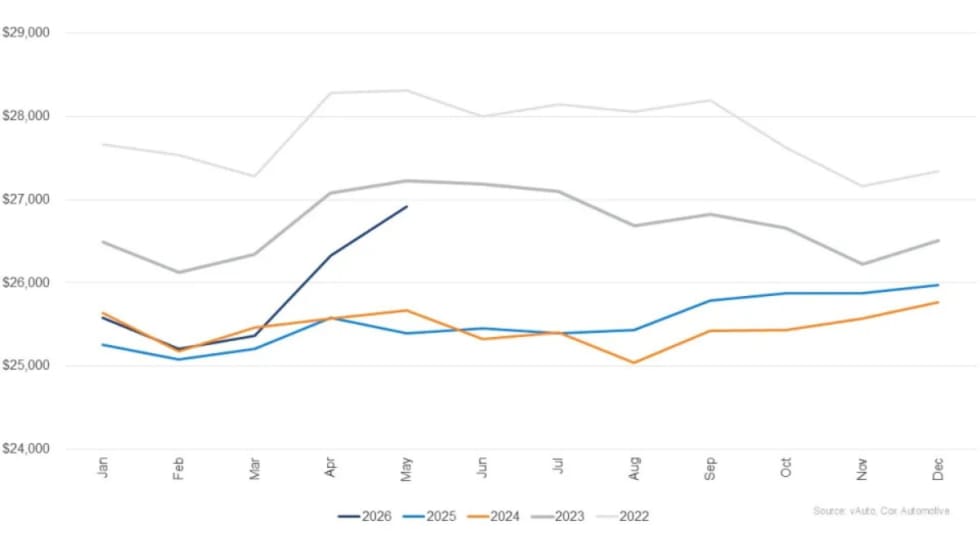
Used Vehicle Prices Climb Higher As Sales Pace Slows
The higher prices at used retail reflect strong wholesale values earlier in the spring, particularly for older, more affordable vehicles.
Read More →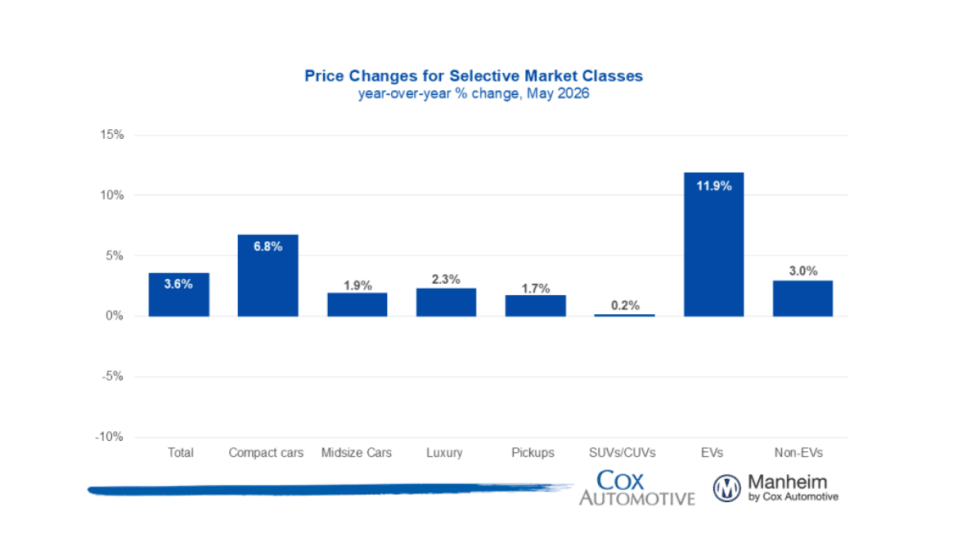
Wholesale Used Vehicle Market Sustains Moderate Rise In Values, Prices
Trends continue to normalize after a strong start to the year, as consumers contend with higher gas prices in the coming summer months.
Read More →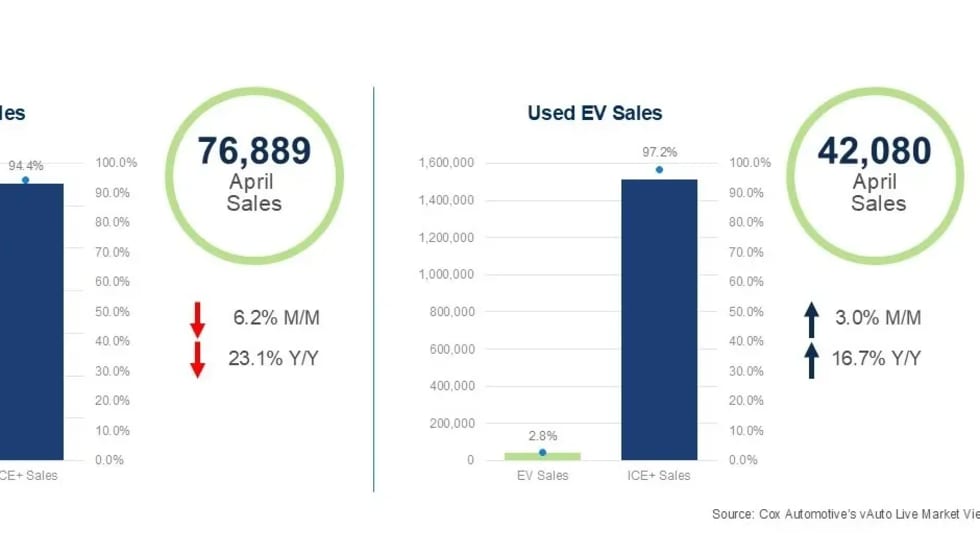
Used EV Sales Grow In April
While EV sales declined, used EV sales grew, as tighter inventory and rising prices reflected a more normalized pace for the EV market.
Read More →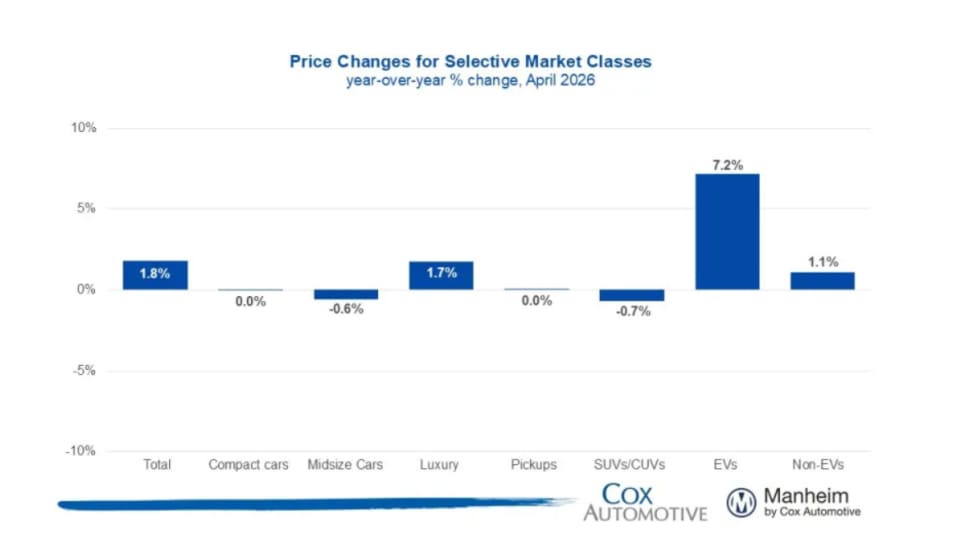
Wholesale Used Vehicle Prices Slightly Up In April
The Iranian conflict and rising gas prices inject much uncertainty into the future wholesale used vehicle markets, as higher gas prices soak up spendable income from vehicle buyers.
Read More →
CAR 2026 Recap Part 2: Closing the Gap Between Data & Remarketing Value
The second half of CAR 2026 examined how fleets can translate lifecycle strategy, vehicle data, and market shifts into higher real-world results.
Read More →