




Want More? Reducing Work Truck Fleet Costs & Increasing Uptime
Shifting Class 3-8 Resale Market
Because of historically high resale rates, most commercial fleets no longer sell out-of-service medium- and heavy-duty Class 3-8 trucks to their employees.
June 13, 2012

For 2007 and earlier, a typical residual value for a Class 3-8 medium- and heavy-duty truck (with average miles and 60 months in service) was in the 20% range.
Photo: Canva
3 min to read
The old saying goes: “No good deed goes unpunished.” This is a particularly apt sentiment when it comes to selling trucks to employees. Generally speaking, employee sales take a great deal of time and patience.
Today’s market has presented the fleet industry with some amazing residual values for both light-duty as well as medium-duty and heavy-duty Class 3-8 trucks. The economic turmoil that has gripped the private and public sectors since 2008 has caused some interesting shifts in the new and used-vehicle market, especially for Class 3-8 vehicles.
Building Residual Value
Fleets are holding onto vehicles much longer than the average 48-60 months. The result has been a dramatic shortfall of good, used equipment, totaling approximately 22 million less used vehicles, of which about 7 million of these would be Class 3-8 trucks.
For 2007 and earlier, a typical residual value for a Class 3-8 unit (with average miles and 60 months of service) was in the 20-percent range of its original price. Today, these vehicles are in the high 30- to mid-40-percent range, with some lower mileage units bringing as much as 50 percent of the original purchase price. The new reality is used vehicles are selling for twice the price of just five years ago.
Saying ‘No’ to Employee Sales
Bob Herzog, VP of sales for PHH Arval, is responsible for the energy sector, with most of his customers based in Texas. Recently, Herzog confirmed that currently none of his customer base offers vehicles to employees. Most of the companies he works with indicated several reasons for the corporate decision to not offer used vehicles to employees: time involved to conduct employee sales, concerns over liability, after-sale complaints, and the vehicle has been fully utilized.
“At the end of the day, my customers do not want to deal with the challenges. It is simply easier to dispose of the unit at auction. An auction buyer clearly understands the term ‘Sold as Is’,” explained Herzog.
Leigh Ann Blake, fleet manager for Enterprise Products in Houston, oversees a fleet of 3,500 vehicles, including light-duty pickups and Class 3-8 vehicles, echoed Herzog about employee sales.
“The harsh environment of the oil field puts a lot of wear and tear on our vehicles. It simply does not make sense to sell these or light-duty units to our employees. Our resale at auction has been meeting our expectations and this further supports our policy not to sell to employees,” Blake explained.
Ace Truck Body of Grove City, Ohio, is one of the state’s largest service truck upfitters.
Rob Leasure, Ace’s sales coordinator, said the majority of his customer base has been actively pursuing the used market. Pressure on the used market began to heat up in early 2010 and has only gotten more challenging year to date.
“The majority of used equipment we see is well past its prime, as a result, used prices for good condition vehicles continue to strengthen. I have a list of private as well as government customers who have been forced to the used market due to their shrinking fleet budgets,” Leasure said. “The used equipment we purchase is often pre-sold to a buyer before we have it at our facility.”
This demonstrates a strong market for Class 3 through Cass 8 trucks, which could continue for several more years.
Originally posted on Work Truck Online
Subscribe to Our Newsletter
More Fleet
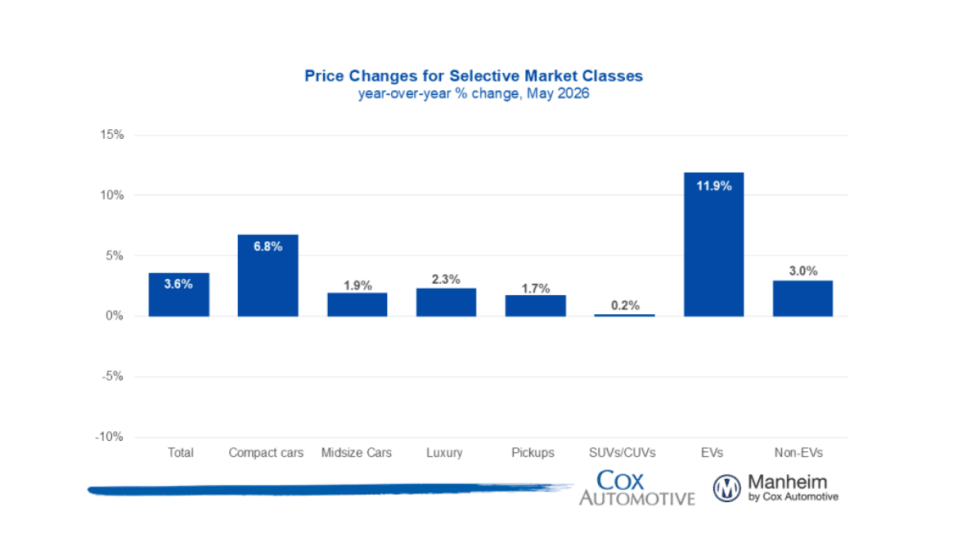
Wholesale Used Vehicle Market Sustains Moderate Rise In Values, Prices
Trends continue to normalize after a strong start to the year, as consumers contend with higher gas prices in the coming summer months.
Read More →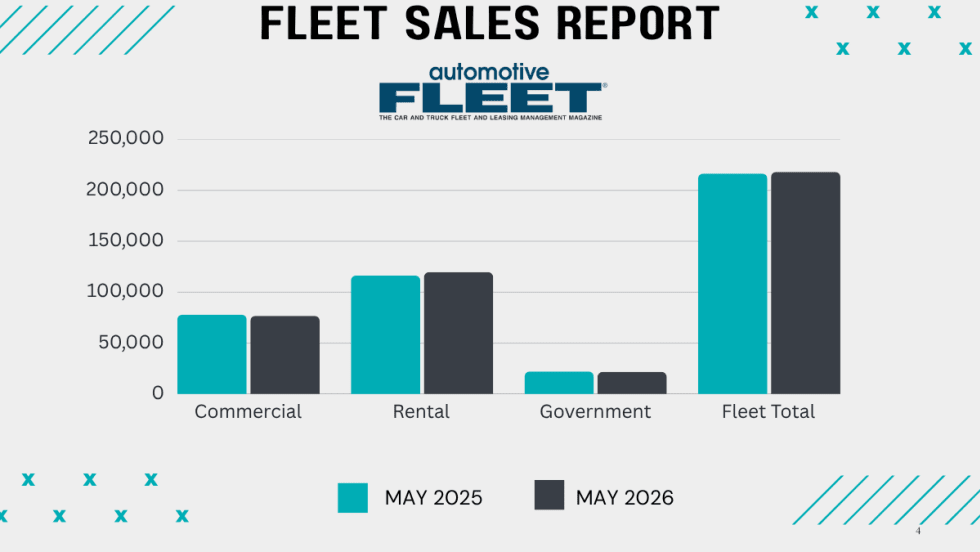
Commercial Fleet Sales Still Lead Sectors Despite May Mini Dip
The U.S. economy's continued growth and positive business investment are creating a favorable environment for fleet vehicle demand.
Read More →
The Data-Driven Haul: 5 Ways AI is Leveling the Playing Field in Auto Transport
Large and small transport fleets are becoming more competitive as predictive analytics and real-time data inform the logistics decision chain.
Read More →
How to Speak the Same Language on Fleet Safety
Drivers, supervisors, and data often speak different safety “languages.” Getting on the same page will drive better results.
Read More →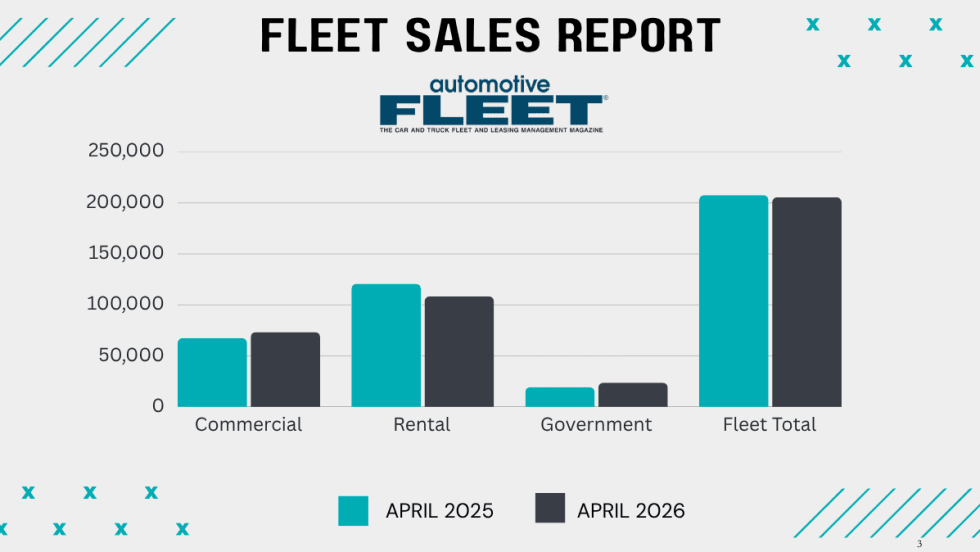
Commercial Fleet Sales Show Healthy Gains
So far, the fleet sector is outshining government and rental fleet sales this year as economic growth spurs more business investment.
Read More →
The Predictive Pivot: How AI and Data Are Redefining Auto Logistics in 2026
AI is no longer a luxury but the baseline for profitability in 2026. Auto haulers that adopt these tools now will quickly outpace those using manual workflows and taking a wait-and-see approach.
Read More →
The Predictive Pivot: How AI and Data Are Redefining Auto Logistics in 2026
AI is no longer a luxury but the baseline for profitability in 2026. Auto haulers that adopt these tools now will quickly outpace those that use manual workflows or take a wait-and-see approach.
Read More →
CAR 2026 Recap Part 2: Closing the Gap Between Data & Remarketing Value
The second half of CAR 2026 examined how fleets can translate lifecycle strategy, vehicle data, and market shifts into higher real-world results.
Read More →
CAR2026 in Two Words: Velocity, Value (Part 1)
The 2026 Conference of Automotive Remarketing convened with a mandate to involve a new constituency — fleet managers — and an updated mission to demonstrate unrealized value in de-fleeted vehicles.
Read More →
Launch of Fleet Remarketing Association Signals New Era for Vehicle Lifecycle Value and Data Stewardship
The Association, dedicated to advancing the remarketing phase of the vehicle lifecycle, held its kick-off meeting on April 16 at the 2026 Conference of Automotive Remarketing (CAR) in Cleveland.
Read More →