



Black Book Says Model-Year Changeover and Greater Supply Could Have Big Impact on Depreciation
Key factors affecting prices beyond the model-year changeover are a larger number of trade-ins, with 60 percent of new-car sales involving one, according to Black Book, and a greater supply of off-lease models.

With the start of the arrival of 2014 model-year vehicles in the marketplace, Black Book’s Senior Vice President and Editorial Director Ricky Beggs said that used-vehicle prices are beginning to soften. Although depreciation levels are still lower than in the past few years, Beggs said they’re approaching more traditional levels.
“Typically, the market does soften this time of year,” Beggs said. “This is the largest three-month depreciating period during the year, generally. If you look at last year at this time, Aug. 1 to Nov. 1 2012, that depreciation level was 5.1 percent. During other periods that year, depreciation was 4.2 percent, 1.2 percent, and 3.6 percent. This is the time of greatest depreciation that we will see this year. It’s nothing to be alarmed about; there is just a new model-year coming into the marketplace. Prices just can’t keep going up.”
Key factors affecting prices beyond the model-year changeover are a larger number of trade-ins, with 60 percent of new-car sales involving one, according to Black Book, and a greater supply of off-lease models.
“Prices might get pushed down a little more than they have in the past because we’ve got a greater volume of vehicles in the marketplace,” Beggs said. “New-car sales are up. Last month saw another increase in the seasonally adjusted annual rate (SAAR) to 15.5 million. The month before that it was 15.9 million, and prior to that it was 15.3. We’re going to finish at 15.3 or 15.4 overall, and with those increased sales come increased trades. Some of those trades are off-lease.”
In addition to a larger number of trade-ins, Beggs said the average age of vehicles being traded in could also push prices down.
“Another interesting thing to look at is the age of the trade-ins coming into the marketplace. R.L. Polk said the average age of a vehicle in the U.S. is 11.4 years,” he said. “When you talk about cars of that age coming into the marketplace, it could be like the reverse of Cash for Clunkers.”
Beggs was careful to say that although during Cash for Clunkers, when prices for an older vehicle that would have sold for $2,000 to $3,000 rose to $4,000 to $5,000, a price drop equivalent to that previous price increase isn’t likely. Still, he said prices for older vehicles that would have previously sold for $4,000 to $5,000 could fall to levels between $3,500 and $2,500.
Vehicle segments where Beggs said the market could see greater depreciation levels include compact crossovers, entry-level cars, mid-size cars, and compact cars. Starting with compact crossovers, he described that segment as having many different players and therefore more competition, which is driving down prices.
“One segment that concerns me is compact crossovers,” Beggs said. “I think there is still plenty of demand for vehicles in that segment, but the number of players in that segment, combined with the volume of those vehicles, means there is question mark hanging over it. The other segments that concern me a little bit are entry-level cars, including entry-level mid-size cars and compact cars. Those concern me for two reasons: One, the volume of vehicles in the market because of the number of players trying to meet CAFE standards, and two, because gas prices are below $4 per gallon. For those segments to perform better, we would need to see $5 per gallon gasoline, and I’m not a proponent of that happening. Those are the two segments that might not do as well.”
Beggs noted that during the period Aug. 1, 2012, to Aug. 1, 2013, the three segments with the highest depreciation levels were entry-level mid-size cars, upper mid-size cars (which he said is an extremely competitive segment), and compact cars.
Still, despite the fact that depreciation levels are approaching those prior to the recession, some segments have seen high retention levels, and are likely to continue to retain value, according to Beggs. For the sake of comparison, Black Book noted that the pre-recession annual depreciation for a vehicle is generally between 15 and 18 percent.
“If you look at the 12-month cycle from Aug. 1, 2012, to Aug. 1, 2013, there are actually four segments that depreciated less than 6 percent for the year, with those being compact SUVs at 4 percent, the compact pickups at 4.2 percent, the full-size pickups at 4.8 percent, and the mid-size pickups at 5.7 percent,” Beggs said. “Those are all tremendous retention levels for a year’s worth of time.”
By Greg Basich
Originally posted on Automotive Fleet
More Operations

FLD Promotes Three Executives in Leadership Changes
FLD has promoted three longtime executives, naming Gary Mott CEO, Richard Mallek president, and Ron Sanders managing partner.
Read More →
CAS Automotive Launches Remarketing Service for Damaged, Surplus Equipment
Damaged Equipment expands CAS Automotive’s vehicle remarketing model to commercial equipment, targeting fleet operators, insurers, equipment dealers, and rental companies.
Read More →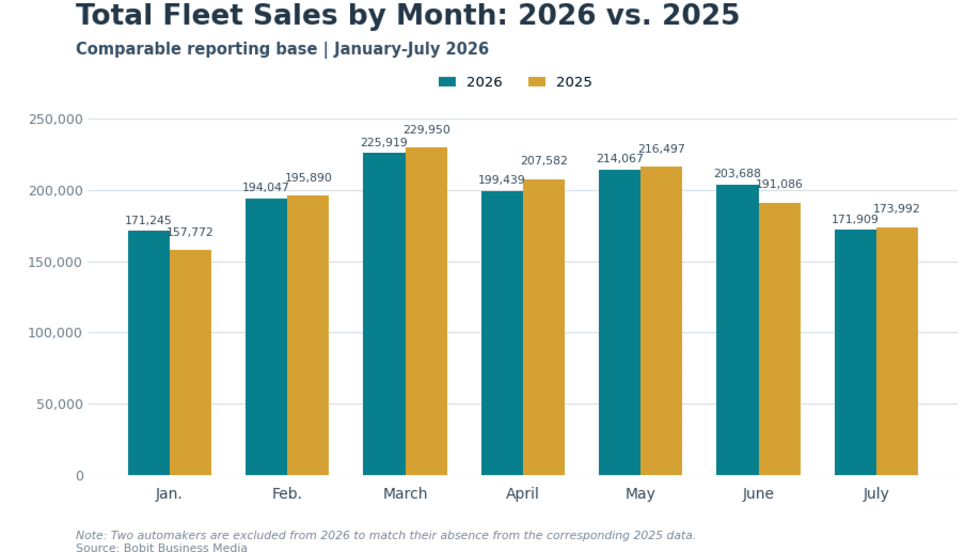
Fleet Sales Hold Steady as Commercial Gains Offset Rental Decline
Commercial and government fleet sales increased through July 2026, offsetting most of the decline in rental volume and leaving combined comparable fleet sales 0.5% above the same period last year.
Read More →
Personnel Update: BrickHouse GPS, PRO-VISION, Auto Driveaway, and Proaction
Check out the latest must-know fleet personnel updates from the last couple of months.
Read More →
What Comes Next for Auto Driveaway?
A new Auto Driveaway feature called Arrive provides recipients with live location updates and ETAs during the final hour of a vehicle move, while fleet customers continue to have end-to-end shipment visibility through the company's customer portal.
Read More →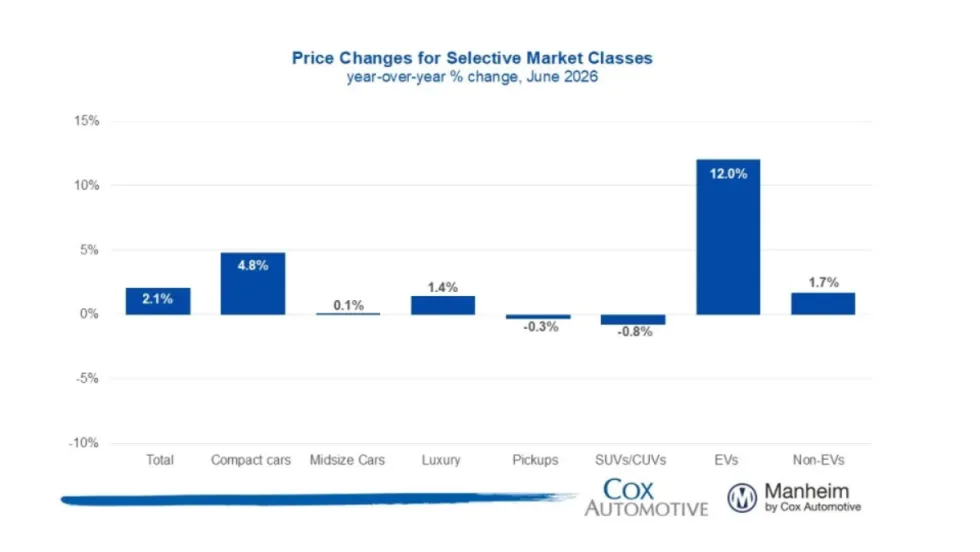
Manheim Index Shows Used-Vehicle Wholesale Prices Up 2.1% in June
The market is seeing stronger appreciation in older used vehicles this year, and the most affordable segments have been among the year’s best performers.
Read More →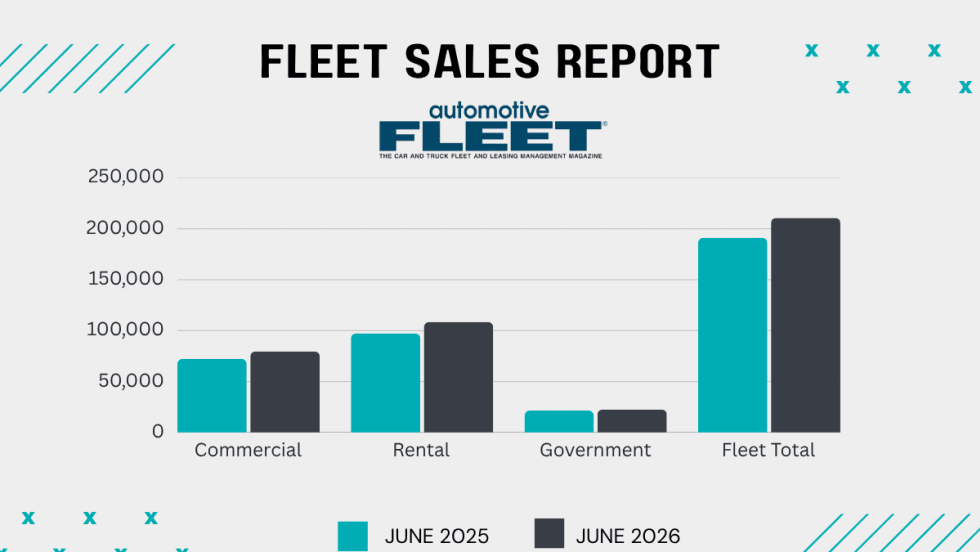
Commercial Fleet Sales Contribute To June, YTD Gains
The fleet sector has boosted its vehicle purchases at a reliable pace in the first half of this year compared with 1H 2025.
Read More →
Stop Remarketing Electric Vehicles Like Gas Cars
The advantages and attributes of electric vehicles are upending the traditional remarketing cycle, requiring fleet sellers to rely on new factors and approaches detailed below.
Read More →
AP Fleet Management Expands Remarketing Program for Commercial Work Trucks
AP Fleet Management expanded its commercial vehicle remarketing program with dedicated resale services and an online marketplace for used work trucks.
Read More →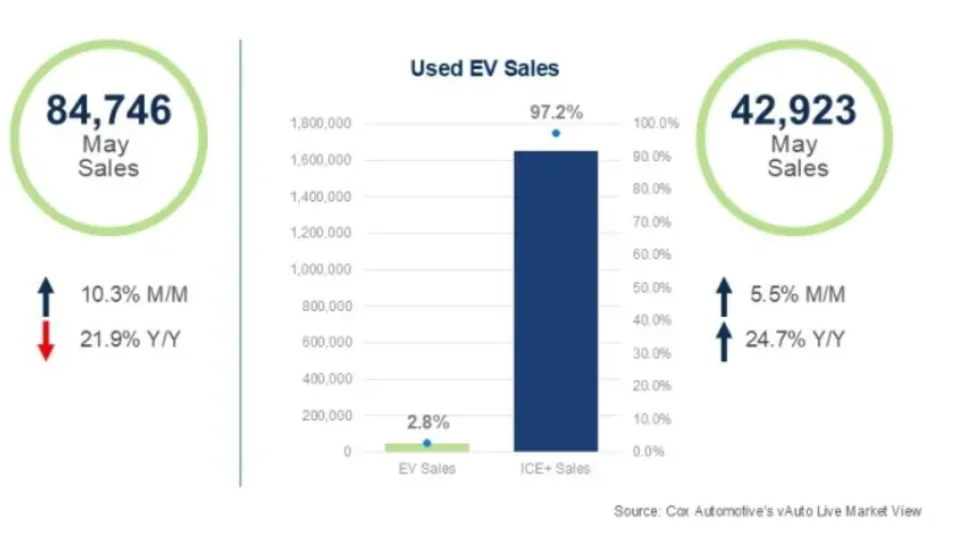
Used EVs Strengthen Overall Electric Vehicle Market
The latest sales data point to several reasons for the divergent trends in new and used EVs that can factor into fleet cycling decisions.
Read More →